Understanding numeracy Adding Up to 5 Worksheets for Ages 4-9
4 filtered results
-
From - To
Explore our "Understanding Numeracy: Adding Up to 5 Worksheets for Ages 4-9" designed to make early math engaging and fun! These worksheets introduce young learners to essential addition skills, focusing on concepts such as counting, number recognition, and simple addition problems. Ideal for building a solid math foundation, these resources encourage hands-on learning and help children understand how to combine numbers to reach 5. With colorful visuals and interactive exercises, our materials are perfect for classrooms or at-home practice, enhancing children's confidence and critical thinking abilities in mathematics. Start building strong numeracy skills today with our thoughtfully crafted worksheets!
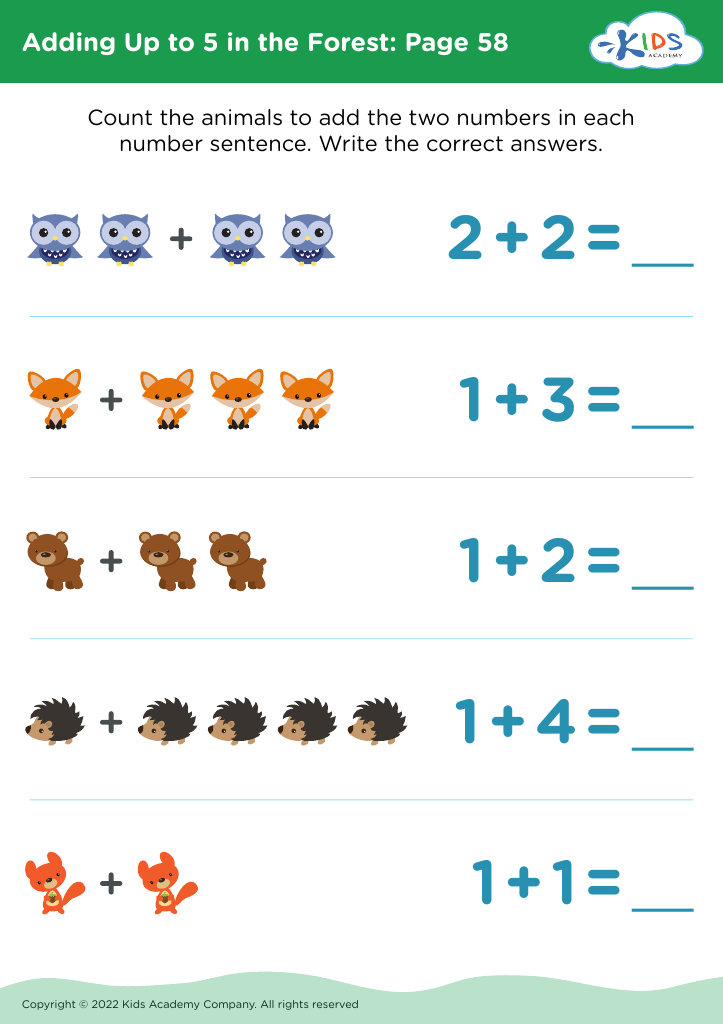
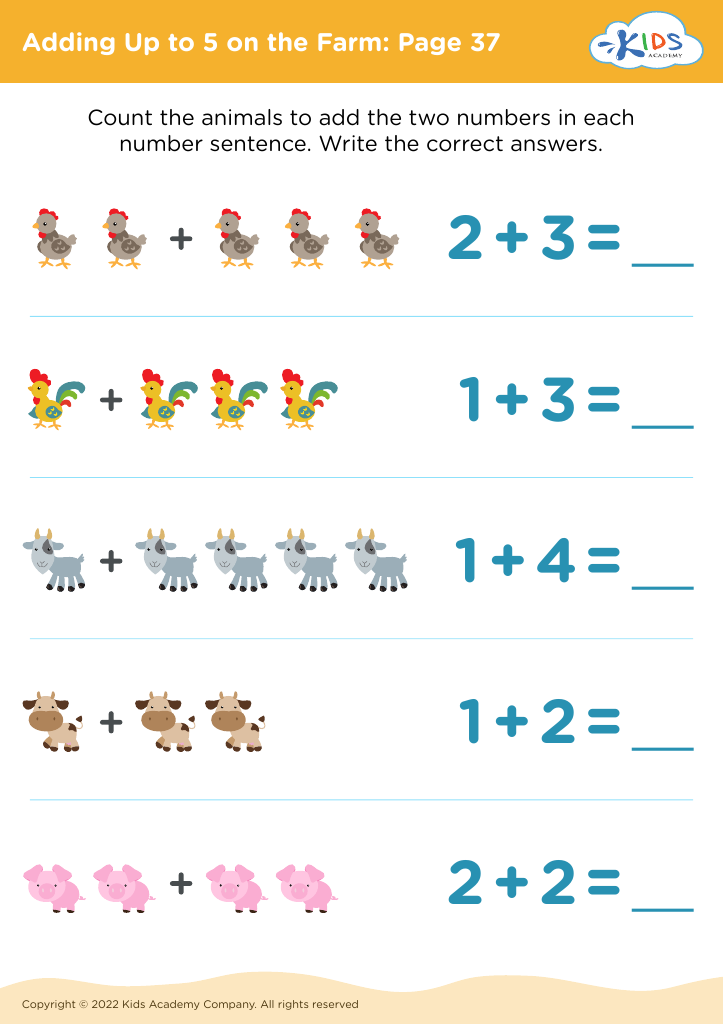
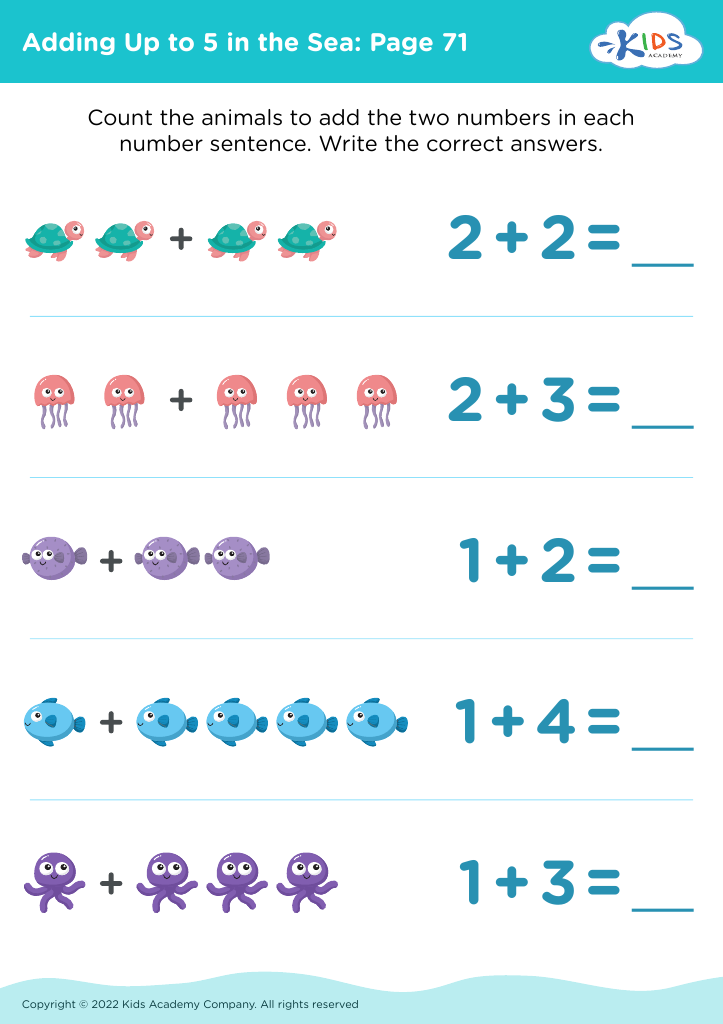
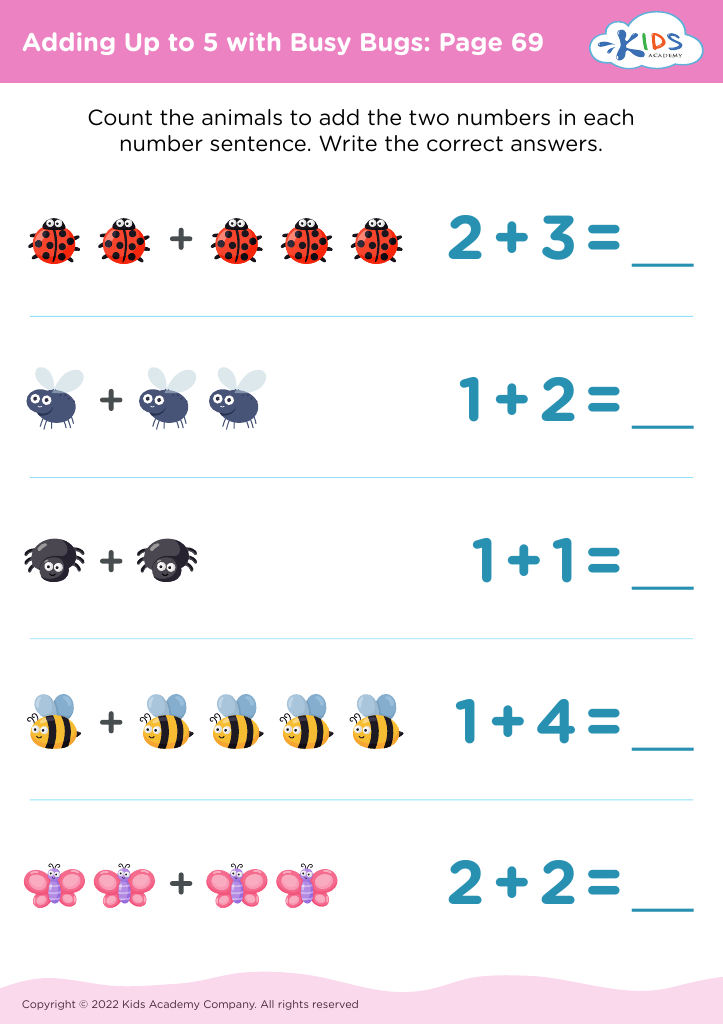








Understanding numeracy, particularly the concept of "Adding Up to 5" for ages 4-9, is crucial for both parents and teachers. Mastering this fundamental skill helps children build a strong foundation for their future mathematical understanding. At this age, children are naturally curious and eager to learn, making it an ideal time to introduce basic addition concepts. By grasping how to add numbers up to 5, children develop critical thinking and problem-solving skills that are essential across all subjects and in real-life situations.
Moreover, numeracy nurtures logical reasoning and enhances cognitive development. Activities involving counting and simple addition promote fine motor skills and improve focus and attention. Parents play a vital role in reinforcing these concepts at home through playful and interactive methods, such as counting objects or using everyday scenarios to apply addition.
For teachers, including "Adding Up to 5" in the curriculum ensures progressive skill-building, promoting confidence in math. Collaborative learning experiences create opportunities for social interaction, understanding ca. Importantly, a comfortable relationship with numbers cultivated early on can reduce anxiety about mathematics as children grow, ultimately leading to better academic performance and everyday competence. Understanding numeracy is thus a shared responsibility that enriches a child's educational experience.








