Understanding numerical values Adding Up to 5 Worksheets for Ages 4-9
4 filtered results
-
From - To
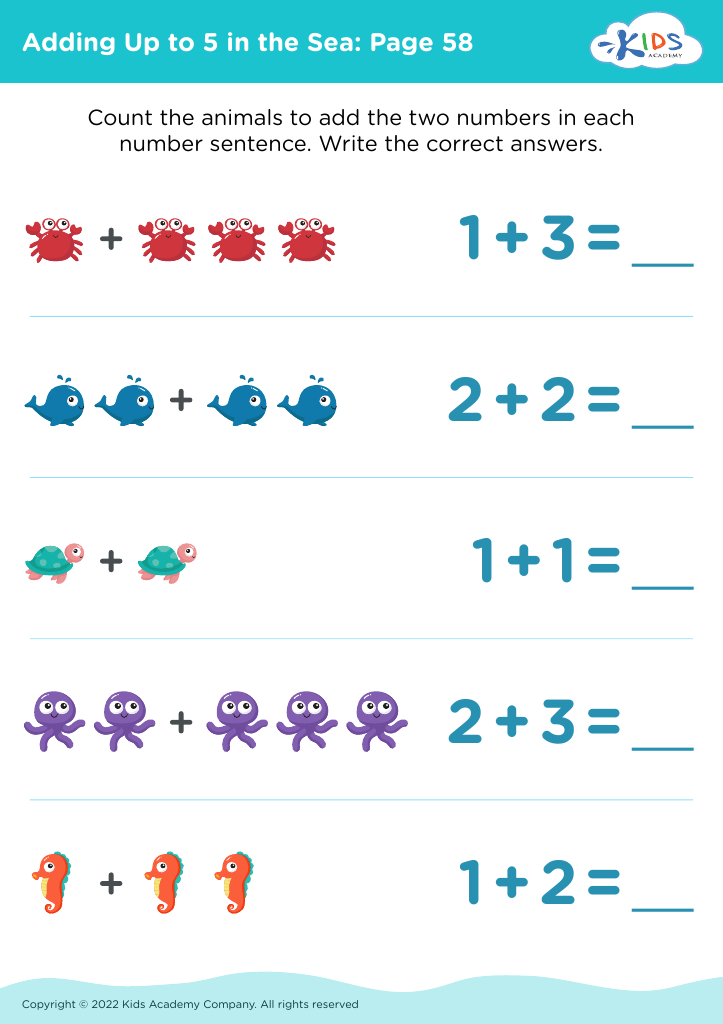
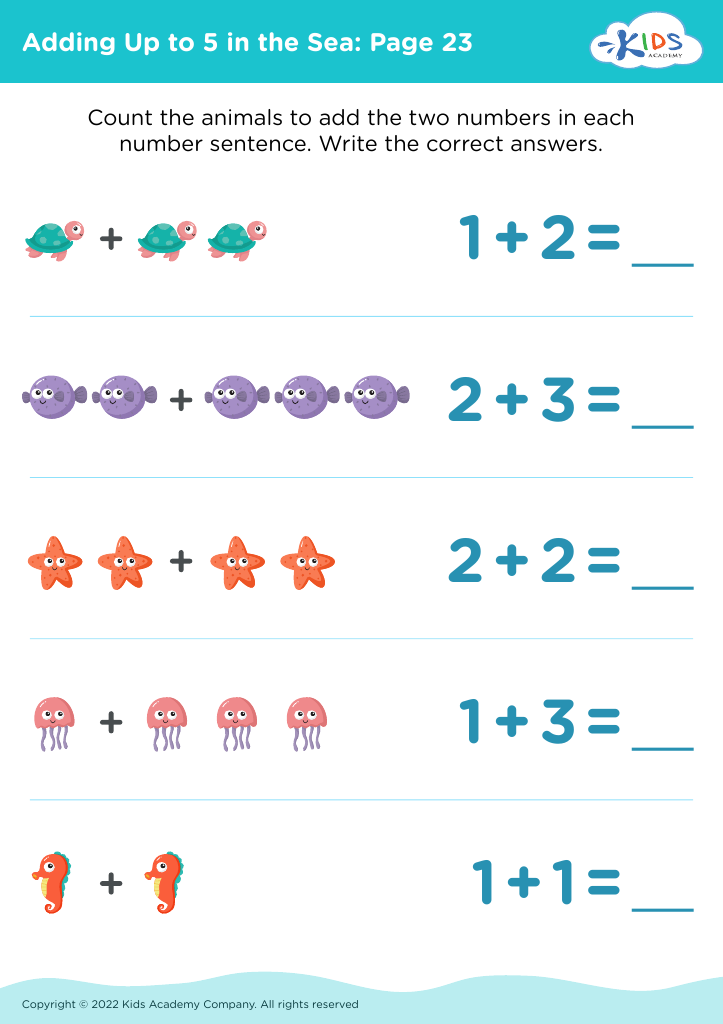
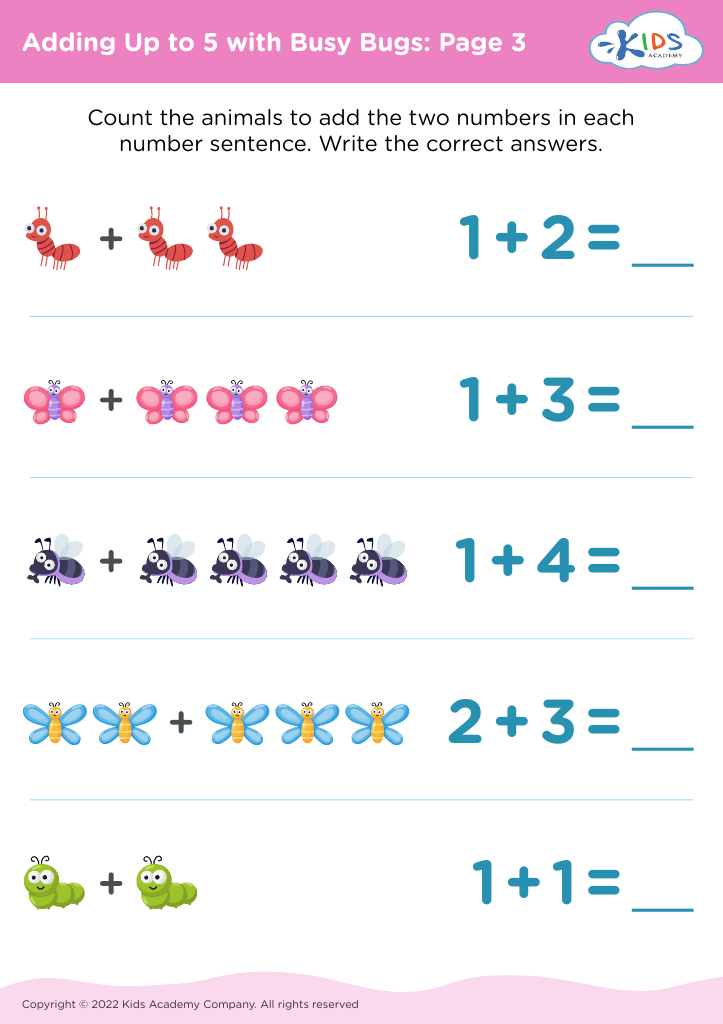
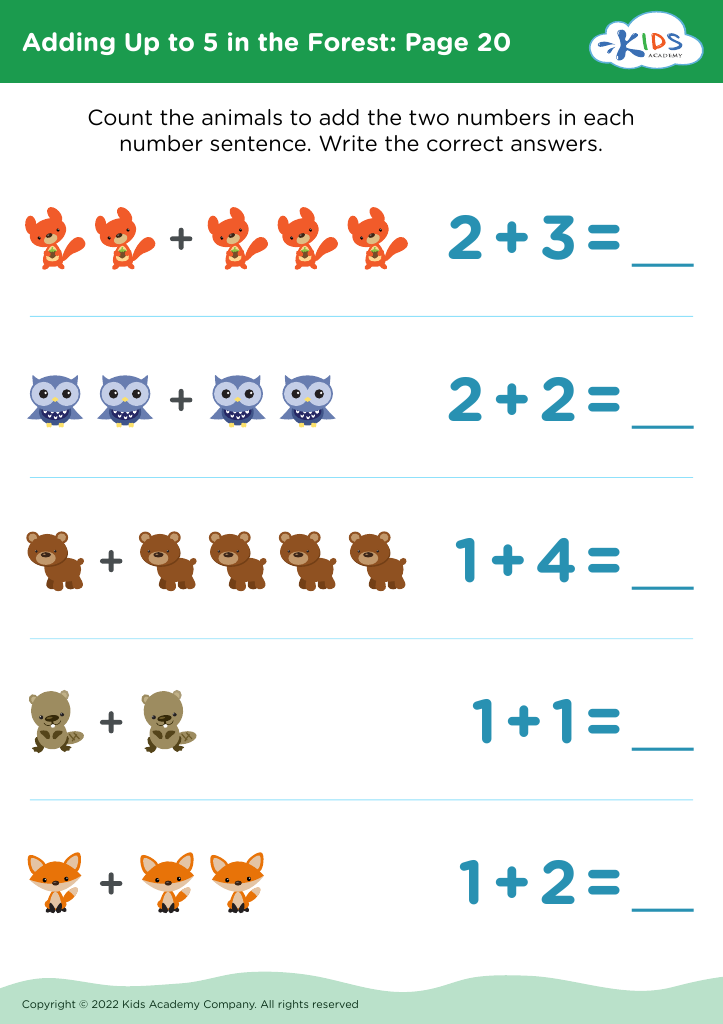
Explore our "Understanding Numerical Values: Adding Up to 5 Worksheets," designed for children aged 4-9! These engaging worksheets help young learners grasp fundamental math concepts by focusing on addition skills up to 5. With a variety of activities, children will practice counting, recognize numerical values, and enhance their problem-solving abilities in a fun and interactive way. These resources cater to different learning styles, ensuring every child can build confidence in their math skills. Ideal for both classroom settings and at-home learning, these worksheets provide essential practice for early mathematicians. Start your child's journey to numerical understanding today!



%20(1).jpg)

.jpg)


Understanding numerical values, particularly the concept of adding up to 5, is crucial for children aged 4-9 for several reasons. First, foundational math skills built during these early years form the basis for later, more complex mathematical concepts, such as addition, subtraction, and problem-solving. Mastery of small numbers helps children develop their number sense—an intuition about how numbers work and relate to one another.
Additionally, learning to add numbers up to 5 fosters cognitive development. It encourages children to engage in critical thinking and enhances their reasoning abilities as they start to recognize patterns and relationships among numbers. This skill also aids in developing perseverance and patience as they tackle challenges associated with math.
Moreover, early exposure and comprehension of simple numerical values promote confidence in academic settings. Children who feel comfortable with basic addition are more likely to participate in classroom activities and enjoy a positive attitude towards math in the future.
Lastly, these skills are not limited to academic success; they also empower children to make day-to-day decisions involving quantities, time, and money, ultimately supporting their independence and fostering a sense of accomplishment in everyday life. Thus, it’s essential for parents and teachers to prioritize numerical literacy in early education.








