Basic math concepts Adding with Busy Bugs Worksheets for Ages 4-9
6 filtered results
-
From - To
Discover the world of basic math concepts with our "Adding with Busy Bugs" worksheets, designed specifically for children ages 4-9. These engaging worksheets make learning addition fun and interactive, featuring colorful bug characters that capture young learners' attention. Students will practice essential skills in a playful environment, enhancing their understanding of numbers and basic arithmetic. With various activities, including visual aids and real-life scenarios, children will build a strong foundation in math. Encourage your child's confidence and love for learning as they hop along with Busy Bugs on their mathematical journey. Perfect for home or classroom use!
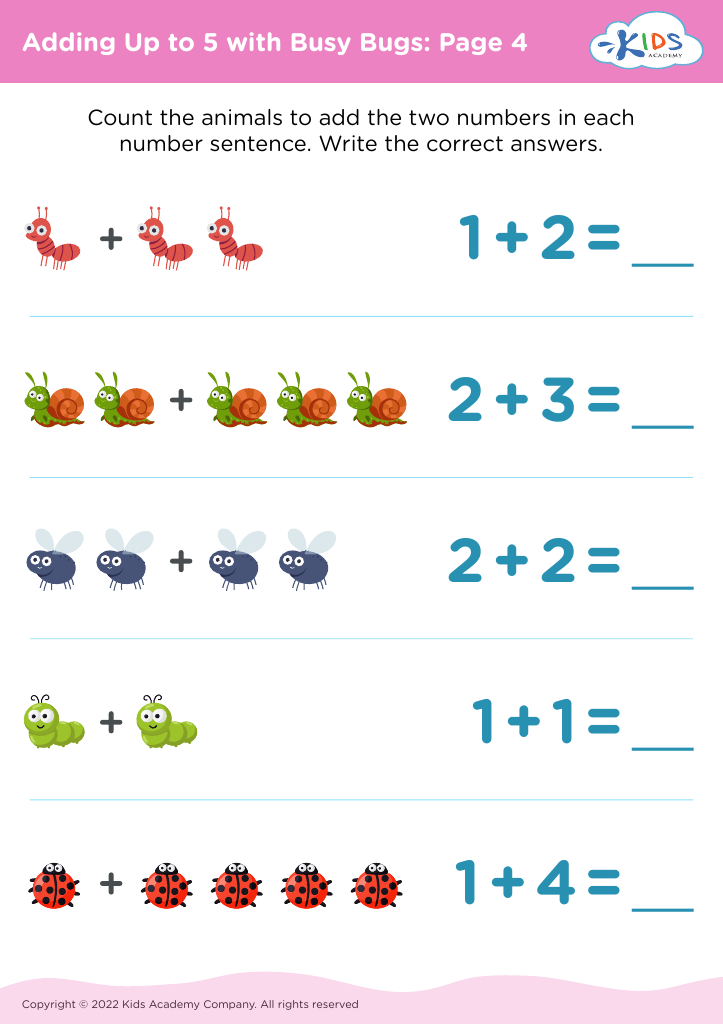
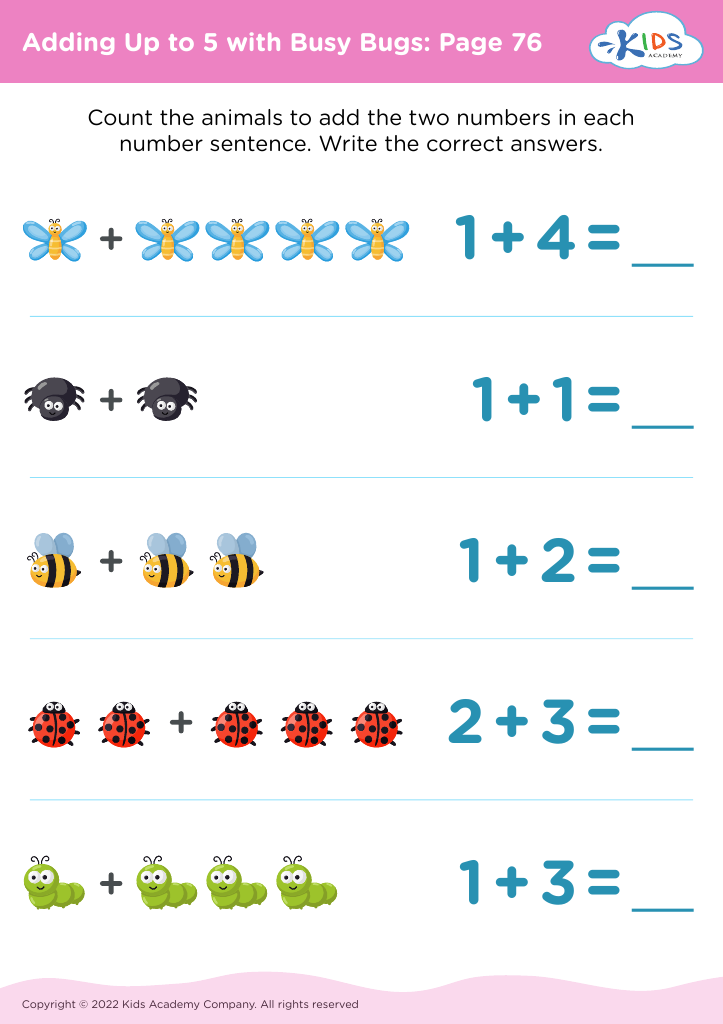
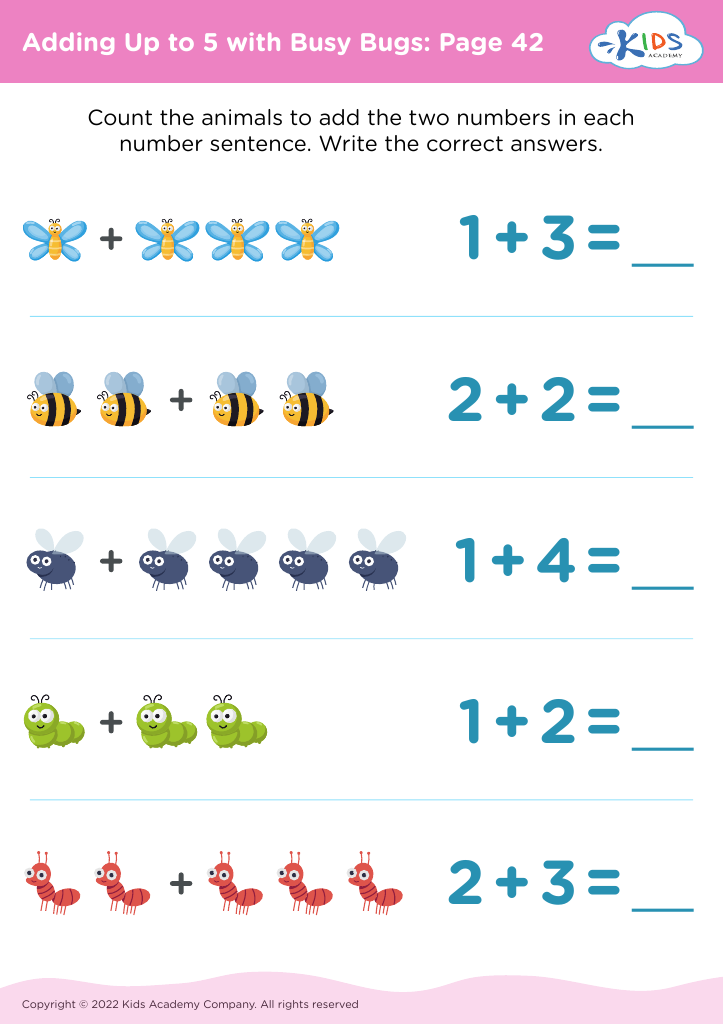
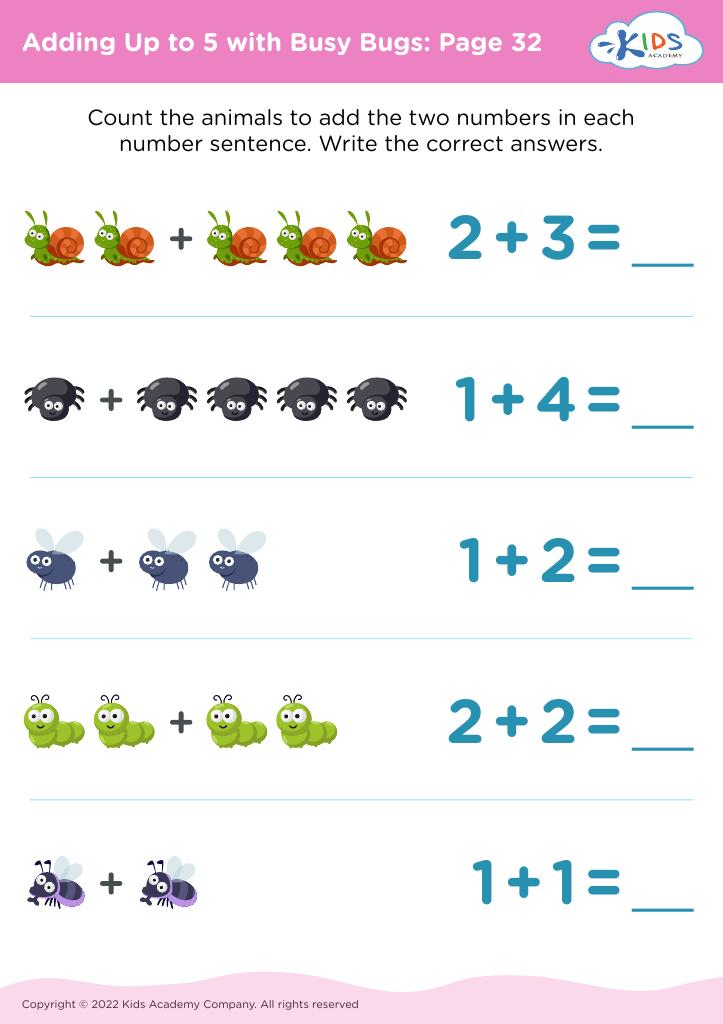
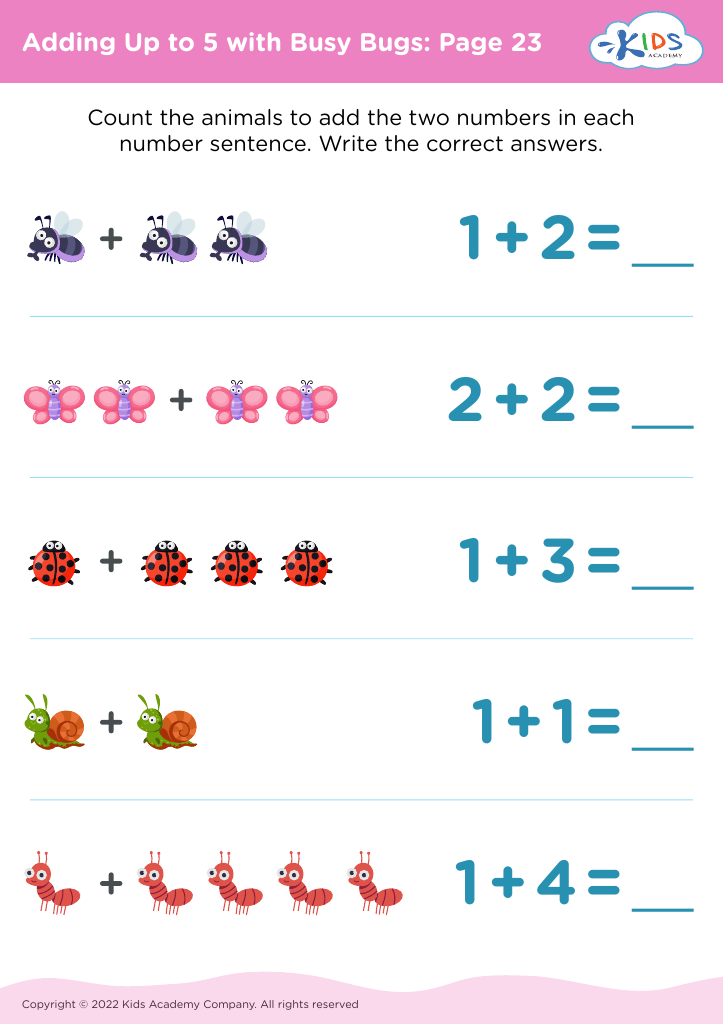
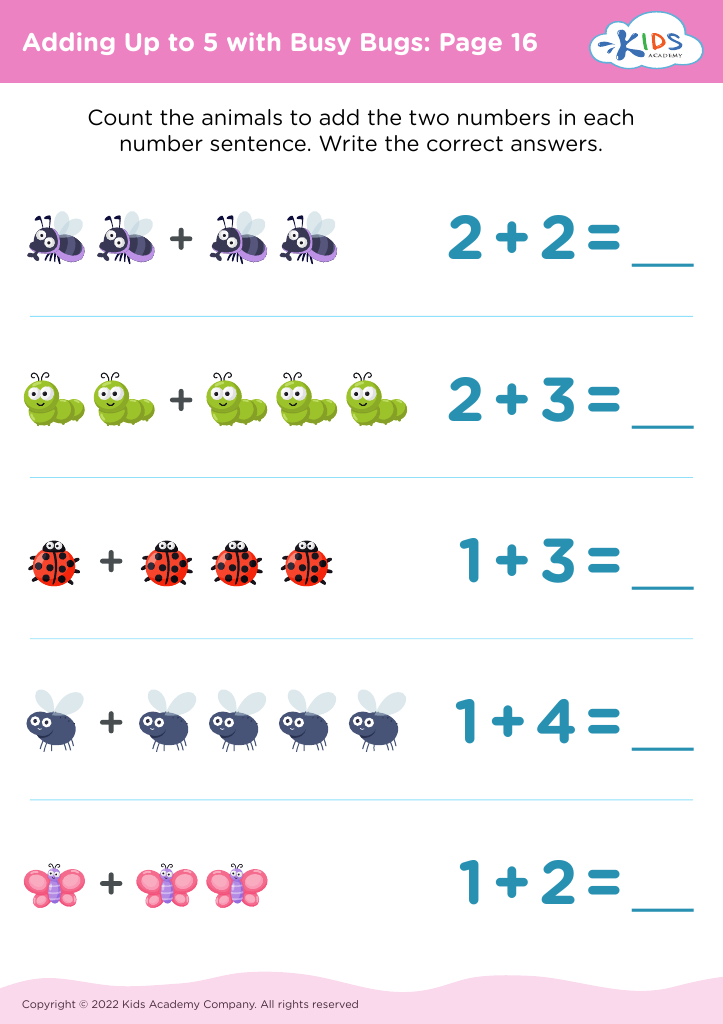



Parents and teachers should care about basic math concepts, such as adding, particularly with engaging resources like "Busy Bugs," for children aged 4-9 for several reasons. First, early math skills lay the foundation for future academic success. Understanding addition is crucial in developing problem-solving and critical thinking abilities, which are essential as children progress through their education.
"Busy Bugs" offers a fun, interactive approach that captures children's attention, making learning enjoyable. Engaging with colorful characters and playful scenarios helps children relate to math in a real-world context, fostering a love for learning early on. Additionally, incorporating themes and visuals can improve retention, allowing young learners to grasp and recall concepts more effectively.
Moreover, learning to add enhances cognitive development; it improves memory and analytical thinking. It often forms part of social engagement, as children share and collaborate on solving problems through play, promoting teamwork and communication skills.
In the long run, instilling a solid understanding of basic math through resources like "Busy Bugs" contributes to building confident learners who are more likely to face challenges with enthusiasm. Prioritizing math education in early childhood is a gift that enables lifelong learning and success.