Problem-solving abilities Addition and Subtraction Word Problems Worksheets for Ages 4-9
4 filtered results
-
From - To
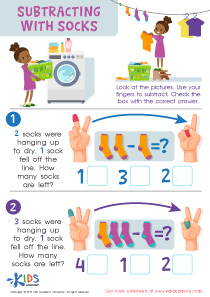
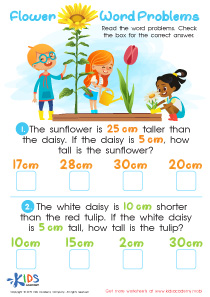
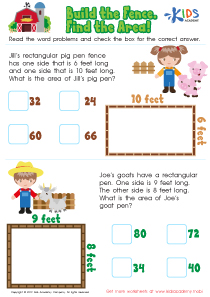
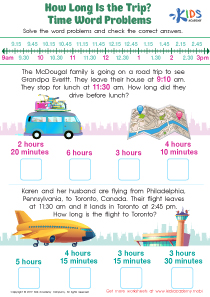
Boost your child's problem-solving abilities with our engaging Addition and Subtraction Word Problems Worksheets designed for ages 4-9. These worksheets combine fun storytelling with essential math skills, helping young learners make sense of real-life situations through addition and subtraction. Each activity focuses on developing critical thinking and analytical skills as children work to uncover solutions. Perfect for home or classroom use, these worksheets align with educational standards, ensuring a solid foundation in mathematics while fostering a love for learning. Enhance your child's cognitive growth and confidence in math with our interactive and visually appealing worksheets today!
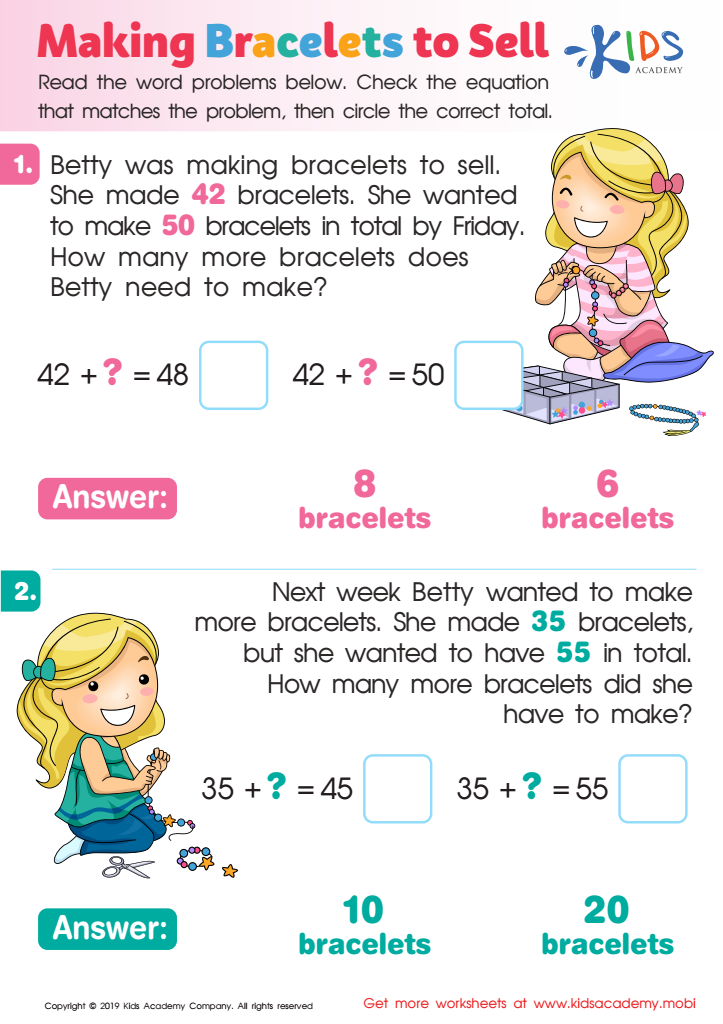
Making Bracelets to Sell Worksheet
 Assign to My Students
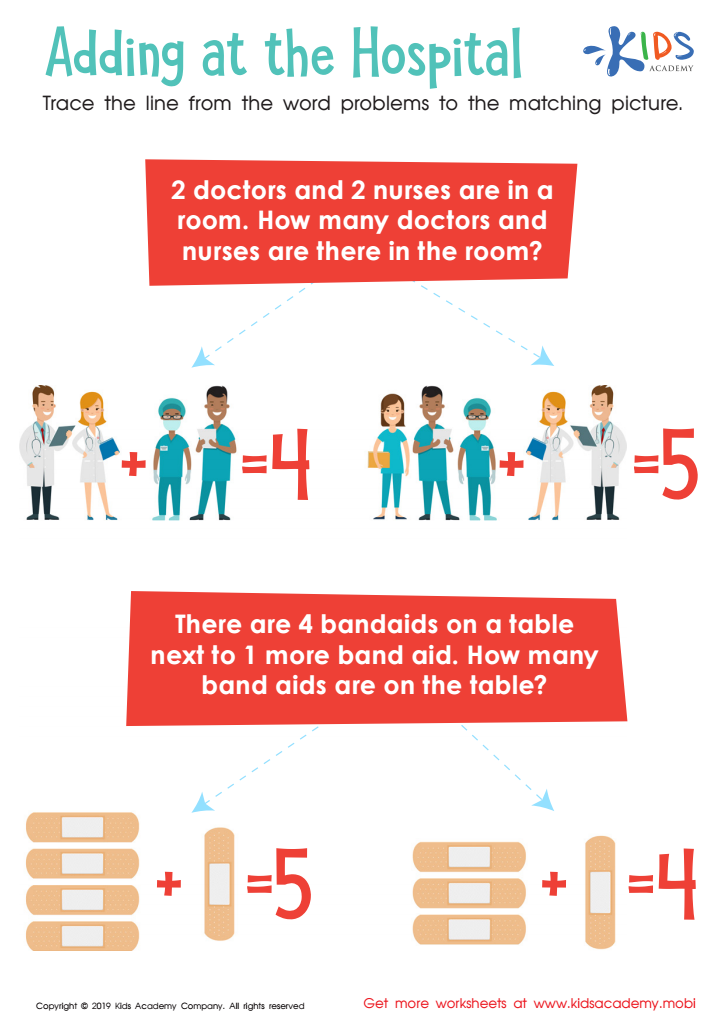
Adding at the Hospital Worksheet
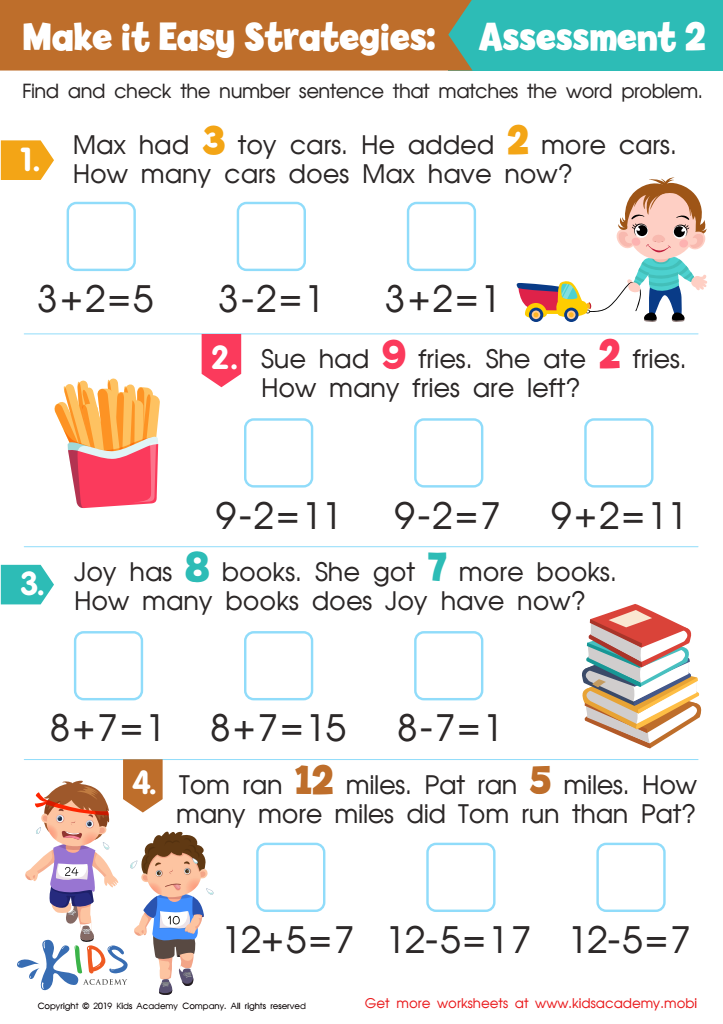
Make it Easy Strategies: Assessment 2 Worksheet
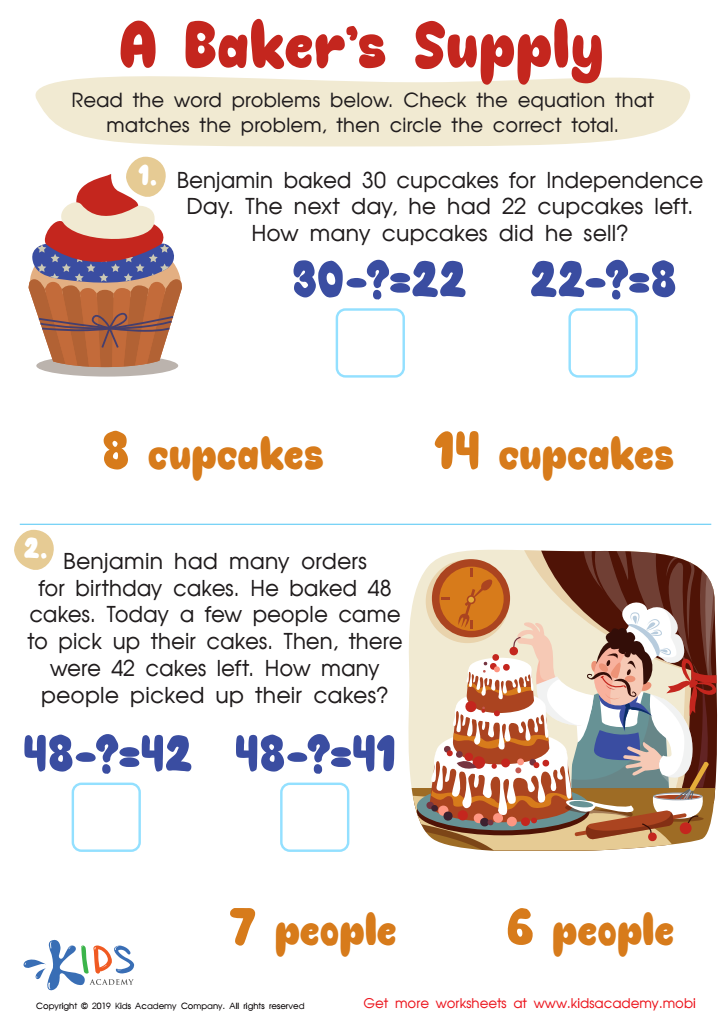
A Baker's Supply Worksheet








Parents and teachers should prioritize problem-solving abilities in addition and subtraction word problems for children ages 4 to 9 because these fundamental skills lay the groundwork for future mathematical comprehension. Early mastery of these concepts enhances critical thinking and analytical skills, essential both in academics and everyday life.
When children engage with word problems, they learn to interpret written scenarios, decipher key information, and devise strategic approaches to find solutions. This not only cultivates numeracy skills but also nurtures comprehension and language abilities, as they learn to understand and articulate complex ideas. Furthermore, developing problem-solving skills improves their resilience and perseverance, essential traits that help children tackle challenges both in the classroom and beyond.
Additionally, promoting these abilities encourages a growth mindset, helping children view mistakes as opportunities to learn rather than setbacks. Strong problem-solving capabilities built during these formative years can lead to increased confidence in their mathematical abilities, positively impacting their overall academic performance. By supporting children in this way, parents and teachers contribute to creating well-rounded individuals who are prepared to tackle the challenges of higher education and life. In essence, fostering these skills is vital for children's holistic development and future success.