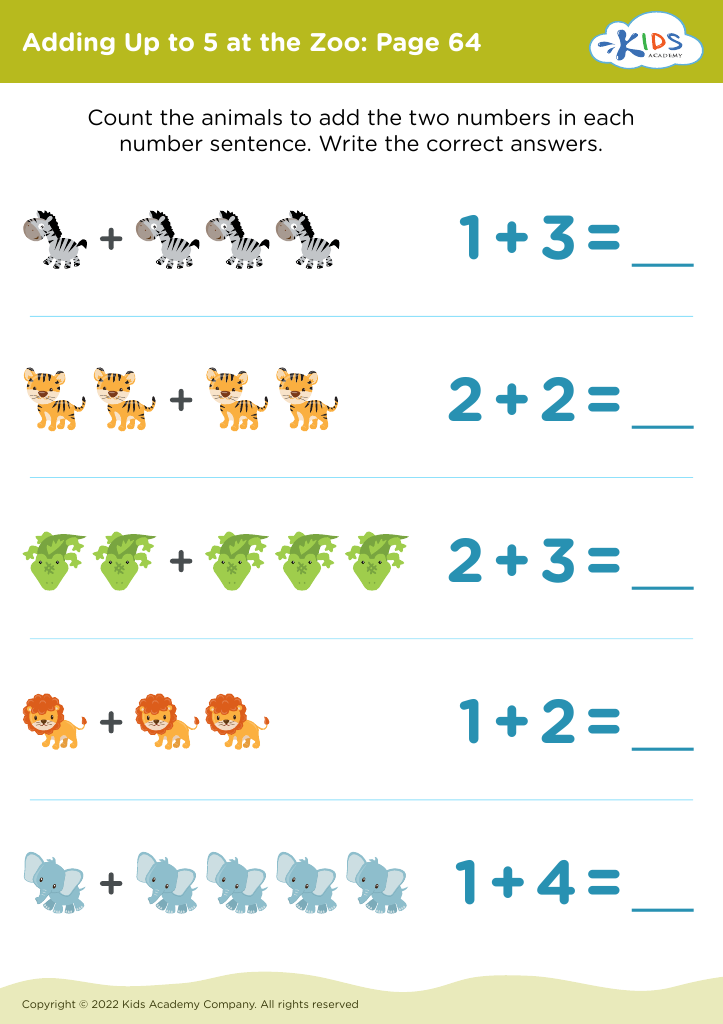
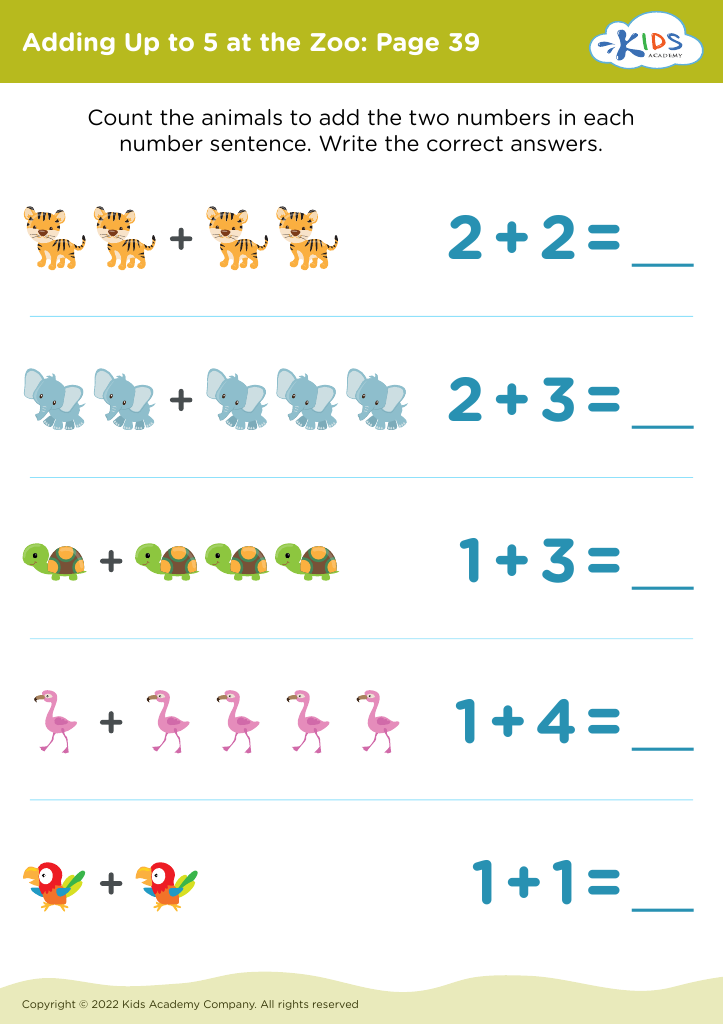
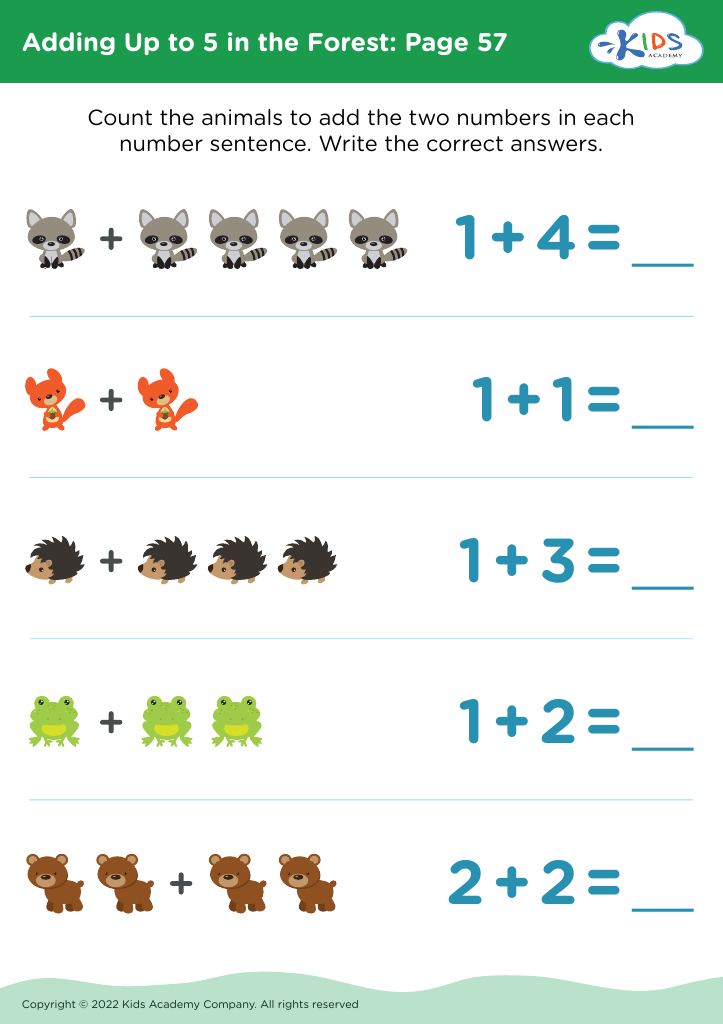







Animal recognition addition and subtraction is essential for children aged 4-9 for several reasons. First, it enhances both their mathematical and cognitive skills by incorporating familiar and engaging elements—animals—that naturally spark a child’s interest. Utilizing animals in math problems helps connect abstract math concepts with real-world contexts, making learning more meaningful and enjoyable.
Moreover, this approach encourages the development of critical thinking and problem-solving skills. When children learn to add or subtract animals, they not only understand numerical operations but also begin to visualize and manipulate quantities in a tangible way. This practice lays a solid foundation for more complex mathematical concepts later on.
Additionally, it promotes literacy and language skills. As students identify animals, they can develop vocabulary related to different species, their characteristics, and habitats, enriching their overall learning experience.
Finally, incorporating play into cardiovascular learning fosters a positive attitude towards math. Engaging activities that involve animals can alleviate anxiety around numeracy, boosting confidence and encouraging a lifelong love for learning. For these reasons, parents and educators should prioritize animal recognition addition and subtraction as an impactful way to nurture young learners’ mathematical abilities and overall development.








