
Compare fractions Addition & Subtraction Worksheets for Ages 4-9
6 filtered results
Difficulty Level
Grade
Age
-
From - To
Subject
Activity
Standards
Explore our engaging "Compare Fractions Addition & Subtraction Worksheets" designed specifically for children ages 4-9. These worksheets focus on helping young learners understand and compare fractions through fun and interactive exercises. By practicing addition and subtraction of fractions, children develop foundational math skills essential for their academic journey. Our carefully crafted activities promote critical thinking, problem-solving, and a love for learning. With vibrant illustrations and age-appropriate content, your child will enjoy mastering fractions while building confidence in math. Discover the joy of learning with our printable worksheets today, and watch your child's skills grow as they excel in fraction concepts!
Favorites
With answer key
Interactive
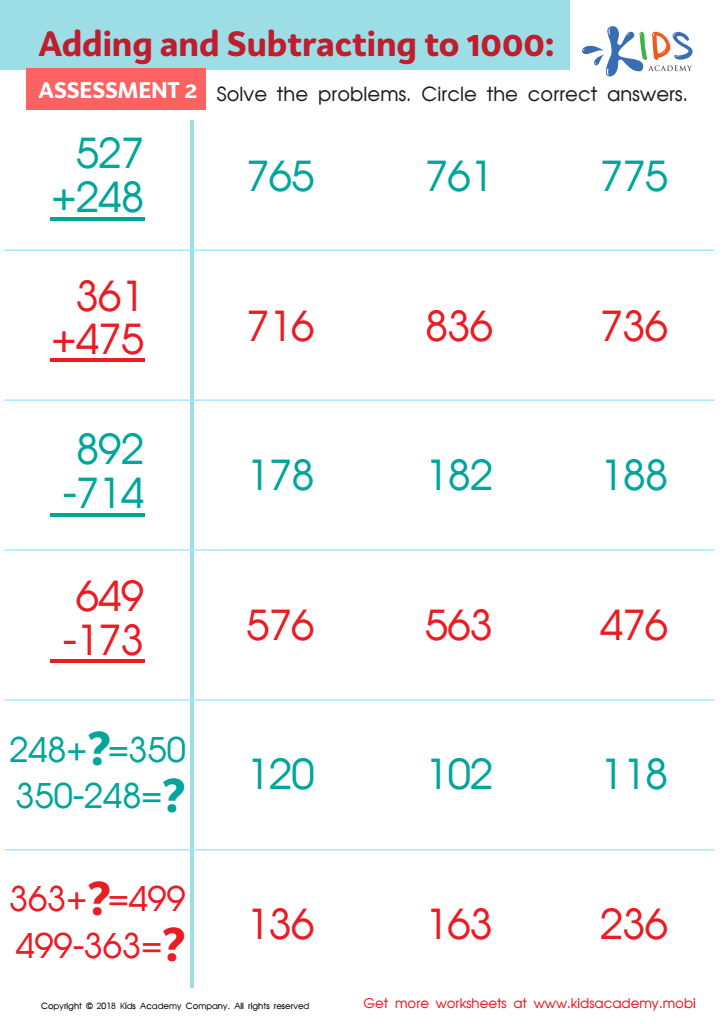
Adding and Subtracting to 1 Worksheet: Assessment 2
Test your child's addition and subtraction of 3-digit numbers with this assessment worksheet! They'll practice regrouping and pre-algebra skills to show their expertise. Have them work through the page and circle their answers, then see how many they got right to check their understanding and progress.
 Assign to My Students
Adding and Subtracting to 1 Worksheet: Assessment 2
Worksheet
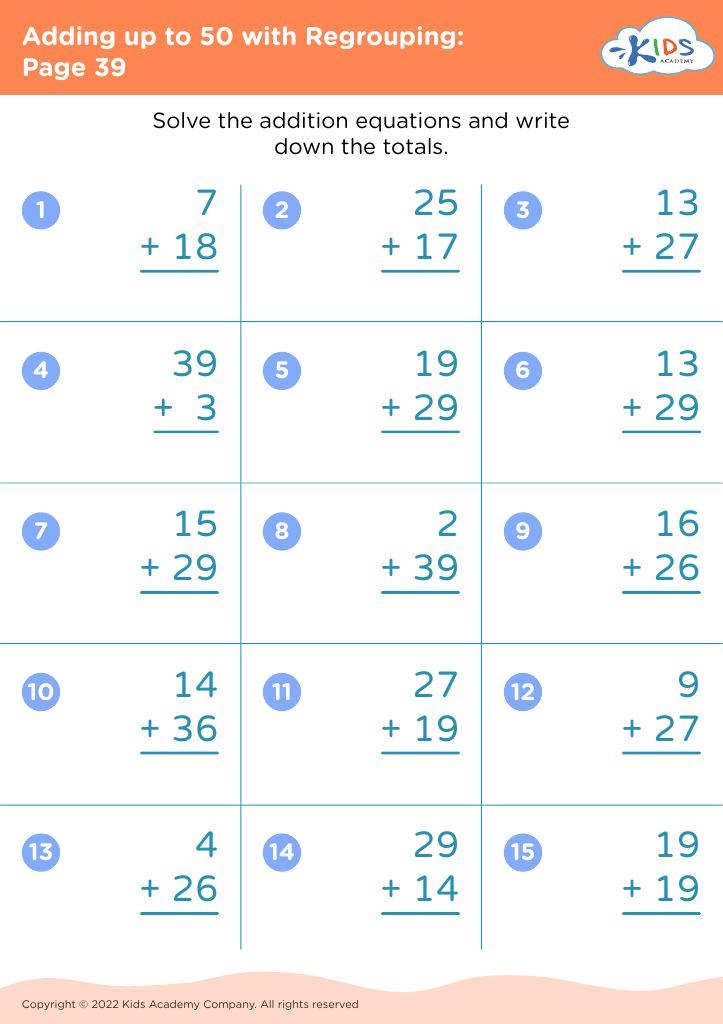
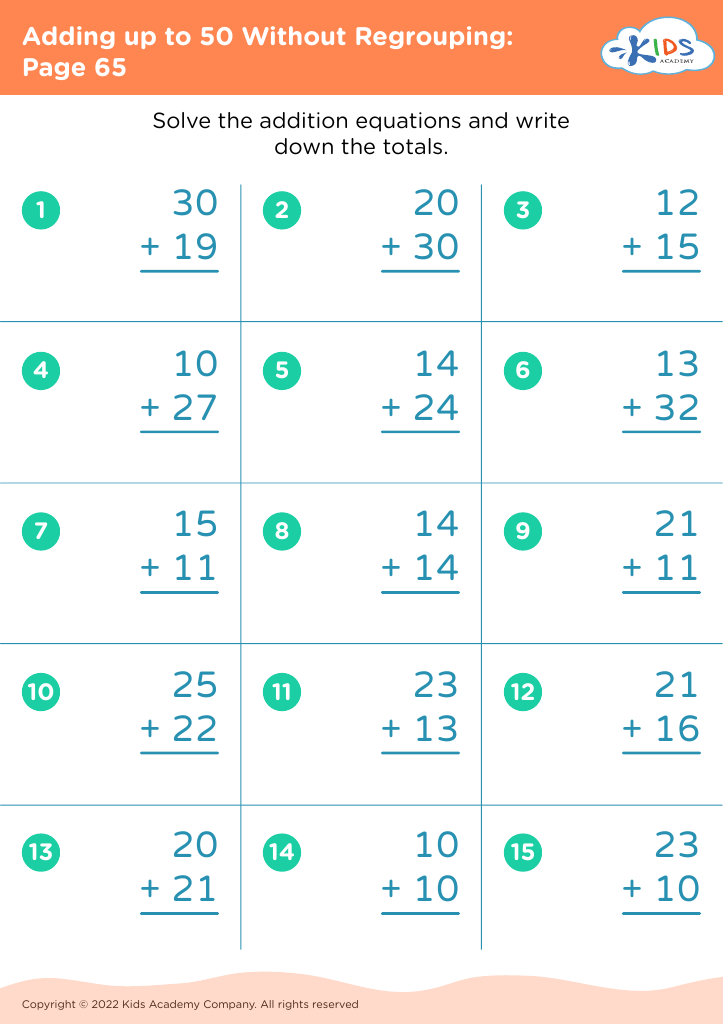
Join Kids Academy for Free
Who is primarily going to use this learning content?








Understanding and mastering the concepts of comparing fractions, addition, and subtraction are crucial for children aged 4-9, laying the foundation for their future mathematical skills. These skills are not only essential for academic success but also foster critical thinking and problem-solving abilities in young learners.
Parents and teachers should care about this because learning to compare fractions enhances children's ability to interpret and analyze different portions of a whole, essential in daily life situations, such as cooking or programming. It sets the stage for more advanced mathematical concepts they'll encounter later, such as ratios and decimals.
Moreover, mastering addition and subtraction of fractions at an early age builds confidence and a positive attitude towards mathematics. Engaging children through interactive activities like visual aids or games can make these concepts enjoyable and relatable. This active involvement supports retention and deep understanding.
Assessing children's grasp of these concepts enables caregivers to identify any misconceptions early on, allowing for timely intervention and tailored support. Ultimately, when parents and teachers prioritize these skills, they equip children with the necessary tools to succeed both in academics and real-world scenarios, building a solid mathematical foundation for the future.








