Fraction identification Addition & Subtraction Worksheets for Ages 4-9
5 filtered results
-
From - To
Discover our engaging Fraction Identification Addition & Subtraction Worksheets designed specifically for children aged 4-9. These interactive worksheets introduce young learners to the fundamental concepts of fractions while seamlessly integrating addition and subtraction practice. Each worksheet is thoughtfully crafted to boost children's comprehension and confidence in math through fun and colorful visuals. Perfect for homeschoolers, teachers, or parents, our resources help kids build essential math skills in an enjoyable way. Encourage your child's love for learning with our age-appropriate exercises that promote critical thinking, problem-solving, and a solid foundation in fractions. Start exploring our collection today and watch your child's math skills flourish!
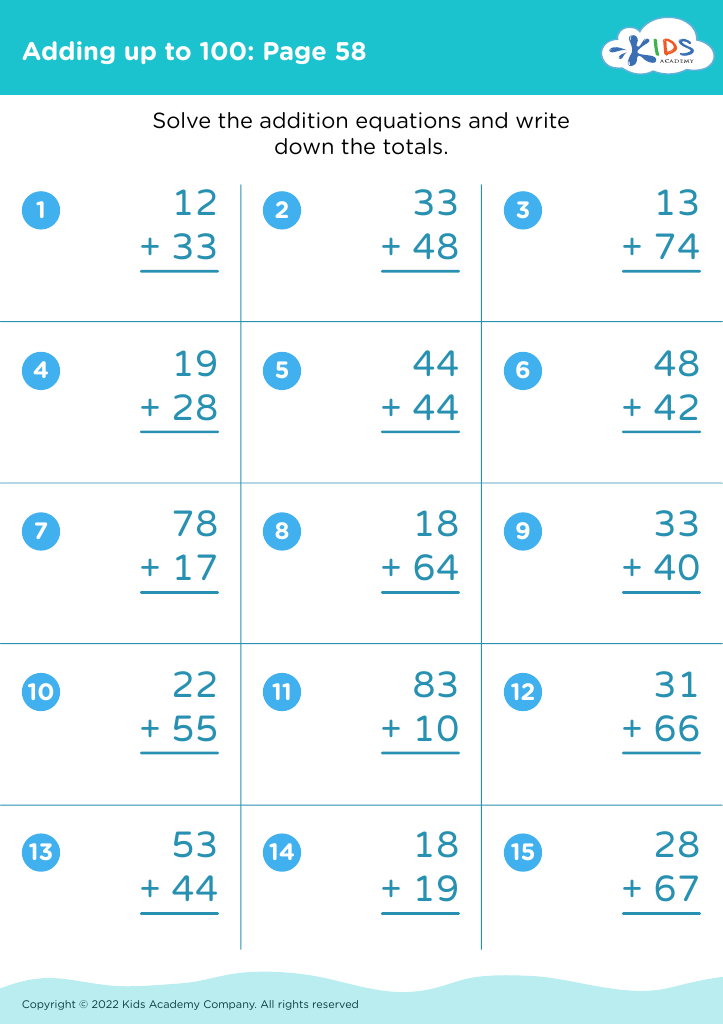








Fraction identification, addition, and subtraction play a crucial role in the foundational math skills of children aged 4-9. Understanding fractions enhances critical thinking and problem-solving abilities, which are essential for future mathematical success. Teaching children about fractions helps them grasp concepts such as part-to-whole relationships, a skill that is applicable in various real-life situations, from cooking to division of resources.
For parents and teachers, engaging children with fractions promotes a better comprehension of numbers and encourages mathematical reasoning. Early exposure to such concepts can demystify more complex mathematical operations introduced later in school, making the transition smoother. Moreover, fostering an interest in math at an early age can instill confidence and a positive attitude towards the subject.
Additionally, incorporating fraction activities into learning can lead to more participatory and hands-on experiences, keeping children engaged and motivated. Using visual aids such as pie charts or fractional pieces turns abstract concepts into tangible learning moments, making math enjoyable. Ultimately, by prioritizing fraction concepts in early education, parents and teachers lay a strong mathematical foundation, equipping children with essential skills that benefit them academically and in daily life situations.








