Learn addition Addition & Subtraction Worksheets for Ages 4-9
3 filtered results
-
From - To
Welcome to our "Learn Addition & Subtraction Worksheets" page, designed for children ages 4-9! Here, young learners can build a solid foundation in math through engaging and interactive worksheets. Our resources focus on helping kids understand key concepts of addition and subtraction with fun exercises that cater to various skill levels. From simple equations to more challenging problems, each worksheet promotes critical thinking and reinforces mathematical understanding. Perfect for home practice or classroom use, these worksheets ensure that learning math is enjoyable and effective. Empower your child’s learning journey today with our comprehensive set of addition and subtraction worksheets!
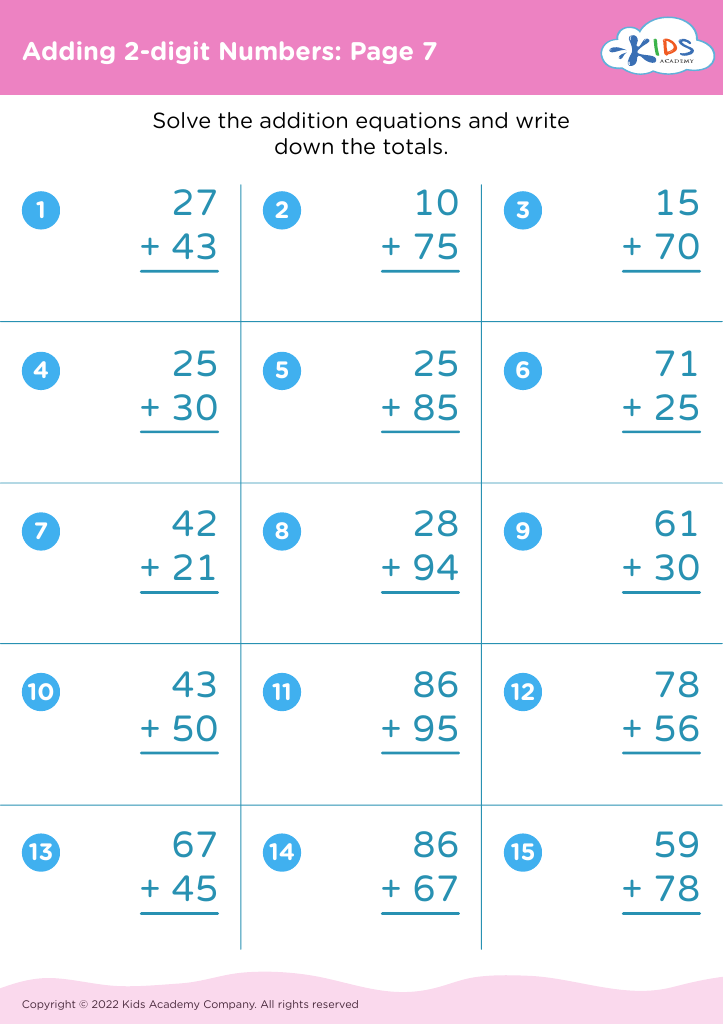
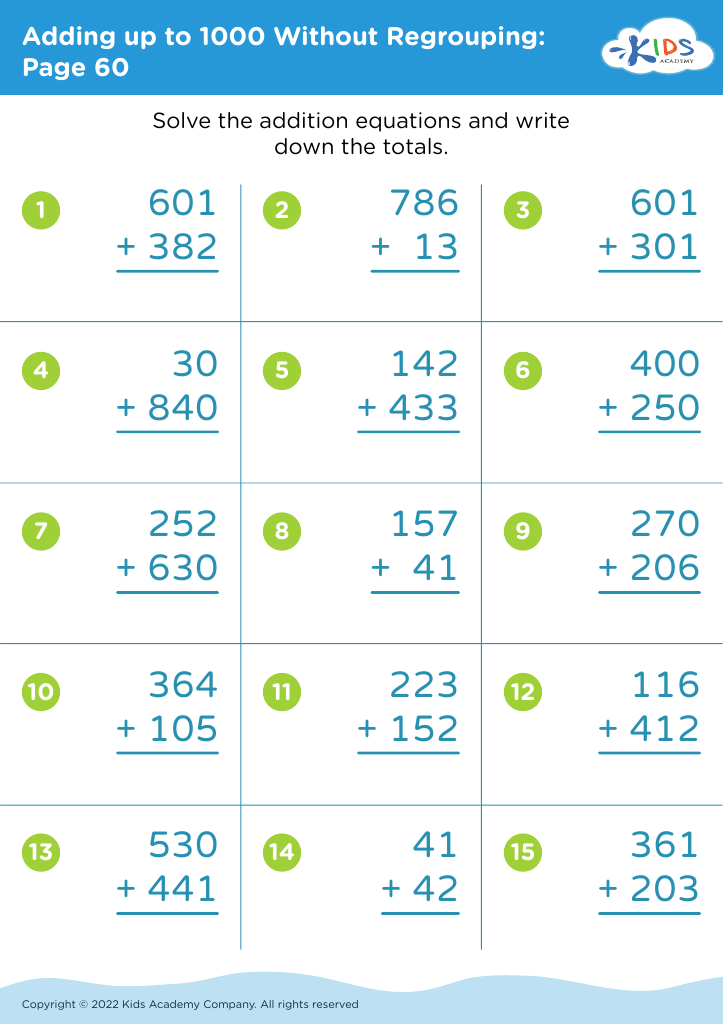
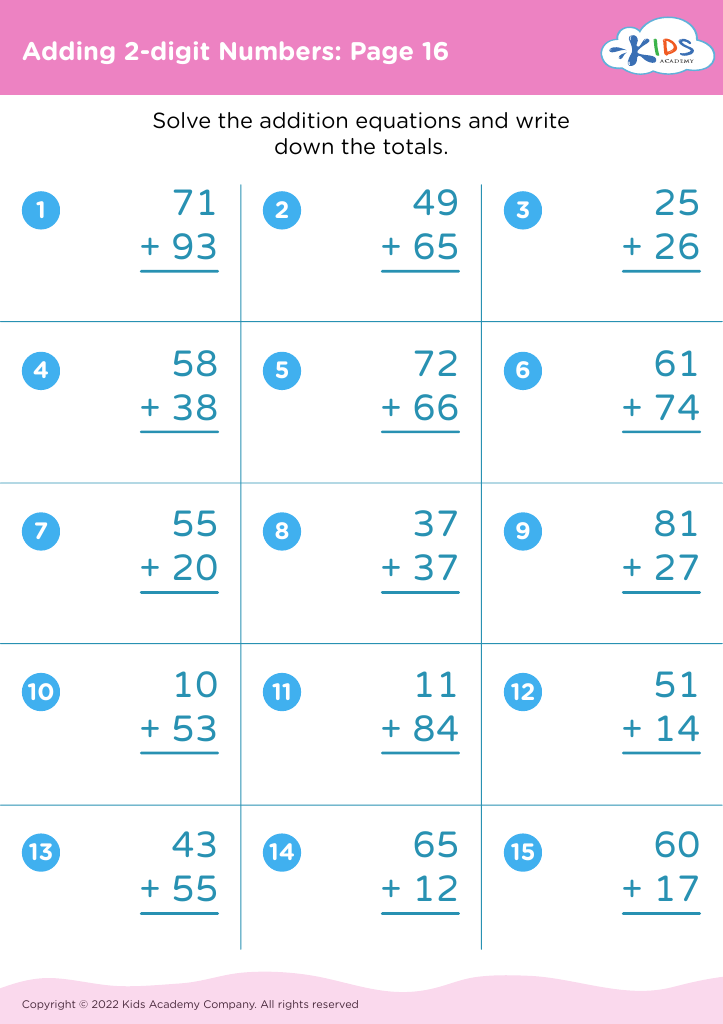








Parents and teachers should prioritize teaching addition and subtraction to children aged 4-9 because these foundational skills are crucial for future academic success and daily life. At this young age, children are like sponges, eager to absorb new concepts. Mastering basic arithmetic fosters their cognitive development and enhances critical thinking skills. Understanding addition and subtraction lays the groundwork for more complex mathematical concepts, such as multiplication and division, that they will encounter as they progress through school.
Moreover, proficient math skills from an early age build children's confidence and self-esteem. When they can successfully solve problems, they feel a sense of accomplishment, encouraging a positive attitude towards learning. Math is not just an academic subject; it permeates everyday activities, from shopping to cooking, helping children understand their world better. Additionally, these skills promote important life skills such as logical reasoning, problem-solving, and decision-making.
Finally, as mathematics education plays a pivotal role in shaping future careers—particularly in STEM (Science, Technology, Engineering, and Mathematics)—initiating this learning early ensures that children are well-prepared for higher-level concepts, paving the way for greater opportunities later in life. Engaging children in fun, hands-on experiences with addition and subtraction makes learning enjoyable and impactful.








