Number comparison Addition & Subtraction Worksheets for Ages 4-9
3 filtered results
-
From - To
Enhance your child's math skills with our expertly designed "Number Comparison Addition & Subtraction Worksheets for Ages 4-9" at Kids Academy. These engaging, age-appropriate activities help young learners master fundamental math concepts such as number comparison, addition, and subtraction. Our worksheets are crafted to make learning fun, strengthening critical thinking and problem-solving skills. Perfect for homeschooling, classroom use, or supplementary practice, each worksheet aims to build confidence and lay a strong arithmetic foundation. Download now and watch your child's math abilities soar with Kids Academy!
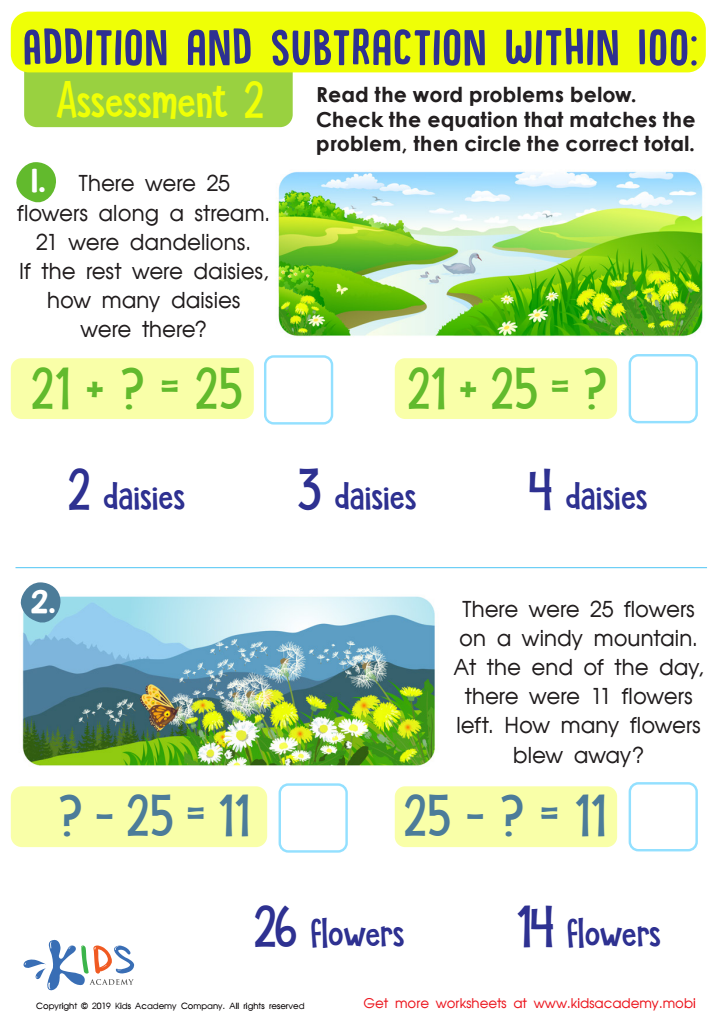
Assessment 2 Math Worksheet
 Assign to My Students
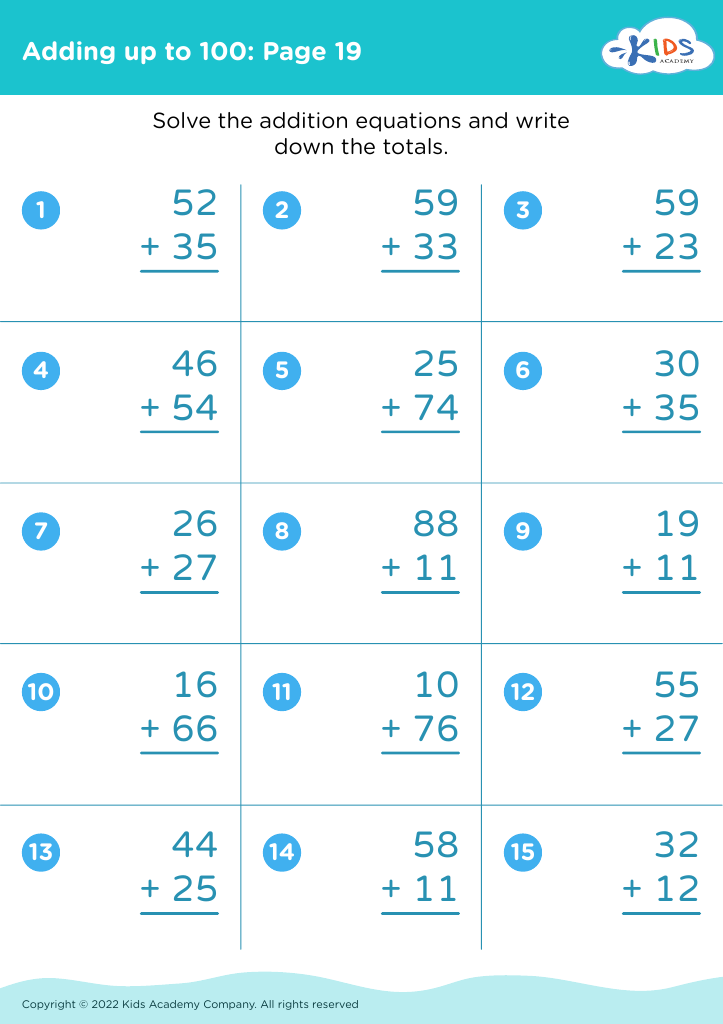
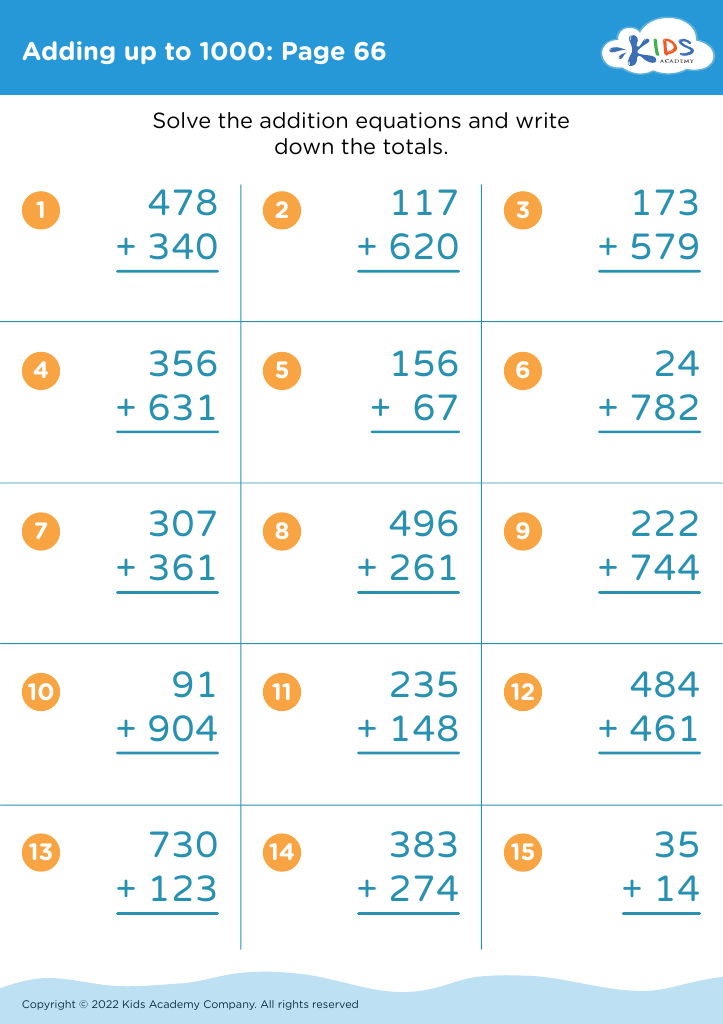








Parents and teachers should prioritize number comparison and basic arithmetic skills in children aged 4-9 because these form the groundwork for all future math learning. At these ages, children's brains are particularly receptive to new information, making it the ideal time to instill foundational skills.
Number comparison (understanding which numbers are greater or smaller) is essential for developing a child's number sense, which helps them understand the relationships between numbers. This skill is not only crucial for everyday tasks like comparing quantities but also underlies more advanced math concepts.
Addition and subtraction, the building blocks of arithmetic, teach children about the operations and properties of numbers. Through these basic operations, children learn how to manipulate numbers, which is critical for problem-solving. Establishing a strong grasp in these areas builds confidence and promotes a positive attitude toward math, which can diminish math-related anxiety and foster a love for the subject.
Moreover, proficiency in these basic math skills benefits cognitive development, enhancing logical reasoning, and critical thinking skills. As math is integrated into daily life, a solid understanding empowers children to make better-informed decisions and develops skills essential for academic success and future careers. Therefore, engagement in these foundational math activities is vital for the holistic development of a young child.








