Recognize shapes Addition & Subtraction Worksheets for Ages 4-9
9 filtered results
-
From - To
Unlock the potential of early math learners with our "Recognize Shapes Addition & Subtraction Worksheets" designed for ages 4-9. These engaging activities skillfully blend fundamental math operations with shape recognition, fostering a dual approach to cognitive development. Each worksheet provides a colorful and stimulating challenge that enhances mathematical thinking and visual spatial skills. Our expertly crafted exercises cater to kindergartners through third graders, ensuring progressive learning aligned with educational standards. Ideal for classroom and home practice, these worksheets create a solid foundation for your child's mathematical journey. Boost confidence and interest in math with Kids Academy's innovative resources!
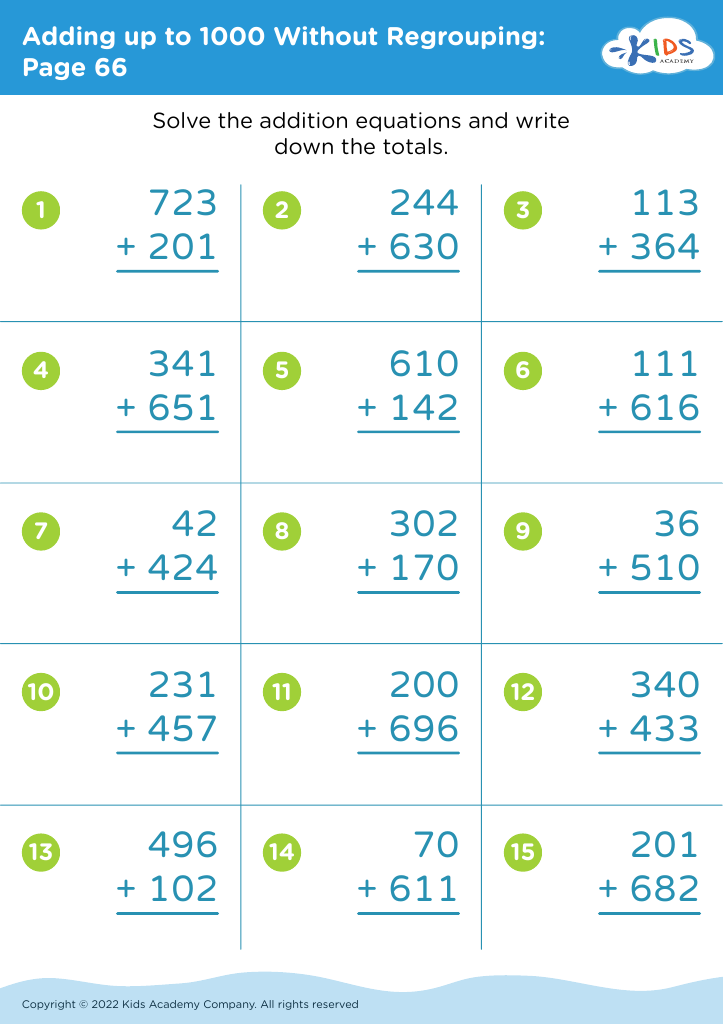
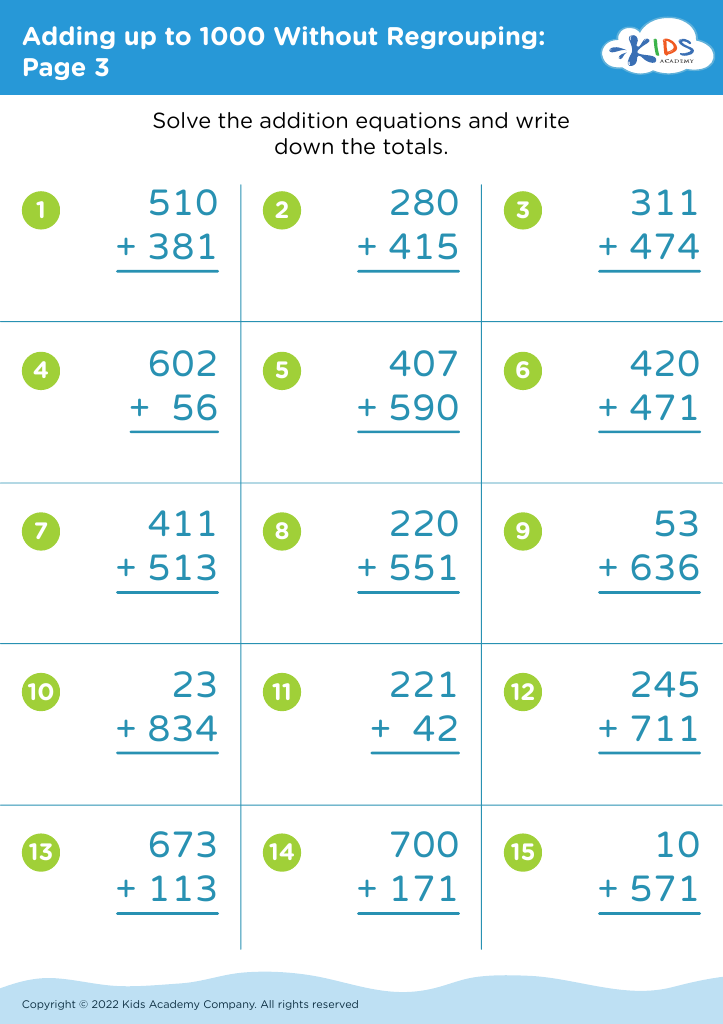
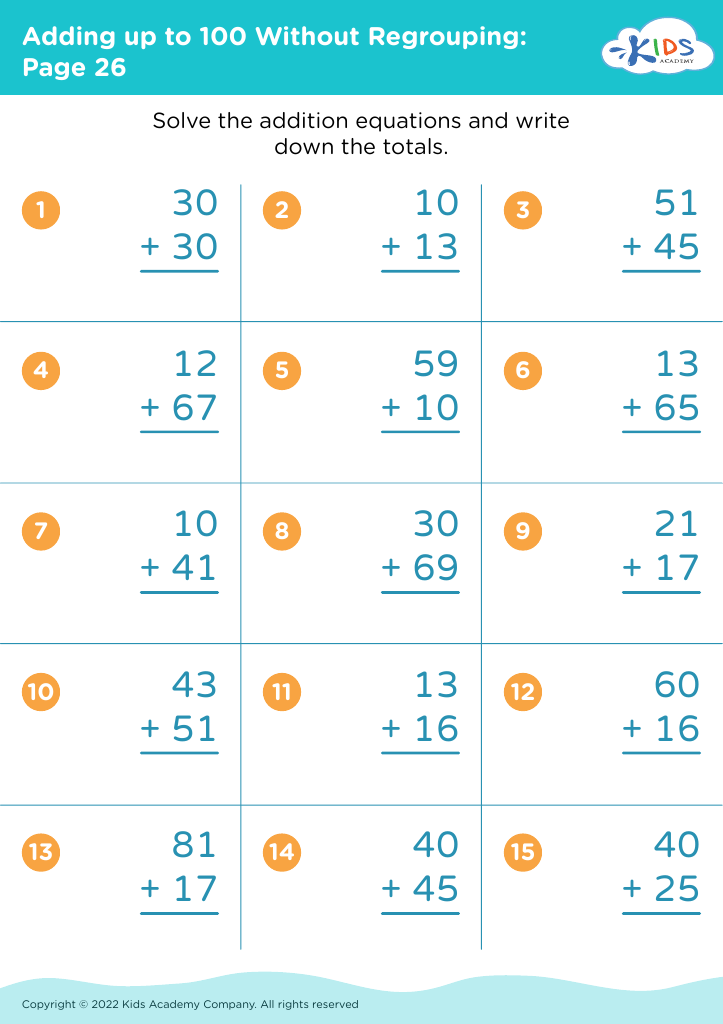
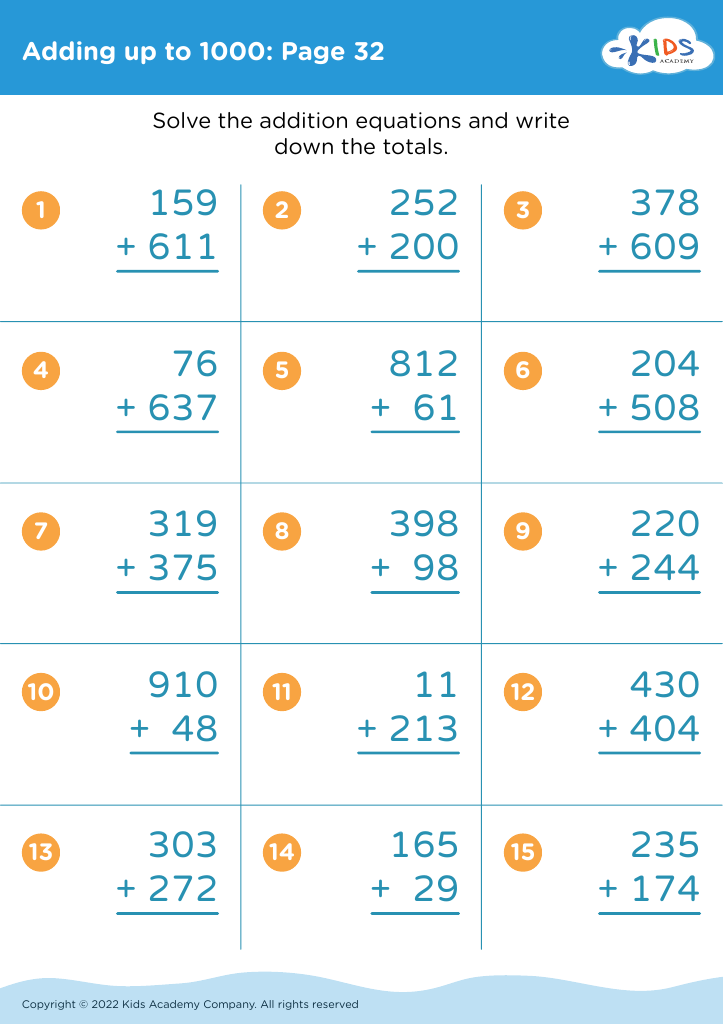
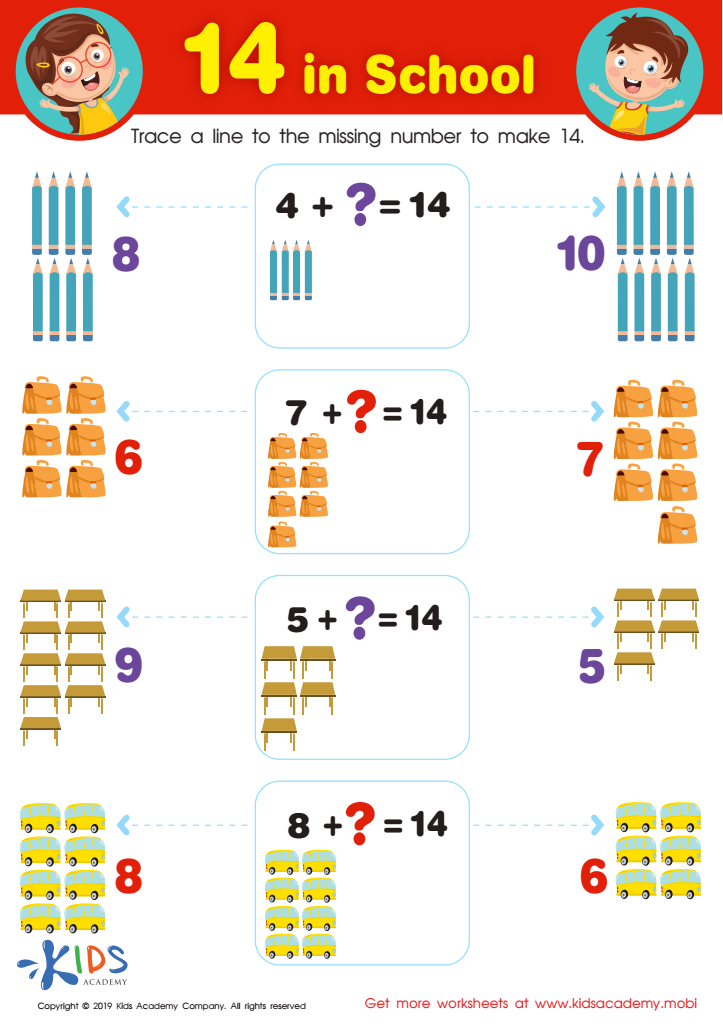
14 in School Worksheet
 Assign to My Students
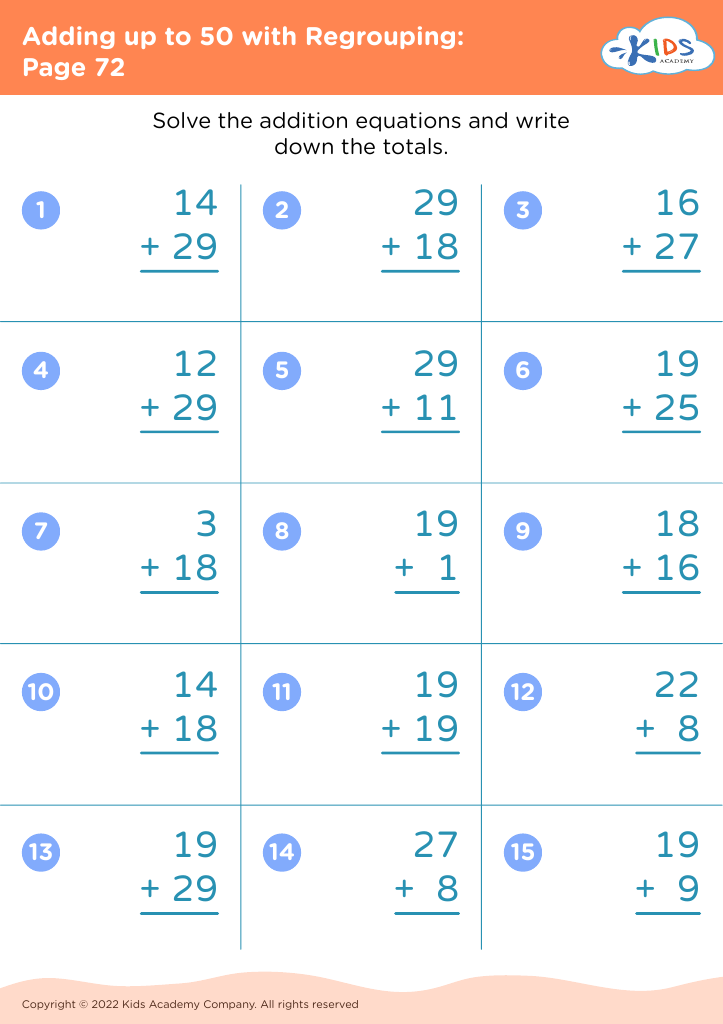








Parents and teachers should care deeply about children in the age range of 4-9 recognizing shapes and mastering basic addition and subtraction because these foundational skills are essential for cognitive development and future academic success. Recognizing shapes like circles, squares, and triangles helps young learners to develop spatial awareness, a critical skill in geometry and everyday problem solving. This spatial awareness is also linked to improved skills in areas such as reasoning, navigation, and understanding abstract concepts.
Similarly, addition and subtraction are fundamental mathematical operations that form the basis for more advanced concepts. Proficiency in these areas enhances logical thinking, number sense, and the ability to make logical connections between different mathematical ideas. Encouraging a strong grasp of these basics enables children to tackle more complex arithmetic problems with confidence and curiosity as they progress in their education.
Additionally, early success in these domains fosters a positive attitude towards learning and boosts self-esteem. When children experience mastery in fundamental areas like shape recognition and basic arithmetic, it sets a strong foundation for lifelong learning and critical thinking skills. Thus, these early educational investments not only support children's academic growth but also contribute to their overall development as capable and confident individuals.








