Shape identification Addition & Subtraction Worksheets for Ages 4-9
14 filtered results
-
From - To
Explore our engaging Shape Identification Addition & Subtraction Worksheets designed for children ages 4-9! These interactive worksheets combine essential math skills with fun shape recognition, making learning enjoyable and effective. Perfect for enhancing young learners’ abilities, our resources provide a variety of exercises that help children identify shapes while practicing addition and subtraction. Each worksheet encourages critical thinking and reinforces foundational math concepts through colorful visuals and exciting activities. Whether you're a teacher or a parent, these worksheets are ideal for daily practice, homework, or classroom settings. Equip your child with essential skills and watch their confidence soar in mathematics!
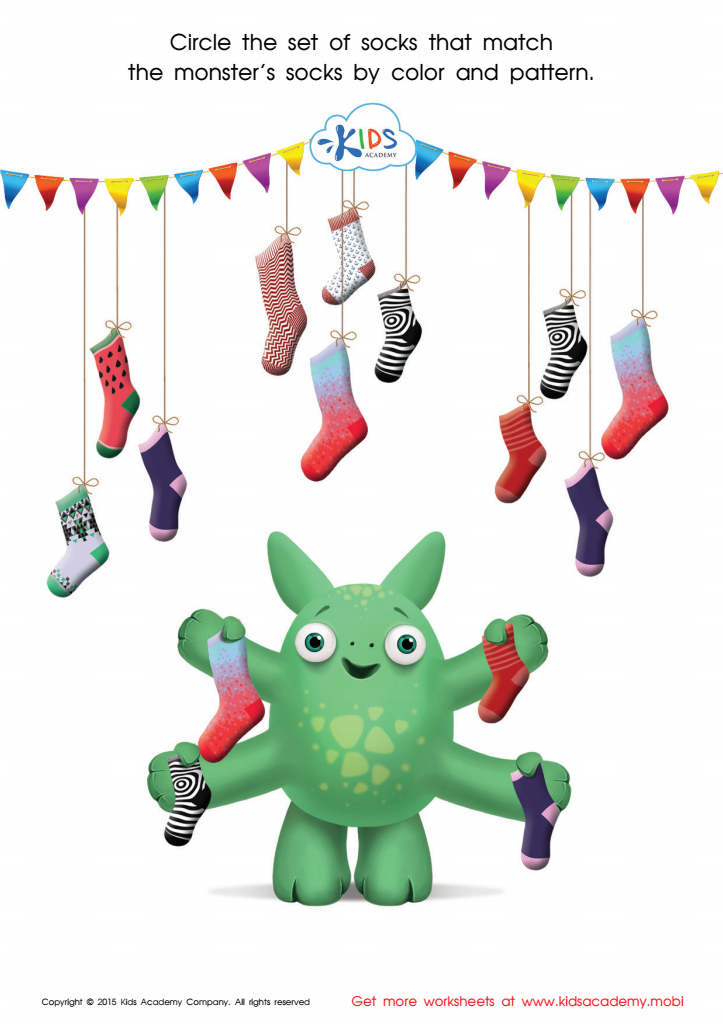
Sort the Monster's Socks Worksheet
 Assign to My Students








Shape identification and foundational addition and subtraction are crucial elements of early childhood education for children aged 4-9. Understanding shapes helps develop spatial awareness, which enhances problem-solving and critical thinking skills. Recognizing various shapes lays the groundwork for more complex mathematical concepts as children grow, fostering cognitive development that is essential for overall learning.
Addition and subtraction, on the other hand, are fundamental skills that create a basis for all future math learning. Early exposure to these operations through engaging activities encourages numerical fluency, boosts confidence, and nurtures a positive attitude towards math. When children grasp these concepts, they are better equipped to handle daily life tasks such as budgeting, sharing, or planning.
Furthermore, these skills are interlinked; for instance, activities that involve counting and sorting shapes can naturally integrate mathematical reasoning. By emphasizing these areas, parents and teachers promote holistic development—cognitive, social, and emotional—inspiring curiosity and a love for learning.
Ultimately, parents and teachers should care about shape identification and the basic operations of addition and subtraction because they serve as stepping stones to future academic success, equipping children with essential life skills that extend beyond the classroom.








