Filters

34 filtered results

Clear all filters
Favorites
With answer key
Interactive

34 filtered results

Difficulty Level

Grade


Shape Recognition Addition & Subtraction Worksheets for Ages 4-9 offer a fun and educational way to strengthen young learners' math skills. Designed for children aged 4-9, these engaging worksheets blend essential math concepts with shape recognition, helping kids grasp addition and subtraction more effectively. The vibrant and interactive activities encourage hands-on learning, making math practice enjoyable while building a solid foundation for future mathematical success. Perfect for parents and teachers, these worksheets not only enhance calculation skills but also promote critical thinking and visual discrimination, fostering a well-rounded approach to early education. Discover a smarter way to learn math today!
Check out this FREE Trial Lesson on Addition & Subtraction for age 4-9!

Short and Long Vowel Sort

Favorites
With answer key
Interactive
  • 4-9
  • Shape Recognition
  • Addition & Subtraction
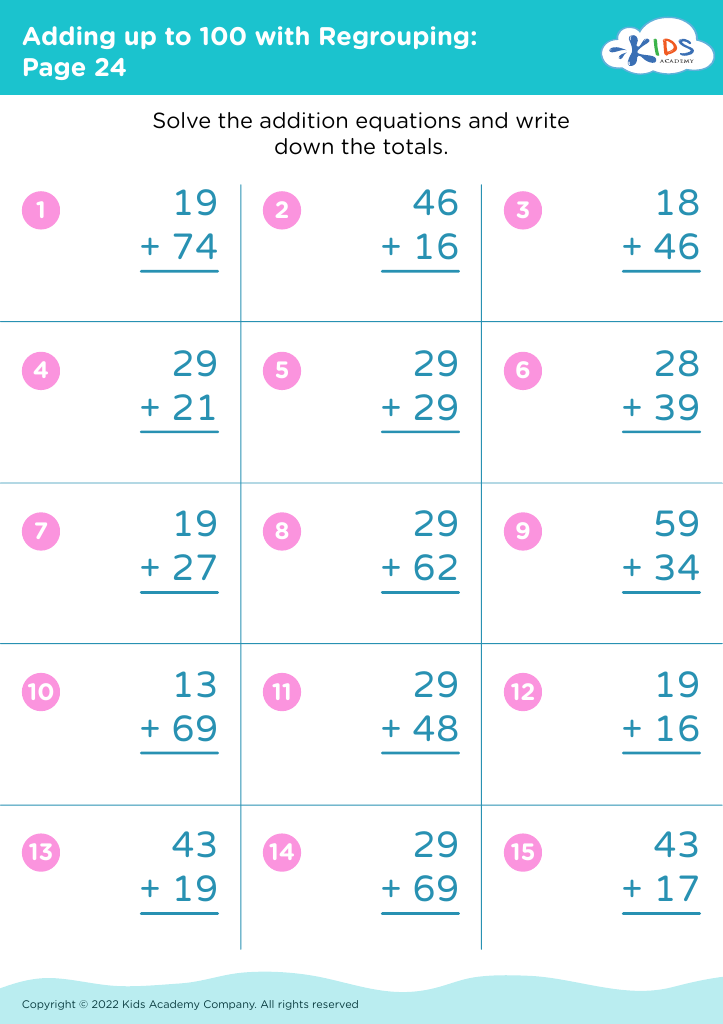
Adding up to 100 with Regrouping: Page 24
Worksheet
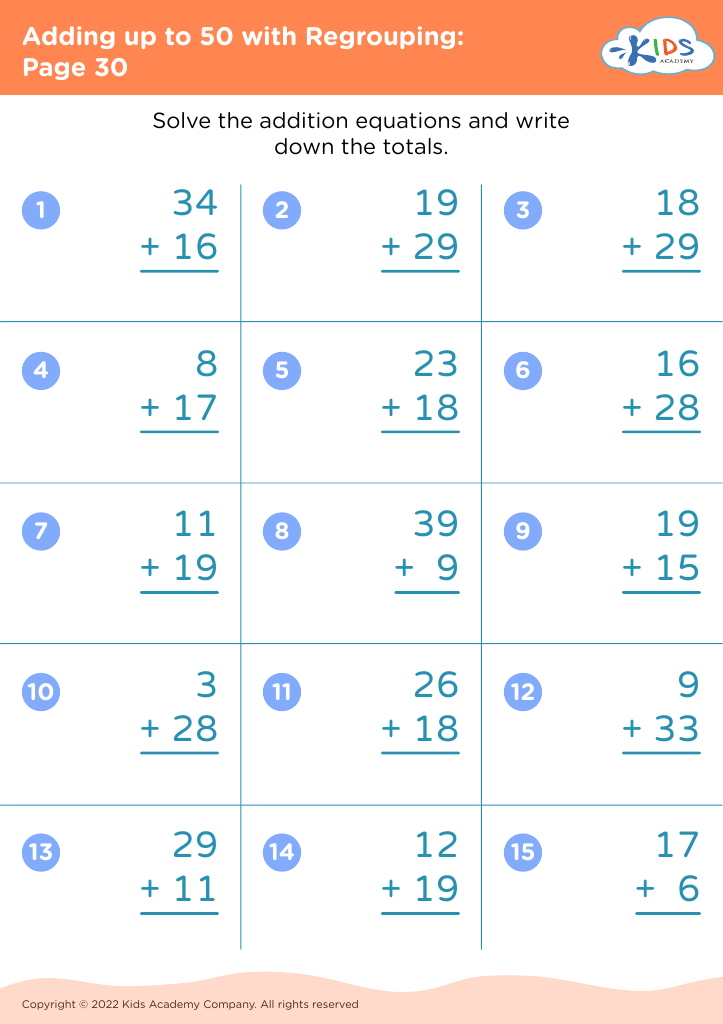
Adding up to 50 with Regrouping: Page 30
Worksheet
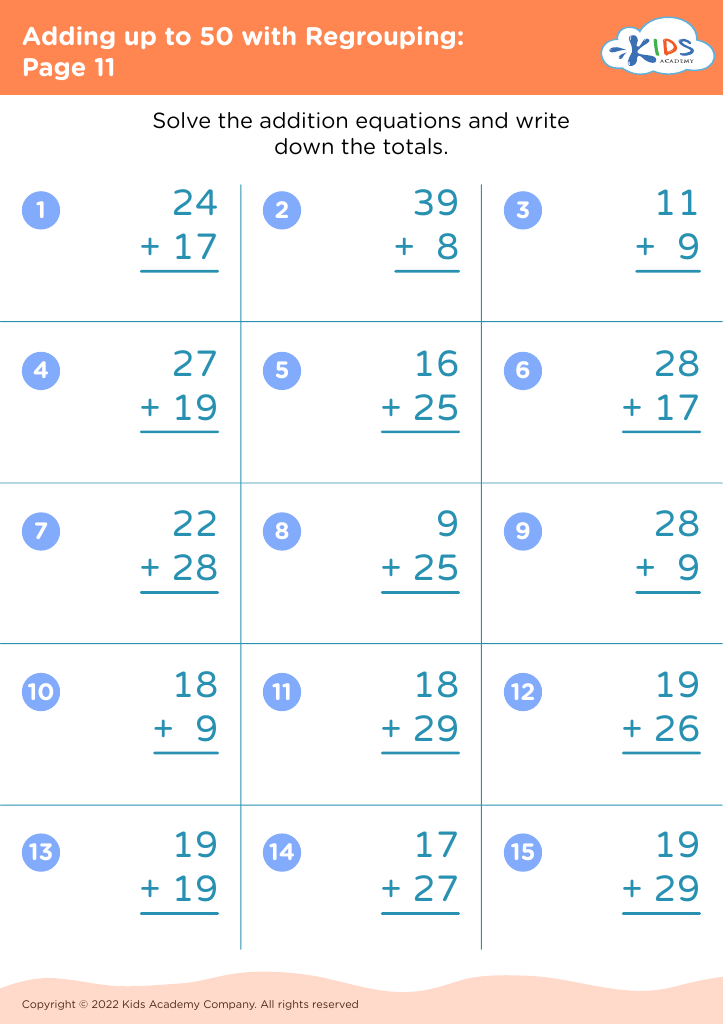
Adding up to 50 with Regrouping: Page 11
Worksheet
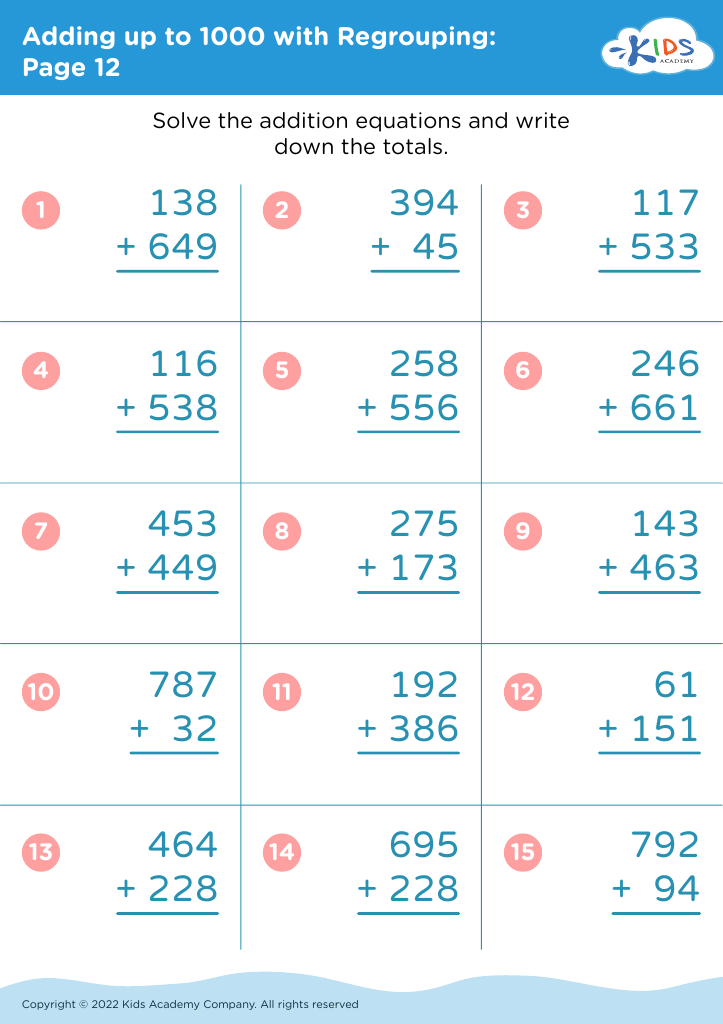
Adding up to 1000 with Regrouping: Page 12
Worksheet
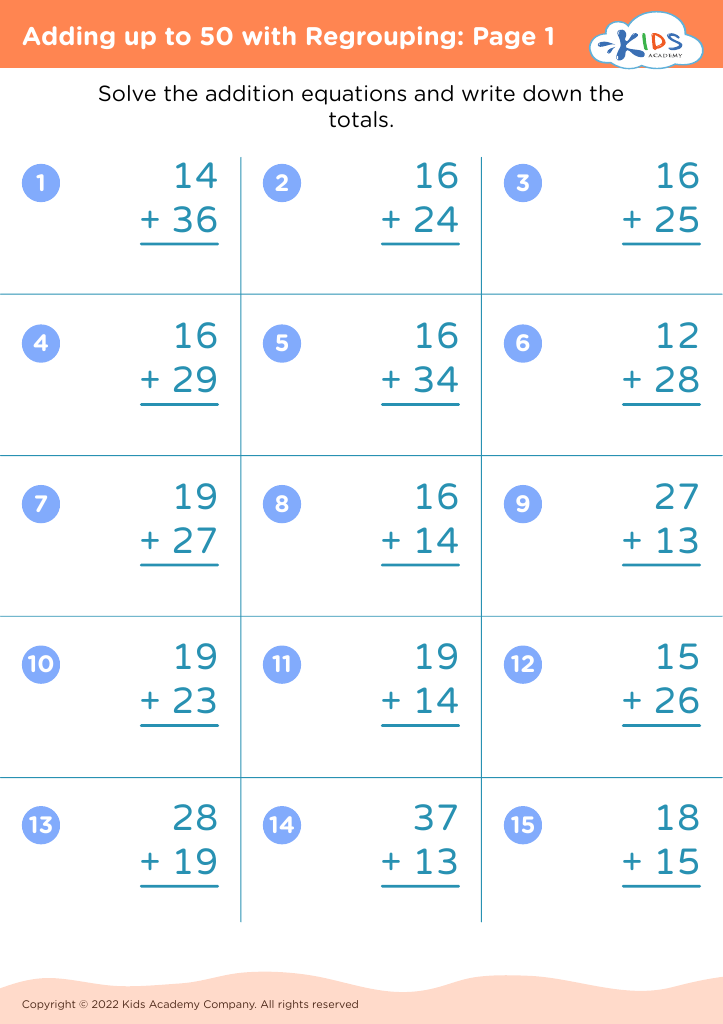
Adding up to 50 with Regrouping: Page 1
Worksheet
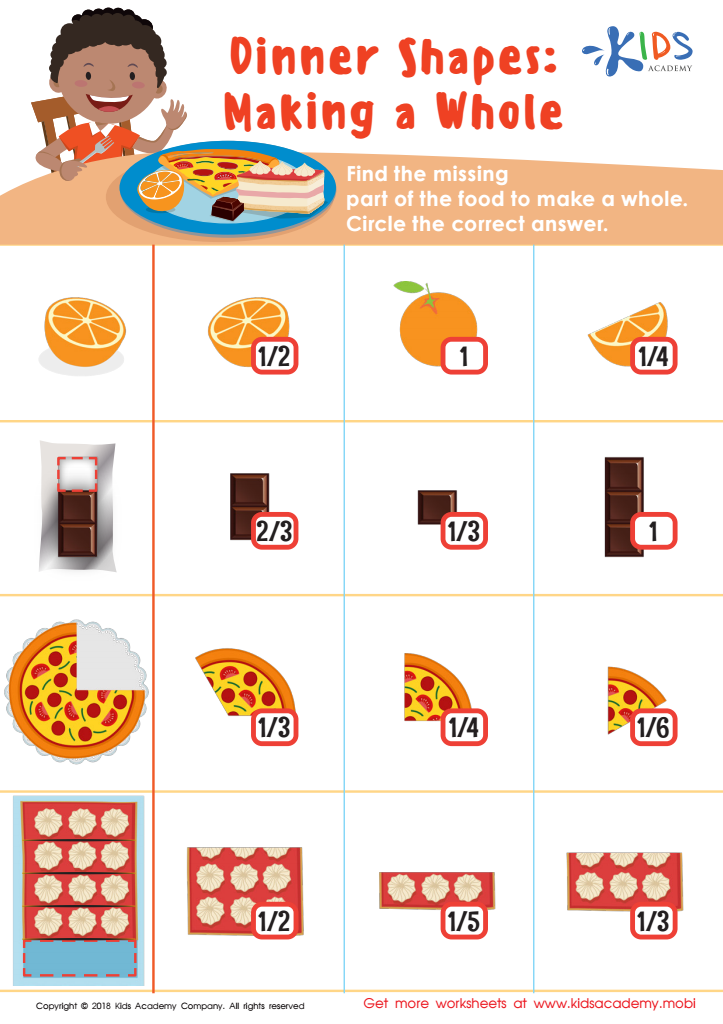
Dinner Shapes: Making a Whole Worksheet

Dinner Shapes: Making a Whole Worksheet

Using food and snacks to stimulate learning and interest in topics is a great strategy. Fractions can prove tricky, but this worksheet can help your child become an expert. Have them look for the missing parts of the food to make a whole, then circle the answer.
Dinner Shapes: Making a Whole Worksheet
Worksheet
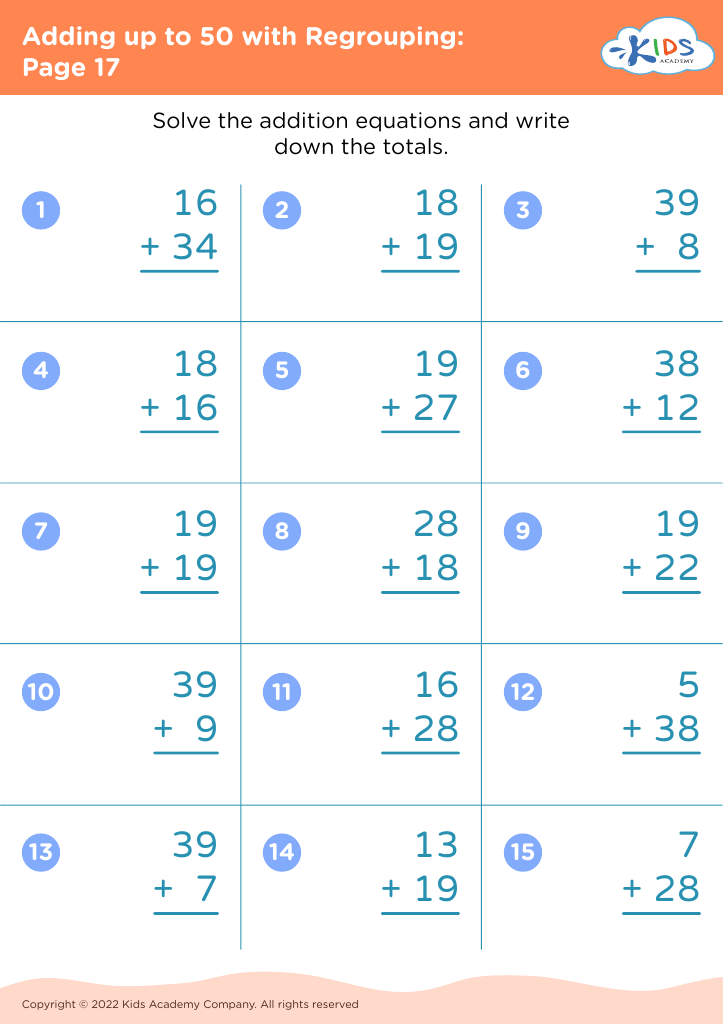
Adding up to 50 with Regrouping: Page 17
Worksheet
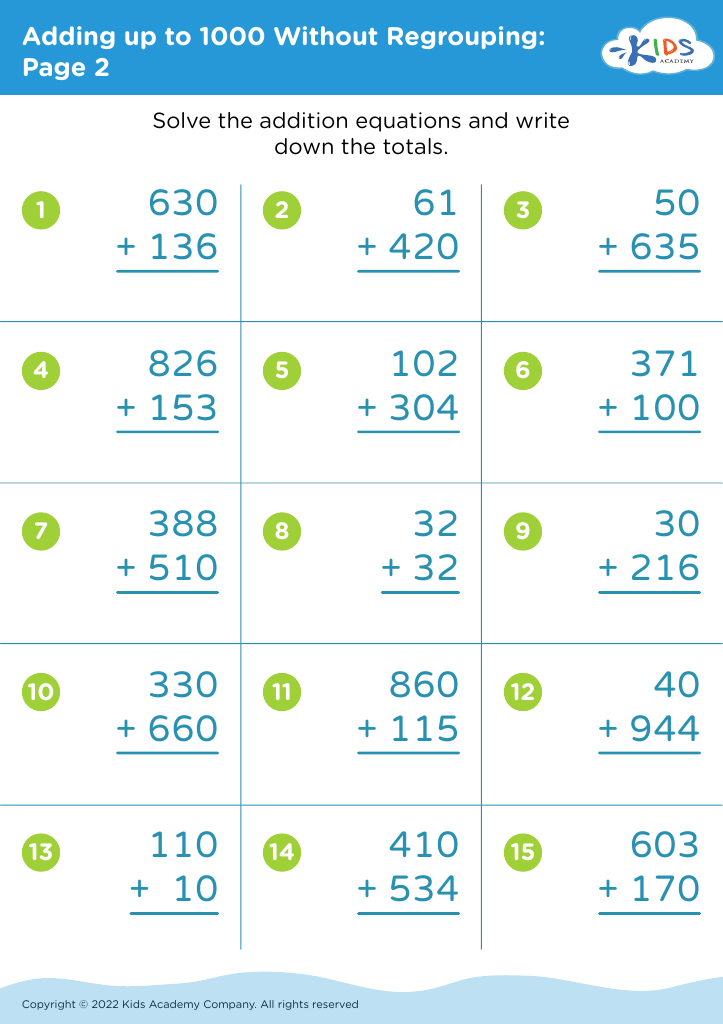
Adding up to 1000 Without Regrouping: Page 2
Worksheet
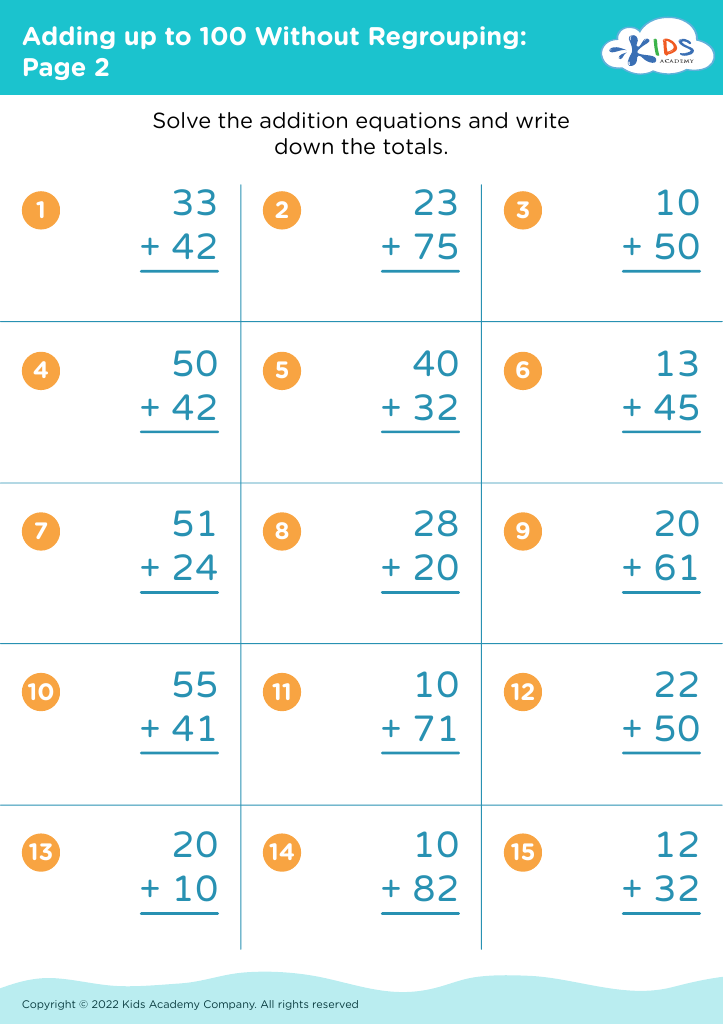
Adding up to 100 Without Regrouping: Page 2
Worksheet
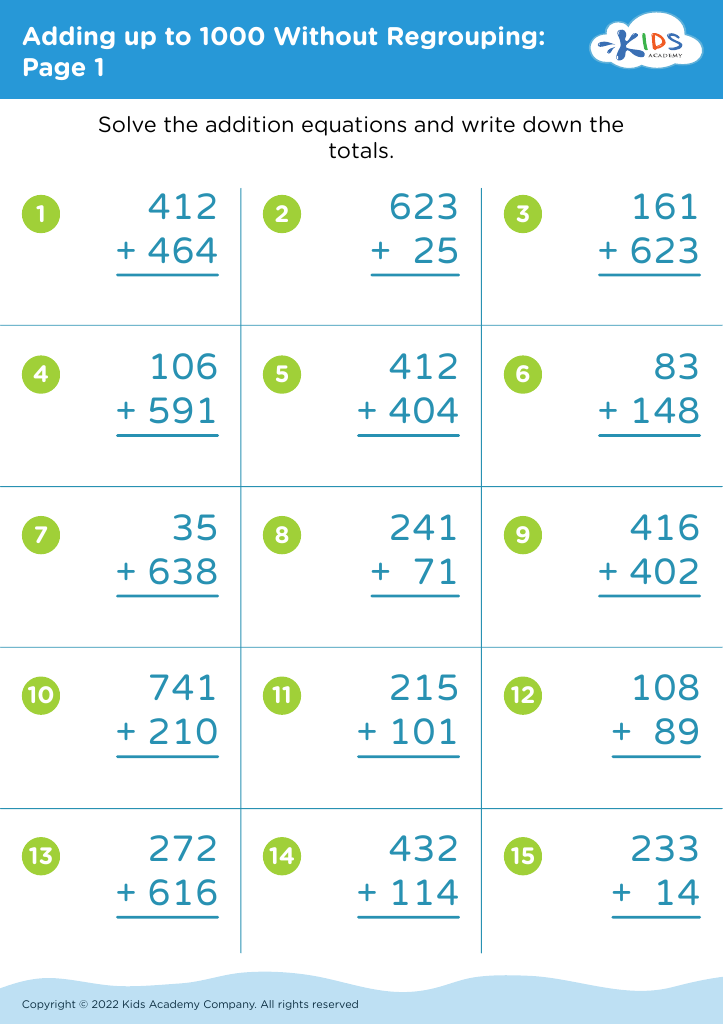
Adding up to 1000 Without Regrouping: Page 1
Worksheet
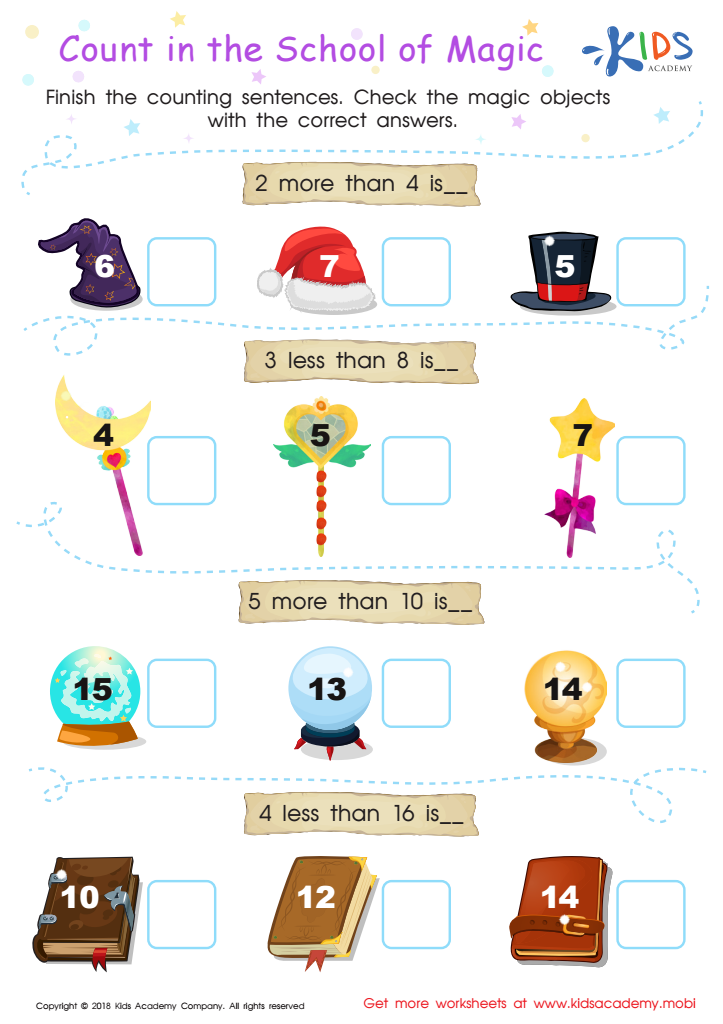
Count in the School of Magic Worksheet

Count in the School of Magic Worksheet

Your math learners can explore the School of Magic with this worksheet. They'll read equations with addition and subtraction numbers under 20, count back and forth to find the answer, then complete the counting sentences. Fun pictures and easy accuracy make it an enjoyable and successful learning experience.
Count in the School of Magic Worksheet
Worksheet
Adding With Longs and Cubes Worksheet
Adding With Longs and Cubes Worksheet
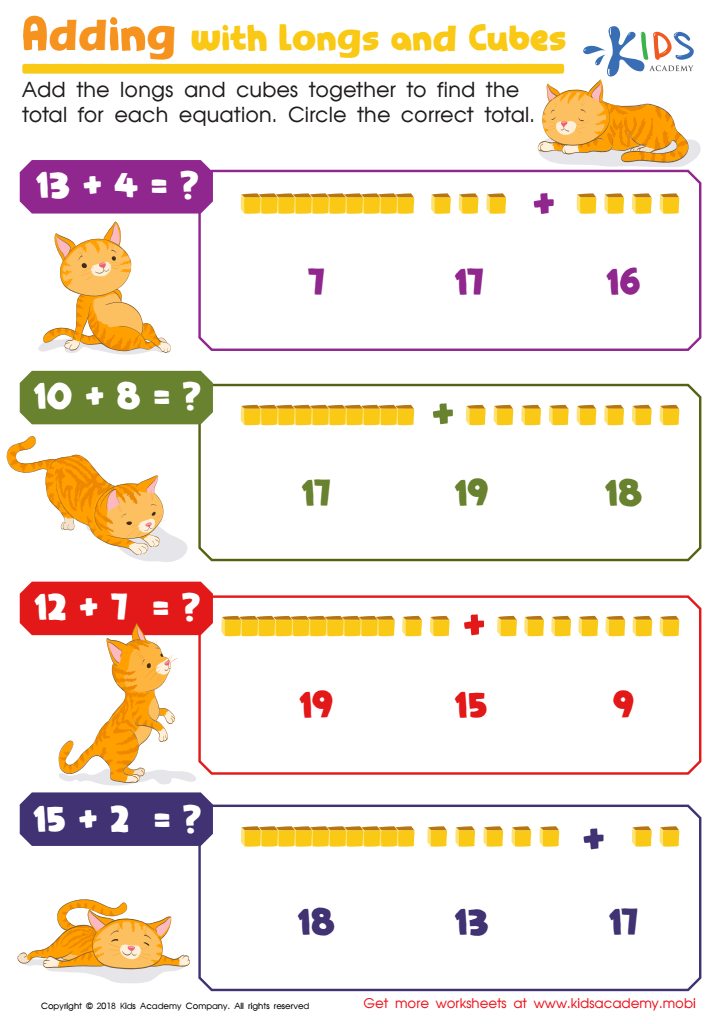
Math might not be your child's favorite, but they must master it to advance. If they're having difficulties or don't like it, use this worksheet to make it easier. Have them add longs and cubes together to find the total for each question, then circle the correct answer. This exercise can help make math experiences better.
Adding With Longs and Cubes Worksheet
Worksheet
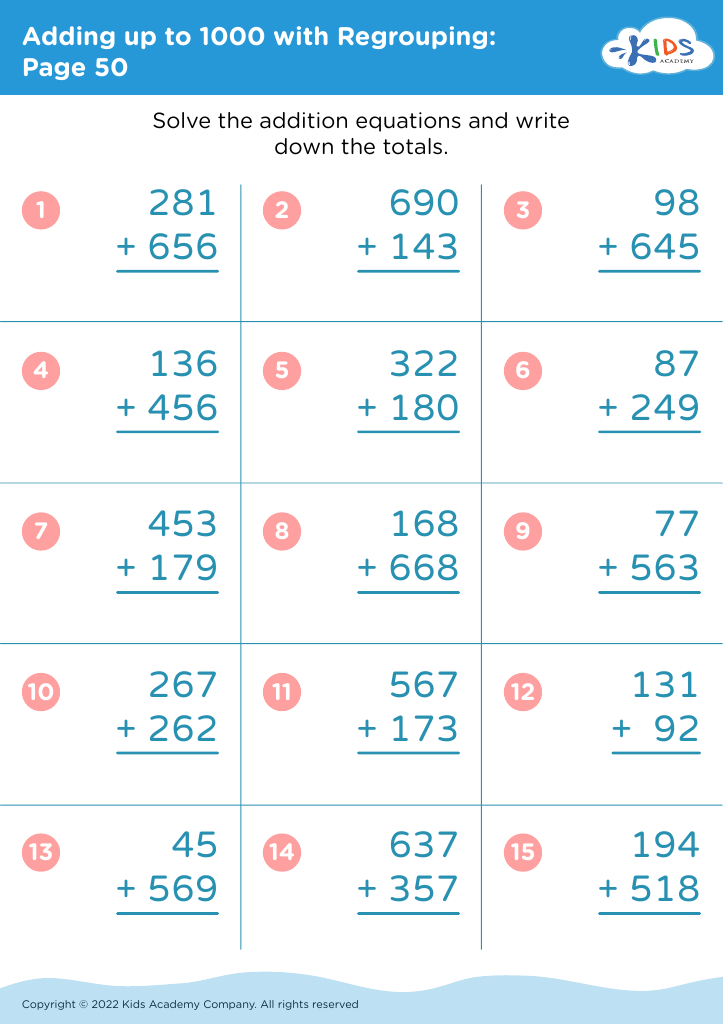
Adding up to 1000 with Regrouping: Page 50
Worksheet
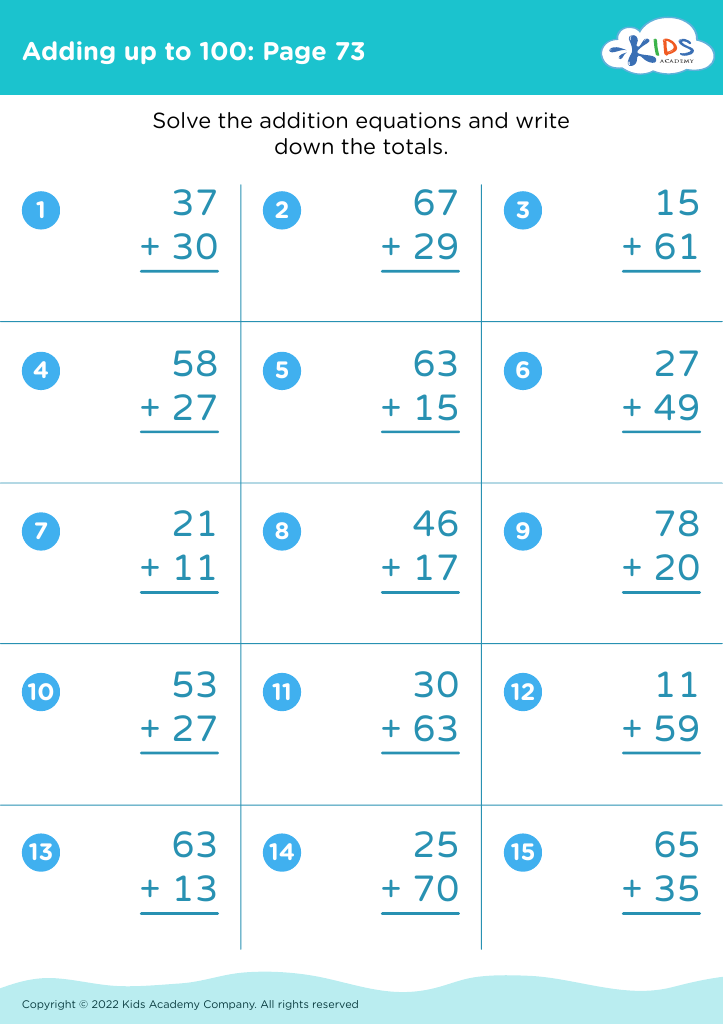
Adding up to 100: Page 73

Adding up to 100: Page 73

Adding up to 100: Page 73
Worksheet
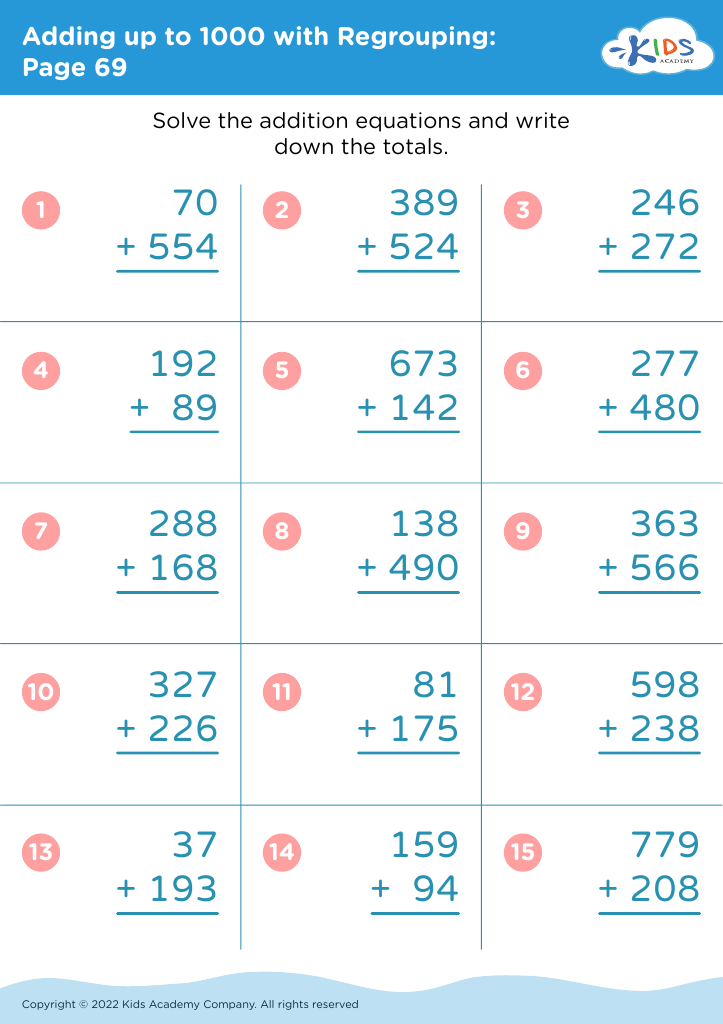
Adding up to 1000 with Regrouping: Page 69
Worksheet
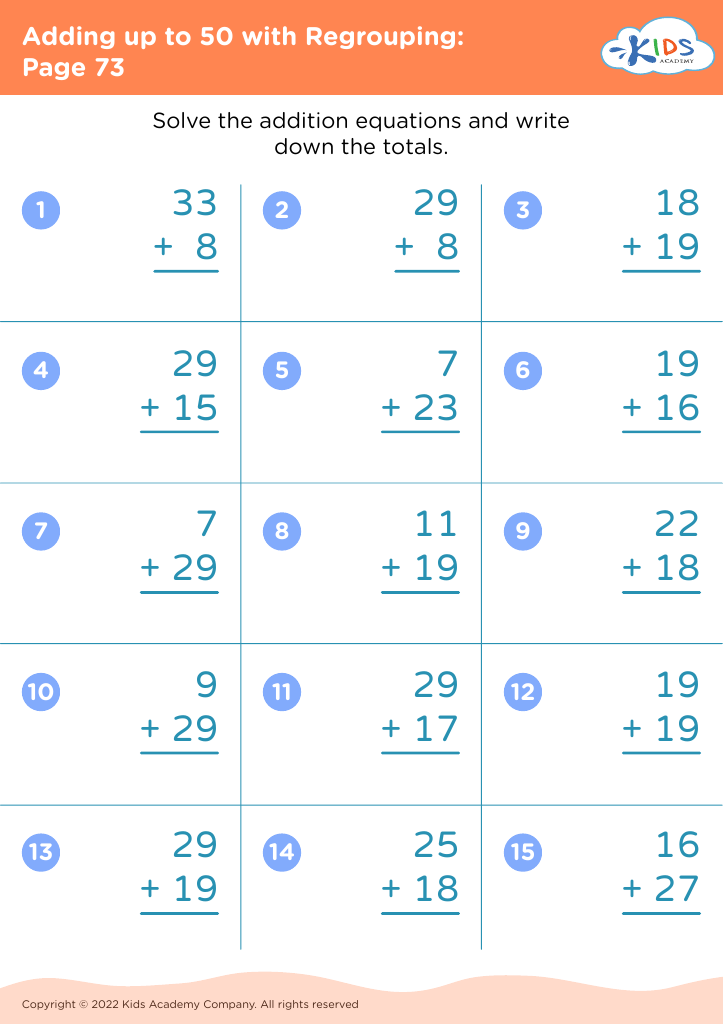
Adding up to 50 with Regrouping: Page 73
Worksheet
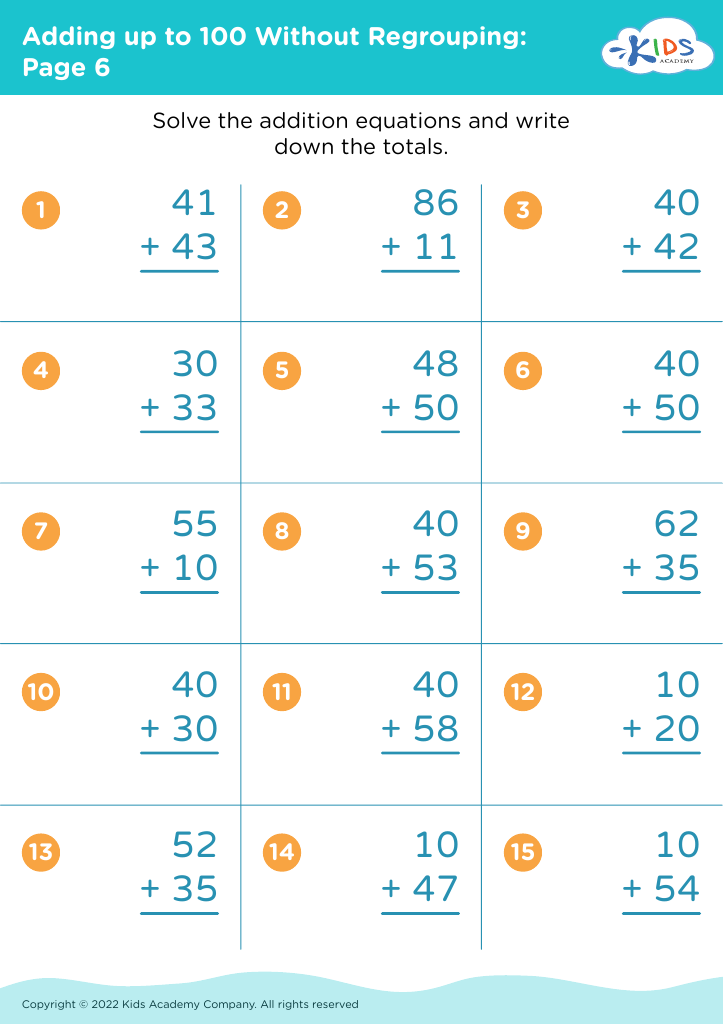
Adding up to 100 Without Regrouping: Page 6
Worksheet
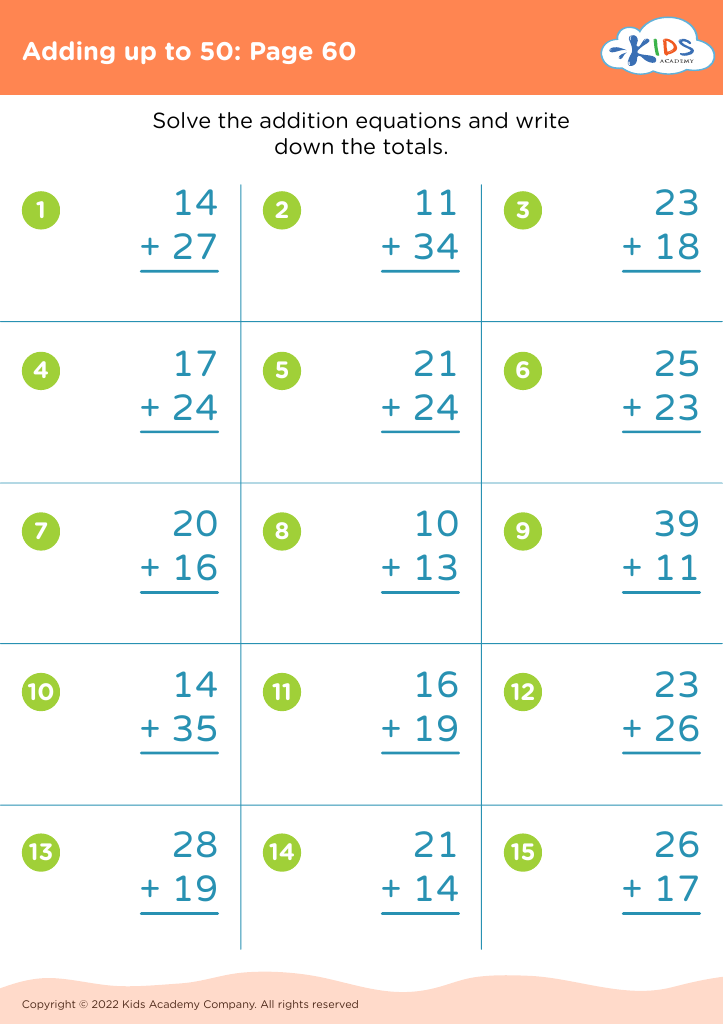
Adding up to 50: Page 60

Adding up to 50: Page 60

Adding up to 50: Page 60
Worksheet
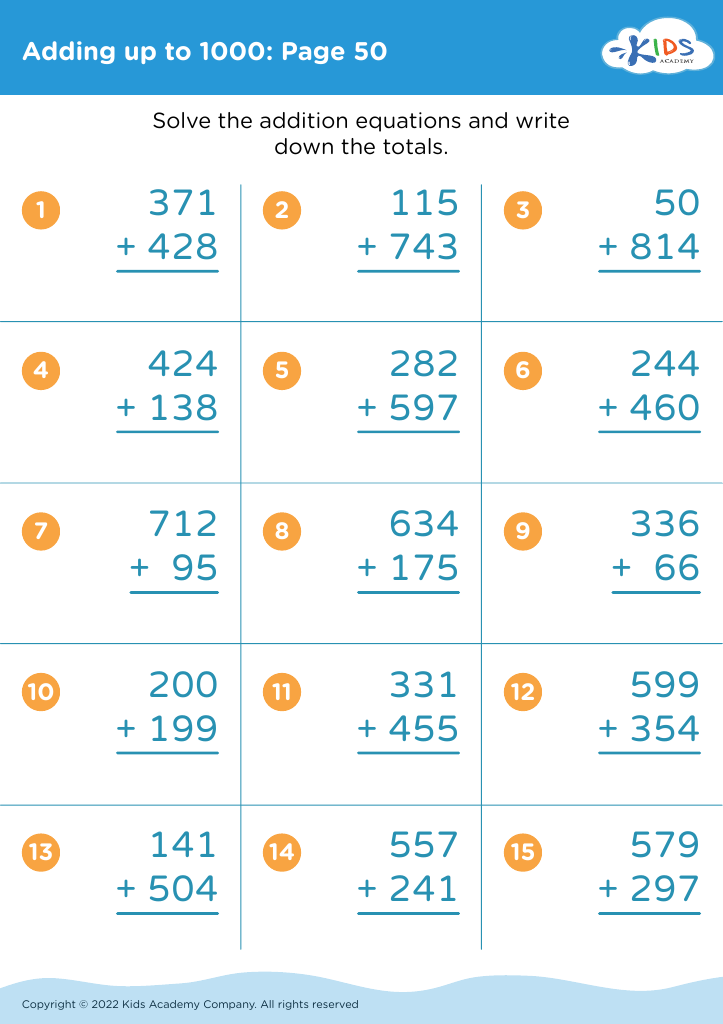
Adding up to 1000: Page 50

Adding up to 1000: Page 50

Adding up to 1000: Page 50
Worksheet
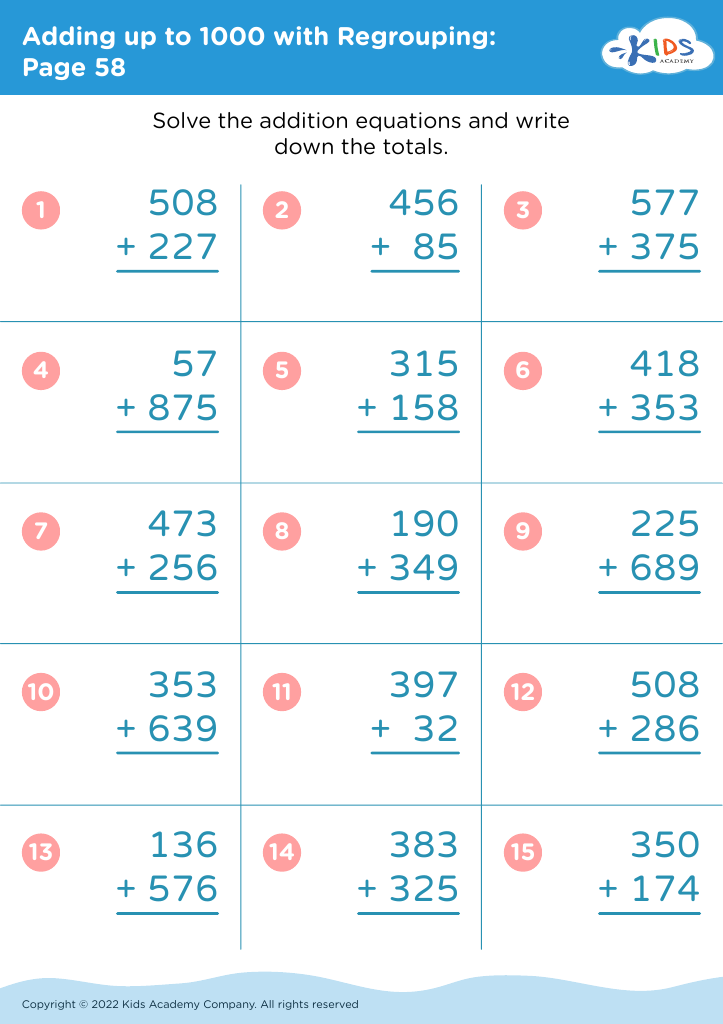
Adding up to 1000 with Regrouping: Page 58
Worksheet
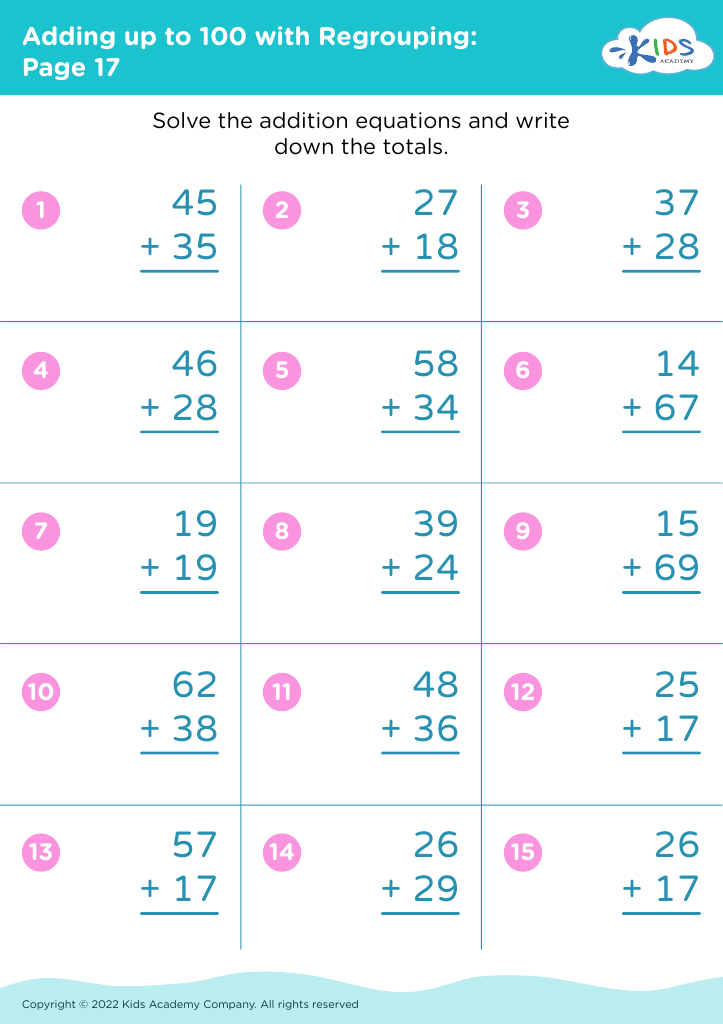
Adding up to 100 with Regrouping: Page 17
Worksheet
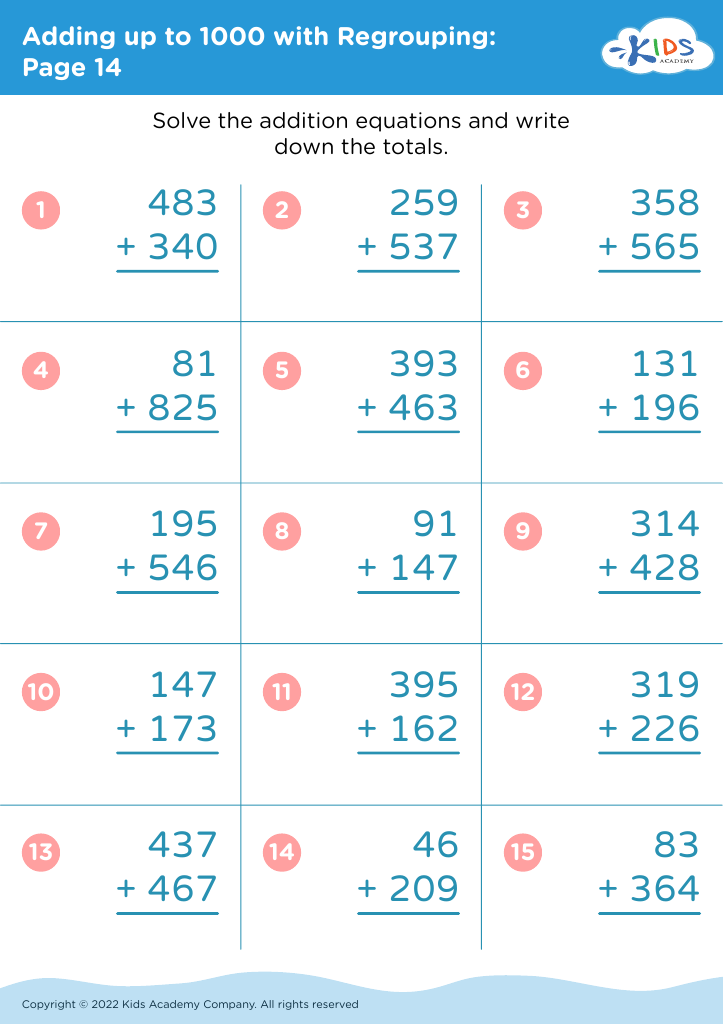
Adding up to 1000 with Regrouping: Page 14
Worksheet
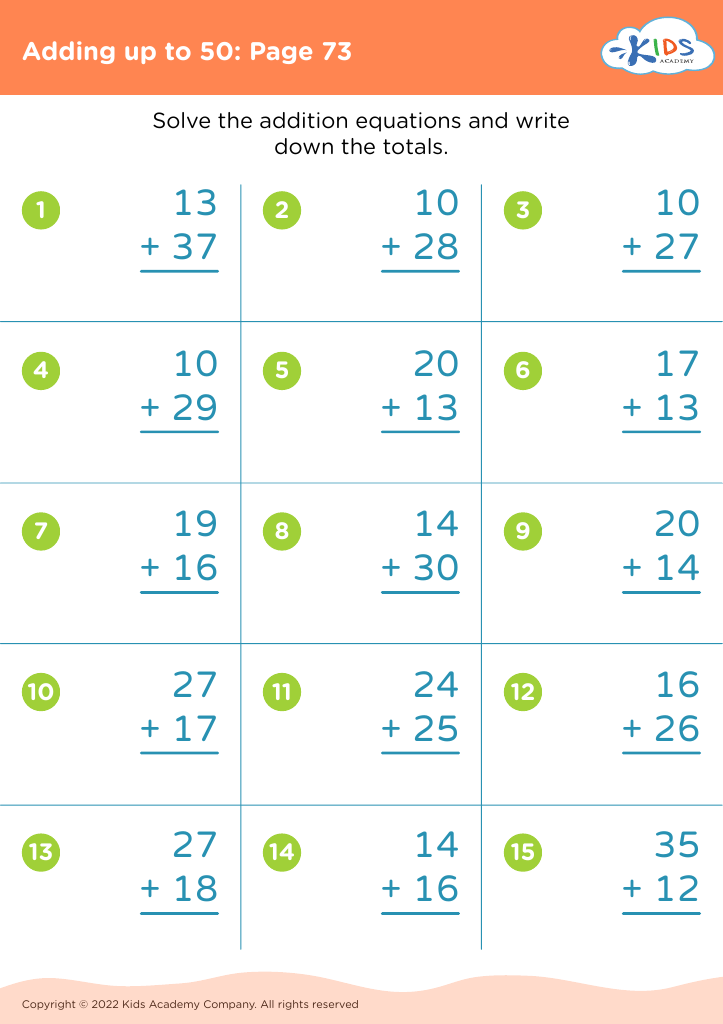
Adding up to 50: Page 73

Adding up to 50: Page 73

Adding up to 50: Page 73
Worksheet
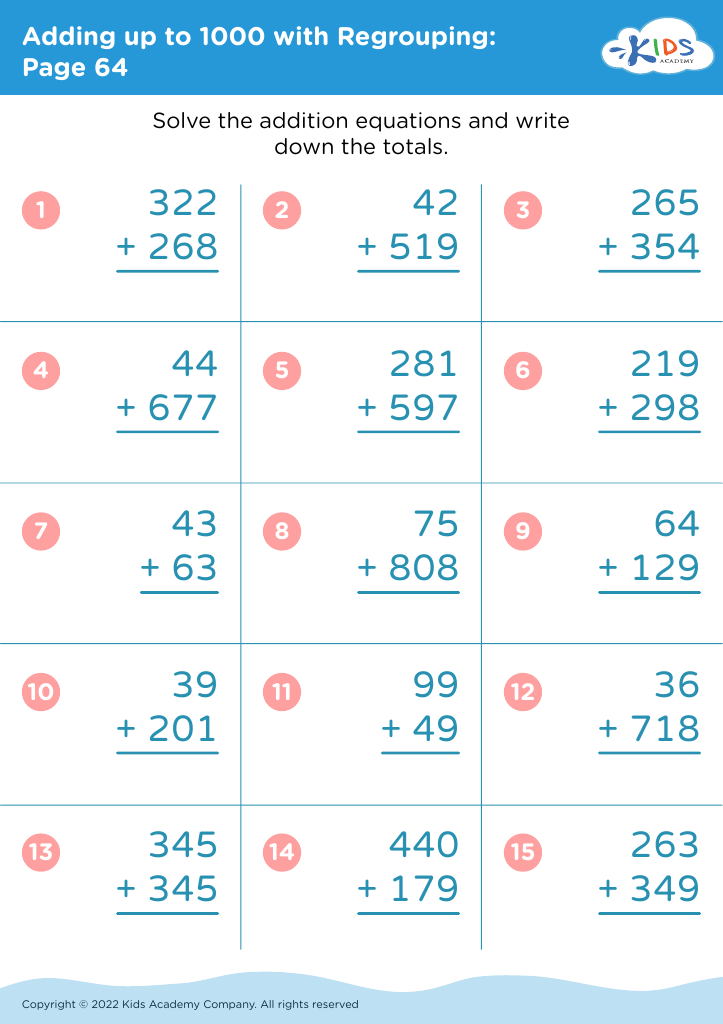
Adding up to 1000 with Regrouping: Page 64
Worksheet


Shape recognition, addition, and subtraction are foundational skills that play a vital role in a child's cognitive and academic development. For children aged 4-9, these skills help develop their visual-spatial awareness, problem-solving abilities, and mathematical thinking.

Shape recognition is crucial as it supports early literacy and language skills. By learning to identify, categorize, and compare shapes, children improve their ability to distinguish different letters and numbers, which is essential for reading and writing. Recognizing shapes also enhances memory and attention to detail, both of which are critical for learning across all subjects.

Understanding addition and subtraction lays the groundwork for all future math learning. During the ages of 4-9, children begin to develop number sense, which involves understanding quantities, counting, and the basic principles of arithmetic. Mastery of these concepts ensures that children can approach more complex math problems with confidence as they progress through their education. This boosts their overall mathematical competence and sets a positive trajectory for their academic career.

Parents and teachers should support these skills because early proficiency not only predicts later academic achievement but also strengthens critical thinking, logic, and creativity. Engaging activities and practice in shape recognition, addition, and subtraction foster a positive attitude toward learning and equip children with tools for lifelong success.