Subtraction skills Addition & Subtraction Worksheets for Ages 4-9 - Page 2
27 filtered results
-
From - To
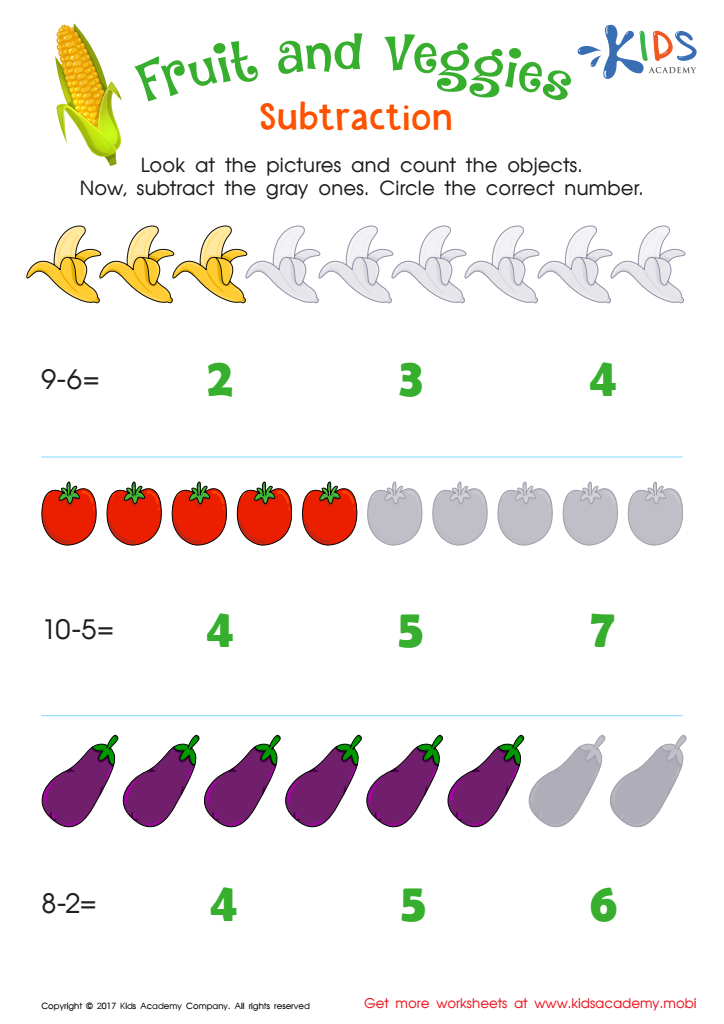
Fruit and Veggies Subtraction Worksheet
 Assign to My Students
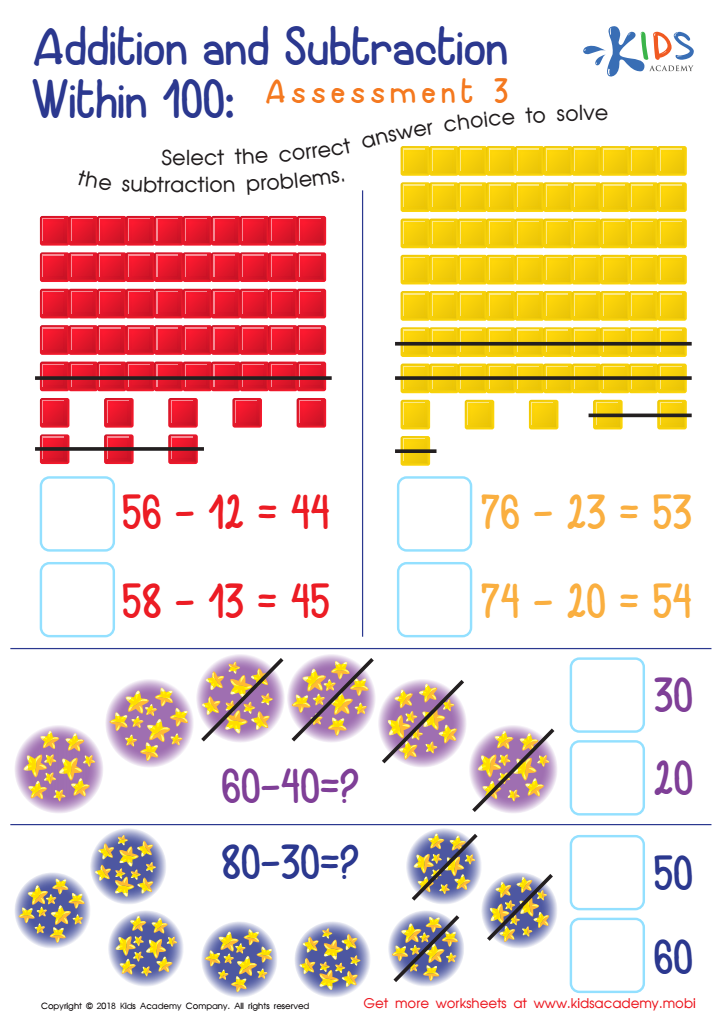
Addition and Subtraction Within 1: Assessment 3 Worksheet








Subtraction is a fundamental mathematical skill that is essential for children aged 4 to 9. Understanding subtraction not only lays the groundwork for more advanced math concepts but also enhances critical thinking and problem-solving skills. Parents and teachers should care about children's subtraction skills for several reasons.
First, arithmetic accomplishments are tied to future academic success. Mastery of subtraction allows children to tackle more complex math concepts confidently, promoting a solid mathematical foundation that will benefit them later in life.
Second, subtraction encourages logical reasoning. As children learn to subtract, they develop the ability to visualize relationships between numbers and comprehend the idea of "taking away," which is vital in everyday situations, from sharing snacks to managing pocket money.
Additionally, subtraction skills foster emotional and social development. By mastering this skill, children experience a sense of achievement and increased self-esteem, encouraging them to engage more actively in learning.
Finally, parents and teachers can cultivate a positive attitude towards math. When subtraction is taught engagingly, it transforms a potentially daunting subject into an exciting challenge, nurturing a lifetime love for learning and discovery in children. Thus, investing time in subtraction skills is a critical step toward a brighter educational future.








