Understand sequences Addition & Subtraction Worksheets for Ages 4-9
5 filtered results
-
From - To
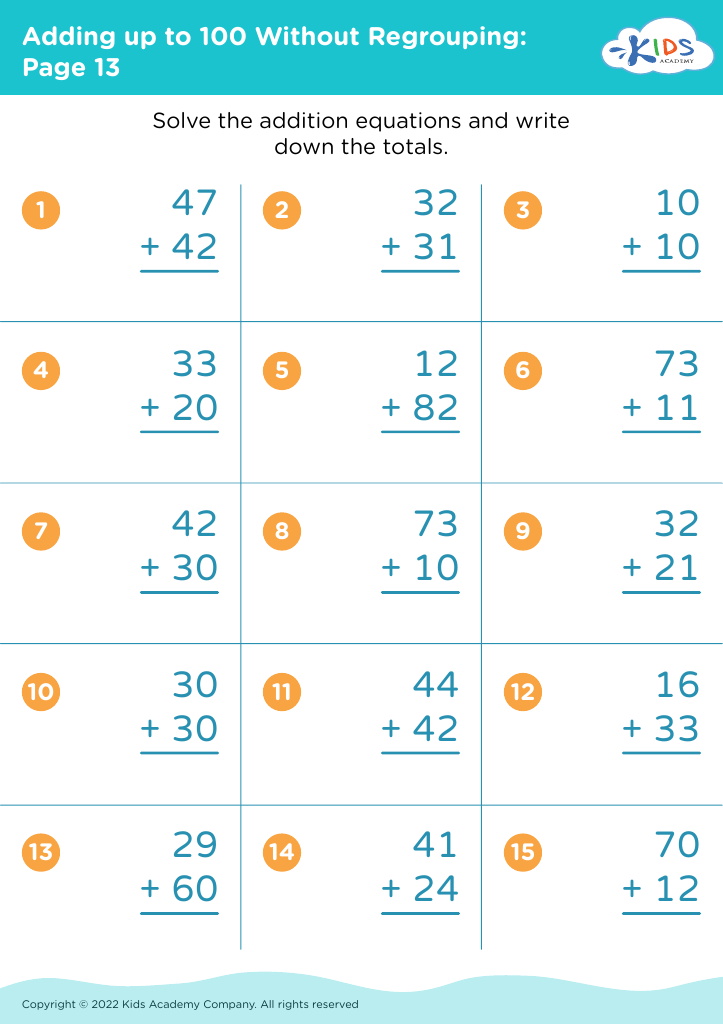
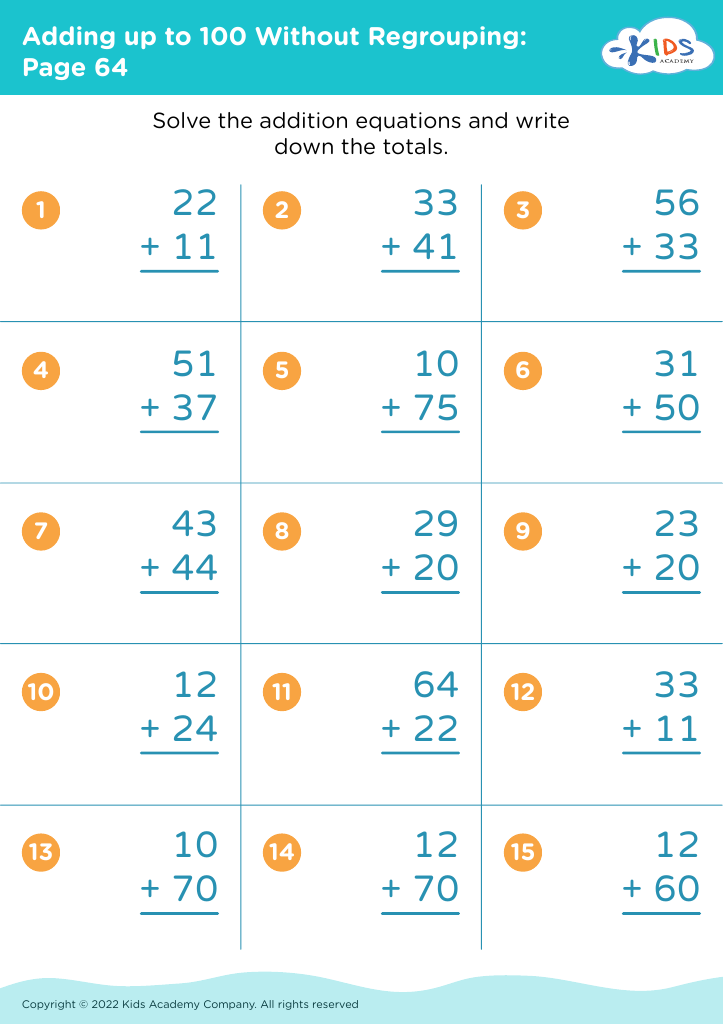
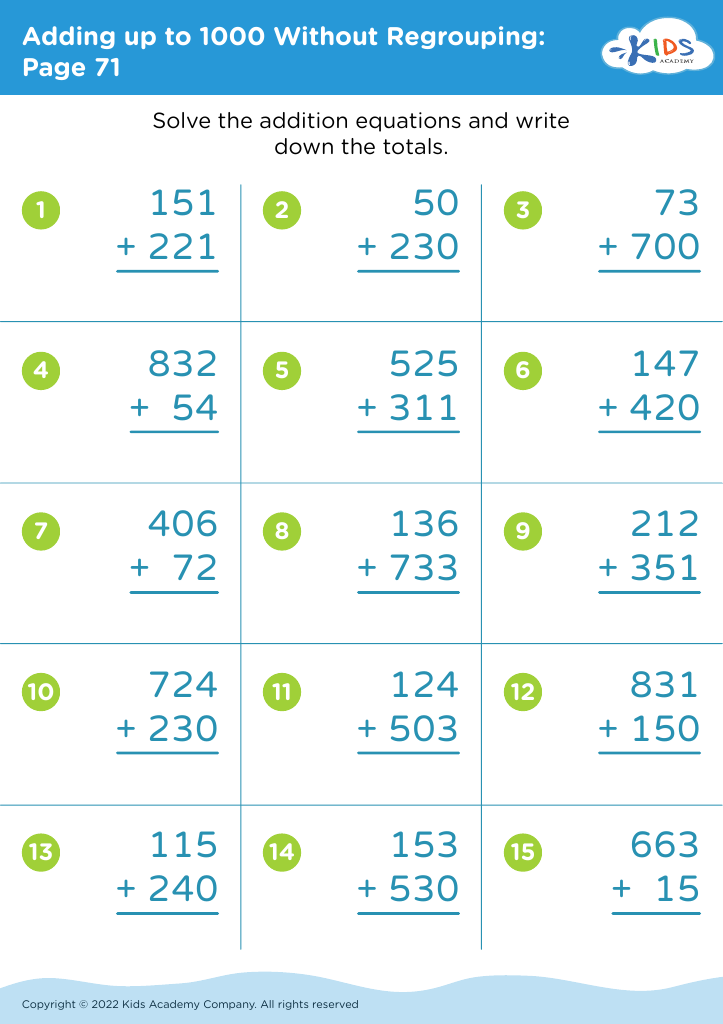
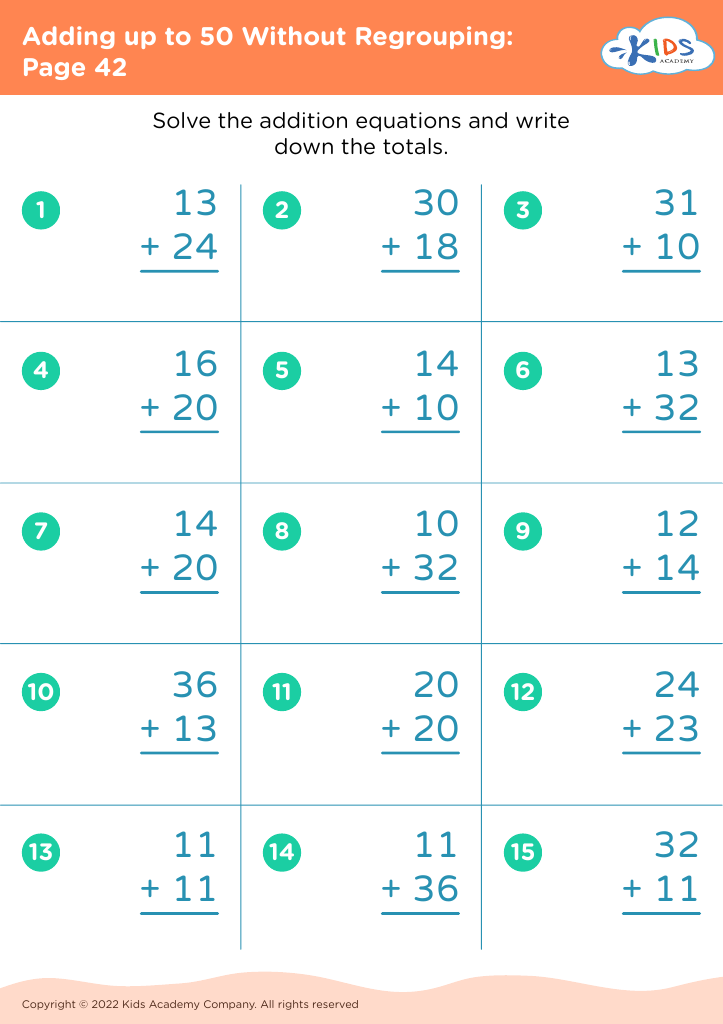
Introduce your child to the exciting world of math with our "Understand Sequences: Addition & Subtraction Worksheets for Ages 4-9". These engaging and educational worksheets are designed to help young learners grasp fundamental math concepts. Through a series of fun exercises, kids will learn to recognize and create sequences, enhancing their addition and subtraction skills. Perfectly tailored for children aged 4-9, these worksheets not only make learning enjoyable but also pave the way for strong math foundations. Foster a love for math and boost your child’s confidence with our expertly crafted resources. Start exploring today!
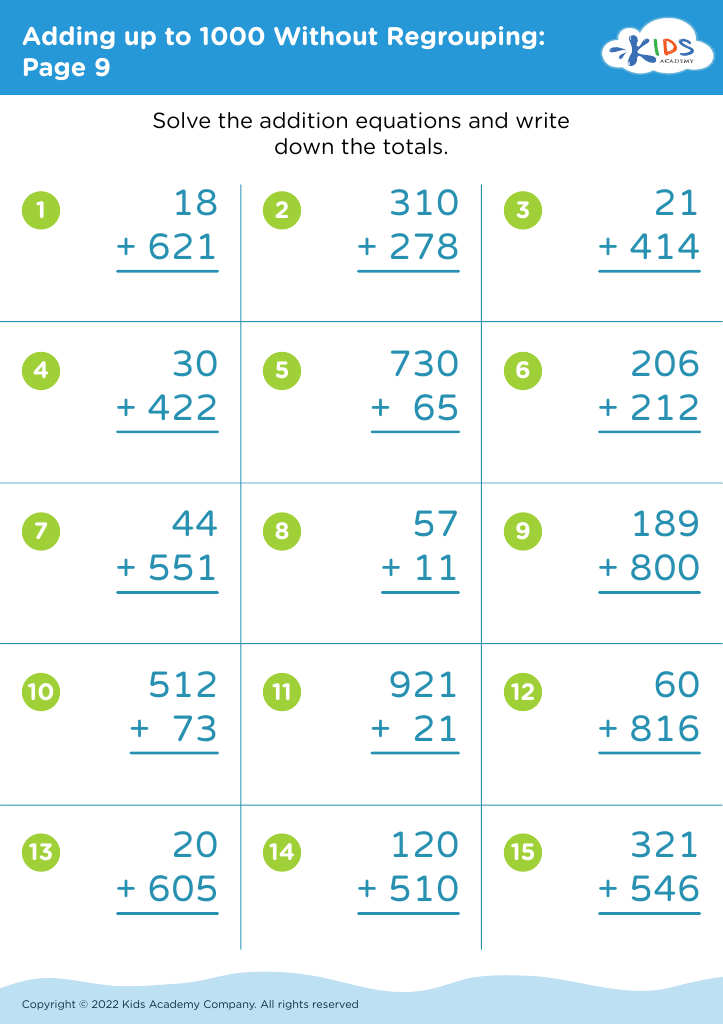








Parents and teachers play a crucial role in nurturing early mathematical skills, particularly understanding sequences, addition, and subtraction for children aged 4-9. This foundational knowledge forms the bedrock of more complex math concepts they will encounter in later grades.
Understanding sequences, such as counting by ones, twos, or tens, helps children recognize patterns and develop logical thinking. Recognizing patterns is an essential skill not just for math, but for problem-solving and critical thinking across all subjects and daily life situations.
Addition and subtraction are the building blocks of arithmetic. Mastery of these operations enables children to tackle more complex mathematical problems with confidence. These skills are not just limited to performing calculations, but also to developing an understanding of number relationships, which is essential for higher-level math like multiplication and division.
Early proficiency in these areas boosts a child's self-esteem and attitudes towards math, which can influence their overall academic success. Moreover, practical comprehension allows children to engage in real-world scenarios involving money, time, and measurements, thus enhancing their everyday functioning.
For ages 4-9, parents and teachers supporting the development of these skills is critical. They can offer structured guidance, use playful methods like games and songs, and provide consistent practice that makes learning enjoyable and effective, thereby laying a strong mathematical foundation.








