Understanding division Addition & Subtraction Worksheets for Ages 4-9
5 filtered results
-
From - To
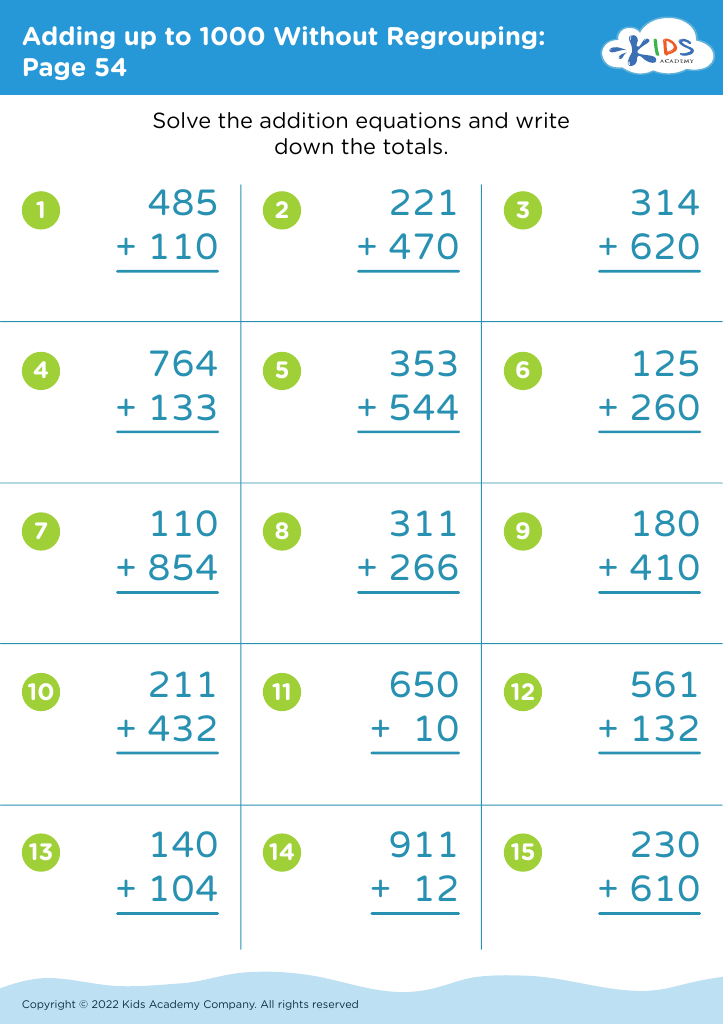
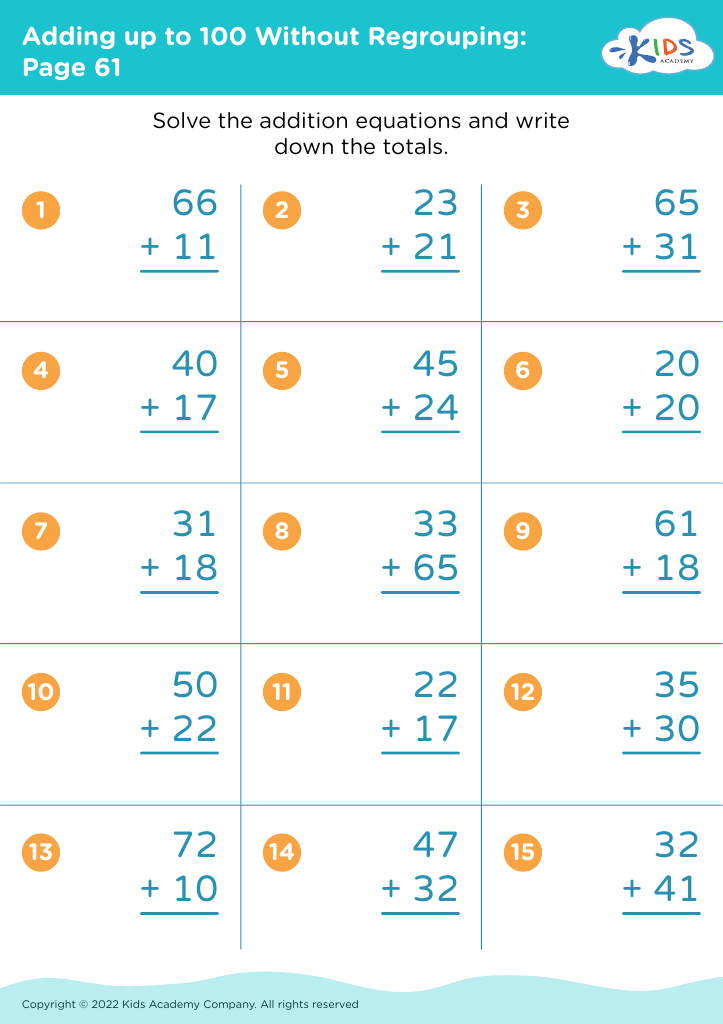
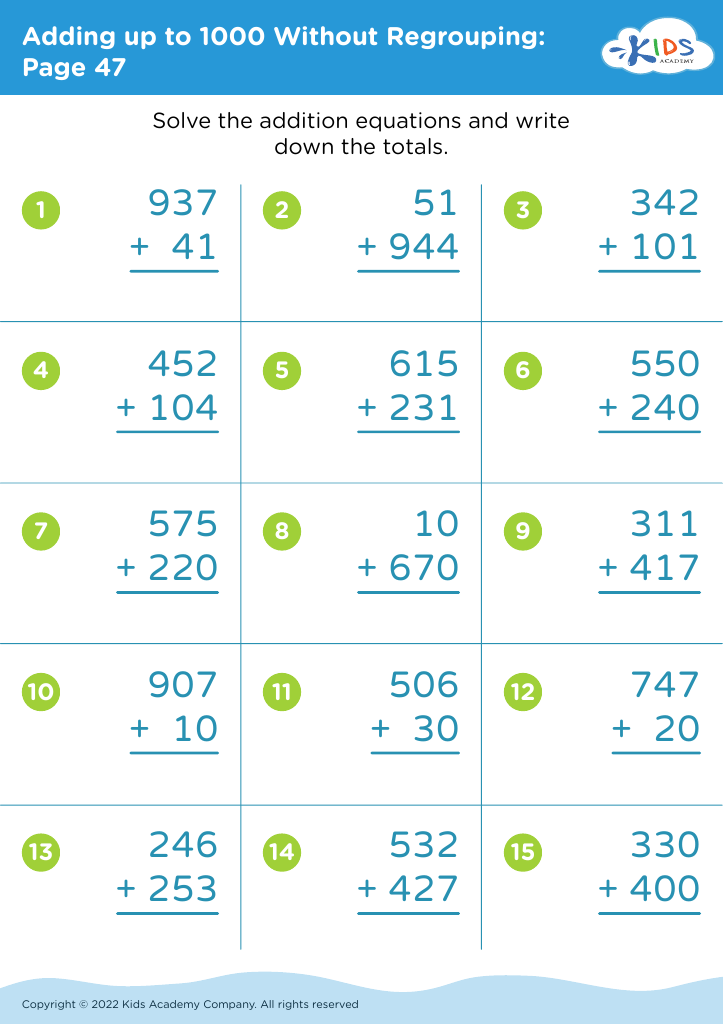
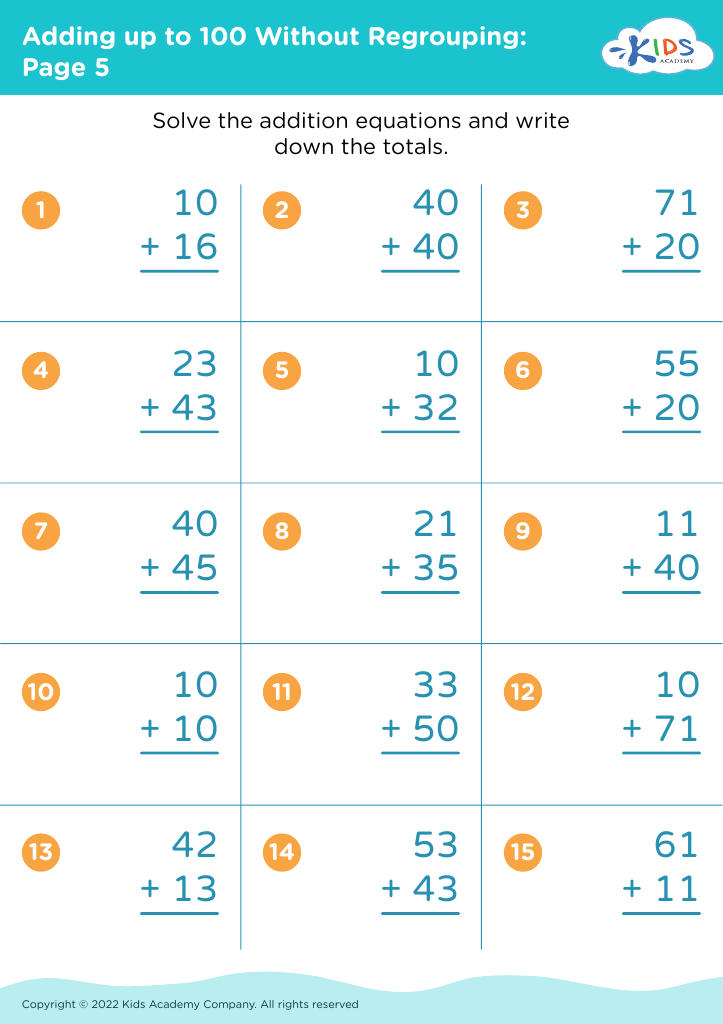
Discover an array of engaging worksheets on Kids Academy designed to help children ages 4-9 master the fundamentals of division, addition, and subtraction. Our expertly crafted activities focus on developing essential learning skills, making math both fun and accessible. Each worksheet is designed to accommodate young learners' varying capabilities, ensuring a solid grasp of arithmetic basics while boosting confidence. With vibrant illustrations and diverse exercises, children will enjoy practicing key concepts, and educators will appreciate the structured and progressive approach. Visit Kids Academy today for your essential resource in nurturing early math proficiency!
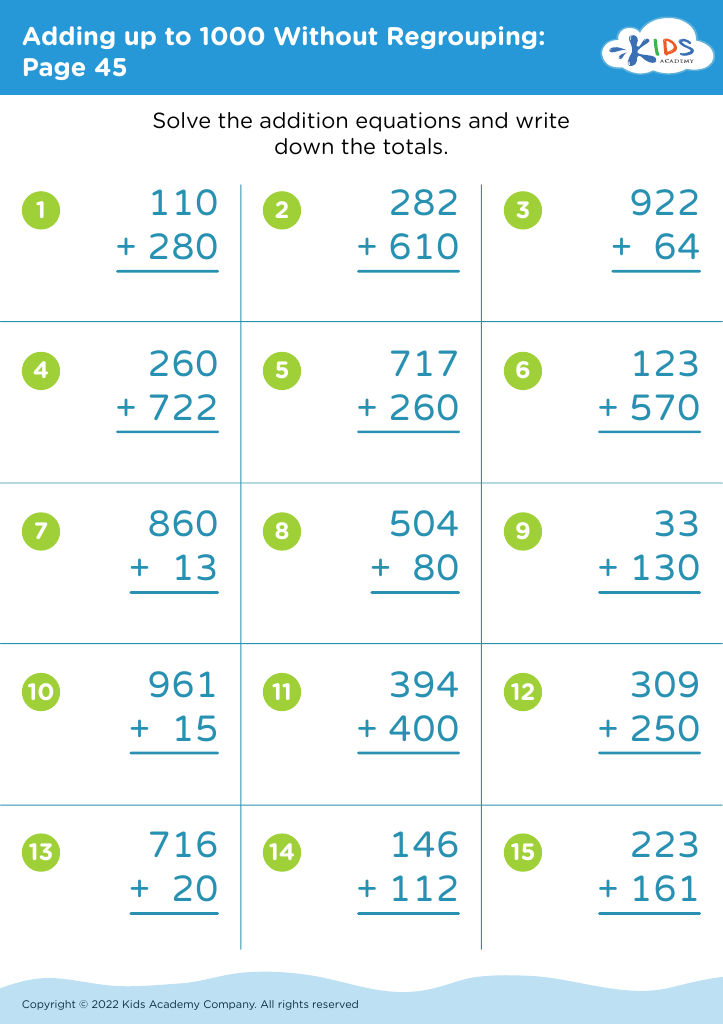








Understanding division, addition, and subtraction at an early age, specifically from ages 4 to 9, is crucial for several developmental and educational reasons. Firstly, mastering these basic mathematical operations builds a strong foundation for more advanced math concepts learned later. Early competence in these areas fosters confidence and a positive attitude towards mathematics, crucial for ongoing engagement and success in the subject.
Additionally, understanding these operations aids in daily life skills. Children use addition and subtraction seamlessly in everyday activities, such as counting toys, sharing snacks, or understanding basic time concepts. Division, although more abstract, introduces the idea of fair sharing and grouping, which are important cognitive skills.
These mathematical operations also promote critical thinking and problem-solving skills. When children learn to add, subtract, and divide, they are essentially learning how to approach and solve problems, an invaluable skill in life beyond academics. Mental calculations enhance memory, attention span, and logical reasoning.
Moreover, fostering such understanding supports early academic achievement. Research shows that early math skills are strong predictors of later academic success, even more than early reading skills. Therefore, encouraging young learners to grasp these concepts significantly benefits their holistic development, laying the groundwork for future learning and practical life applications.








