Filters

271 filtered results

Clear all filters
Favorites
With answer key
Interactive

271 filtered results

Difficulty Level

Grade


Check out this FREE Trial Lesson on Addition for age 4-9!

Sorting Objects into 3 Categories

Favorites
With answer key
Interactive
  • 4-9
  • Basic Addition Skills
  • Addition
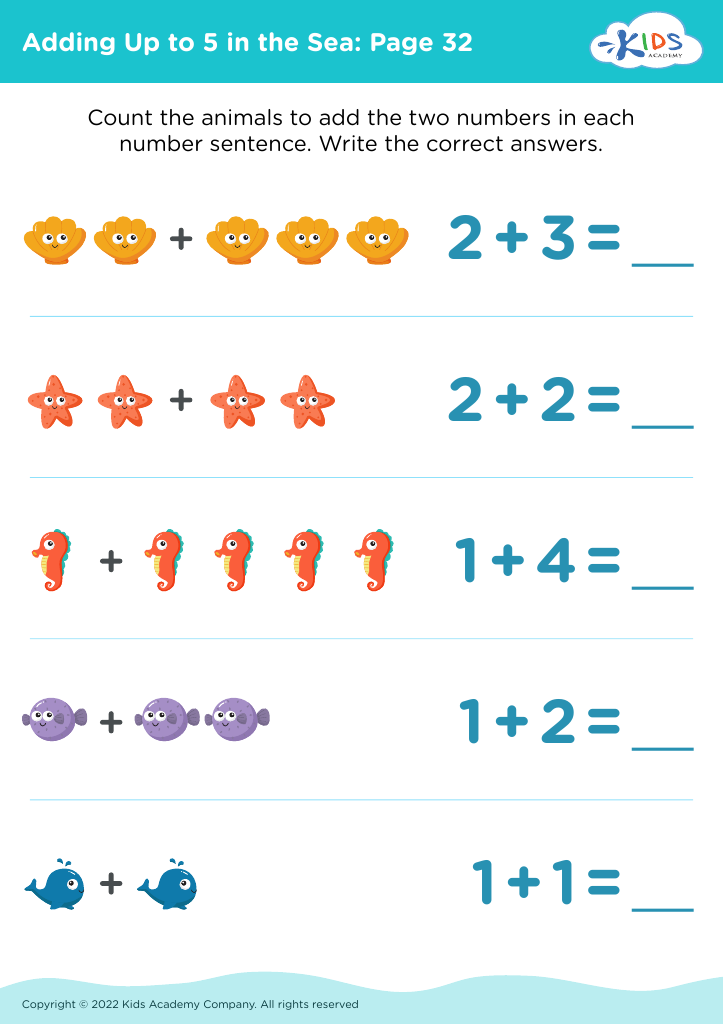
Adding Up to 5 in the Sea: Page 32
Worksheet
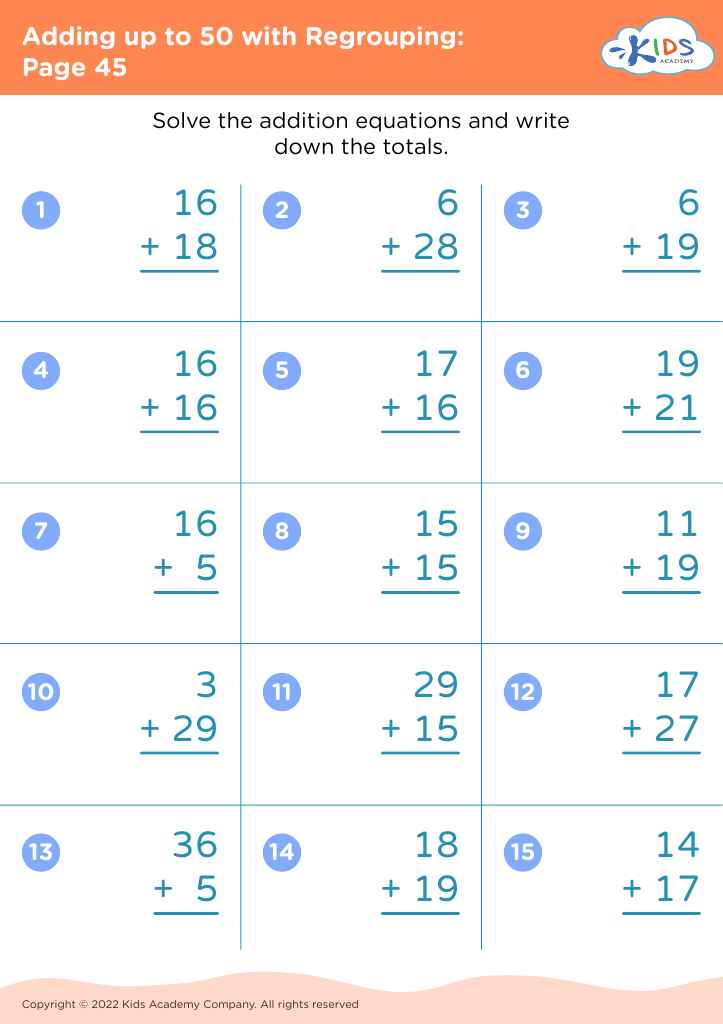
Adding up to 50 with Regrouping: Page 45
Worksheet
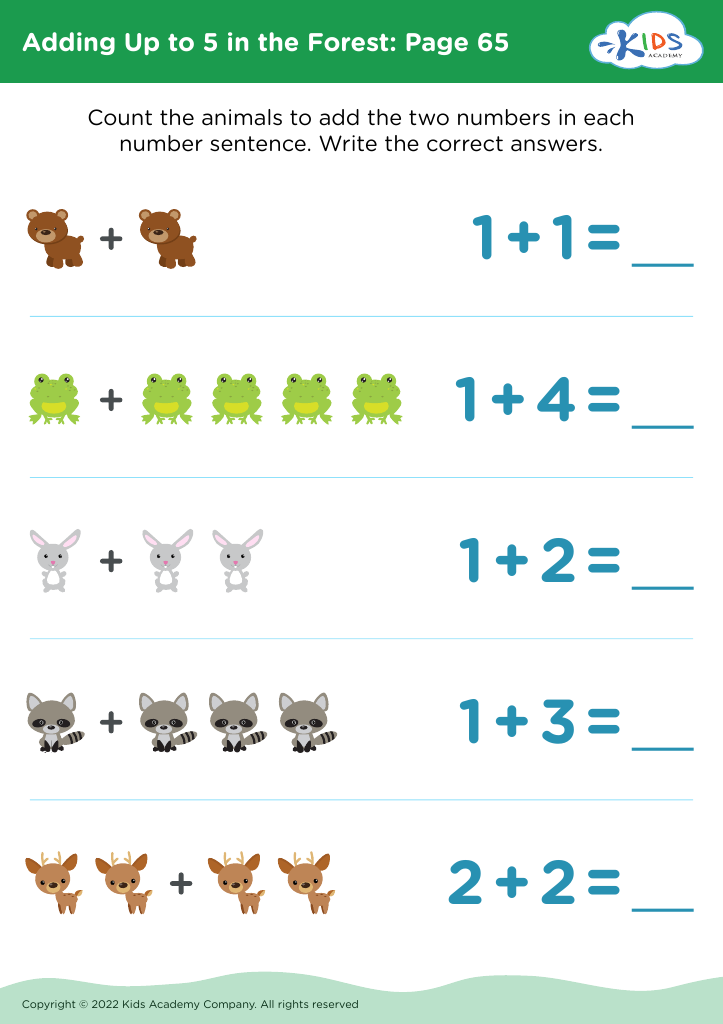
Adding Up to 5 in the Forest: Page 65
Worksheet
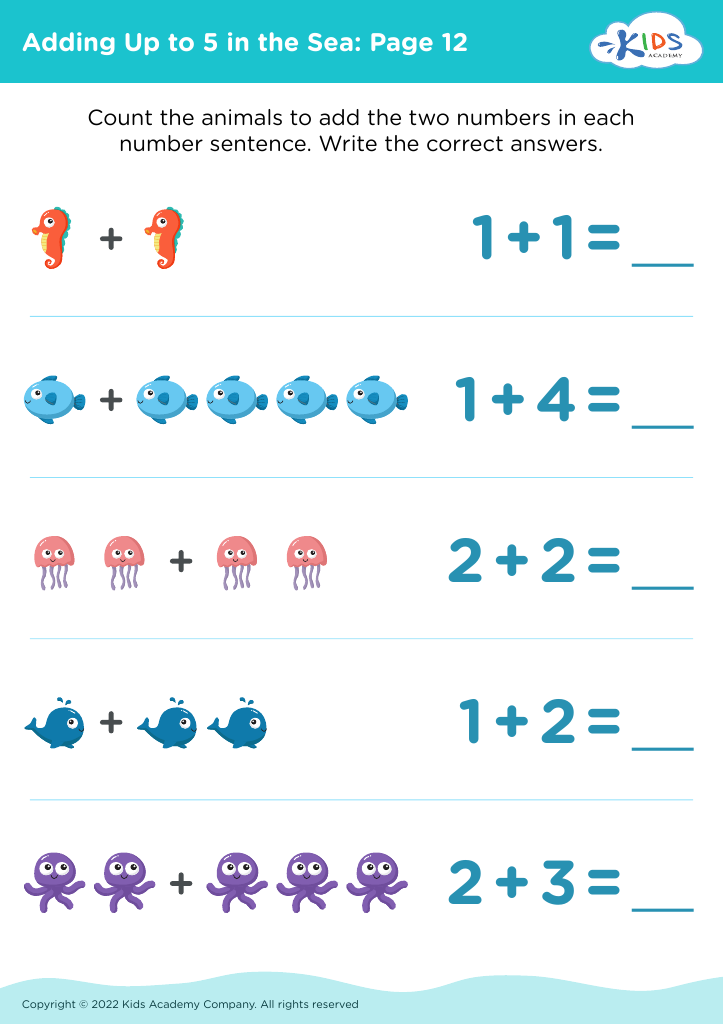
Adding Up to 5 in the Sea: Page 12
Worksheet
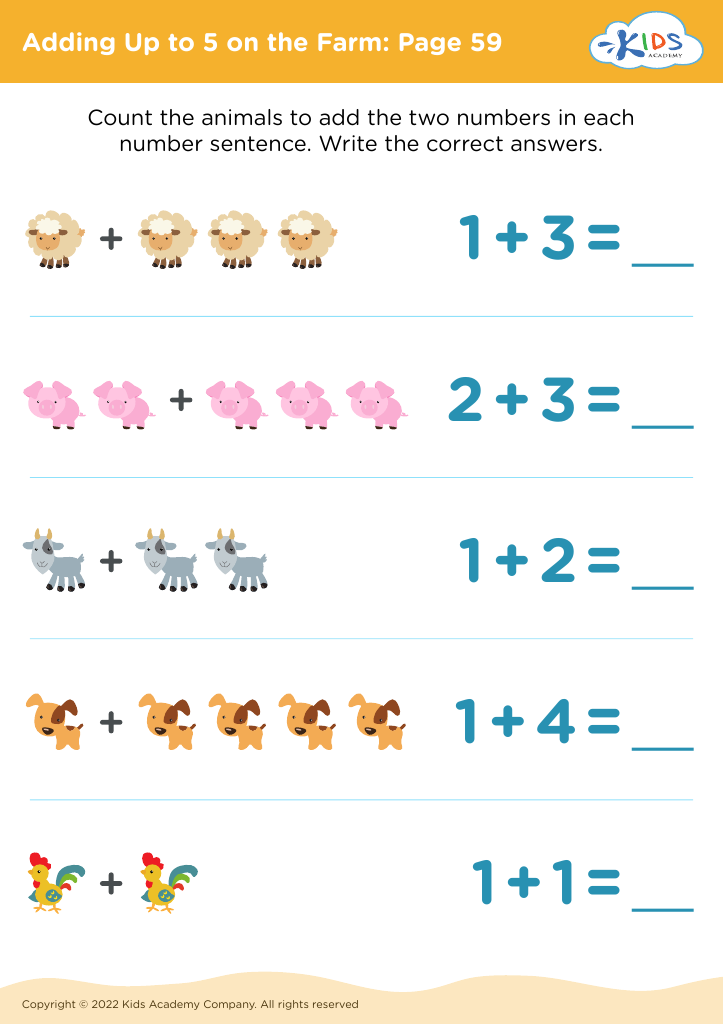
Adding Up to 5 on the Farm: Page 59
Worksheet
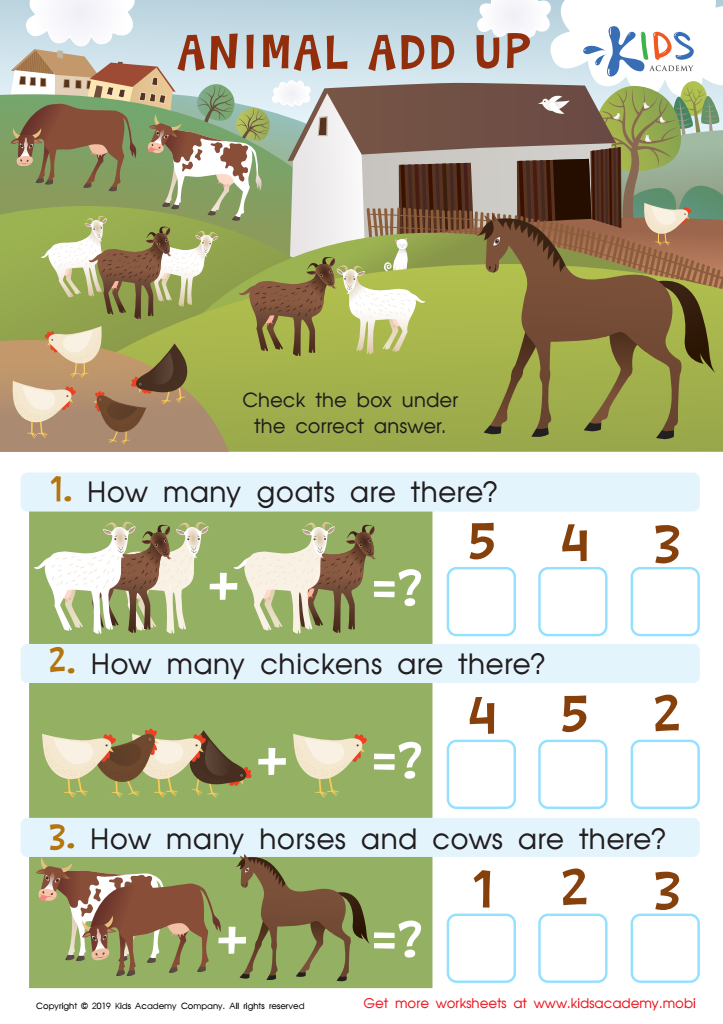
Animal Add Up Worksheet

Animal Add Up Worksheet

Animals are fun to observe and interact with. They can be seen at the zoo, parks, farms and in homes with pets. This worksheet helps kids identify animals, and build addition skills. Look at the picture with them and help name each animal. After that, add the animals up and check the box for the correct answer. 80 words.
Animal Add Up Worksheet
Worksheet
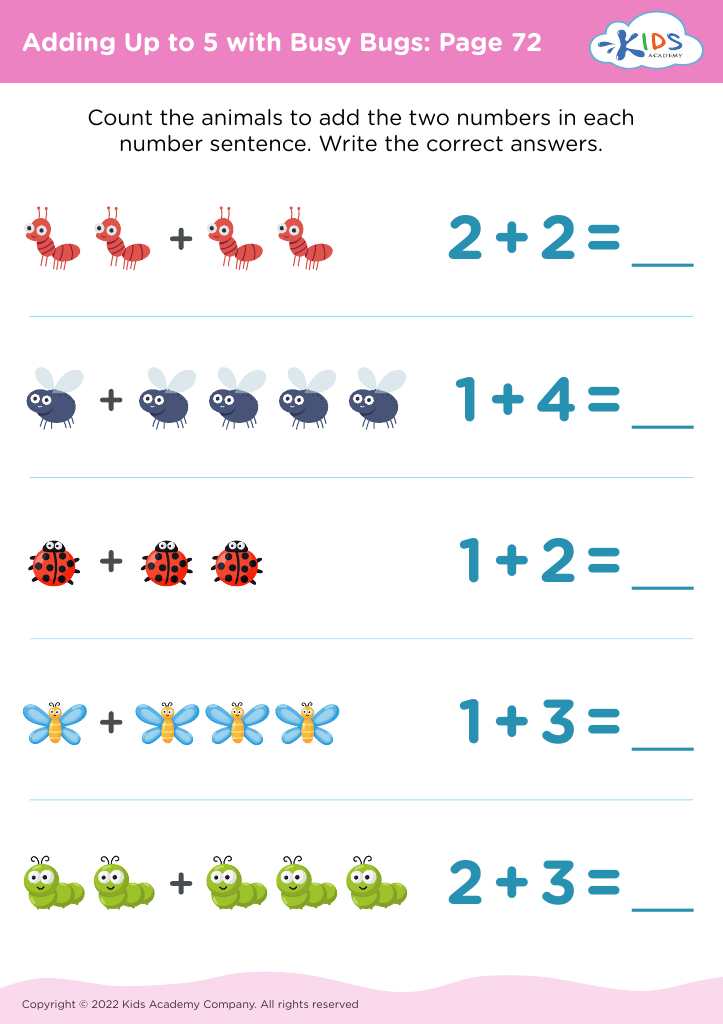
Adding Up to 5 with Busy Bugs: Page 72
Worksheet
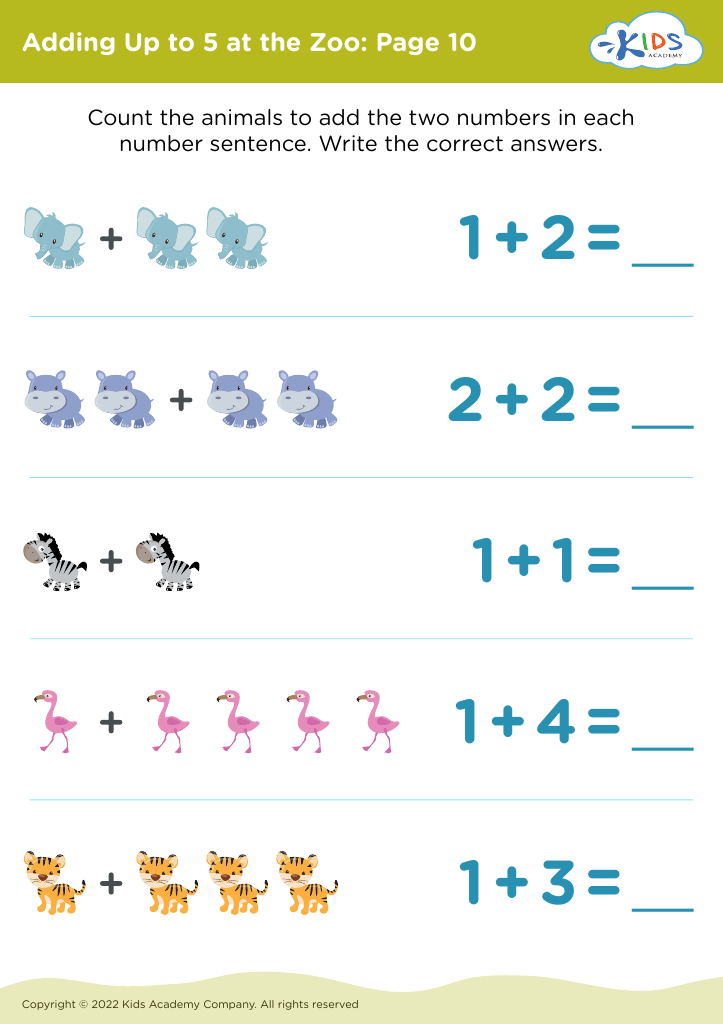
Adding Up to 5 at the Zoo: Page 10
Worksheet
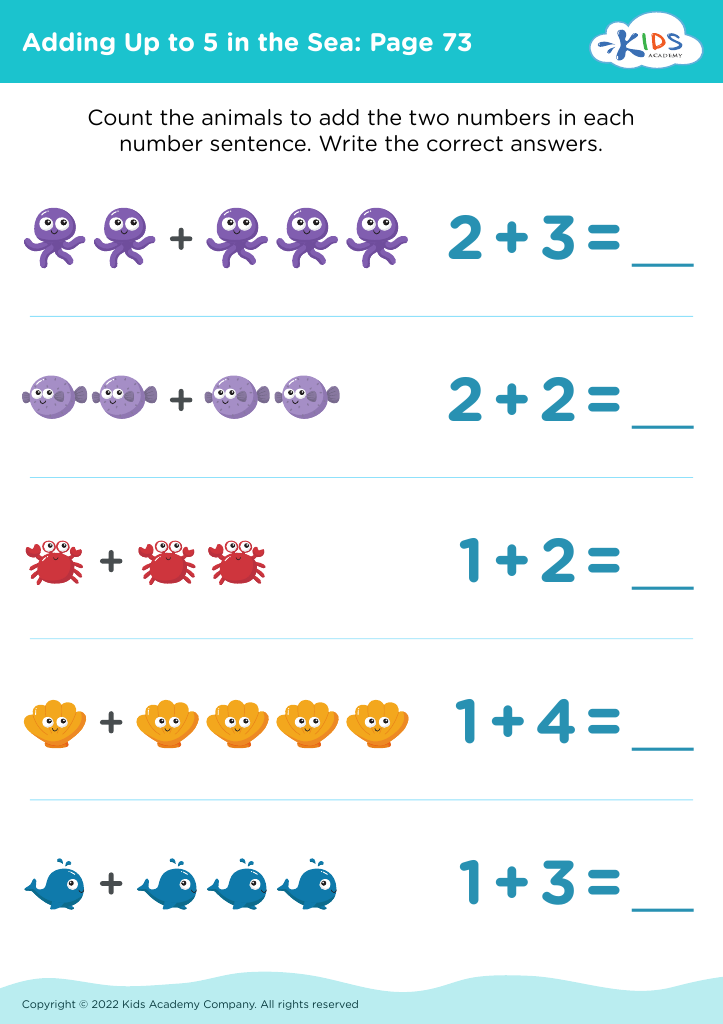
Adding Up to 5 in the Sea: Page 73
Worksheet
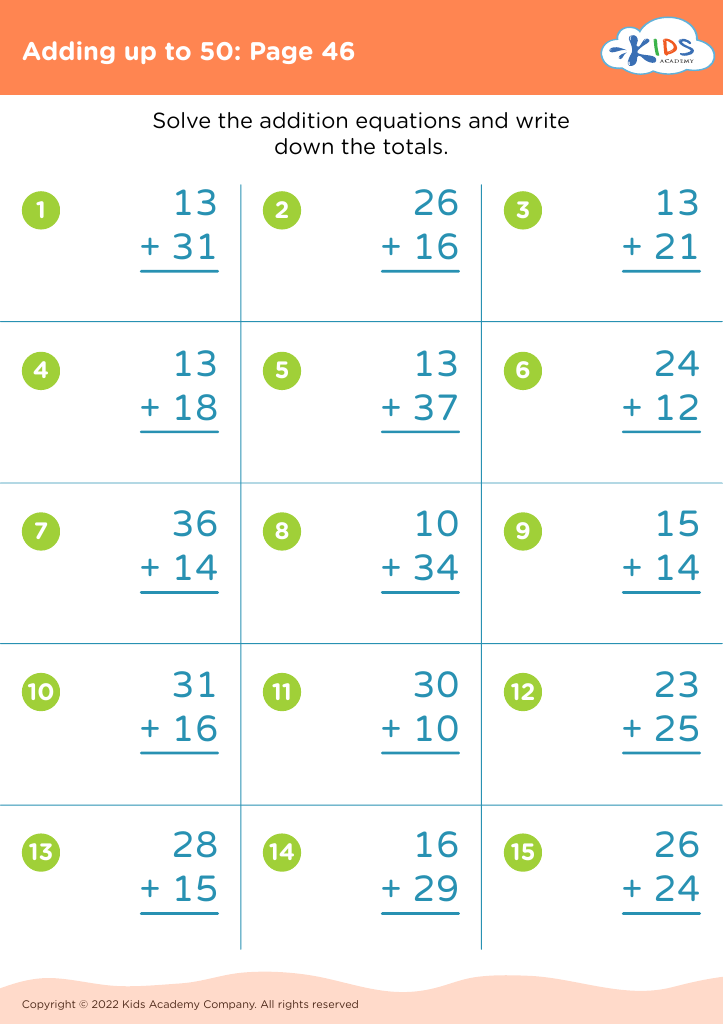
Adding up to 50: Page 46

Adding up to 50: Page 46

Adding up to 50: Page 46
Worksheet
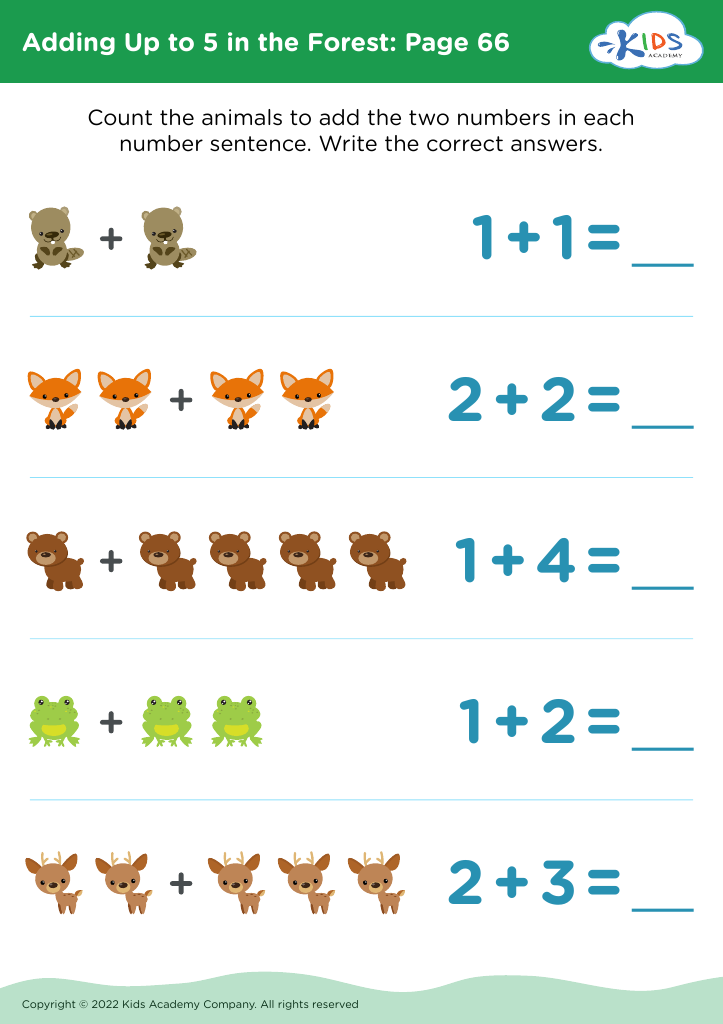
Adding Up to 5 in the Forest: Page 66
Worksheet
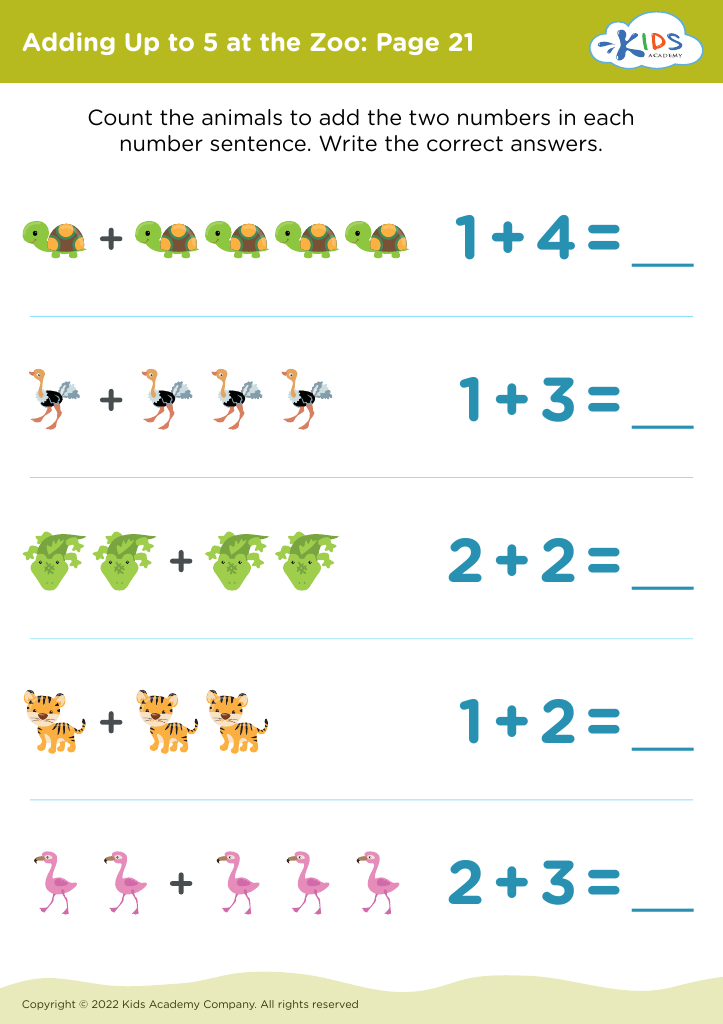
Adding Up to 5 at the Zoo: Page 21
Worksheet
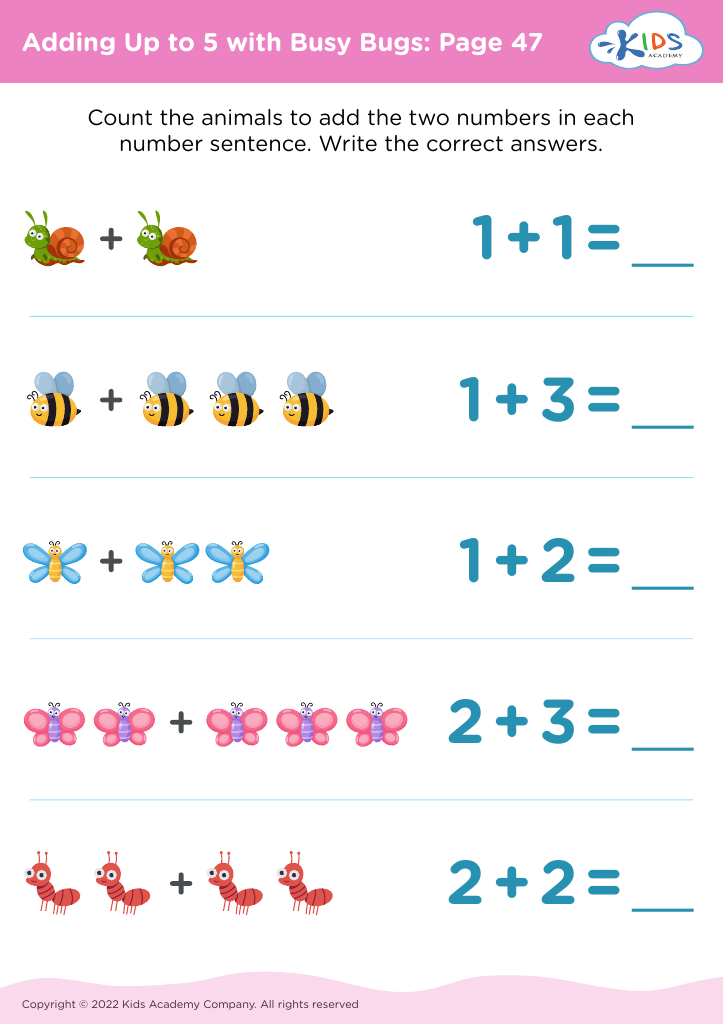
Adding Up to 5 with Busy Bugs: Page 47
Worksheet
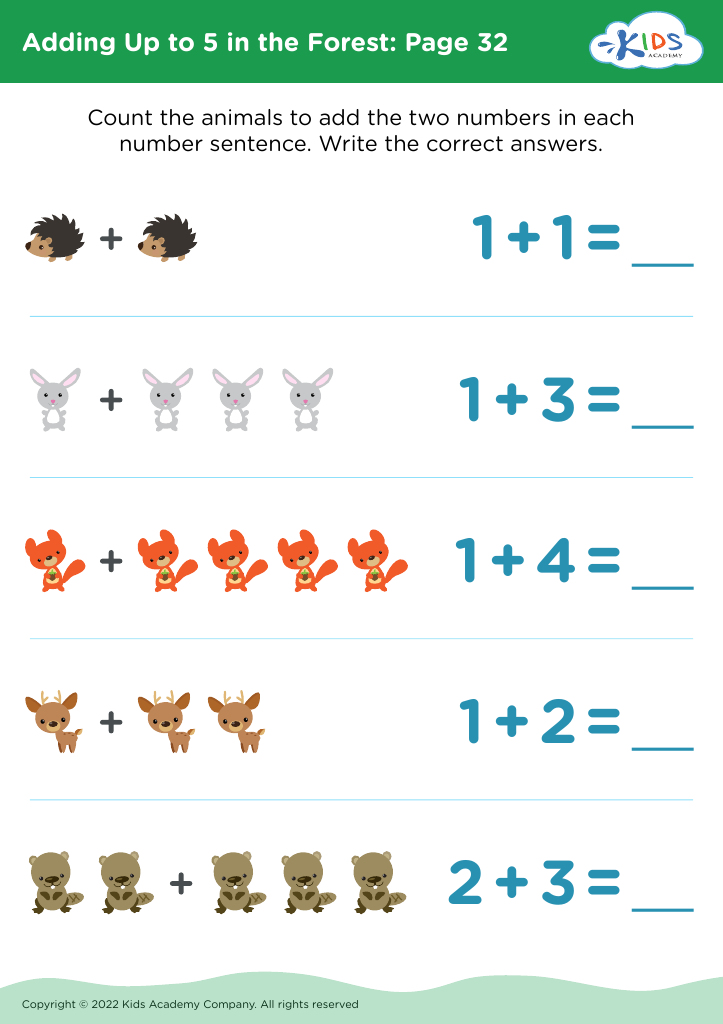
Adding Up to 5 in the Forest: Page 32
Worksheet
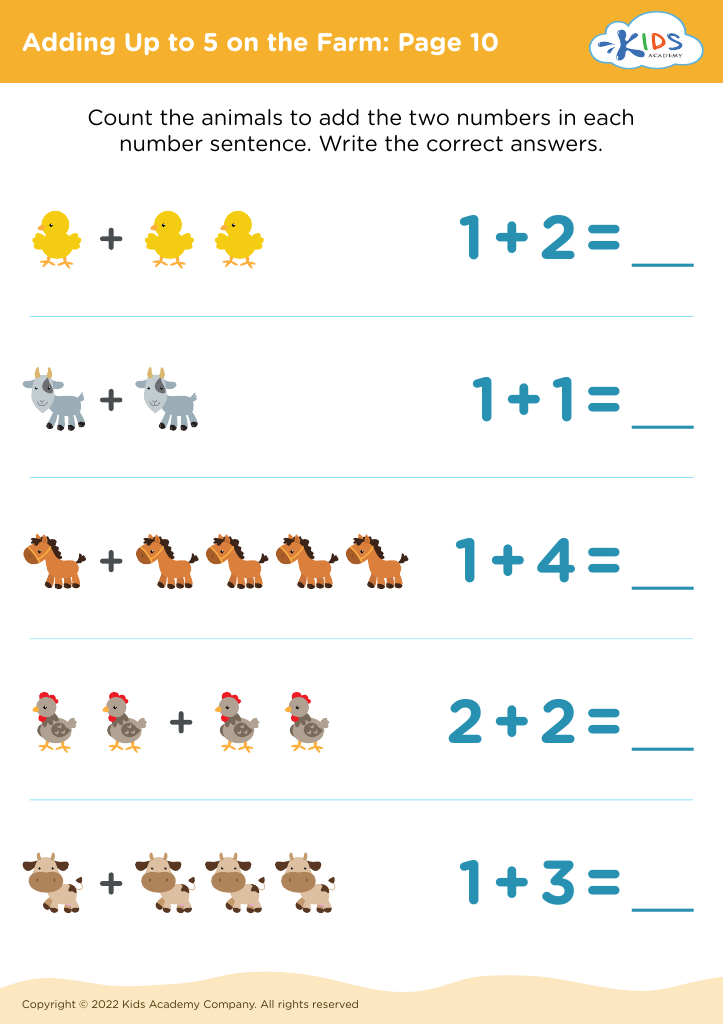
Adding Up to 5 on the Farm: Page 10
Worksheet
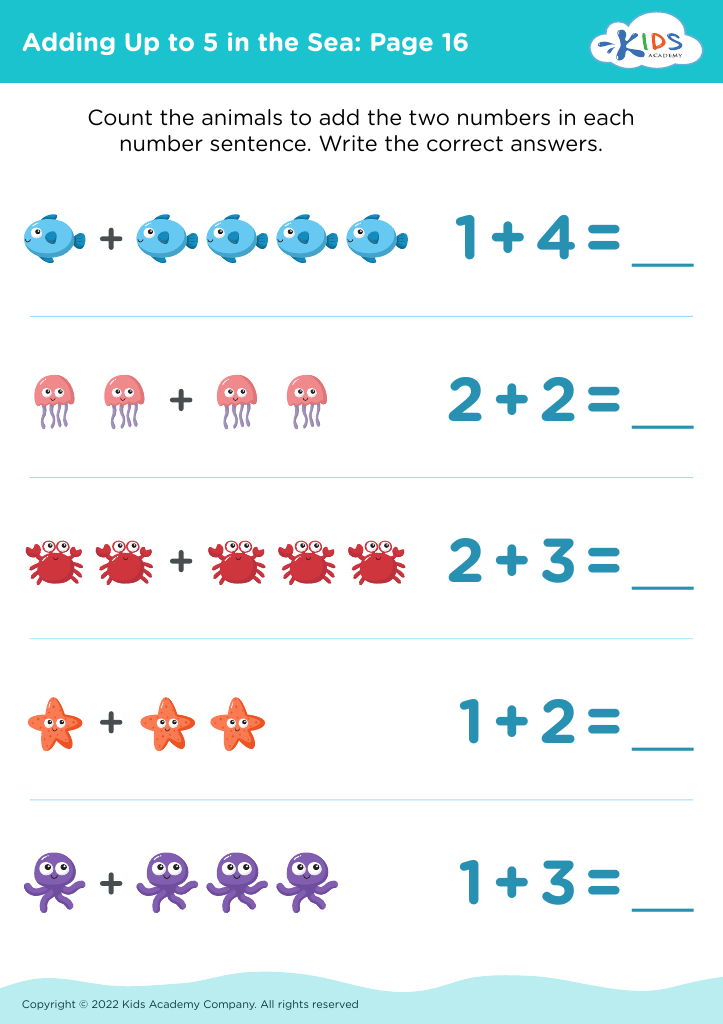
Adding Up to 5 in the Sea: Page 16
Worksheet
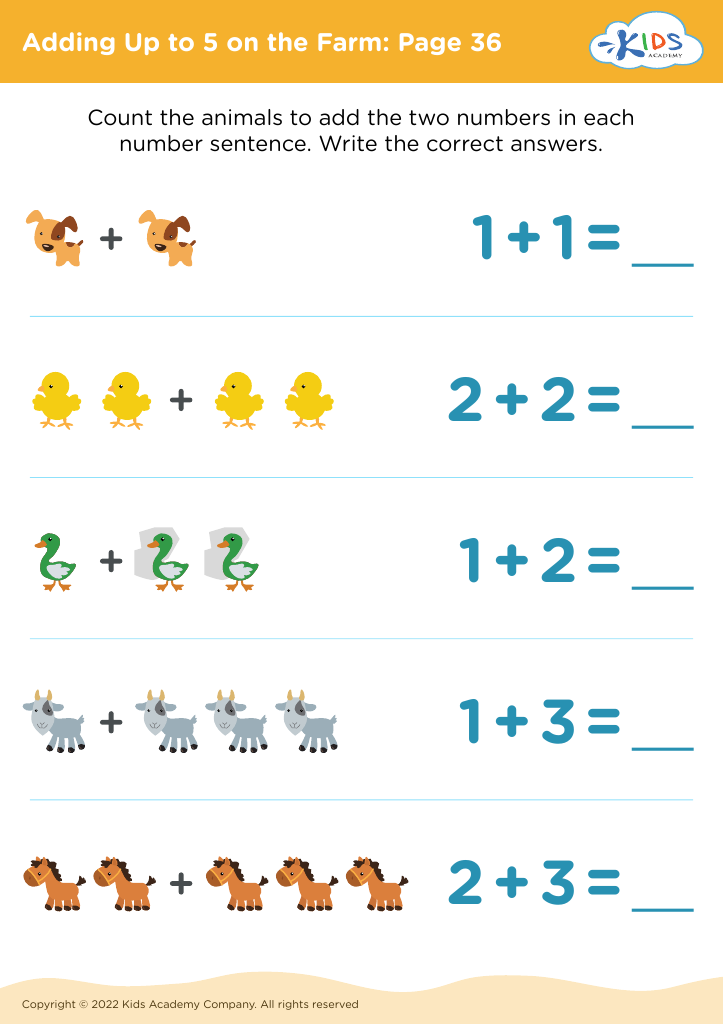
Adding Up to 5 on the Farm: Page 36
Worksheet
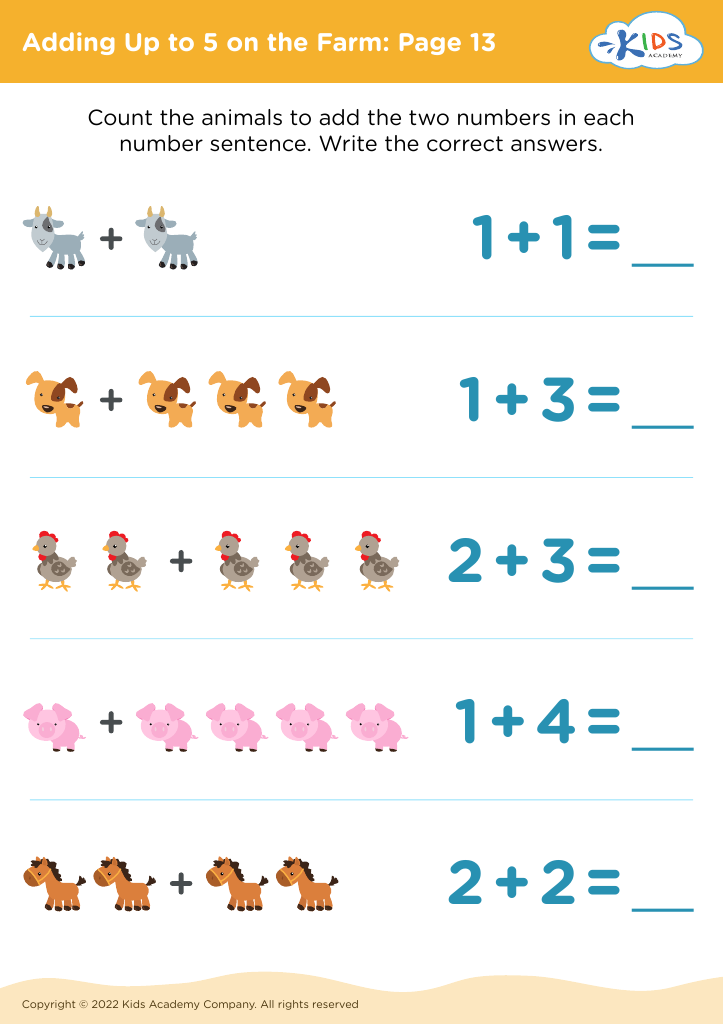
Adding Up to 5 on the Farm: Page 13
Worksheet
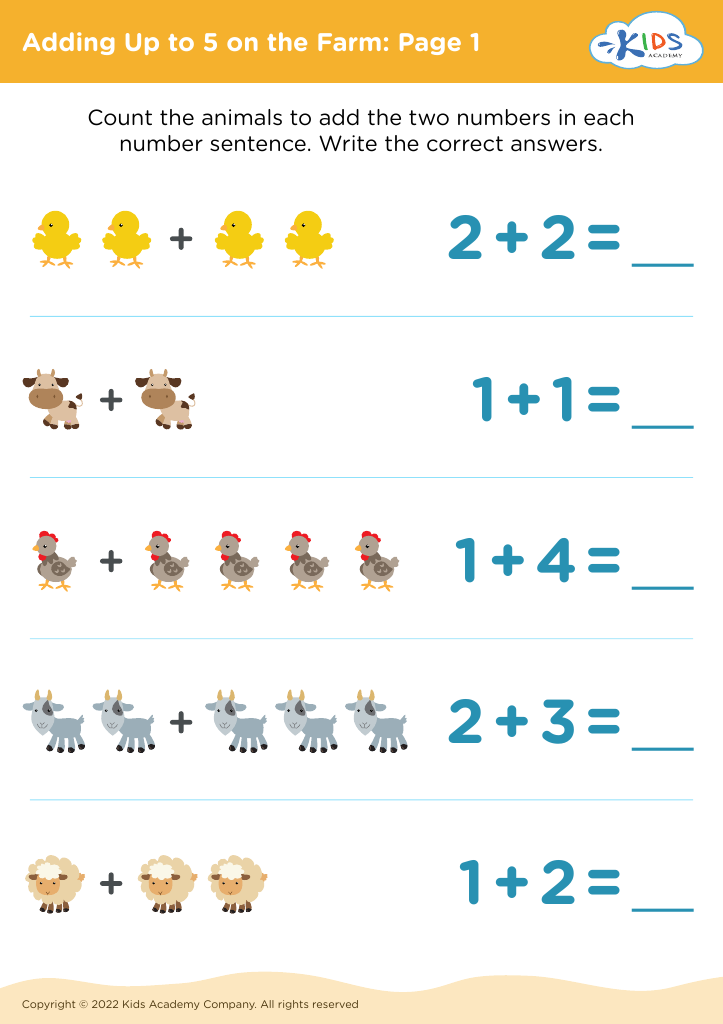
Adding Up to 5 on the Farm: Page 1
Worksheet
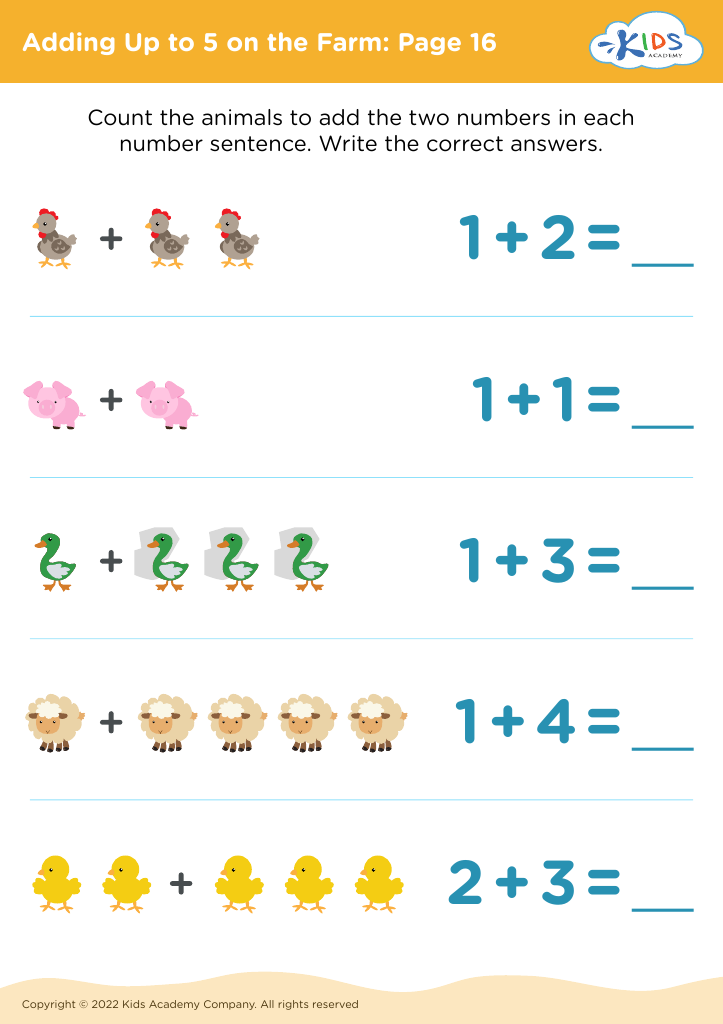
Adding Up to 5 on the Farm: Page 16
Worksheet
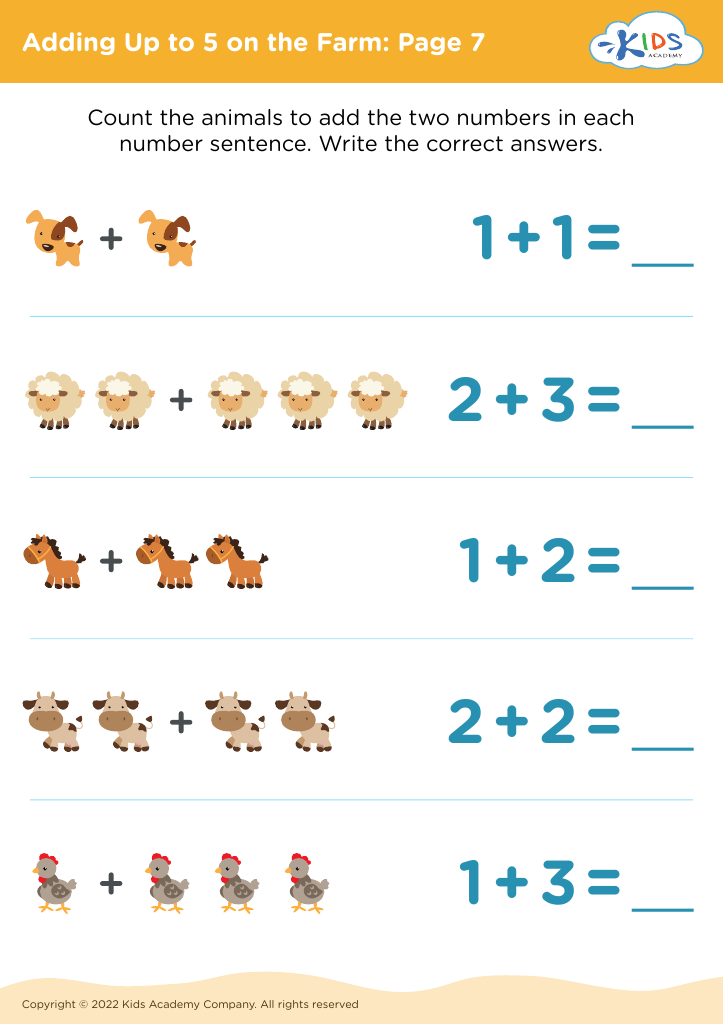
Adding Up to 5 on the Farm: Page 7
Worksheet
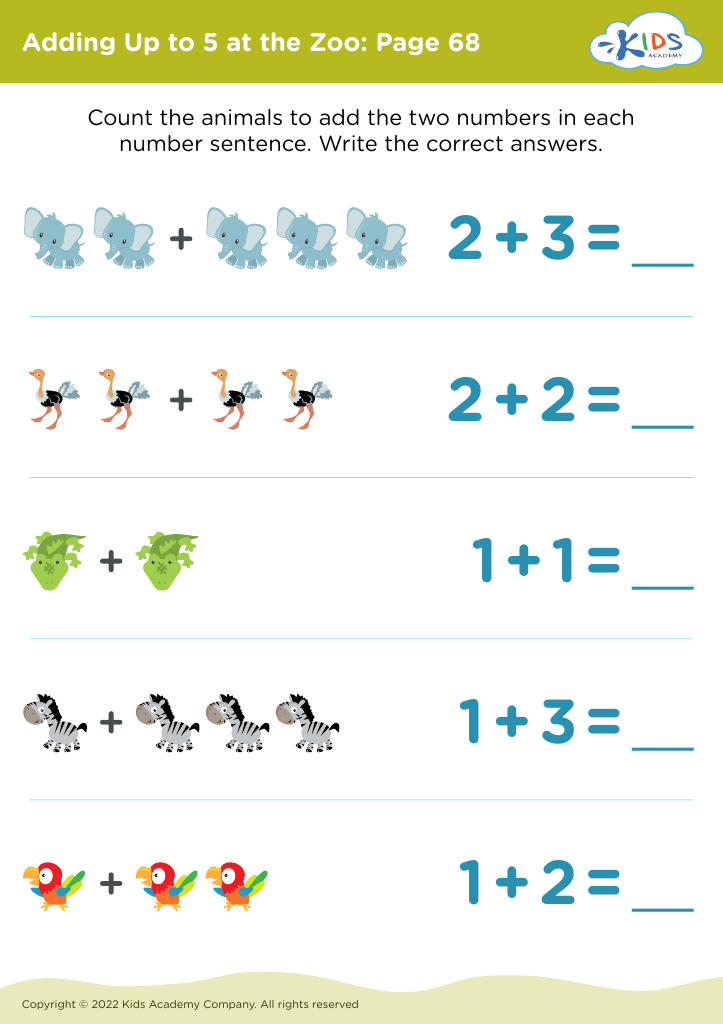
Adding Up to 5 at the Zoo: Page 68
Worksheet
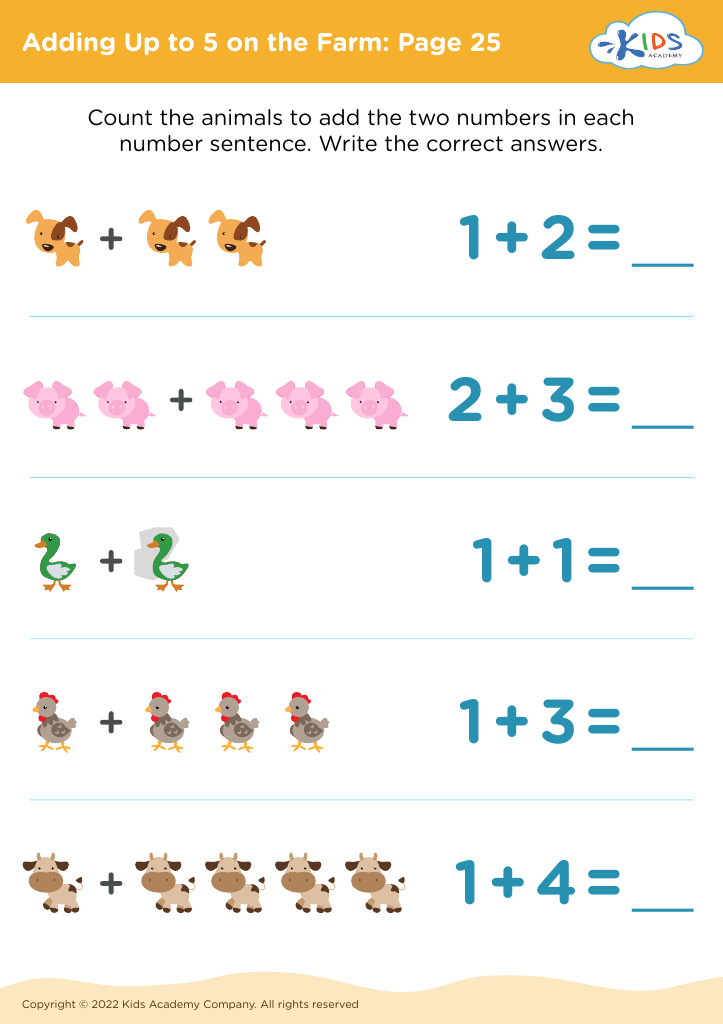
Adding Up to 5 on the Farm: Page 25
Worksheet
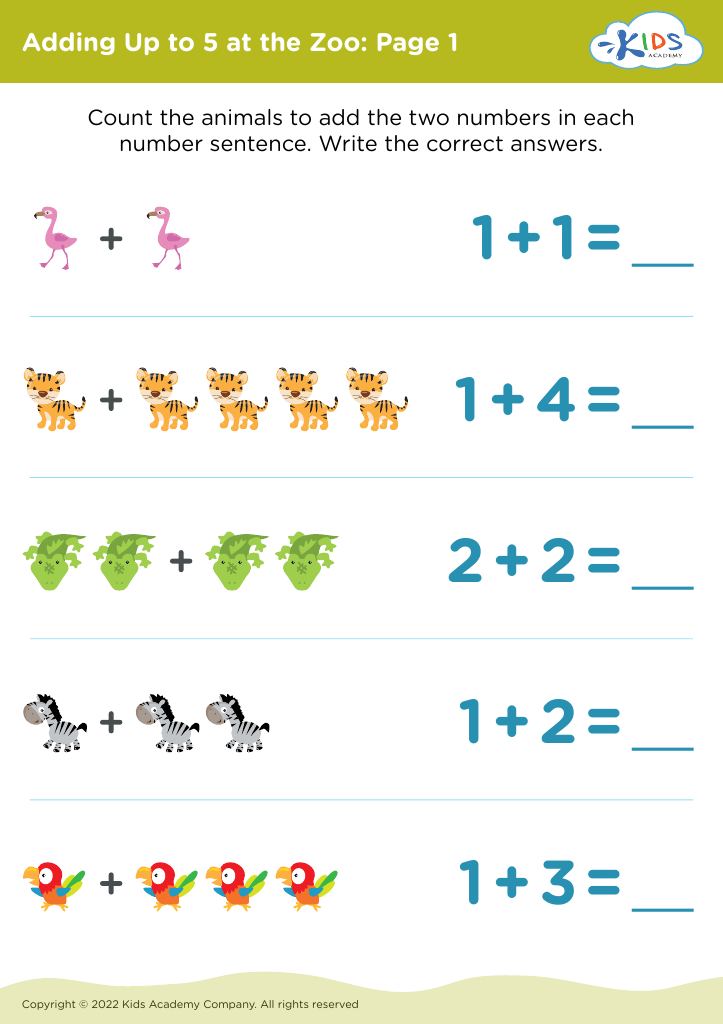
Adding Up to 5 at the Zoo: Page 1

Adding Up to 5 at the Zoo: Page 1

Adding Up to 5 at the Zoo: Page 1
Worksheet


Basic addition skills are crucial for children ages 4-9 as they serve as the foundation for mathematics and problem-solving abilities. At a young age, children are highly impressionable, and learning basic addition fosters confidence in their numerical understanding. Mastery of addition helps children with more complex math topics that emerge later in their education, such as subtraction, multiplication, and division.

Additionally, developing these skills enhances cognitive function and critical thinking. When children grasp addition, they learn important concepts of quantity, correlation, and sequence, which align with cognitive developmental standards. This understanding is vital not only for academic success but also for everyday scenarios, such as handling money, time management, and spatial awareness.

Engaging in addition activities, whether through games or practical applications, makes math enjoyable and relatable. It encourages the growth of a positive attitude towards learning, crucial for lifelong educational engagement. For parents and teachers, fostering these skills early on contributes significantly to children's overall development, setting a strong academic trajectory while nurturing curiosity and a love for learning. Therefore, investing time and resources in teaching basic addition not only benefits the immediate educational experience but equips children with skills that have lasting impacts on their futures.