
Basic Math Skills Addition Worksheets for Ages 4-9
75 filtered results
Difficulty Level
Grade
Age
-
From - To
Subject
Activity
Standards
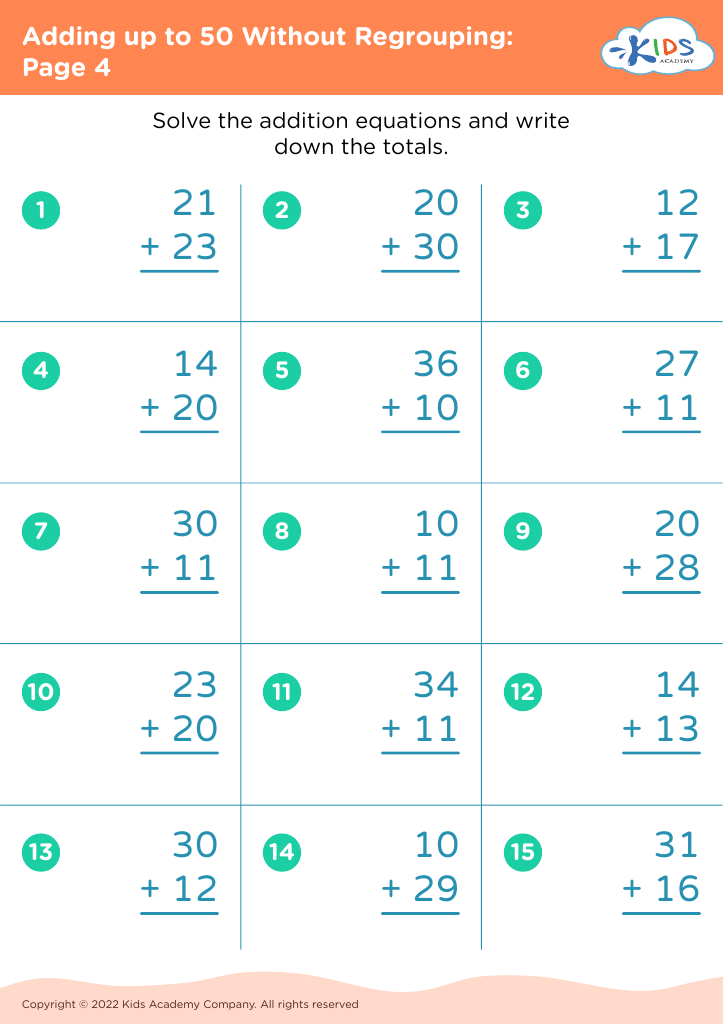
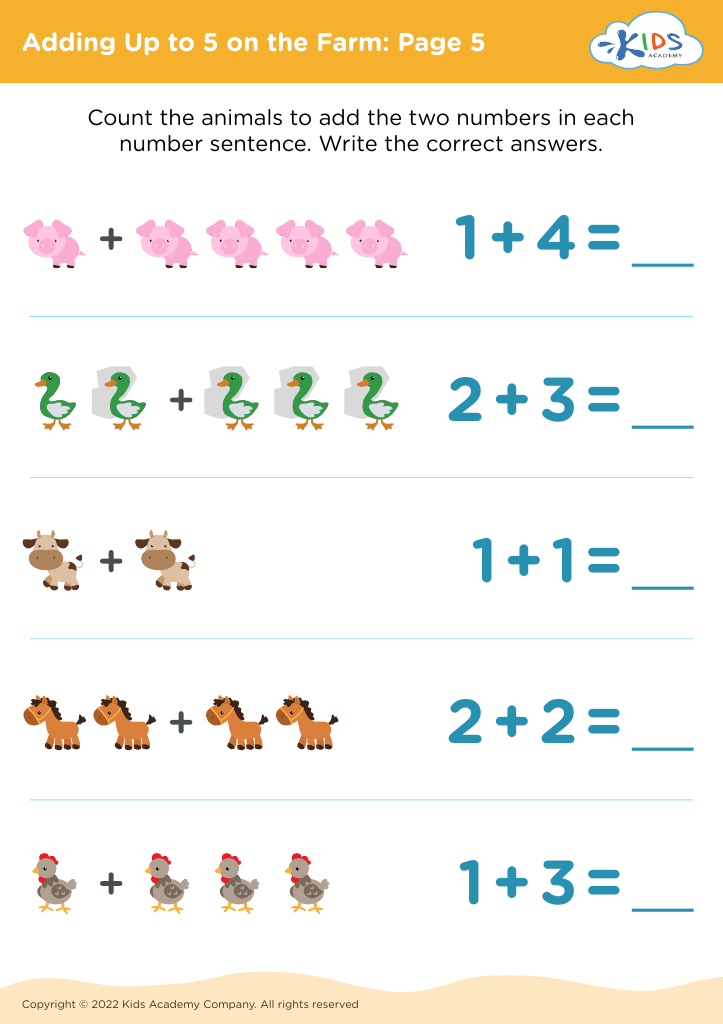
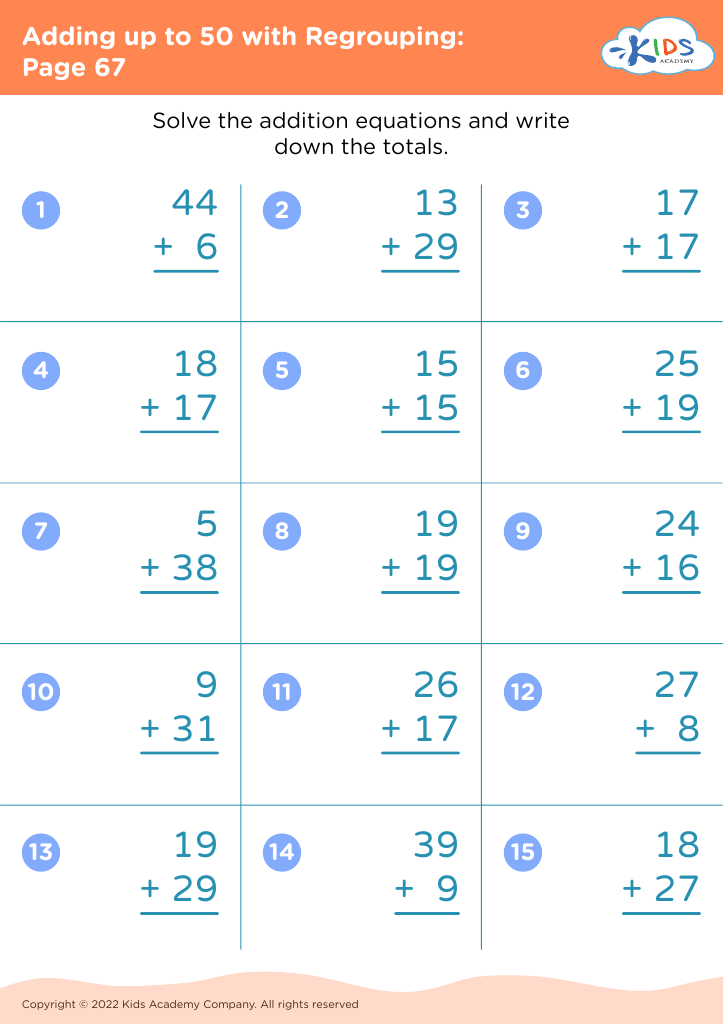
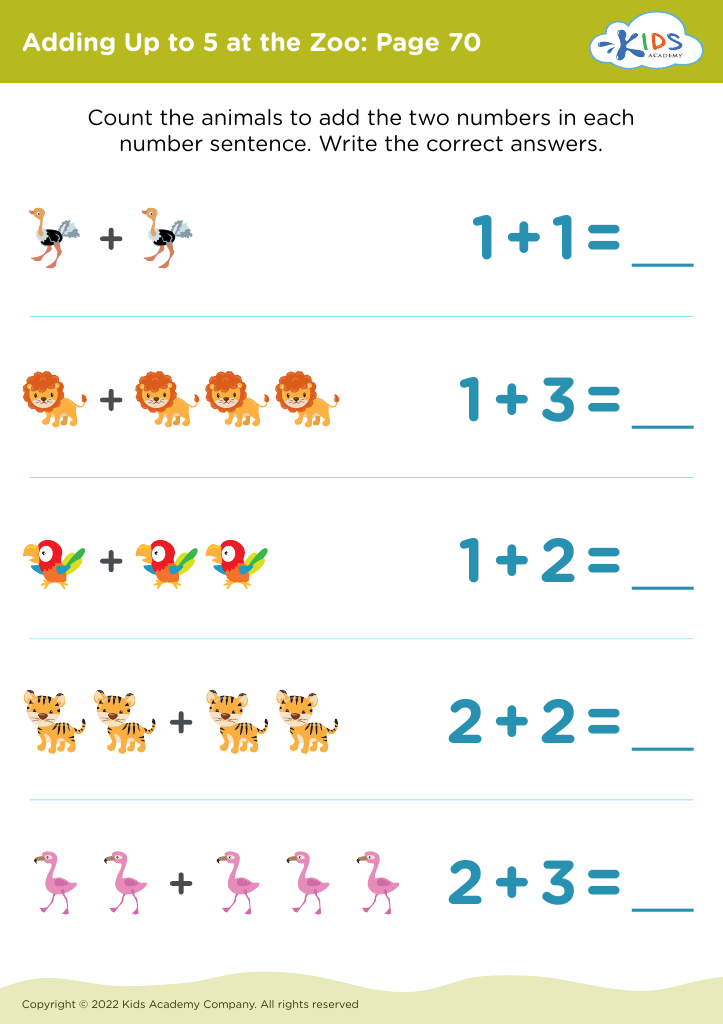
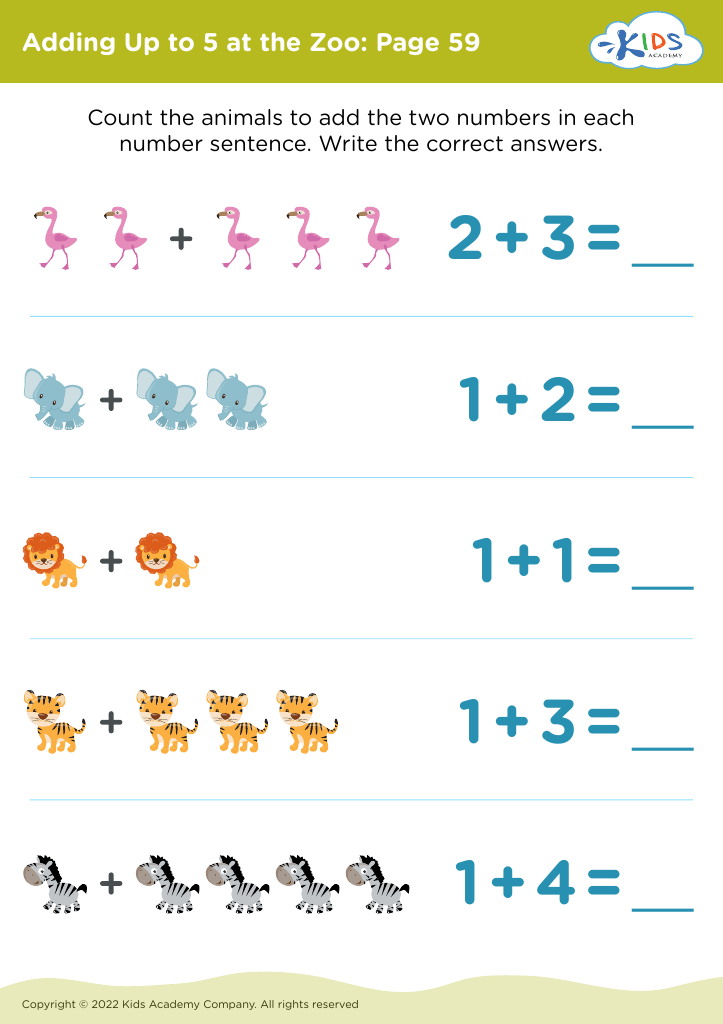
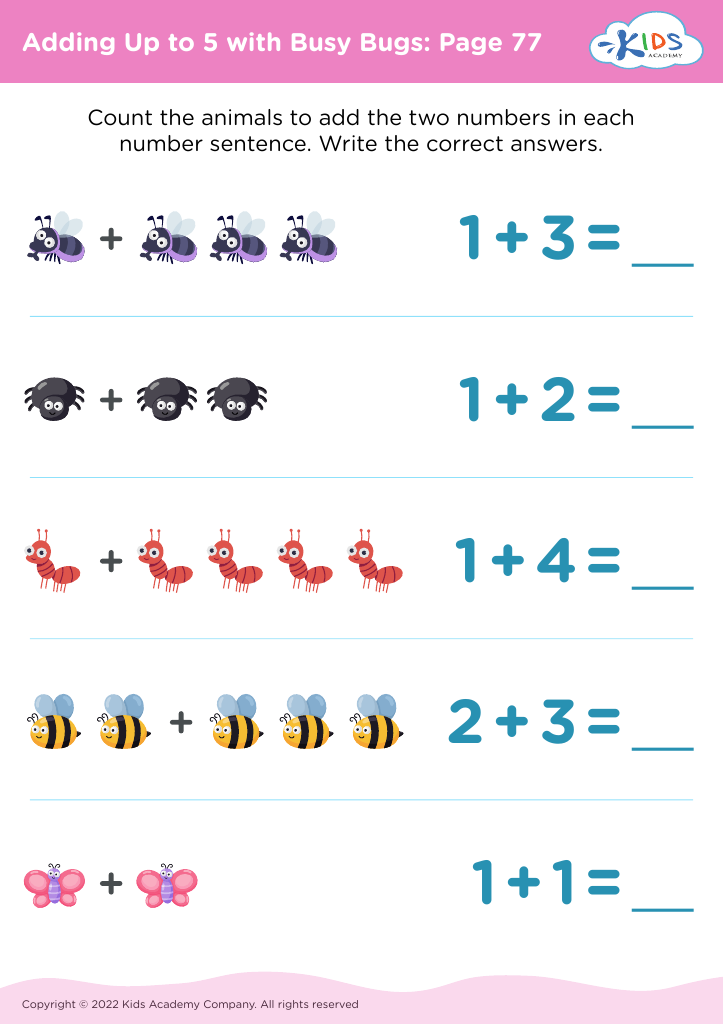
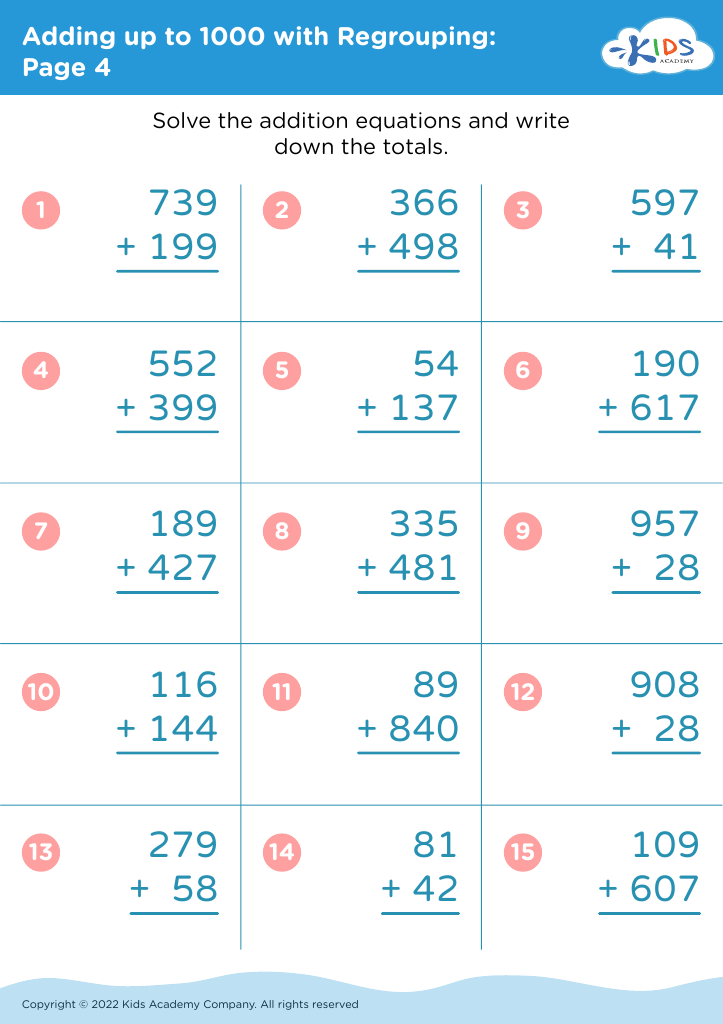
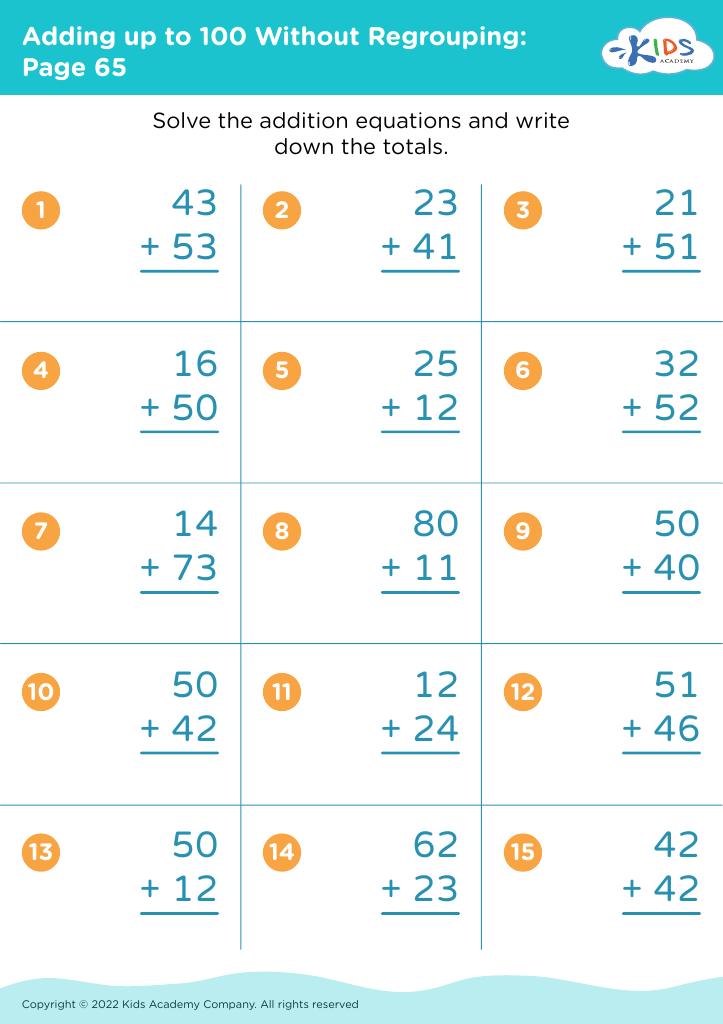
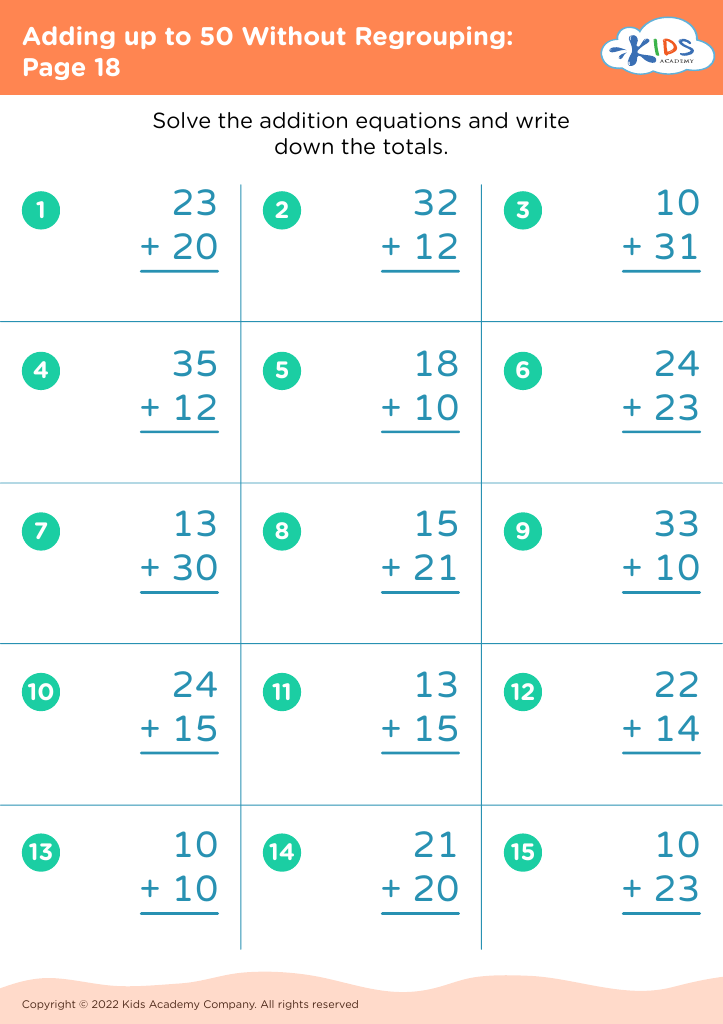
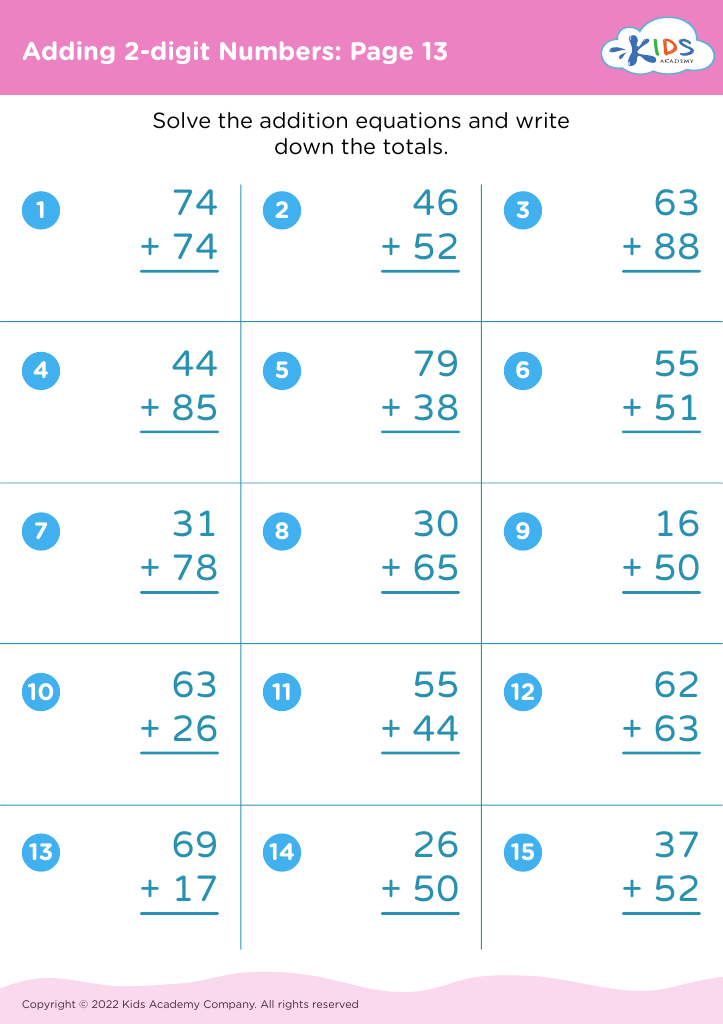
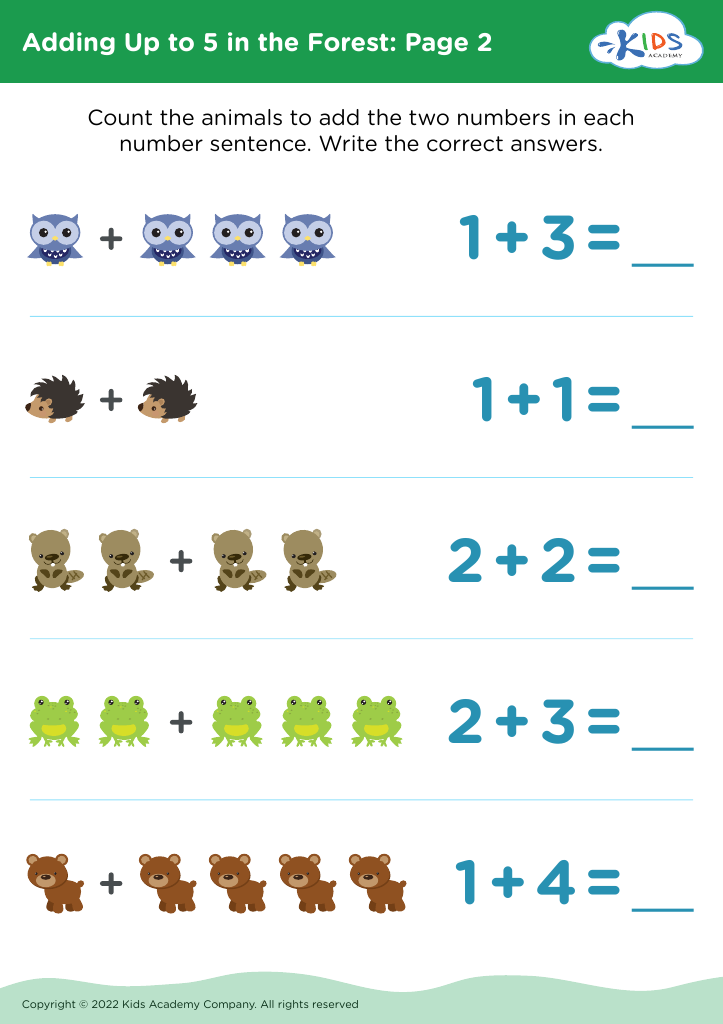
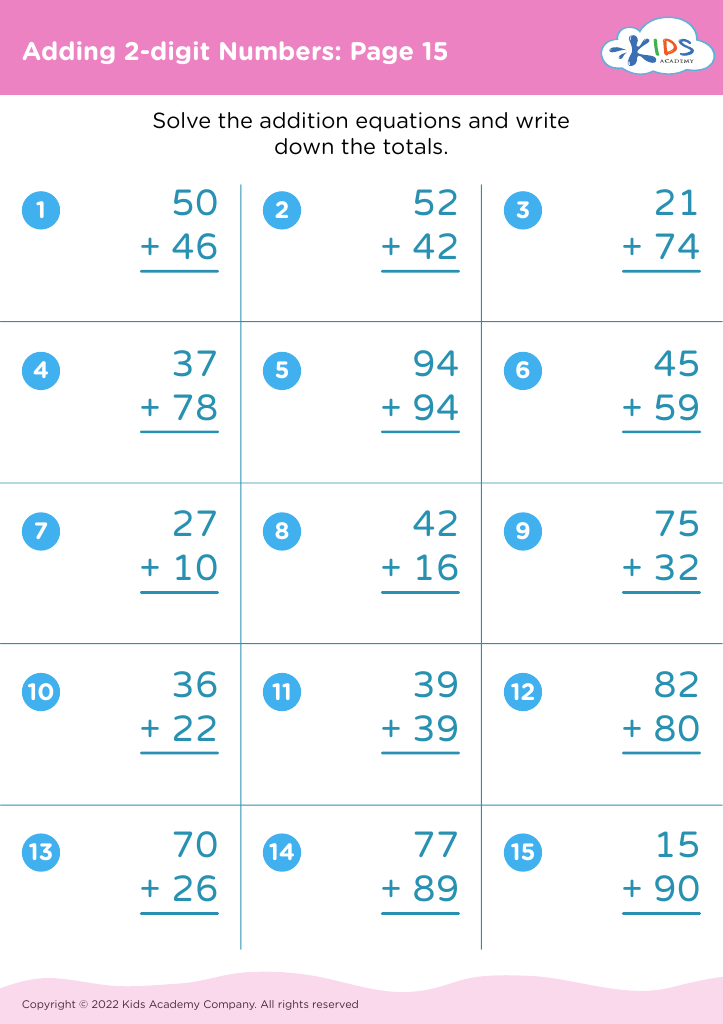
Boost your child's arithmetic foundation with our Basic Math Skills Addition Worksheets for ages 4-9. These engaging and colorful worksheets are designed to make learning addition fun and interactive. Featuring simple equations, visual aids, and progressively challenging problems, our worksheets help young learners build confidence and proficiency in basic math. Perfect for preschool through early elementary students, these resources are ideal for both classroom and homeschooling settings. Enhance computational skills while fostering a love for math through consistent practice and hands-on activities. Download them now from Kids Academy for a solid start in math success!
Favorites
With answer key
Interactive
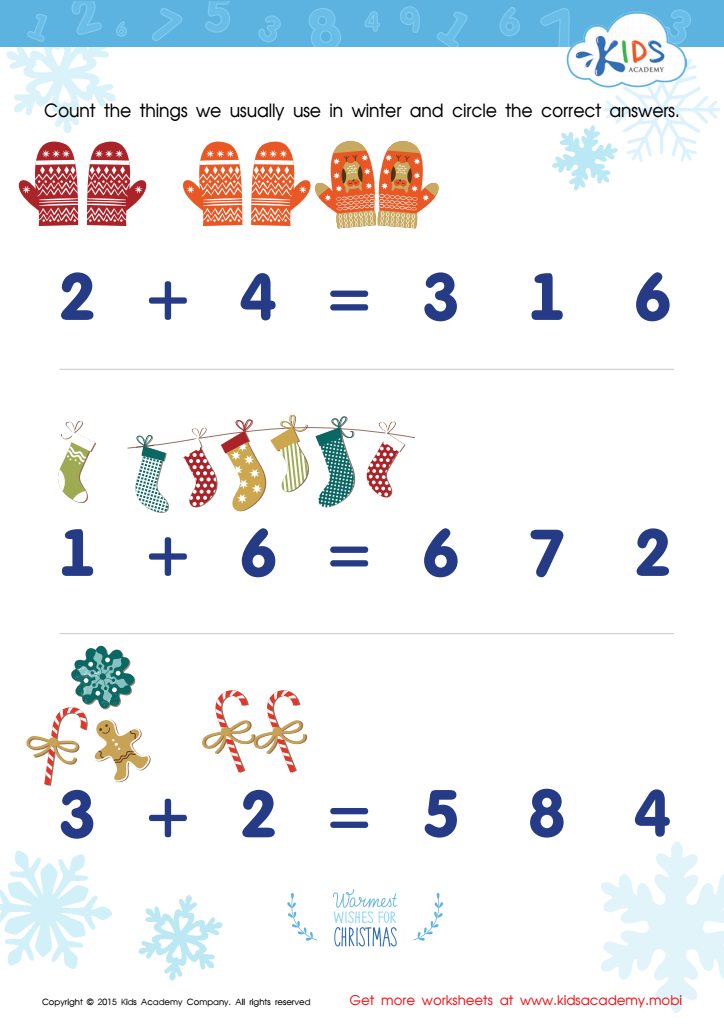
Count Winter Things Worksheet
This chilly winter afternoon, help your kid warm up with Kids Academy's free math worksheet - full of bright pictures and addition practice. Let them count the things and write in the numbers for a great brain training and math head start. Get more free math worksheets here. (80 words)
 Assign to My Students
Count Winter Things Worksheet
Worksheet
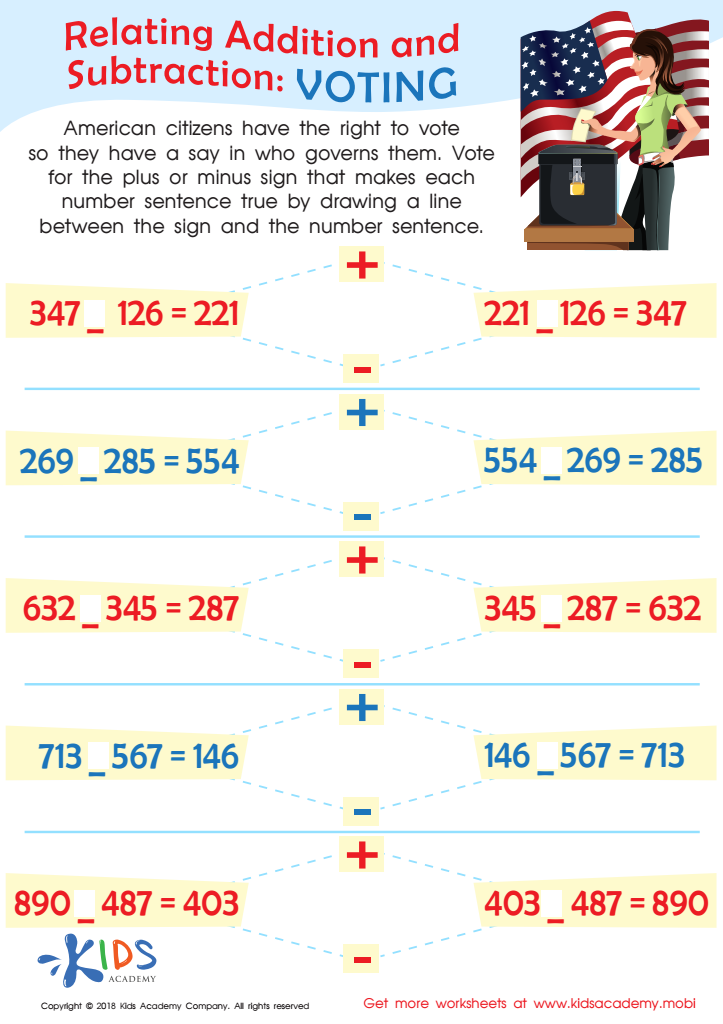
Voting Worksheet
This worksheet combines Social Studies and Math, teaching kids the democratic concept of voting. Guide learners to observe the problem, and decide if it needs a plus or minus. They "vote" for the correct answer by drawing a line from the problem to the correct operation symbol. Tally up the votes to check the answers!
Voting Worksheet
Worksheet
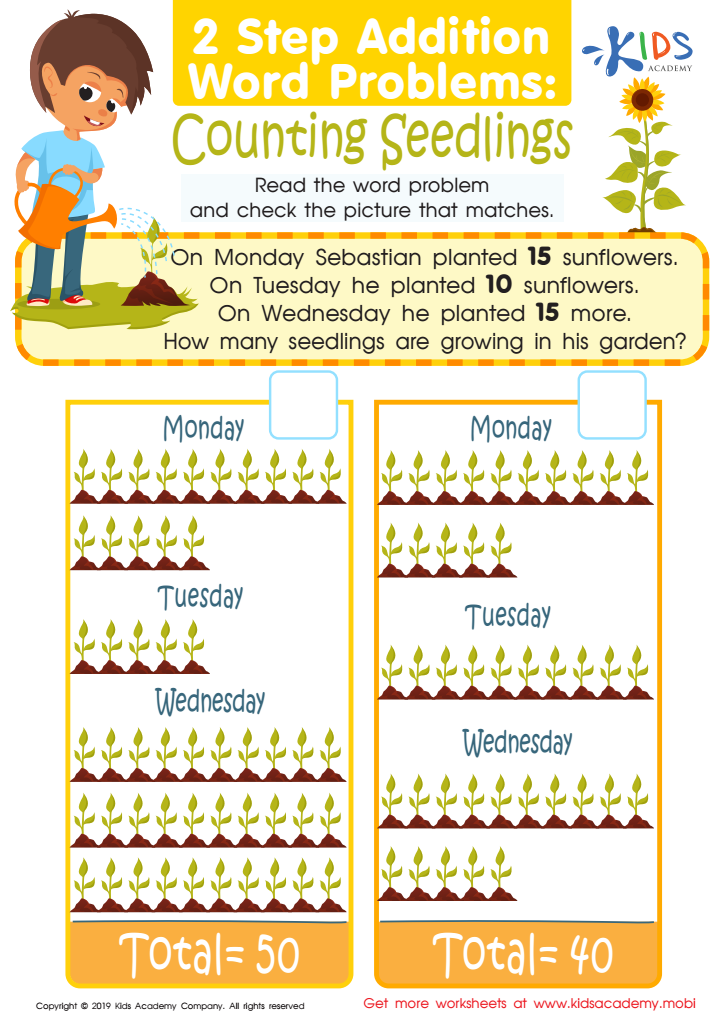
Counting Seedlings Worksheet
Understanding math word problems is key. Multiple steps can prove challenging - this free worksheet provides one-to-one picture representation to help kids solve multi-step addition word problems. Strengthen addition skills by choosing the matching picture to the answer.
Counting Seedlings Worksheet
Worksheet
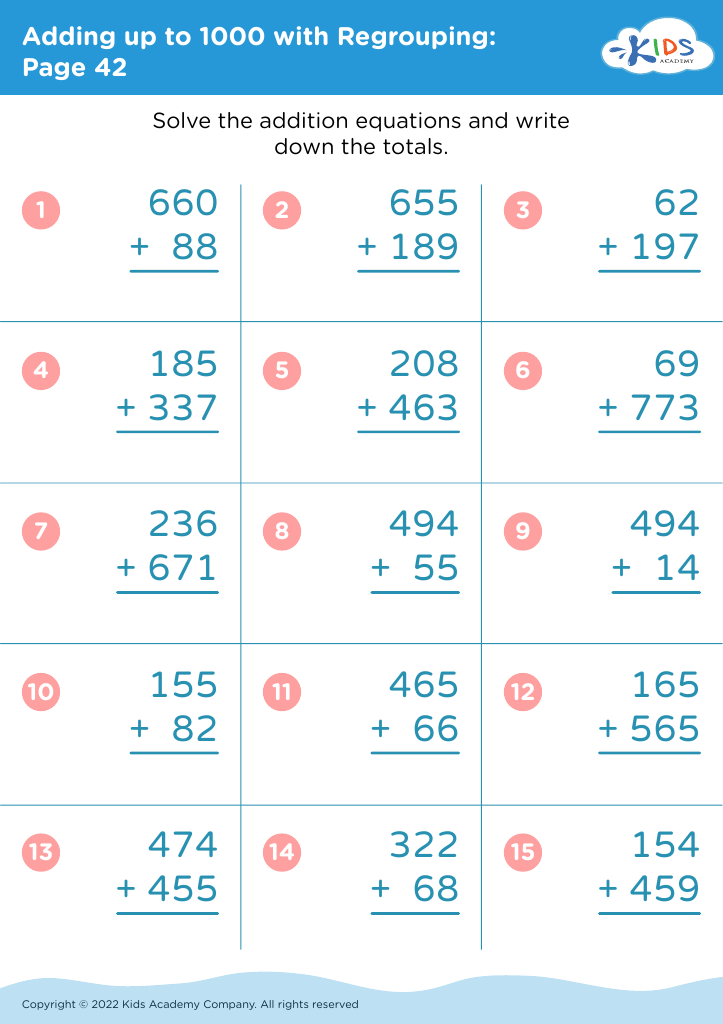
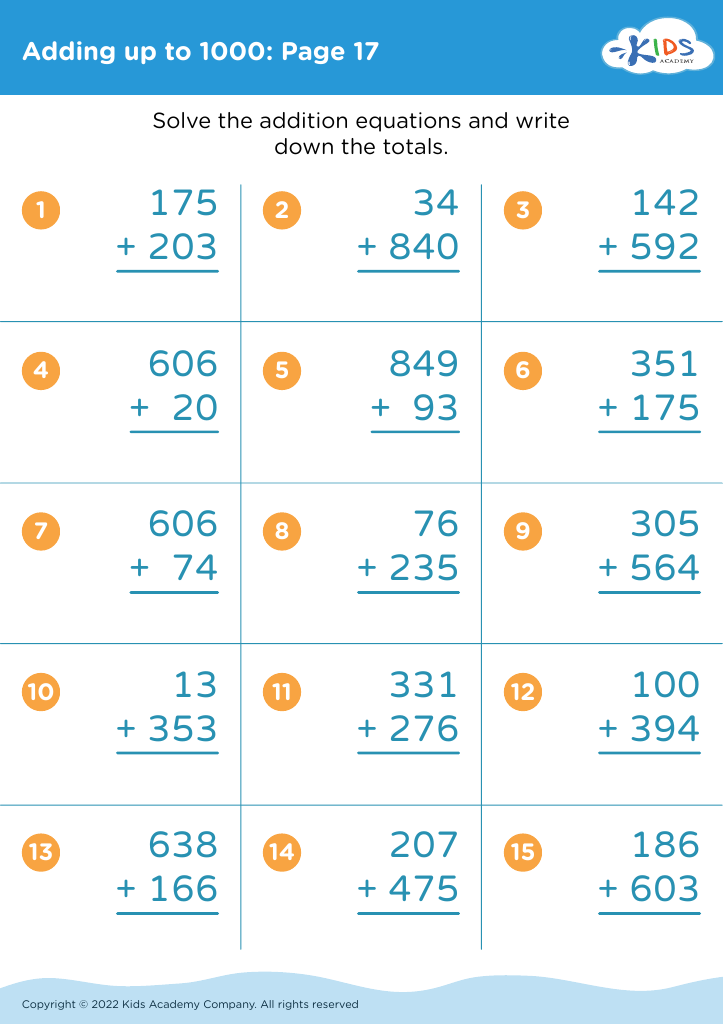
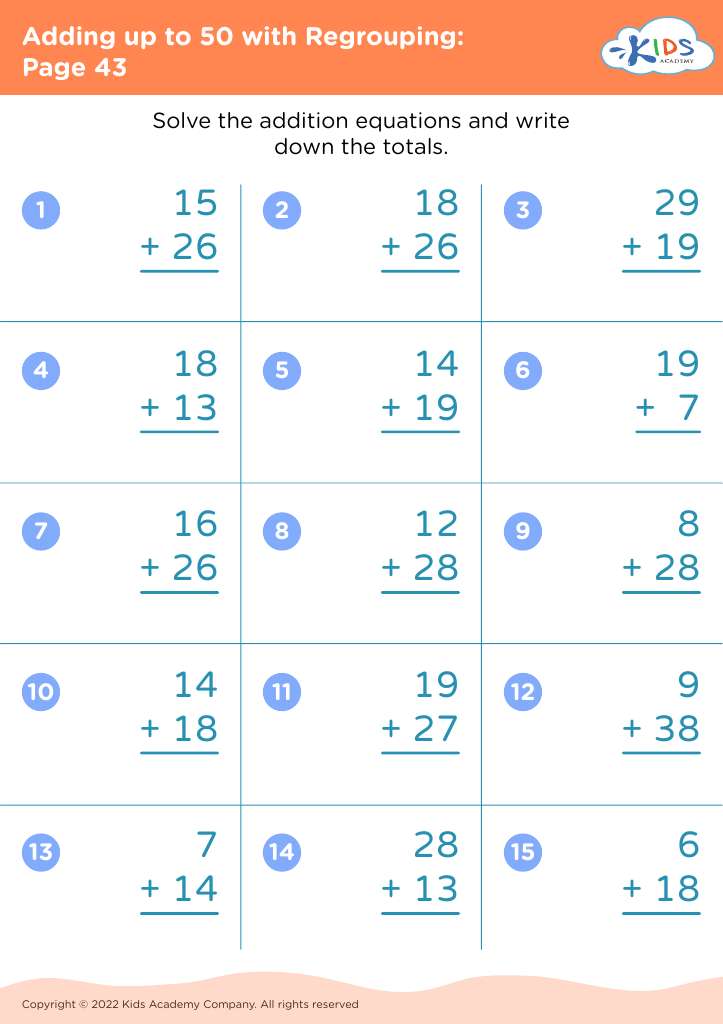
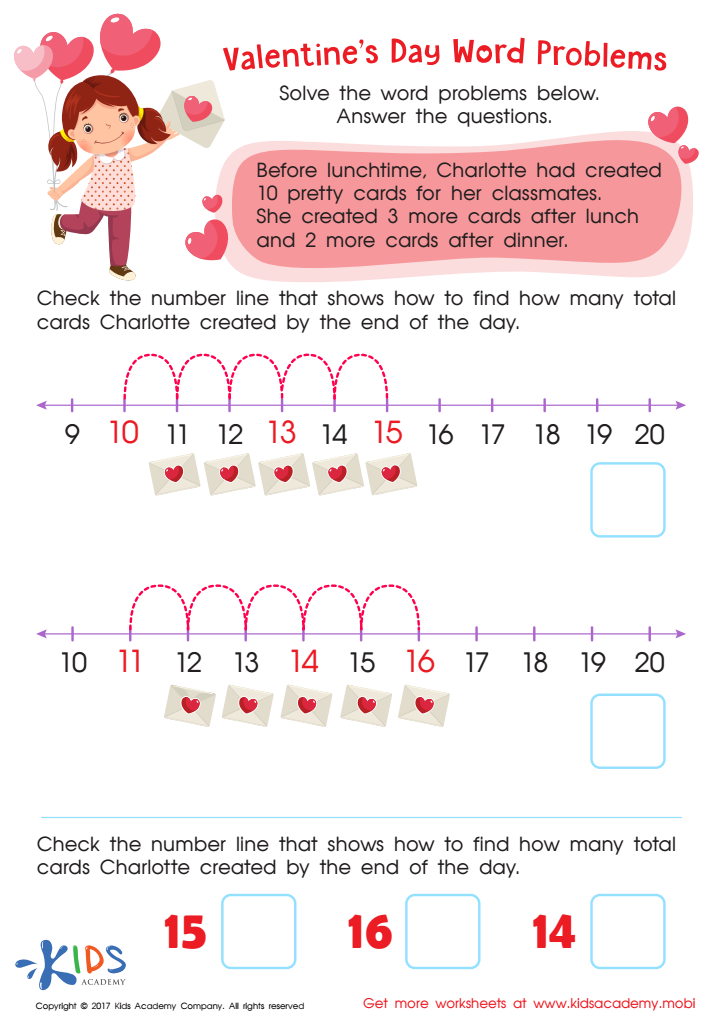
Valentines Day Word Problem Worksheet
This Valentine's Day worksheet will help your child practice using a number line to solve an addition problem. It's a great way to boost confidence and make solving word problems a breeze.
Valentines Day Word Problem Worksheet
Worksheet
Join Kids Academy for Free
Who is primarily going to use this learning content?








Basic math skills, particularly addition, serve as a fundamental cornerstone for all higher mathematical concepts, making them crucial for children aged 4-9. During early childhood, the brain is highly adaptable and capable of absorbing vast amounts of information. Introducing addition at a young age helps build a solid mathematical foundation, fostering cognitive development and enhancing problem-solving abilities that are valuable in everyday life and future studies.
For parents and teachers, focusing on basic math skills like addition can also help identify early learning strengths and challenges, allowing for timely intervention and support if necessary. Children who master addition in their formative years typically find it easier to grasp more complex mathematical concepts like subtraction, multiplication, and division later on.
Additionally, early success in math can boost a child's confidence and foster a positive attitude towards the subject. Enjoyable and effective math experiences can reduce math anxiety and increase a child's willingness to engage with the subject, encouraging lifelong learning.
Overall, caring about and supporting the development of basic addition skills in young children can set them on a path to academic success, critical thinking, and a love for learning that extends beyond the math classroom.








