Develop number recognition Addition Worksheets for Ages 4-9
5 filtered results
-
From - To
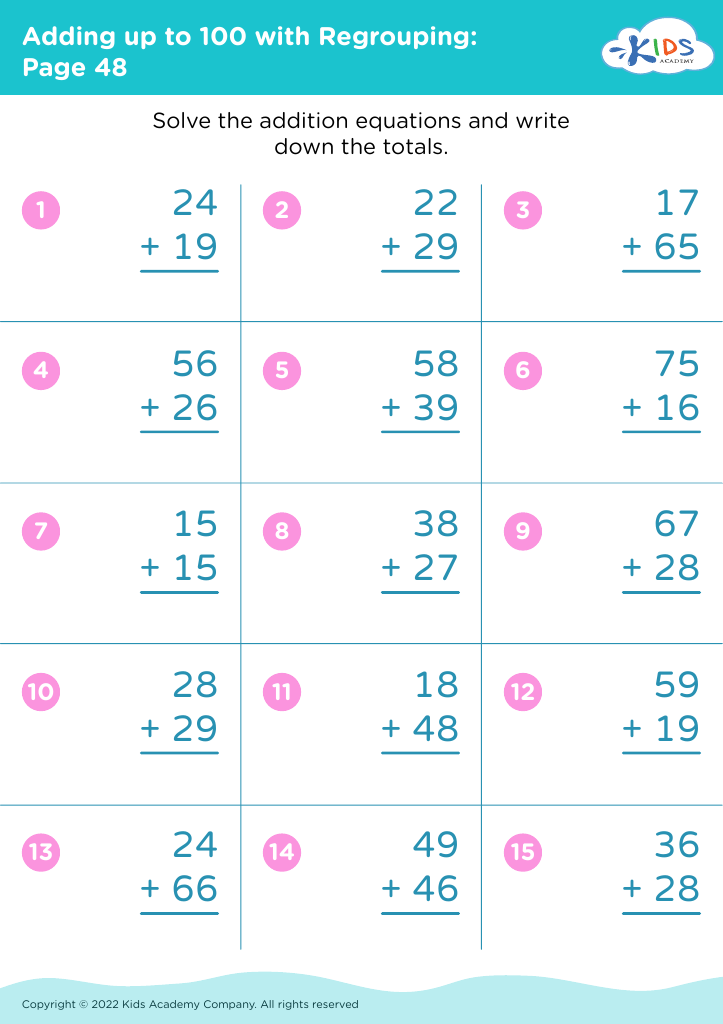
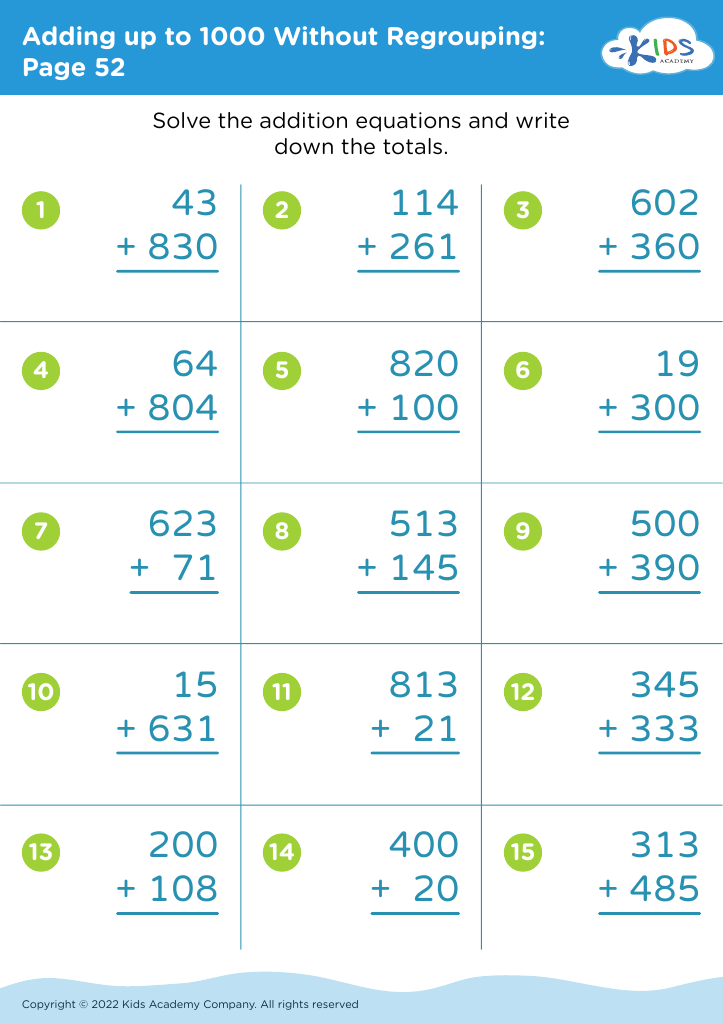
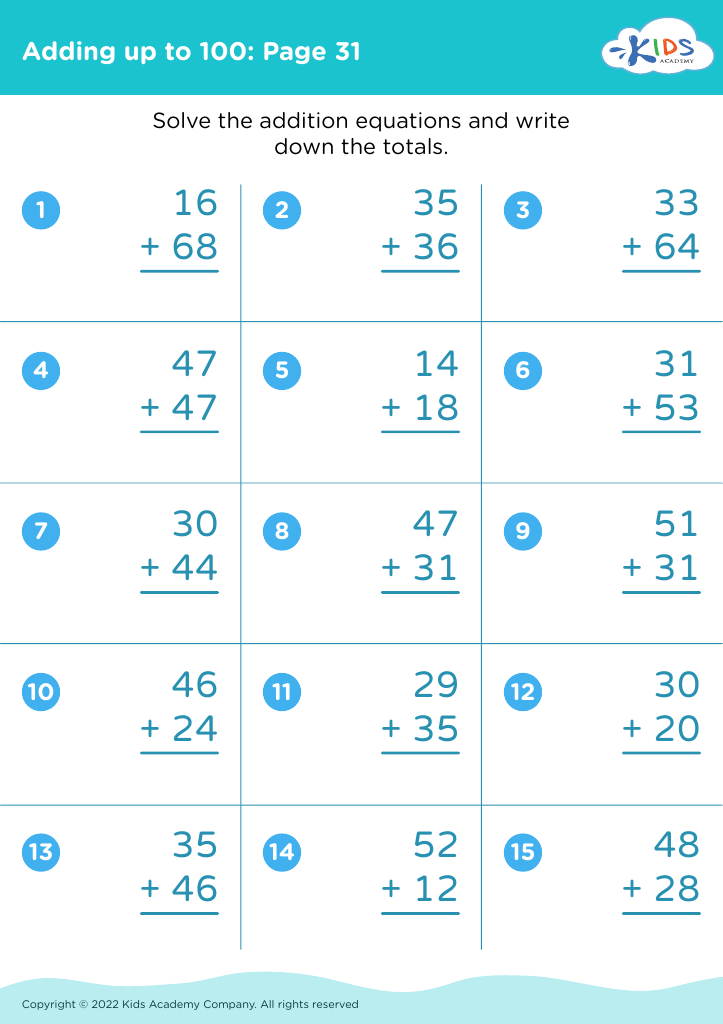
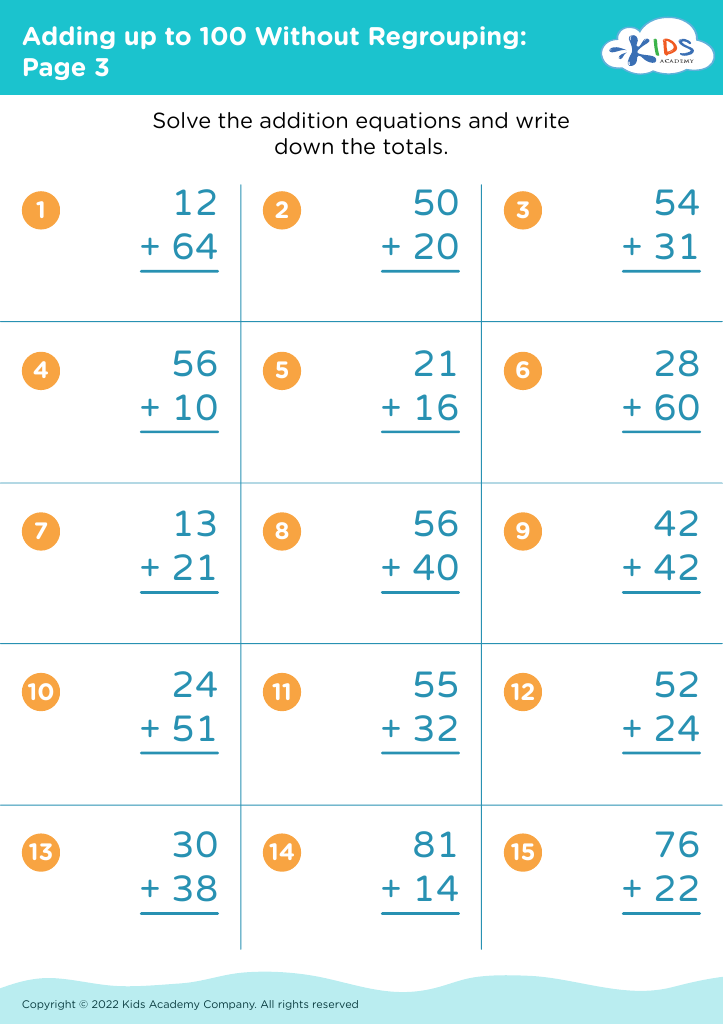
Enhance your child's mathematical journey with our engaging number recognition addition worksheets designed for ages 4-9. These interactive worksheets provide a fun and effective way for young learners to recognize numbers while mastering addition. Each worksheet fosters visual learning through colorful illustrations and intuitive exercises, making math enjoyable and approachable. Kids will develop essential math skills as they solve attractive problems, helping them build a strong foundation for future math concepts. Ideal for homeschoolers and classroom settings, our resources are perfect for educators and parents aiming to promote confidence in young mathematicians. Start your child's number recognition adventure today!
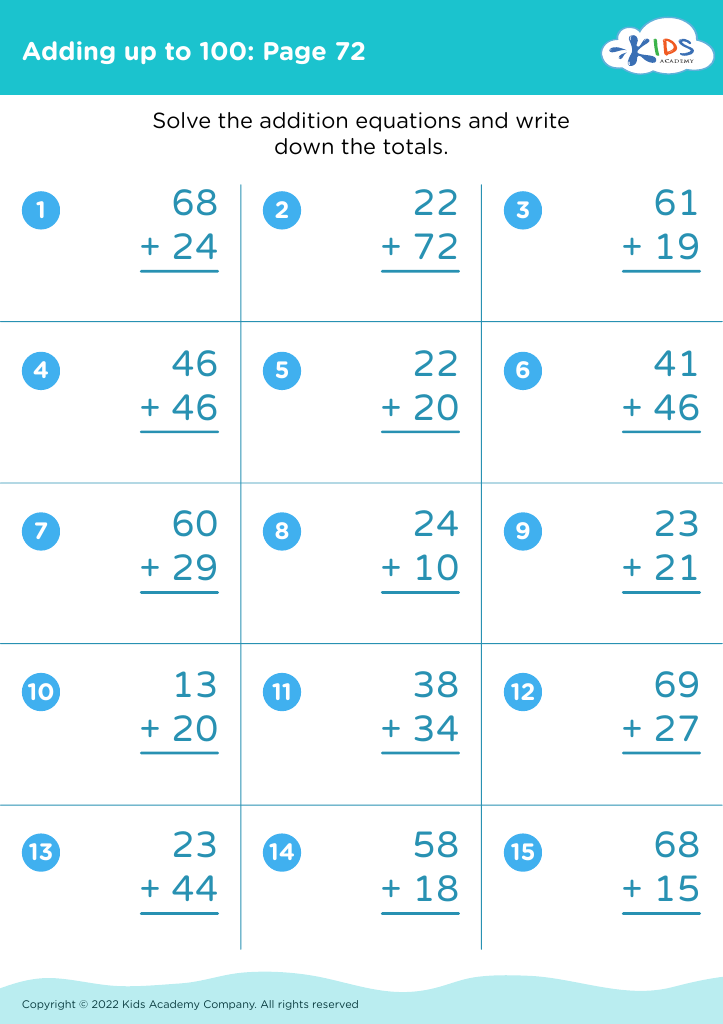





.jpg)


Parents and teachers should prioritize developing number recognition and addition skills in children aged 4-9 because these foundational skills are essential for mathematical literacy and overall cognitive development. Number recognition—the ability to identify and understand numbers—lays the groundwork for children to engage meaningfully in everyday math-related activities, such as counting objects, reading prices, or understanding time.
Moreover, mastering basic addition helps foster critical thinking and problem-solving abilities. When children learn to add, they begin to develop a sense of quantity and relationships between numbers, which can enhance their confidence in tackling more complex concepts later on. These skills are integral not just in math but in everyday situations, such as budgeting, cooking, and time management.
Early development of these abilities can also reduce math anxiety, an essential psycho-emotional factor that can affect a child's future learning experiences. Additionally, engaging children in fun, numeracy-focused activities nurtures a positive attitude towards learning, making it a joyful experience rather than a chore. By investing in this early education, parents and teachers provide children with the tools they need to succeed academically and in life, thus laying a strong foundation for future educational pursuits.








