
Developing Concentration Addition Worksheets for Ages 4-9
5 filtered results
Difficulty Level
Grade
Age
-
From - To
Subject
Activity
Standards
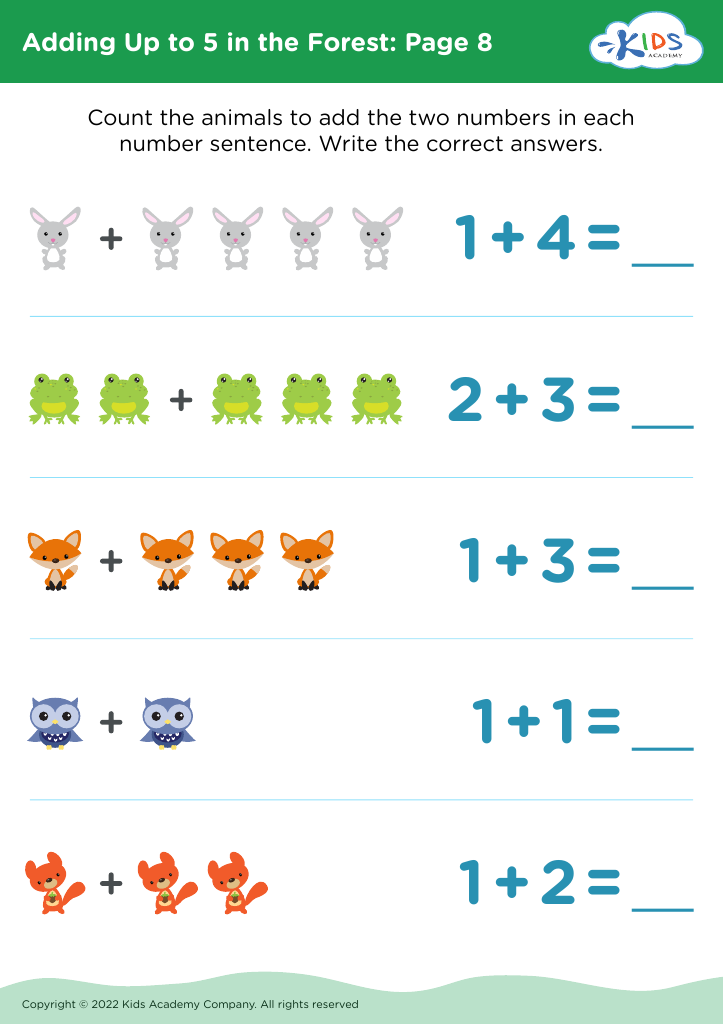
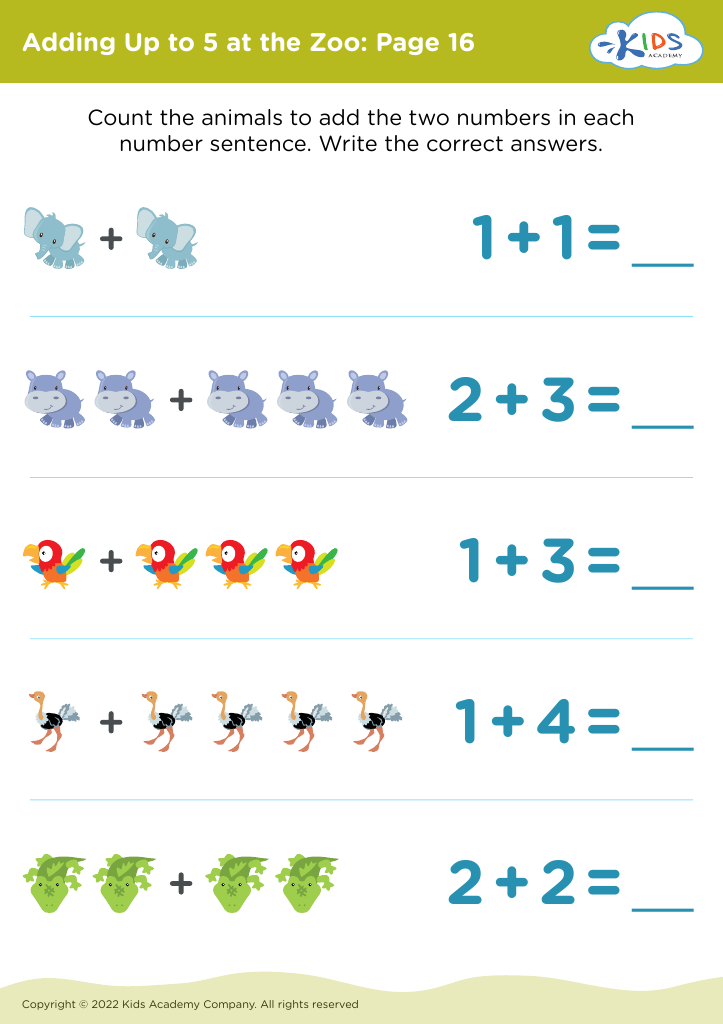
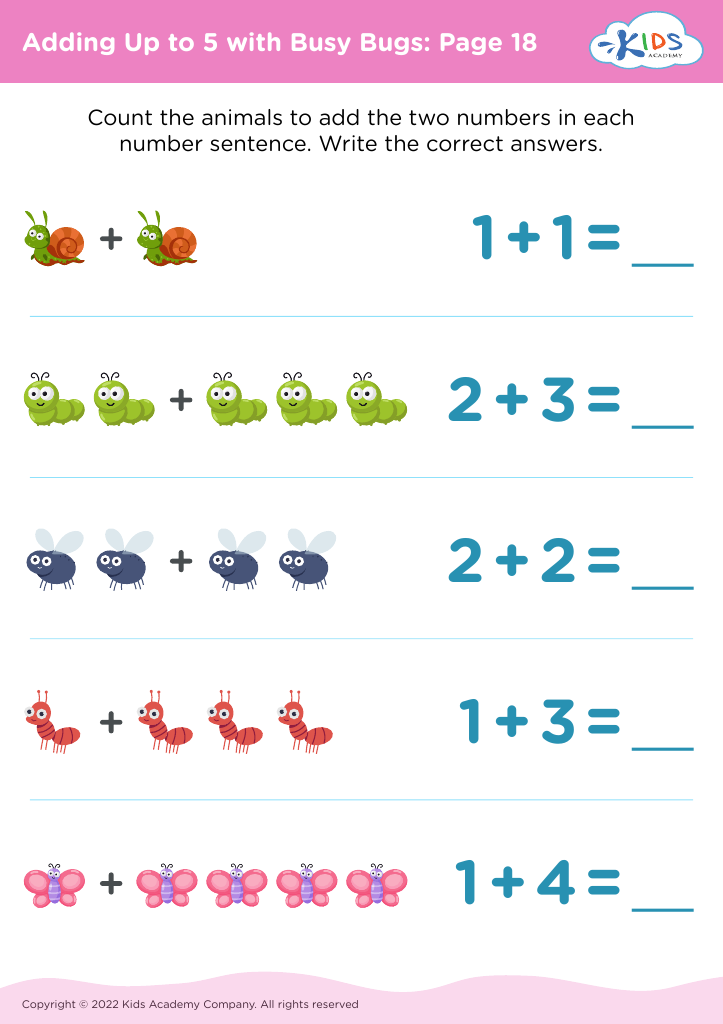
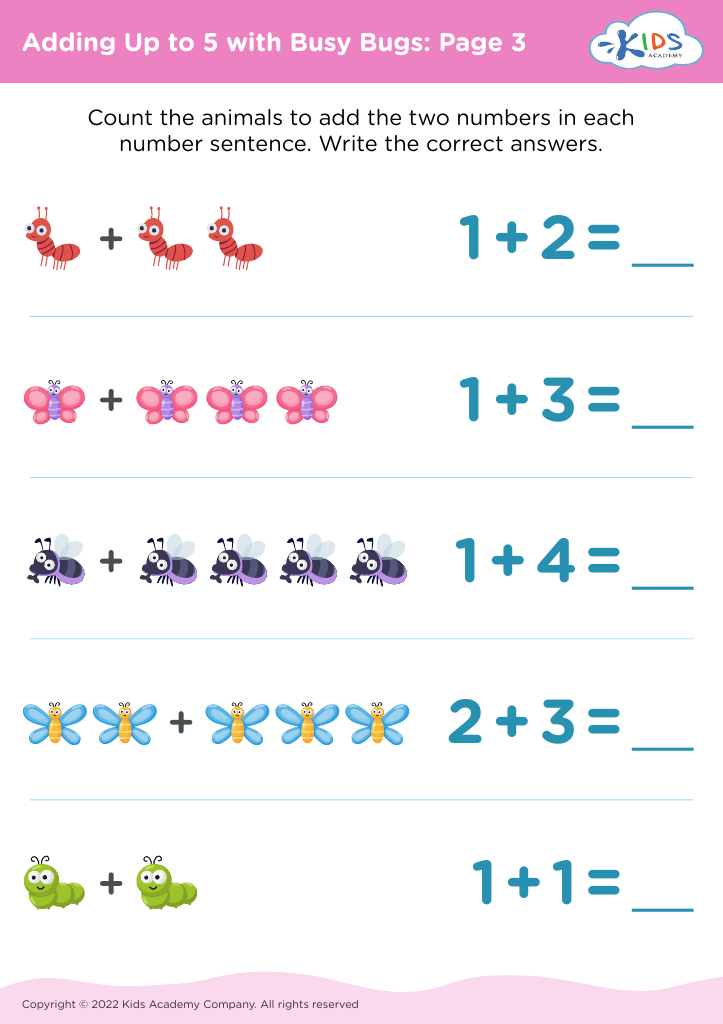
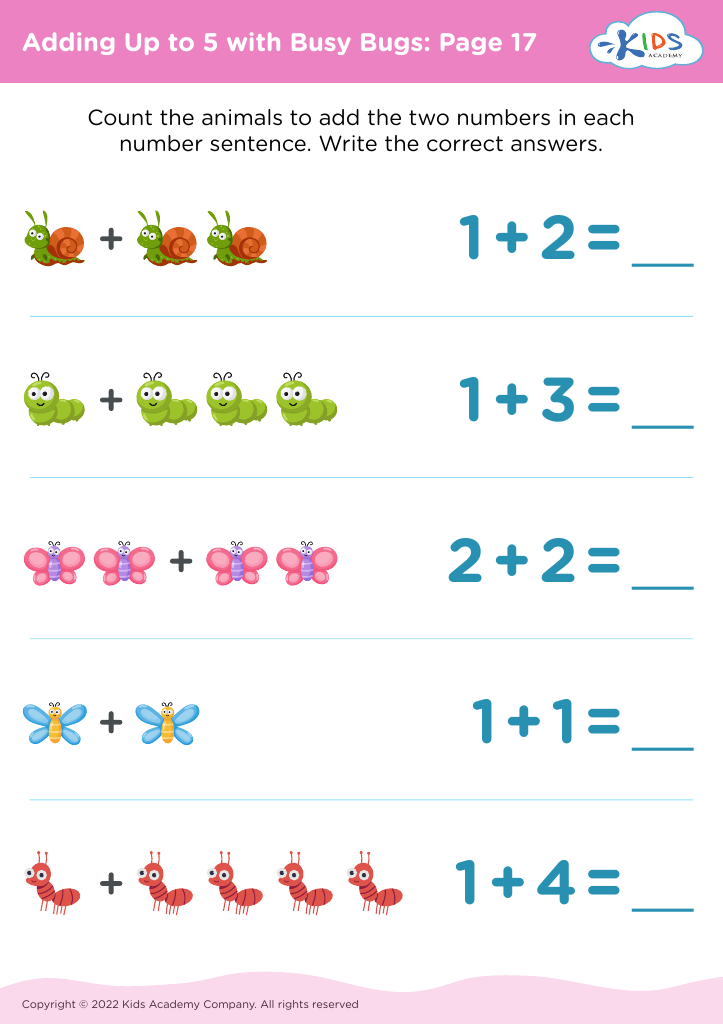
Developing concentration in young learners is crucial for their academic success. Our specialized addition worksheets, designed for ages 4-9, seamlessly blend fun and education to enhance focus and mathematical skills. Crafted by experts, these worksheets incorporate captivating visuals and engaging exercises that gradually increase in complexity. They are perfect for fostering attention, critical thinking, and problem-solving abilities. By integrating these activities into their daily routine, children will build a strong foundation in addition while sharpening their concentration. Ideal for both home and classroom use, our printable worksheets are an excellent resource for parents and educators striving to support young learners' cognitive development.
Favorites
With answer key
Interactive
Join Kids Academy for Free
Who is primarily going to use this learning content?








Developing concentration in addition for children aged 4-9 is critical because it builds a foundation for their future learning and success. At this age, children's brains are especially receptive to developing cognitive skills, which enhance their ability to focus and absorb information. Concentration directly impacts a student's capacity to grasp and retain mathematical concepts like addition, which is essential for progressing to more complex arithmetic and problem-solving tasks as they grow older.
Fostering concentration helps in cultivating good study habits early on. When children learn to focus on tasks without getting easily distracted, they build the resilience and determination needed to tackle academic and life challenges effectively. This sets them up for disciplined and structured learning, critical in later years.
Moreover, developing concentration through activities like addition aids in enhancing their analytical thinking, memory, and processing skills. Engaging in exercises that improve focus also positively affects behavior, as children better manage their impulses and attention.
For parents and teachers, investing time and resources into nurturing concentration through fun and educational activities can provide children with a skill set essential for lifelong learning, self-discipline, and academic achievement. Encouraging concentration and attention not only boosts their math skills but also equips them with tools vital for overall intellectual development and future success.








