Developing fine motor skills Addition Worksheets for Ages 4-9
4 filtered results
-
From - To
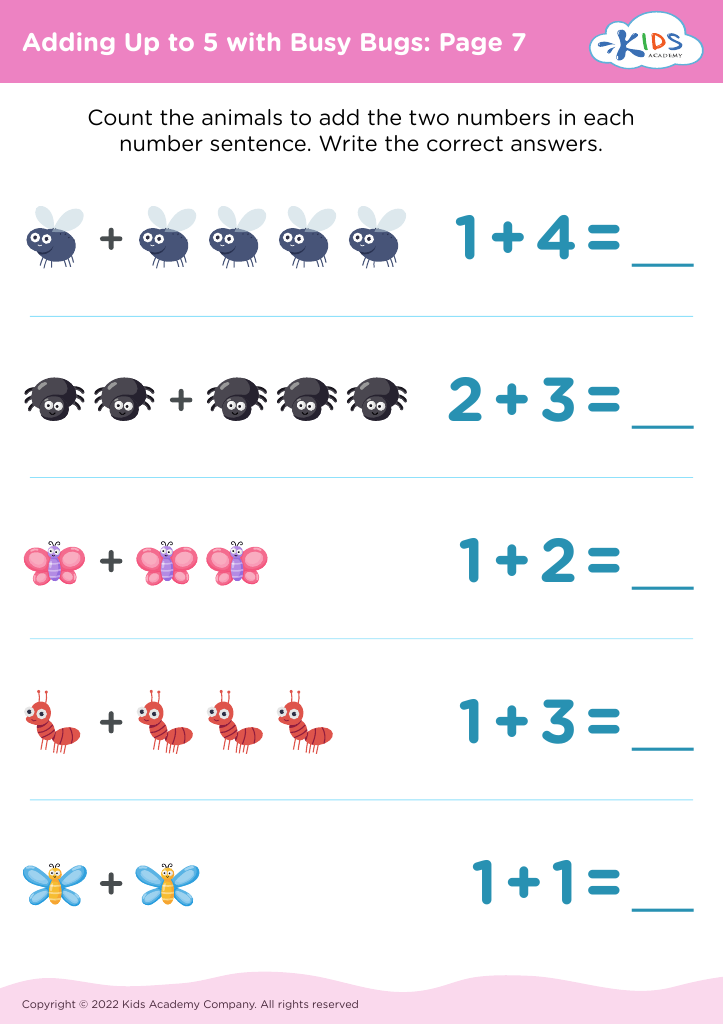
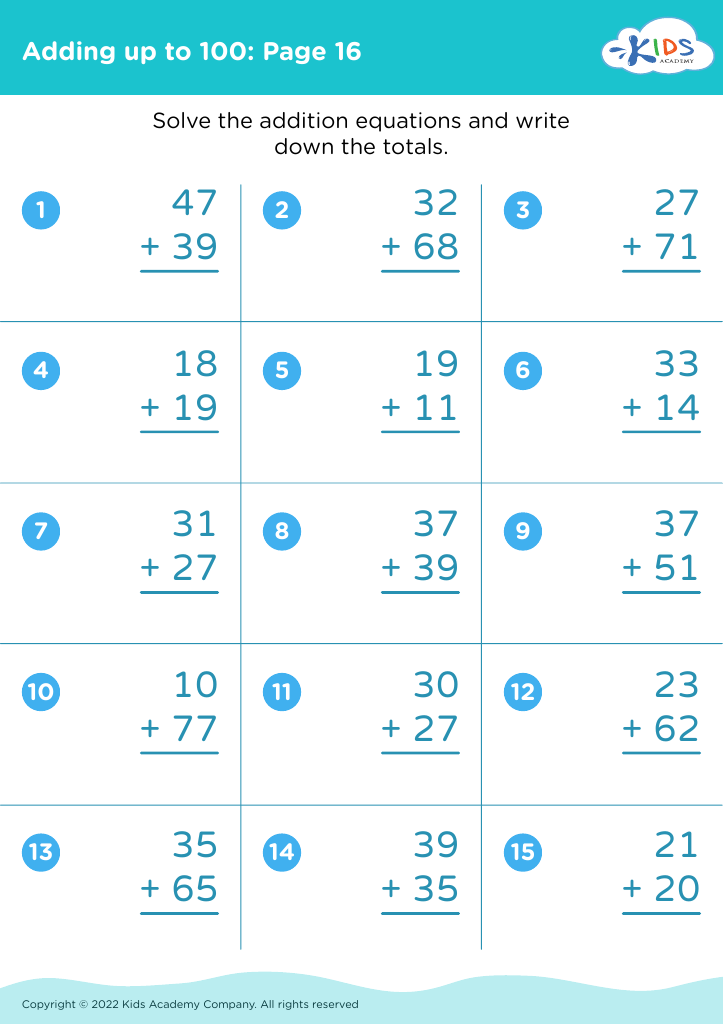
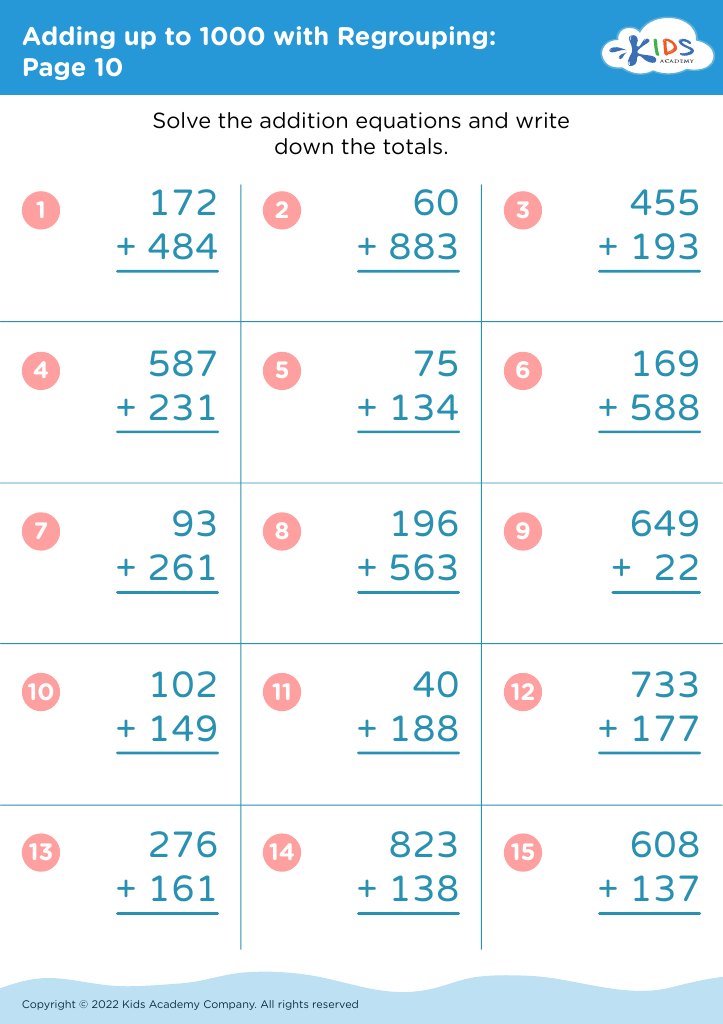
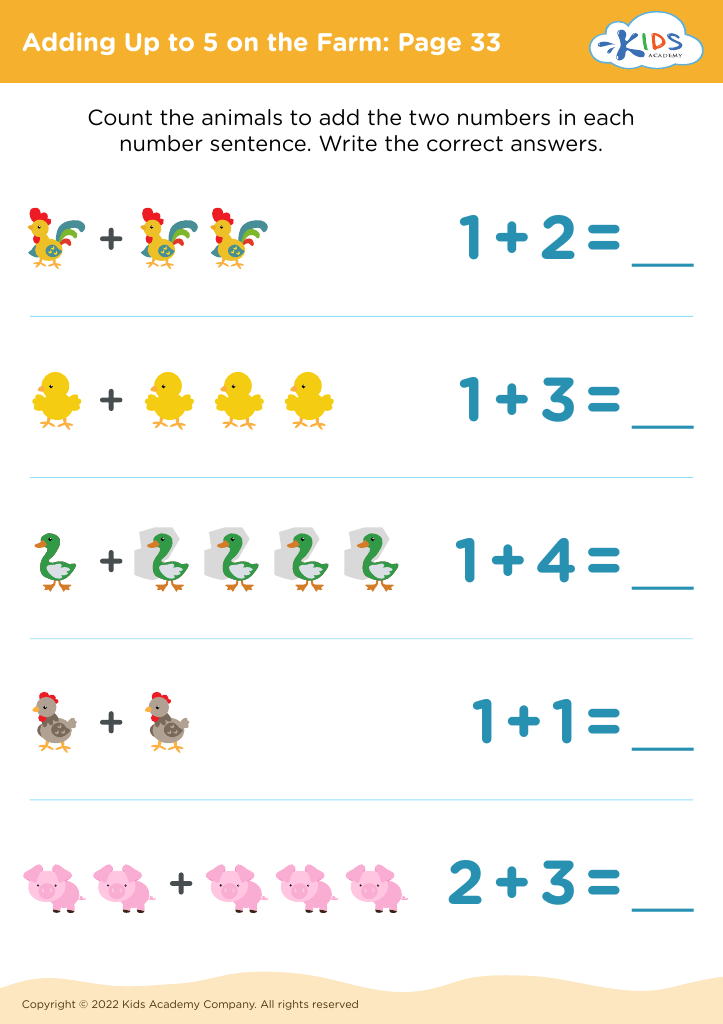
Unlock your child's potential with our engaging "Developing Fine Motor Skills Addition Worksheets" designed specifically for ages 4-9. These adaptable worksheets combine the fun of math with essential fine motor skill development. Each page focuses on enhancing dexterity through playful activities like tracing numbers, coloring, and interactive exercises, ensuring your child grasps addition concepts effectively. Perfect for young learners, our resources foster a love for learning while building confidence in both math and fine motor tasks. Ideal for classrooms or home practice, these worksheets provide a creative way to prepare your child for future educational success. Get started today!








Developing fine motor skills in children aged 4-9 is crucial, as it lays the foundation for various essential tasks they will encounter throughout their lives. Fine motor skills refer to the ability to control small muscles in hands and fingers, which are vital for everyday activities such as writing, buttoning clothes, and using utensils. For parents and teachers, promoting these skills is not just about physical development; it significantly impacts a child's cognitive growth, social interactions, and self-esteem.
When children engage in activities like coloring, cutting, or building with small blocks, they enhance their hand-eye coordination, dexterity, and problem-solving abilities. Such skills are directly linked to academic success, especially in literacy and math. Moreover, mastering fine motor tasks helps children develop confidence as they gain independence in managing their own activities.
By caring about and actively fostering fine motor development, parents and teachers can create an enriched environment conducive to learning and growth. Early intervention through appropriate activities equips children with the motor competencies necessary for school readiness, enabling them to navigate their educational journeys with ease and success, ultimately contributing to their overall personal development and well-being.








