Enhances number recognition Addition Worksheets for Ages 4-9
4 filtered results
-
From - To
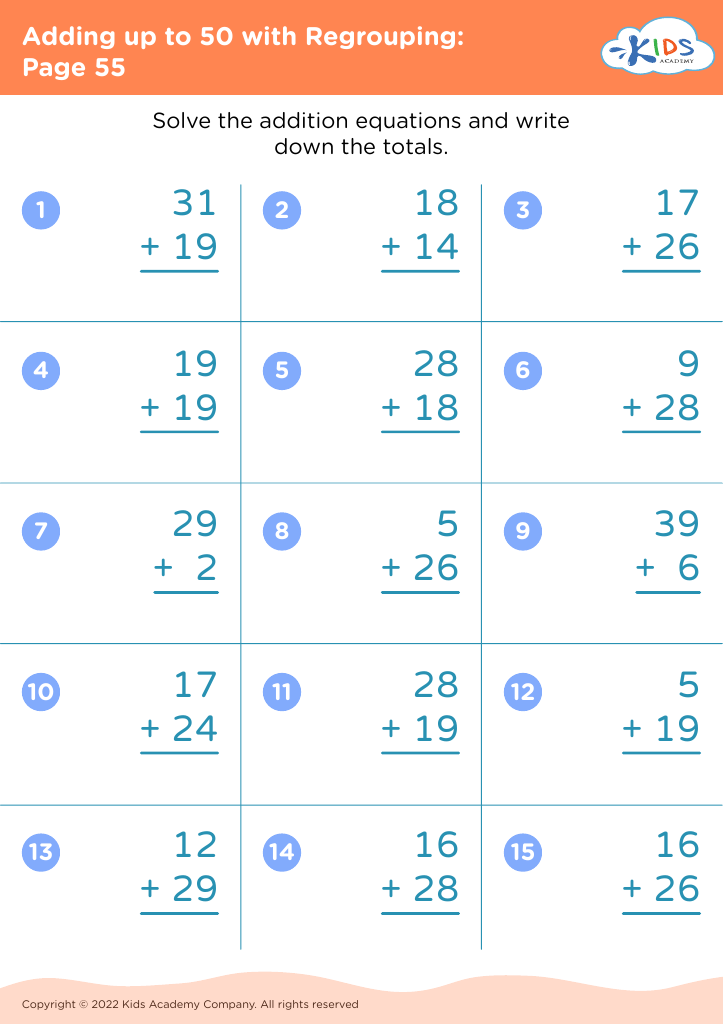
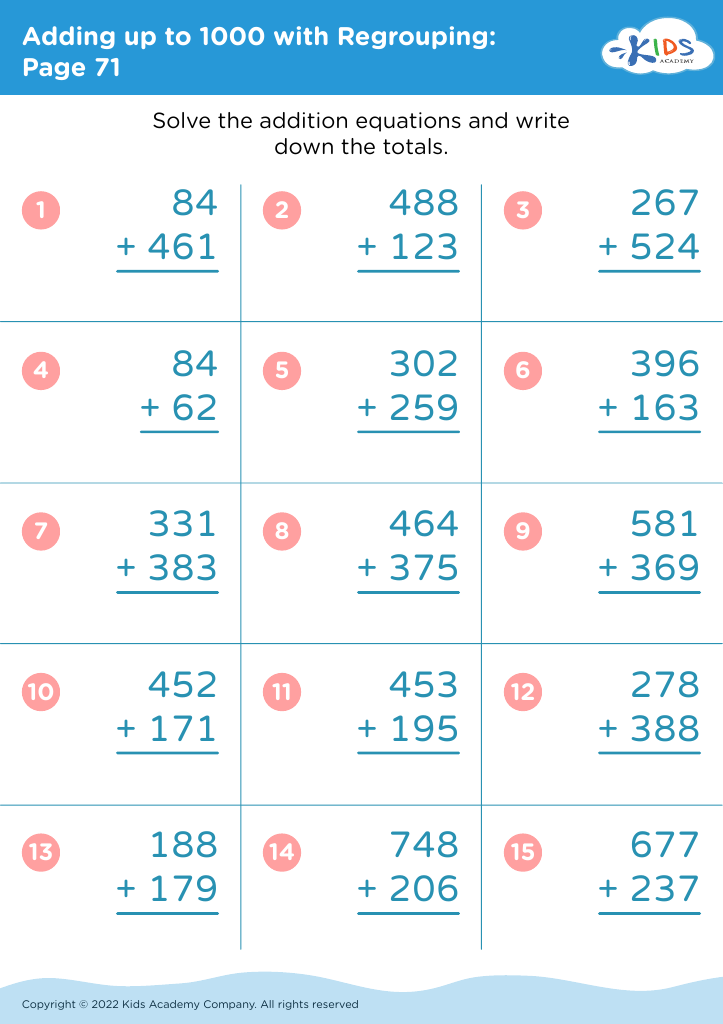
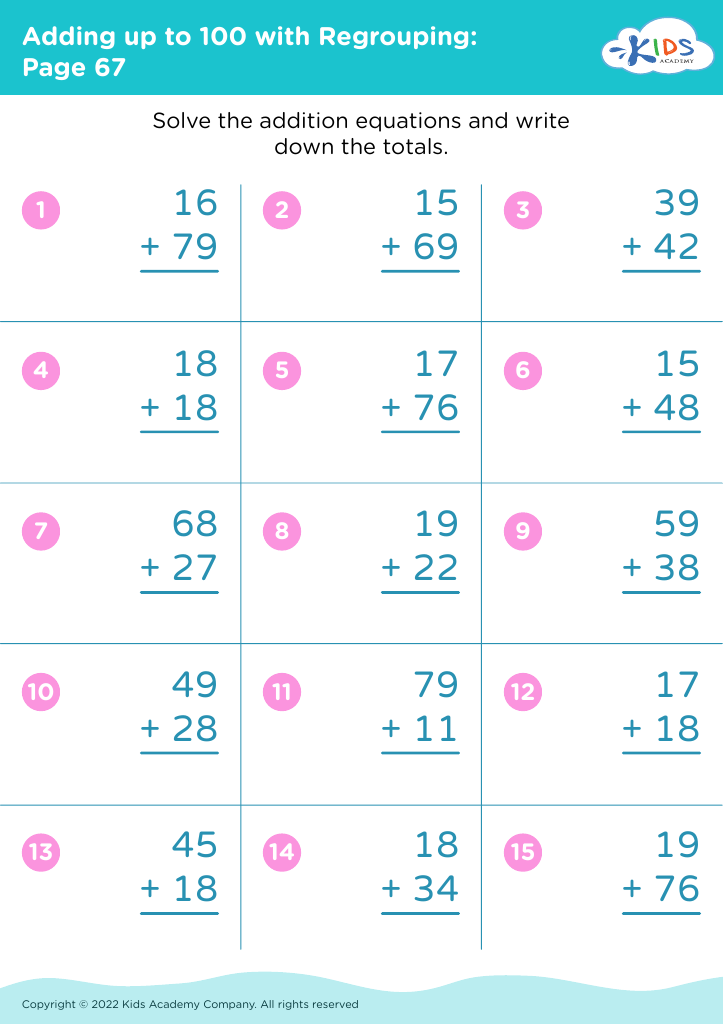
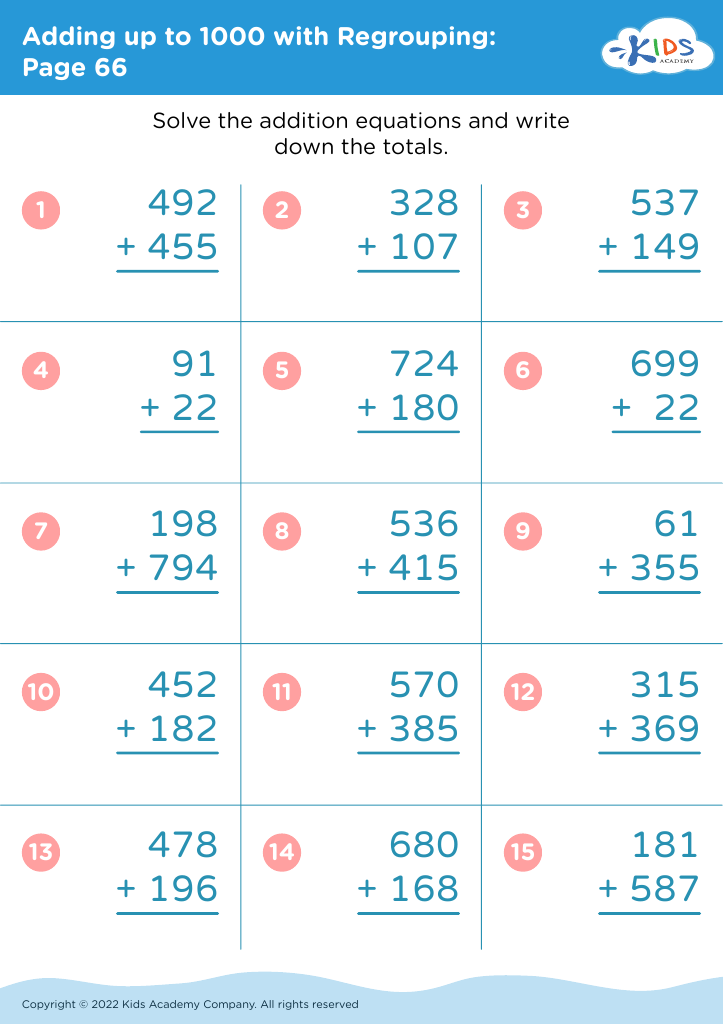
Discover engaging Addition Worksheets designed to enhance number recognition for children ages 4-9. Our fun, interactive activities help young learners develop foundational math skills while fostering a love for numbers. Each worksheet is tailored to reinforce number identification and encourage addition practice through colorful illustrations and relatable themes. With exercises focusing on visual recognition and hands-on learning, children will gain confidence in their math abilities. Perfect for homeschool, classroom, or supplemental learning, these worksheets are a valuable resource for parents and educators alike. Explore our collection and watch your child's numerical skills flourish! Start their math journey today!








Enhancing number recognition and addition skills in young learners, particularly ages 4-9, is crucial for several reasons. First, number recognition is one of the foundational skills in mathematics, serving as a building block for all future mathematical understanding. When children can recognize numbers, they develop confidence and a positive attitude toward learning, which fosters a lifelong love of math.
Additionally, mastering addition at an early age promotes critical thinking and problem-solving skills. These are essential competencies not just in mathematics, but in everyday life and in many academic areas. Establishing these skills early encourages a smooth transition into more complex mathematical concepts, reducing anxiety and frustration later on.
Parents and teachers can also play a significant role in this development. Engaging children with fun, interactive activities such as games, storytelling, or hands-on manipulatives makes learning enjoyable and effective. When adults show enthusiasm and support for math, it reinforces the importance of these skills.
Overall, prioritizing number recognition and addition during these formative years lays a strong academic foundation, supports cognitive development, and develops essential life skills that children will utilize throughout their education and beyond.








