Fine motor skills development Addition Worksheets for Ages 4-9
3 filtered results
-
From - To
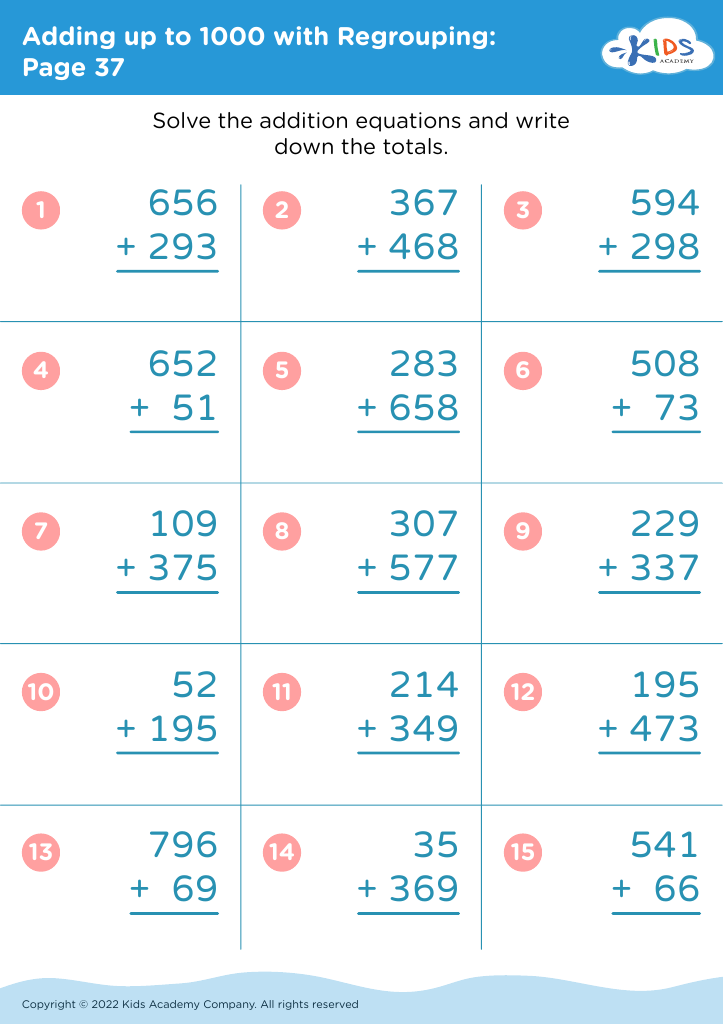
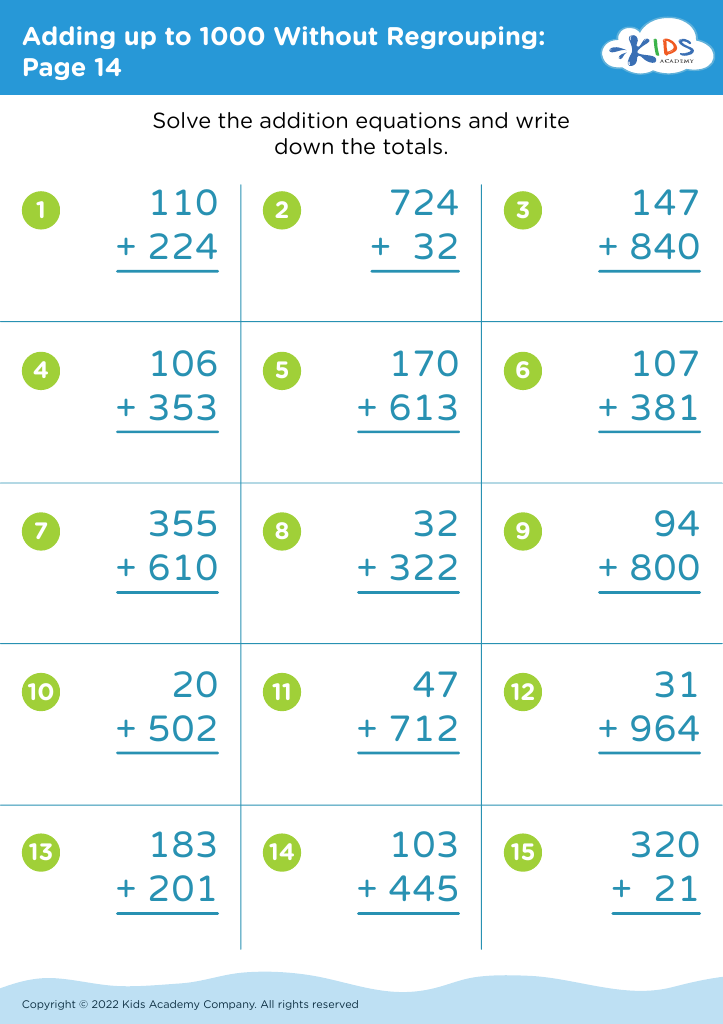
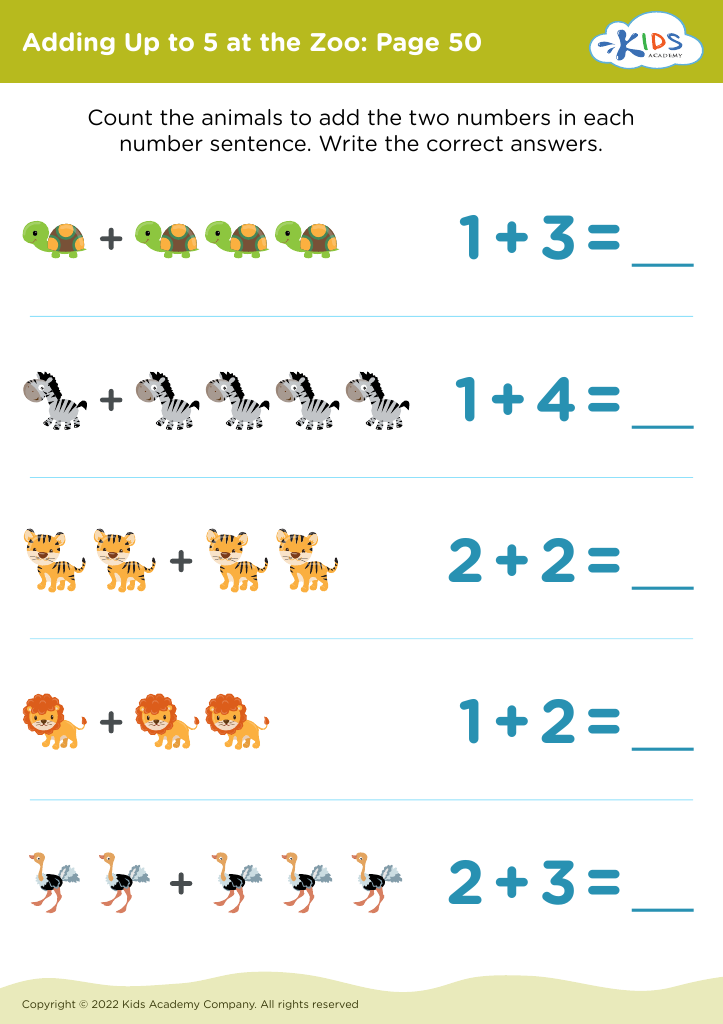
Unlock your child's potential with our Fine Motor Skills Development Addition Worksheets, specially designed for ages 4-9. Enhance essential fine motor skills while practicing addition through engaging, interactive activities. These worksheets blend educational fun with important skill-building exercises that improve hand-eye coordination, dexterity, and concentration. Children will enjoy tracing, coloring, and solving colorful problems, increasing their confidence in math and motor abilities. Perfect for classroom use or at-home learning, these worksheets cater to various learning styles, ensuring that every child can thrive. Foster your child's love for learning and set them up for success in math with our expertly crafted worksheets!








Fine motor skills are crucial for children ages 4-9, as they form the foundation for various daily activities and academic achievements. Parents and teachers should prioritize fine motor skill development because it enhances children's ability to perform tasks such as writing, tying shoelaces, and using utensils—all essential for independence and self-care. These skills enable children to interact with their environment more effectively, promoting confidence and creativity.
Furthermore, underdeveloped fine motor skills can lead to frustration in tasks requiring precision, which can hinder a child’s learning experience and motivation. Engaging in activities like drawing, cutting with scissors, and playing with building blocks strengthens these skills, improves hand-eye coordination, and paves the way for academic success, especially in subjects like math and science.
Additionally, fine motor development is linked to cognitive skills, as it encourages problem-solving, critical thinking, and spatial awareness. By supporting the growth of fine motor skills, parents and teachers play a vital role in fostering overall cognitive development and preparing children for future academic endeavors, promoting their readiness for school and everyday challenges. Raising awareness about the importance of these skills can help create supportive environments for healthy development.








