Introduction to mathematics Addition Worksheets for Ages 4-9
3 filtered results
-
From - To
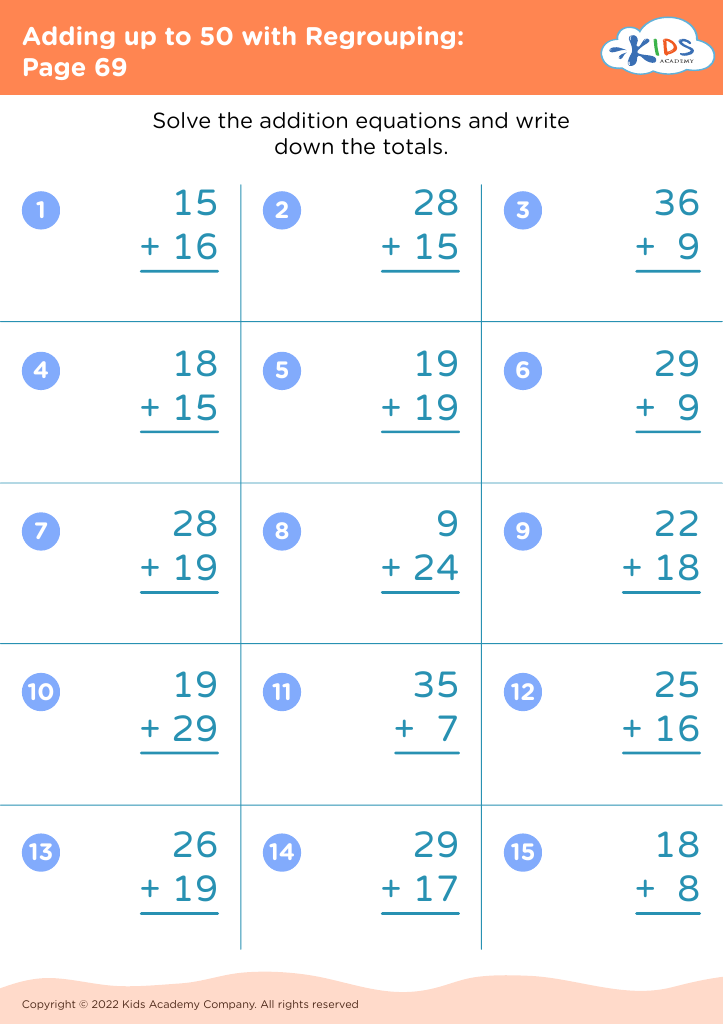
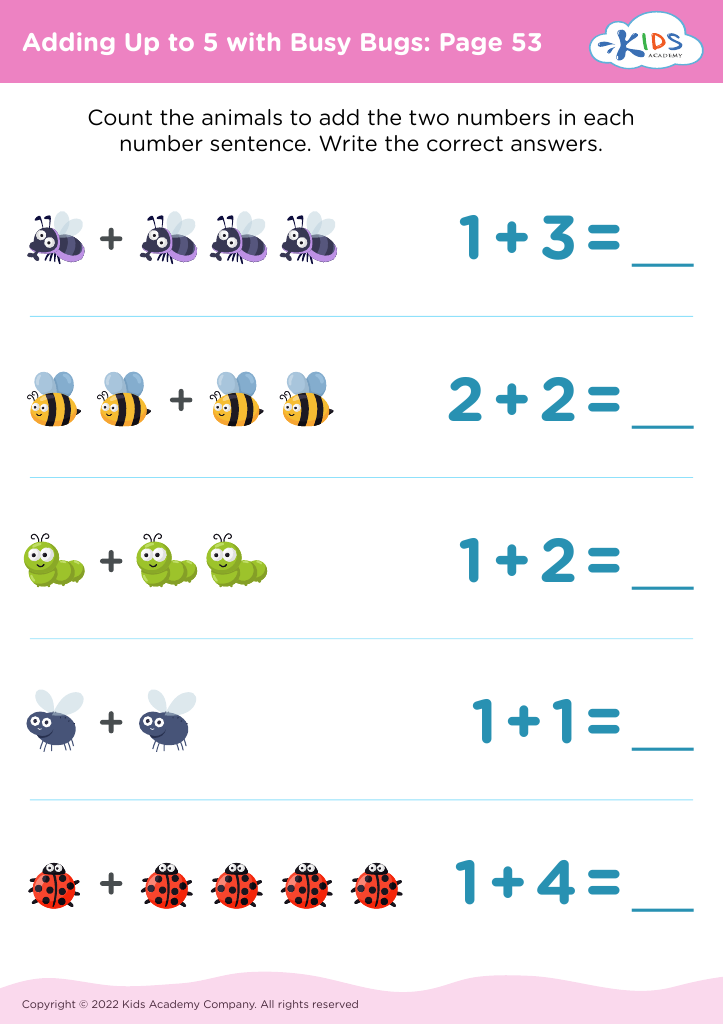
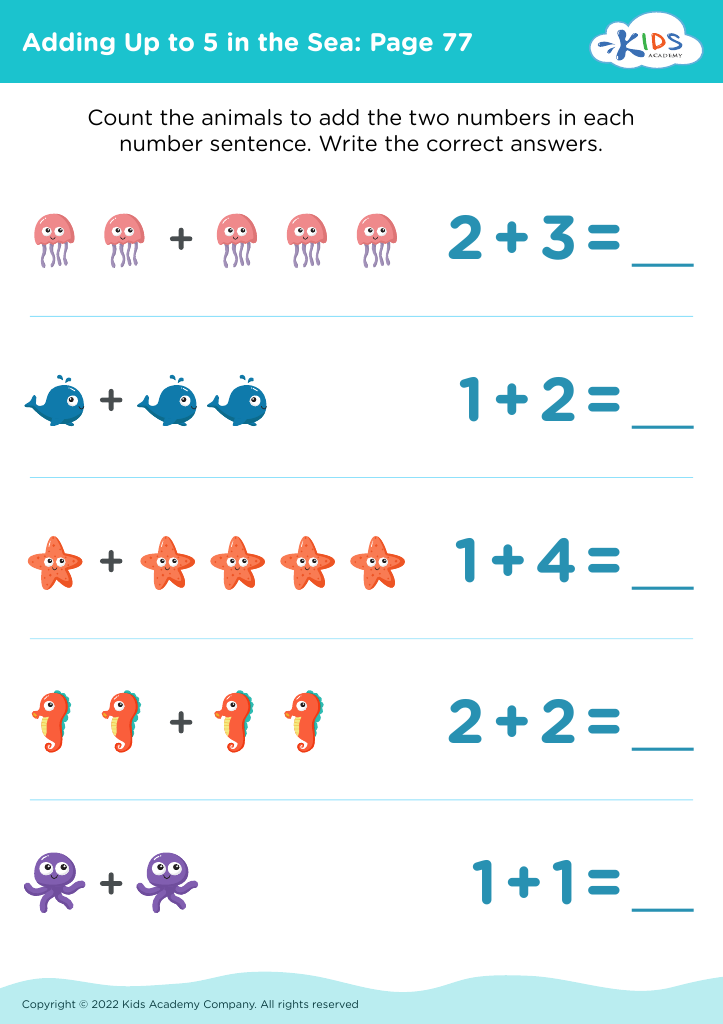
Boost your child's math skills with our "Introduction to Mathematics: Addition Worksheets for Ages 4-9." These engaging worksheets are designed to make learning addition fun and accessible for young learners. With colorful visuals and a variety of problems, each worksheet aims to build a solid foundation in basic addition, enhancing number sense and problem-solving abilities. Perfect for home or classroom use, these resources cater to different skill levels, ensuring every child progresses at their own pace. Give your young mathematician the confidence to succeed with our expertly-crafted addition worksheets. Start today and watch their skills grow!






.jpg)

Introducing mathematics, specifically addition, to children aged 4-9 is fundamental for their cognitive and academic growth. At this early developmental stage, children's brains are highly flexible and capable of absorbing new concepts quickly and effectively. Learning addition sets the groundwork for higher-level mathematical skills such as subtraction, multiplication, and division. These basic arithmetic skills not only contribute to academic prowess but also enhance critical thinking and problem-solving abilities across various subjects.
Parents and teachers should prioritize introducing addition to foster a positive attitude toward mathematics. Early exposure diminishes math anxiety, a common obstacle for many students in later years. By mastering these foundational skills, children gain confidence, leading to a sense of achievement and encouraging a lifelong interest in learning.
From a practical perspective, understanding addition aids in daily life activities, such as counting money, measuring ingredients, and telling time. Integrating fun and interactive methods, like games and hands-on activities, ensures that learning addition is an enjoyable and engaging experience.
For ages 4-9, knowledge is rapidly expanding. A strong grasp of addition during these formative years equips children with the tools they need for future academic challenges, ensuring they are well-prepared for more complex concepts and a successful educational journey.








