Learn addition Addition Worksheets for Ages 4-9
3 filtered results
-
From - To
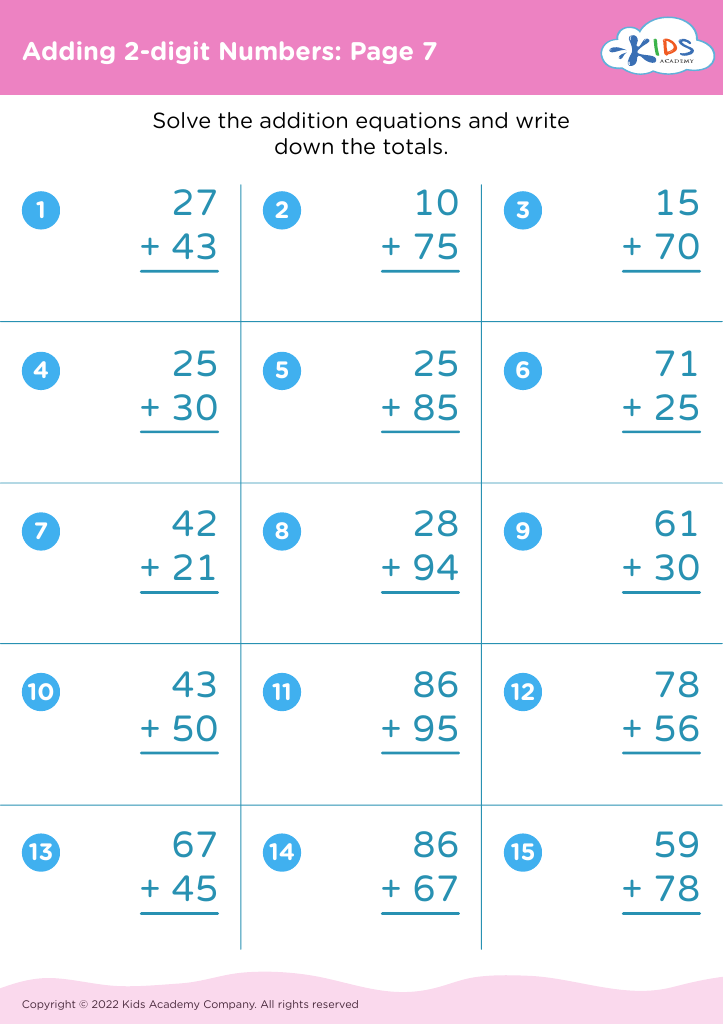
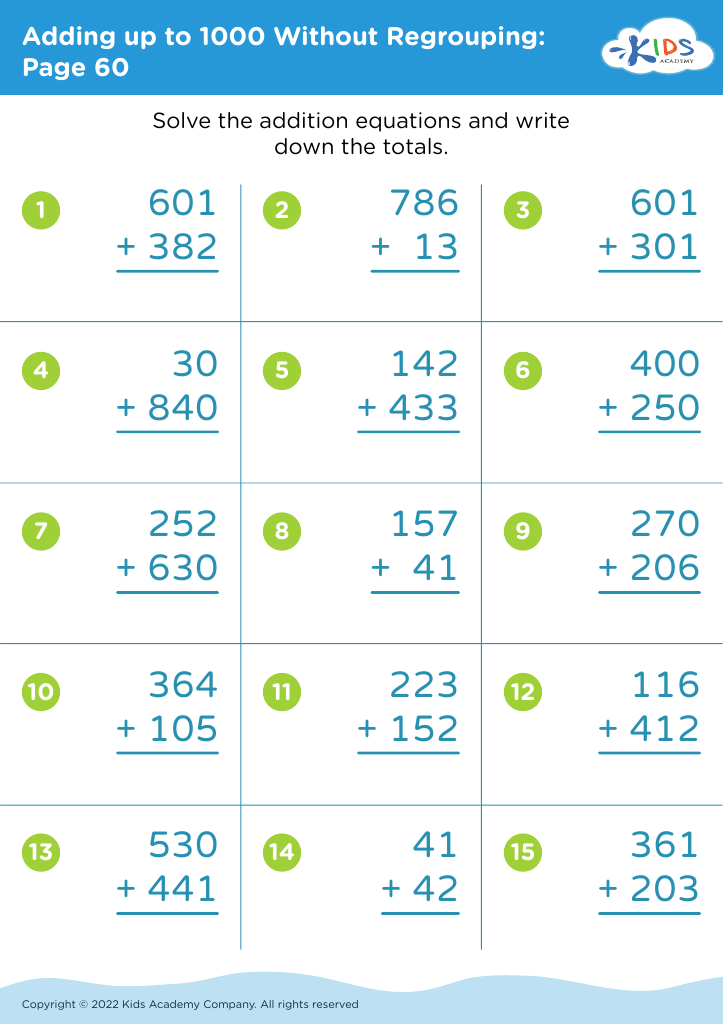
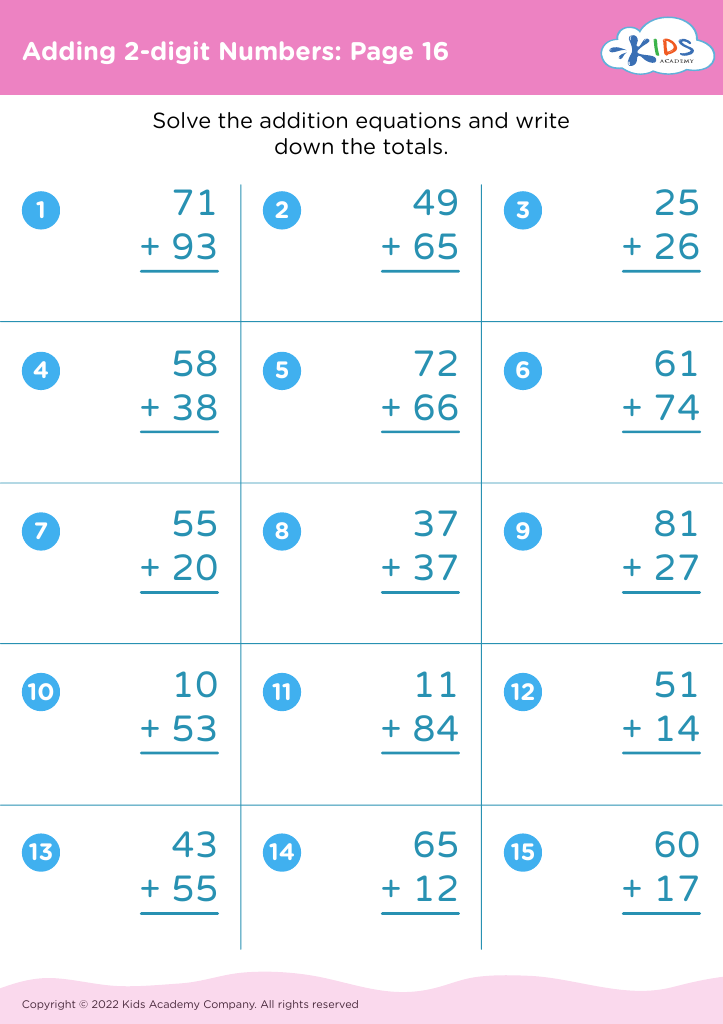
Discover engaging and interactive addition worksheets designed specifically for children aged 4-9! Our "Learn Addition" resources make mastering basic math skills fun and enjoyable. With colorful visuals and age-appropriate exercises, kids will develop a strong foundation in addition through practice and play. These worksheets include various activities, from simple number matching to more complex problems, catering to different learning styles and pace. Parents and teachers can easily download and print these materials for home or classroom use. Support your child's arithmetic journey and build confidence in their math abilities with our thoughtfully crafted addition worksheets today!


.jpg)





Parents and teachers should prioritize teaching addition to children aged 4-9 for several essential reasons. First, early mastery of basic math concepts lays the foundation for future learning. Addition serves as the gateway to more complex mathematical operations, such as subtraction, multiplication, and division. When children grasp addition early, they often experience greater confidence and success in math as they progress through their schooling.
Moreover, addition helps develop critical thinking and problem-solving skills. Engaging with numbers allows children to analyze and understand relationships, which is crucial not only in mathematics but in everyday life situations as well.
Additionally, fostering a strong math foundation fosters positive attitudes towards learning. Children who experience success in addition are more likely to develop a love for math, sparking curiosity and exploration.
Socially and emotionally, learning to add encourages perseverance and resilience as children work through challenges and celebrate their achievements. Lastly, by investing time in teaching addition, parents and teachers contribute to lifelong skills in budgeting, planning, and analytical reasoning, which are vital in adult life. Thus, emphasis on early addition is essential for holistic child development.








