Learn new vocabulary Addition Worksheets for Ages 4-9
4 filtered results
-
From - To
Enhance your child’s vocabulary and math skills with our engaging "Learn New Vocabulary Addition Worksheets" designed for ages 4-9. These printable worksheets provide a fun and interactive way to introduce essential math vocabulary while reinforcing addition concepts. Perfect for at-home learning or classroom activities, each worksheet integrates new words related to addition, helping your child build both language and numerical fluency. With colorful designs and age-appropriate challenges, kids will enjoy learning as they practice addition in a creative context. Explore our collection and watch your young learners grow more confident in their math abilities! Perfect for parents and educators alike!
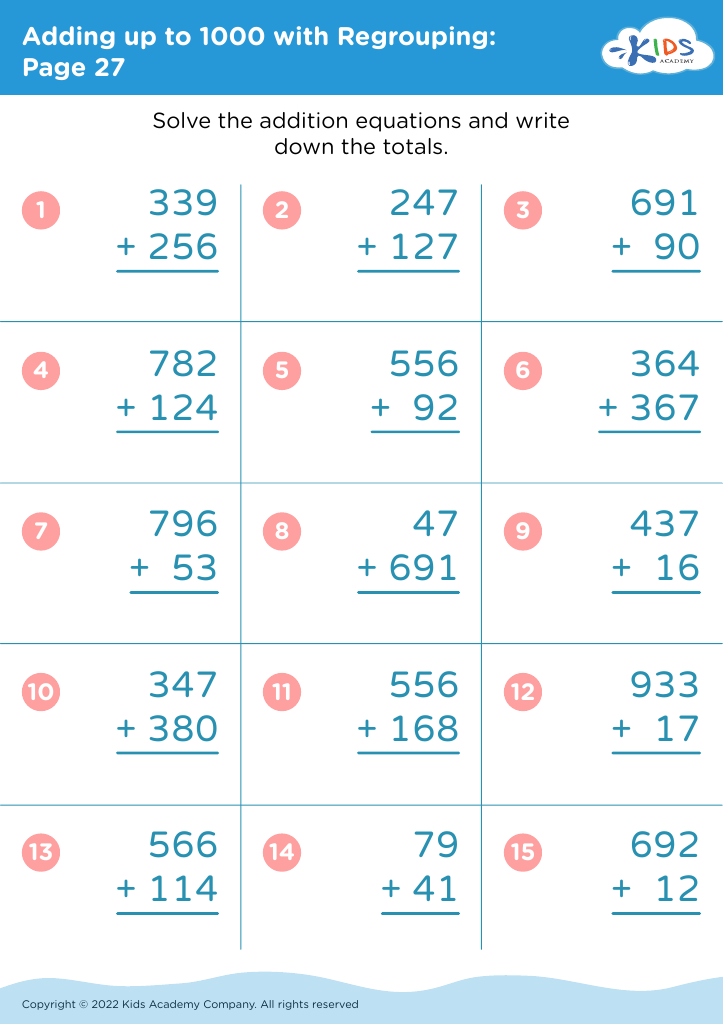
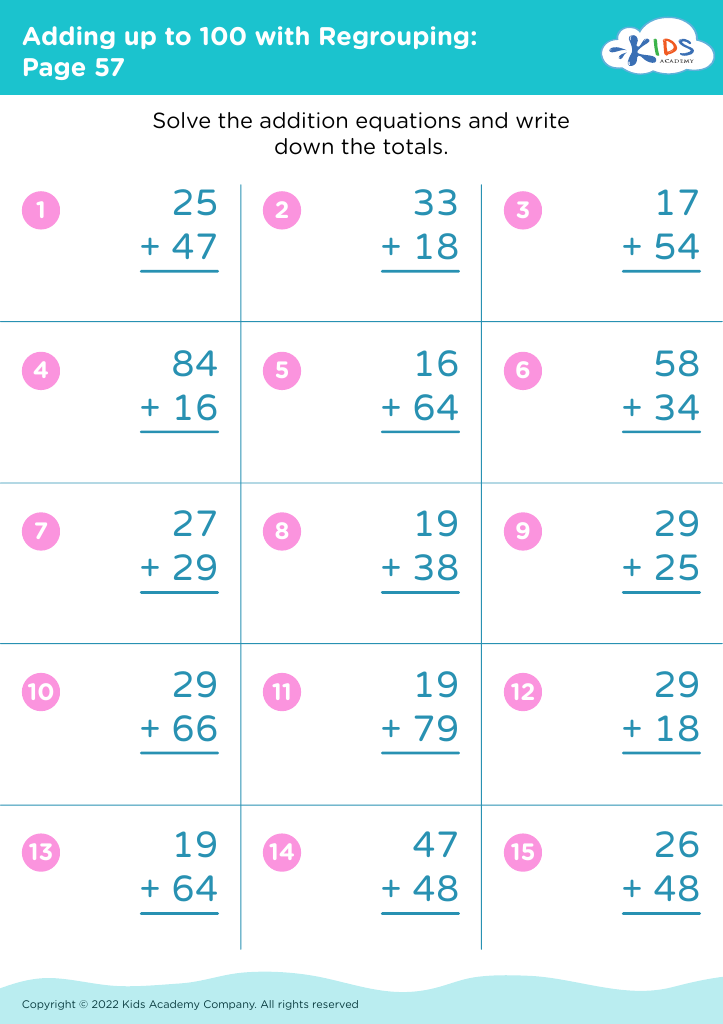
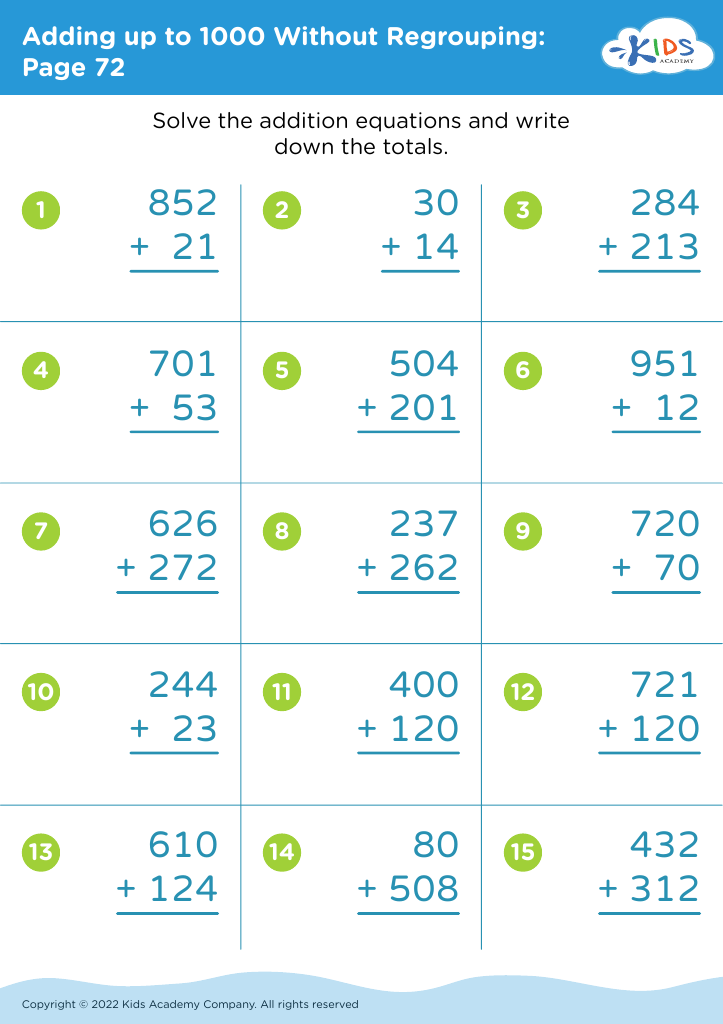
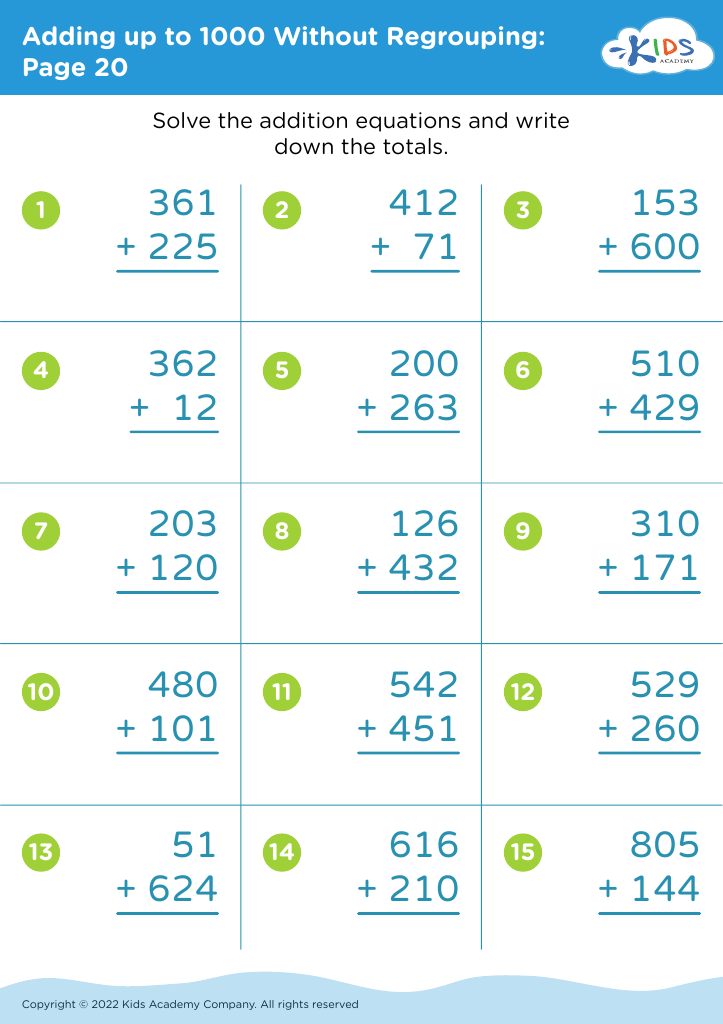








Parents and teachers should prioritize introducing new vocabulary, particularly around topics like addition, to children aged 4-9 for several important reasons. First, vocabulary acquisition during these formative years significantly enhances a child's cognitive development and language skills. By learning terms associated with addition, children develop a foundational understanding of mathematical concepts, promoting both literacy and numeracy.
Moreover, a strong vocabulary enables children to express their thoughts and ideas more clearly, which fosters better communication skills. This is crucial as they transition into more complex topics in school. Understanding mathematical terminology can also reduce anxiety around math subjects, making learning more enjoyable and accessible.
Additionally, stimulating vocabulary development through engaging activities like games and storytelling can help maintain children's interest in learning. It connects mathematical concepts to everyday language, bridging the gap between academic knowledge and real-world application.
Furthermore, actively participating in vocabulary learning helps parents and teachers build stronger relationships with children, encouraging a collaborative and supportive learning environment. In summary, investing time in teaching vocabulary related to addition yields lifelong benefits for children—equipping them with essential skills for academic success and beyond.








