Motor skills development Addition Worksheets for Ages 4-9
5 filtered results
-
From - To
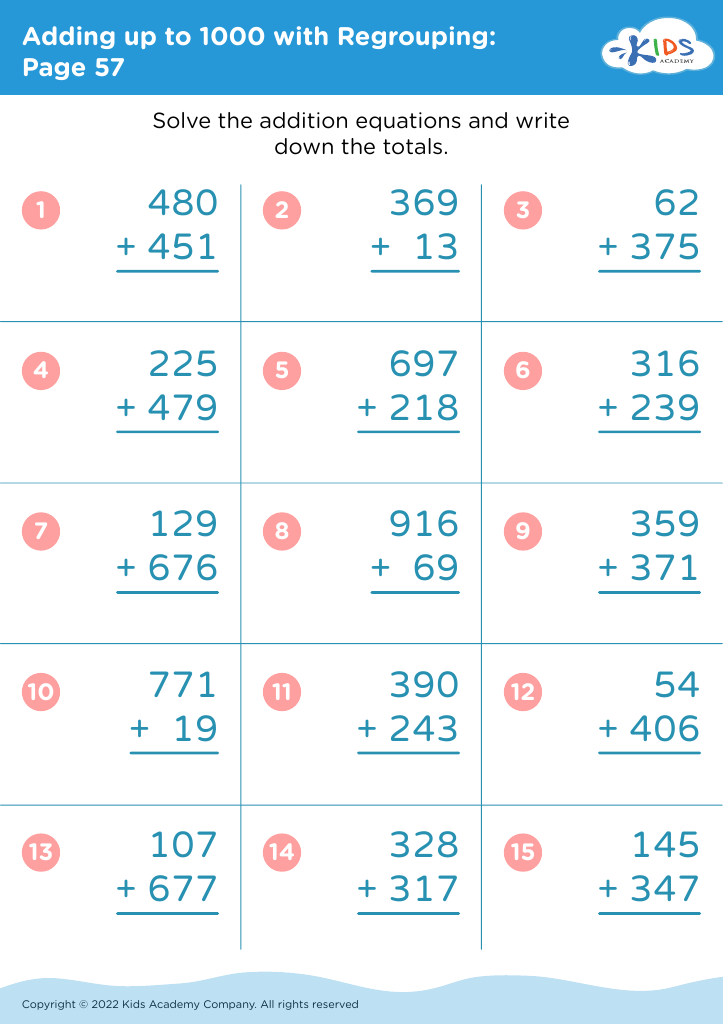
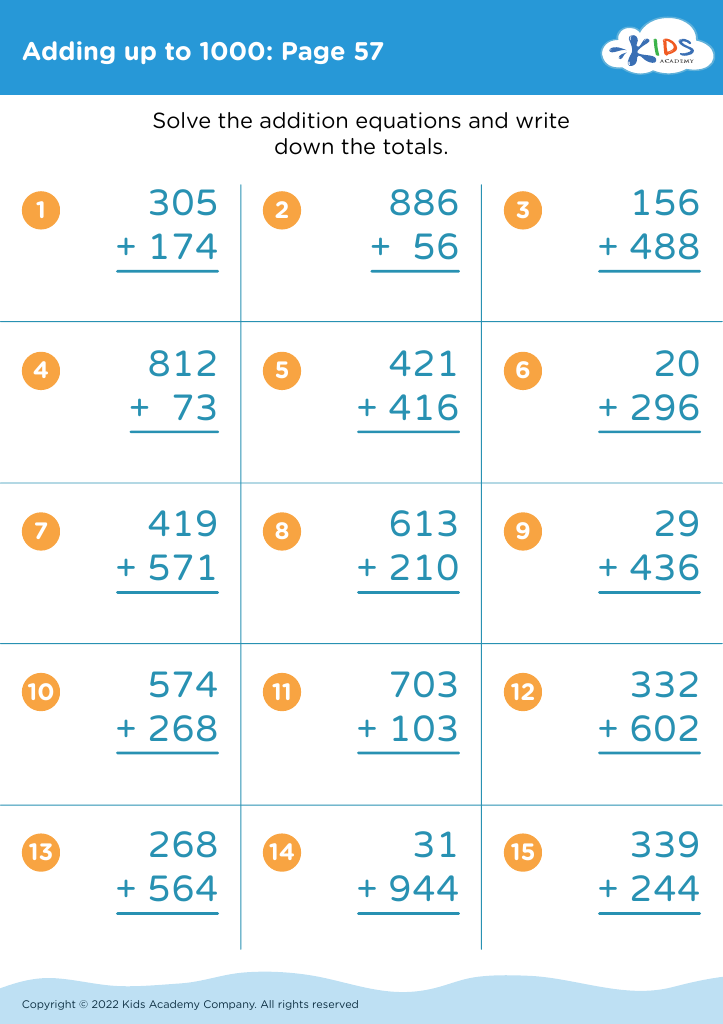
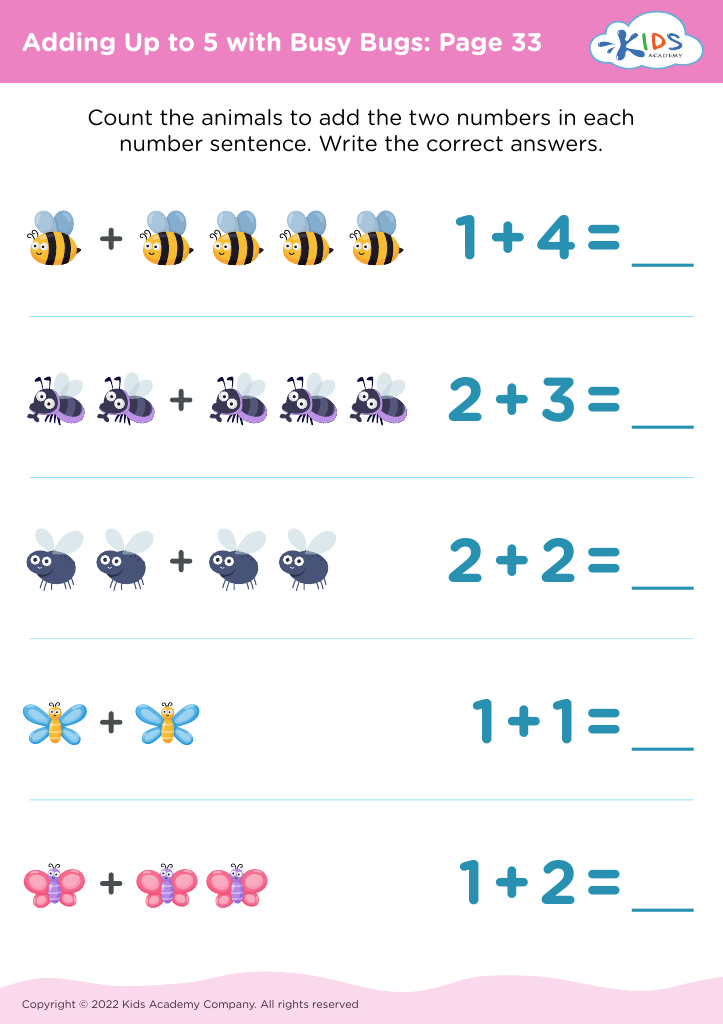
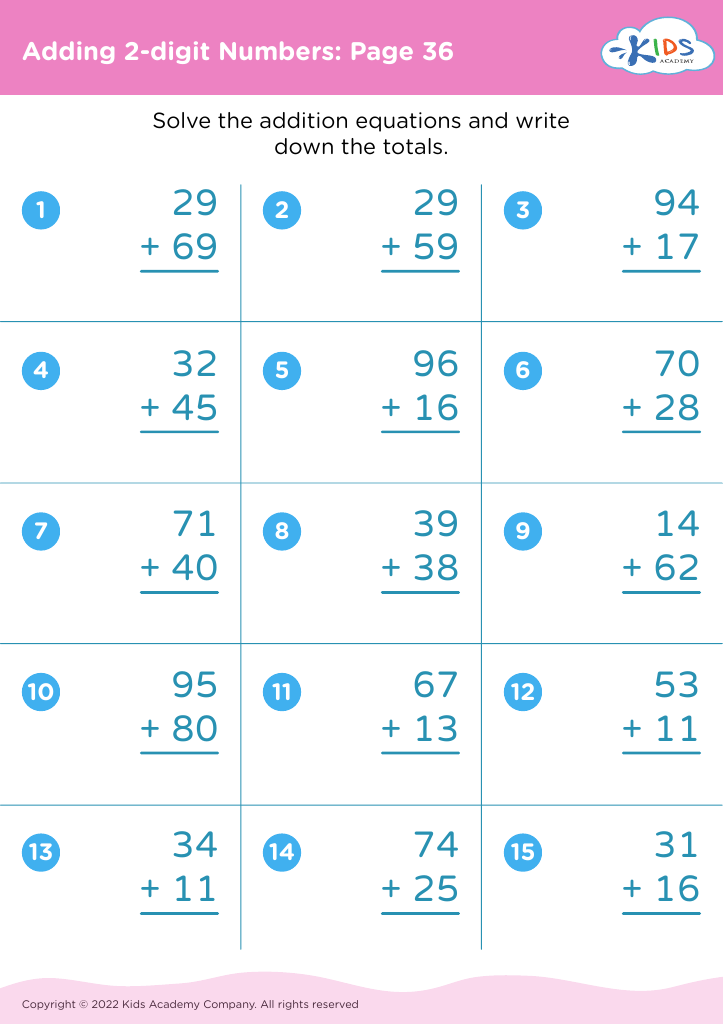
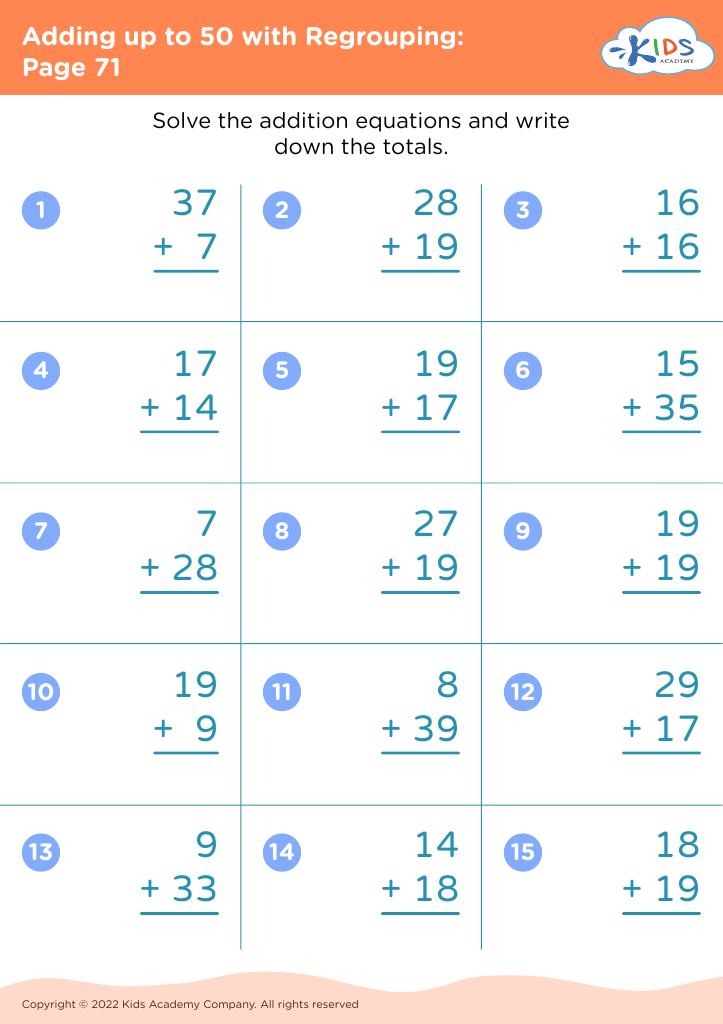
Enhance your child's fine motor skills and mathematical abilities simultaneously with our Motor Skills Development Addition Worksheets for Ages 4-9. Specially crafted for young learners, these worksheets seamlessly integrate fun with learning. Through activities that require cutting, pasting, coloring, and tracing, children can strengthen their hand-eye coordination while mastering addition. Our engaging exercises both challenge and entertain, ensuring that essential motor and math skills are developed in tandem. Perfect for homeschooling or classroom use, these worksheets are a valuable tool for both parents and educators aiming to create a comprehensive and enjoyable learning experience. Explore and download today!








Motor skills development is crucial for children aged 4-9 as it lays the foundation for overall growth, learning, and well-being. Both fine motor skills, like holding a pencil or tying shoelaces, and gross motor skills, such as running or jumping, are essential at this stage.
Parents and teachers should prioritize motor skills development for several reasons. Firstly, it impacts academic success - children who adeptly use their hands can write more easily, facilitating better performance in school activities. Tasks like cutting, drawing, or typing become manageable, paving the way for academic achievements.
Secondly, developing motor skills enhances physical health and fitness. Engaging in activities like climbing, balancing, and playing sports builds strength and coordination, promoting healthy lifestyle habits that can last a lifetime.
Moreover, motor skills development boosts self-esteem and independence. When children can confidently perform tasks by themselves, they feel capable and motivated, which fosters a positive self-image and encourages continued exploration and learning.
Lastly, such development promotes social skills. Group activities requiring coordinated movements, such as team sports or playground games, help children learn the value of teamwork, cooperation, and sharing.
In essence, supporting motor skills development prepares children for a well-rounded, healthy, and successful future.








