Nature awareness Addition Worksheets for Ages 4-9
8 filtered results
-
From - To
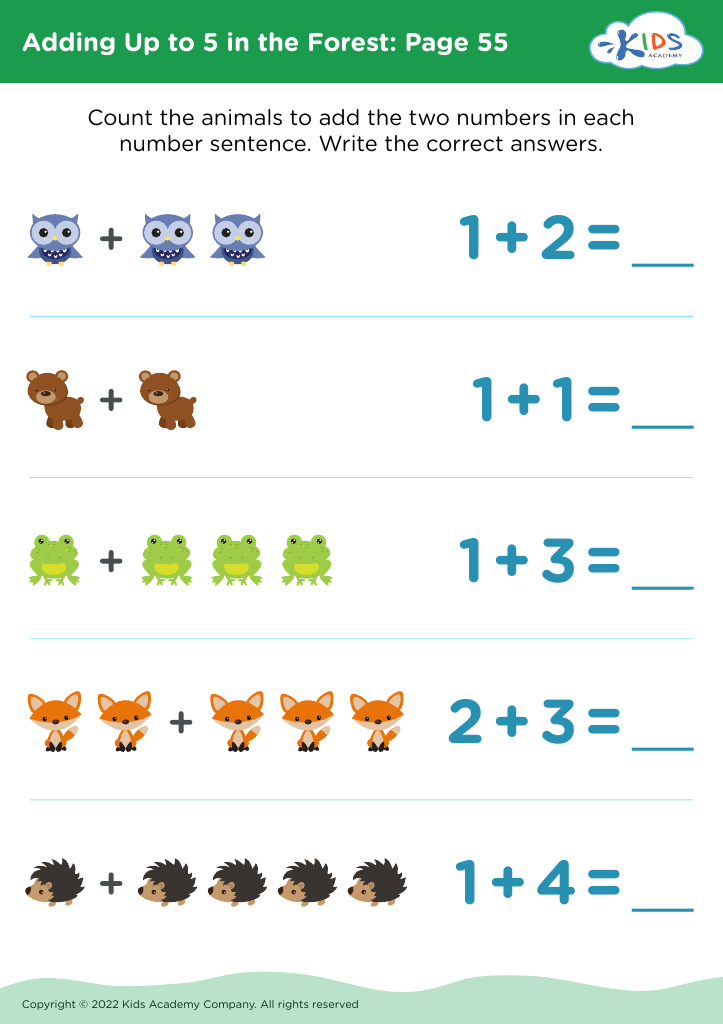
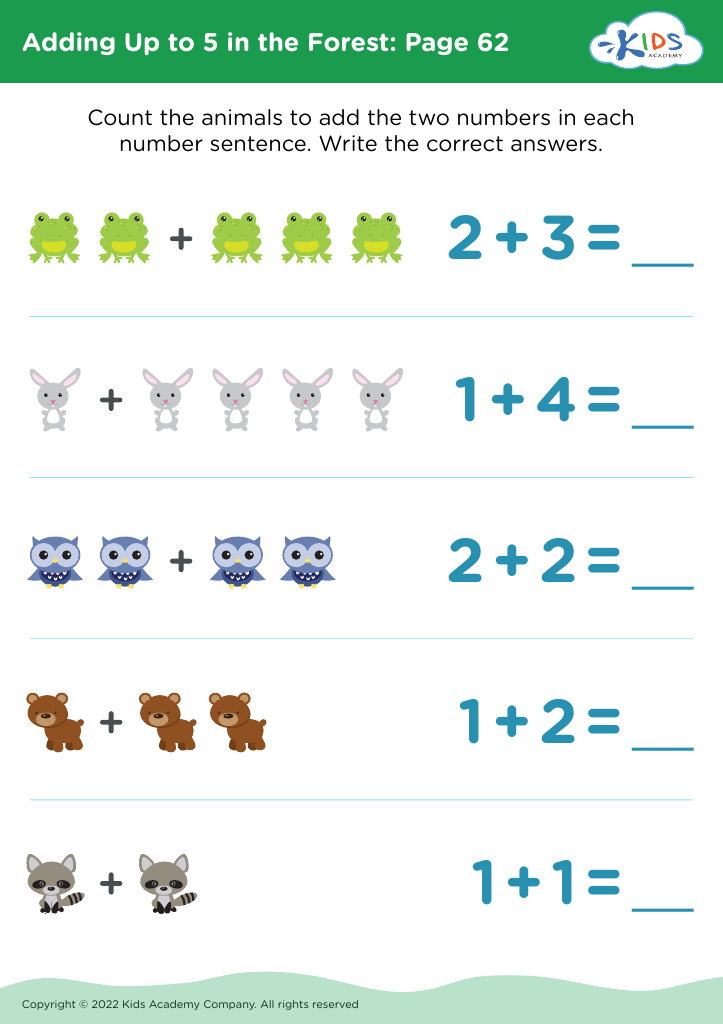
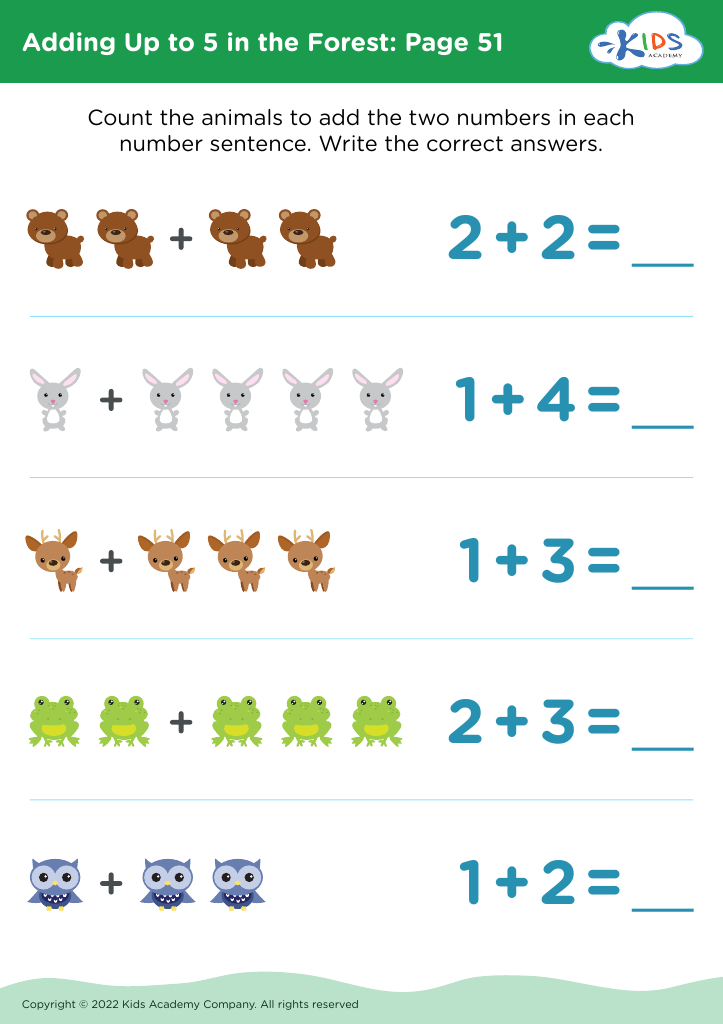
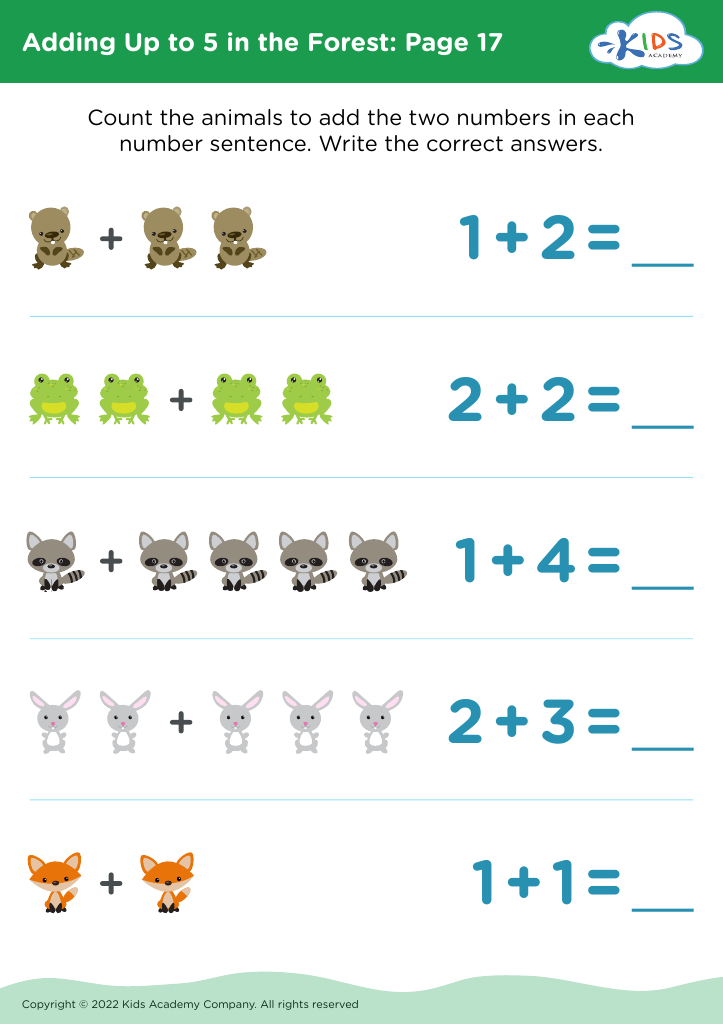
Explore our "Nature Awareness Addition Worksheets for Ages 4-9," uniquely designed to blend math practice with nature exploration. Perfect for young learners, these worksheets make mastering addition fun by incorporating engaging nature-themed problems. From counting animals to adding leaves, children will refine their math skills while fostering a love for the environment. Our expert-created activities are ideal for both classroom and at-home learning, ensuring educational growth and environmental appreciation. Help your child discover the joy of math and nature, hand in hand, with our delightful and stimulating worksheets. Download now and start the adventure!
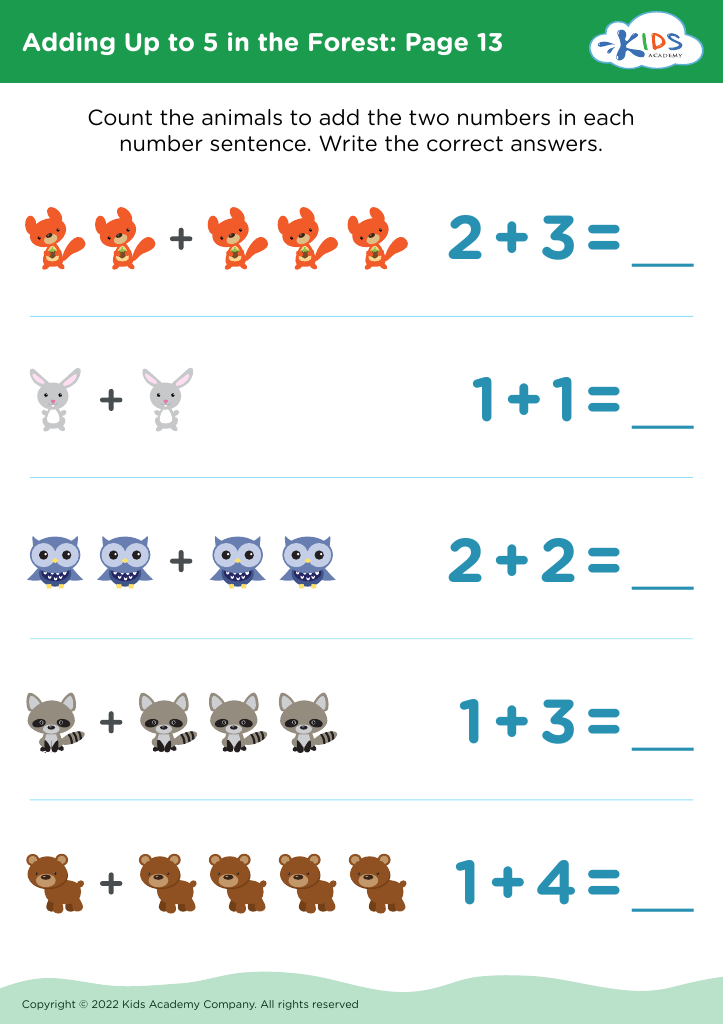
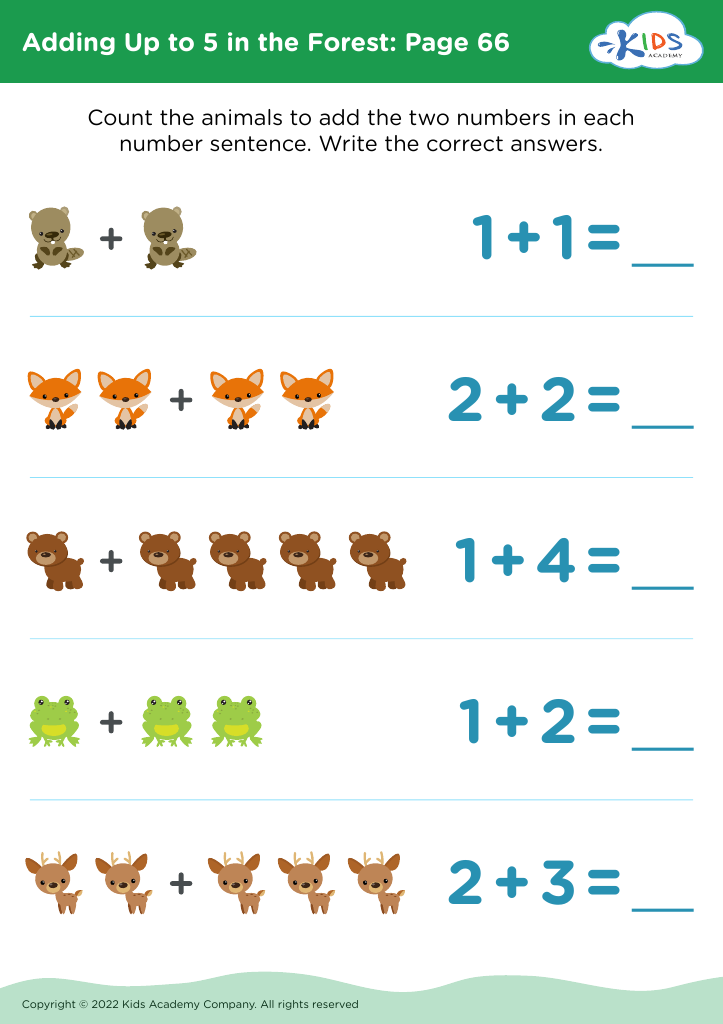
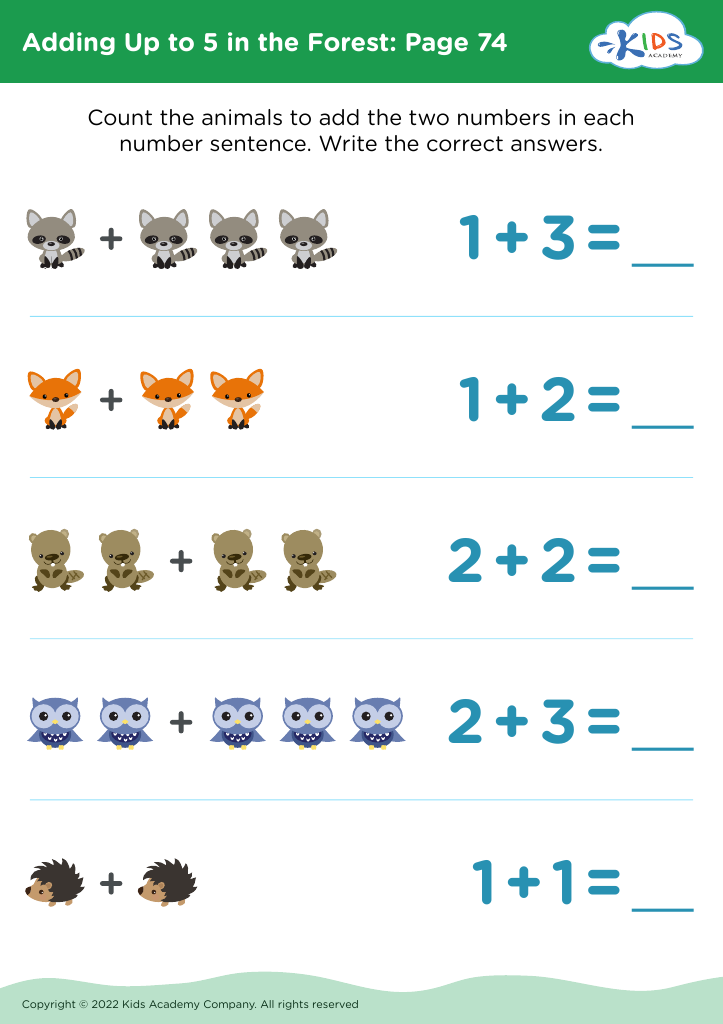
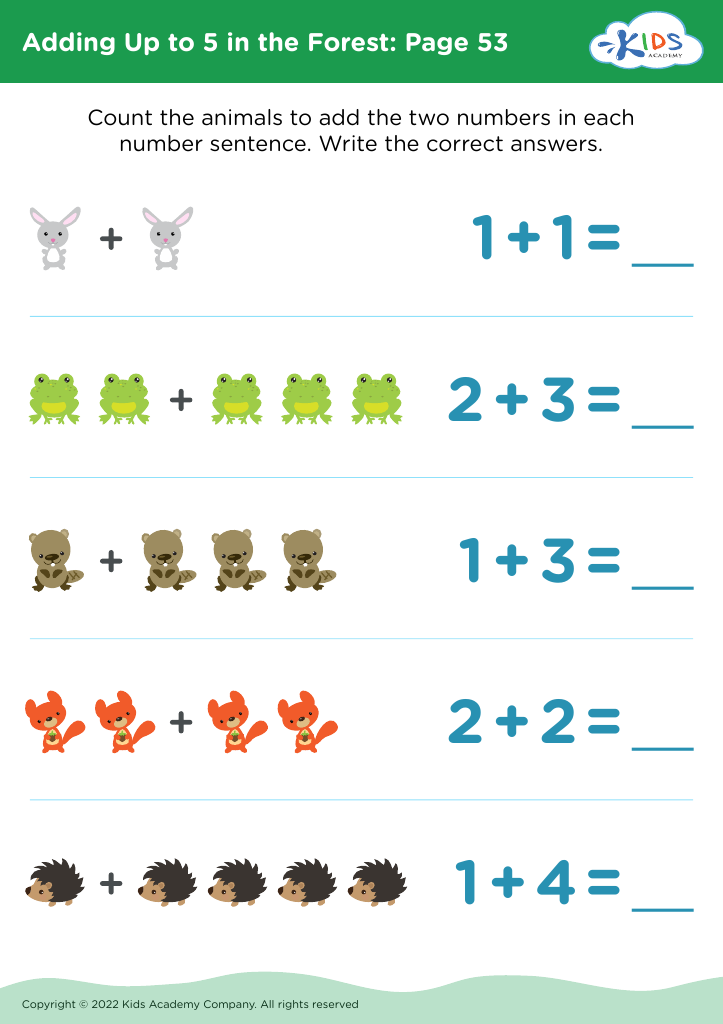



.jpg)




Nature awareness is crucial for children between the ages of 4-9, and both parents and teachers should prioritize this aspect of education for several compelling reasons. Firstly, developing a connection with nature fosters curiosity and enhances observational skills. When children explore outdoor environments, they learn to notice details, identify different species of plants and animals, and grasp basic ecological principles. This hands-on learning nurtures cognitive development and critical thinking skills.
Secondly, nature awareness promotes emotional and psychological well-being. Studies have shown that regular interactions with natural surroundings reduce stress, improve mood, and enhance overall mental health in children. Being outdoors encourages physical activity, which contributes to a healthy lifestyle and combats the growing concern over childhood obesity.
Additionally, fostering a love for nature at an early age instills a sense of responsibility toward environmental conservation. Children who grow up appreciating the earth’s natural beauty are more likely to adopt sustainable practices and advocate for our planet, becoming thoughtful stewards of the environment.
Lastly, nature-based activities support social and collaborative skills. Group outdoor adventures such as hikes or scavenger hunts provide opportunities for children to work together toward common goals, enhancing communication, teamwork, and problem-solving abilities.
By prioritizing nature awareness, parents and teachers help cultivate a generation of resilient, mindful, and environmentally responsible individuals.








