
Number comprehension Addition Worksheets for Ages 4-9
8 filtered results
Difficulty Level
Grade
Age
-
From - To
Subject
Activity
Standards
Enhance your child's numerical skills with our engaging Number Comprehension Addition Worksheets, designed specifically for ages 4-9. Perfect for early learners, these worksheets offer a fun and interactive way to master basic addition concepts while building a solid foundation in math. Each worksheet features vibrant illustrations and easy-to-follow activities that foster understanding of numbers, promote critical thinking, and encourage problem-solving skills. Whether at home or in the classroom, our resources ensure kids stay motivated and focused. Download our collection today to help your child thrive in their mathematical journey, turning learning into an enjoyable adventure!
Favorites
With answer key
Interactive
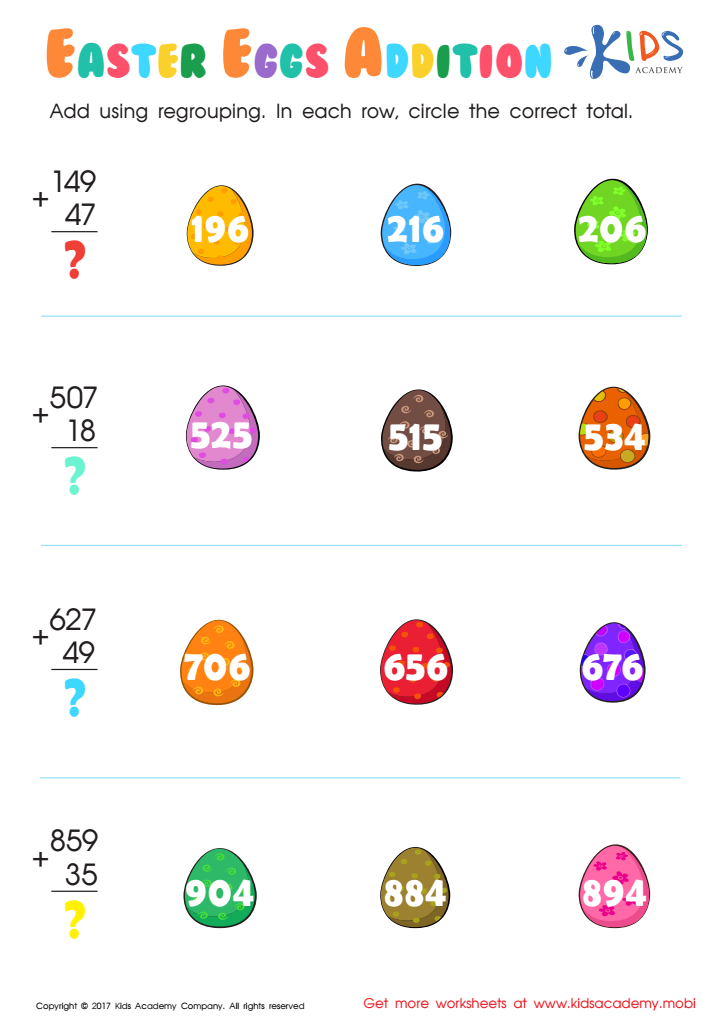
Addition with Regrouping Worksheet
Try this fun holiday-themed addition with regrouping worksheet! Kids can practice adding while regrouping using bright, colorful holiday images. It's a great way to make math exciting, and keep their interest piqued!
 Assign to My Students
Addition with Regrouping Worksheet
Worksheet
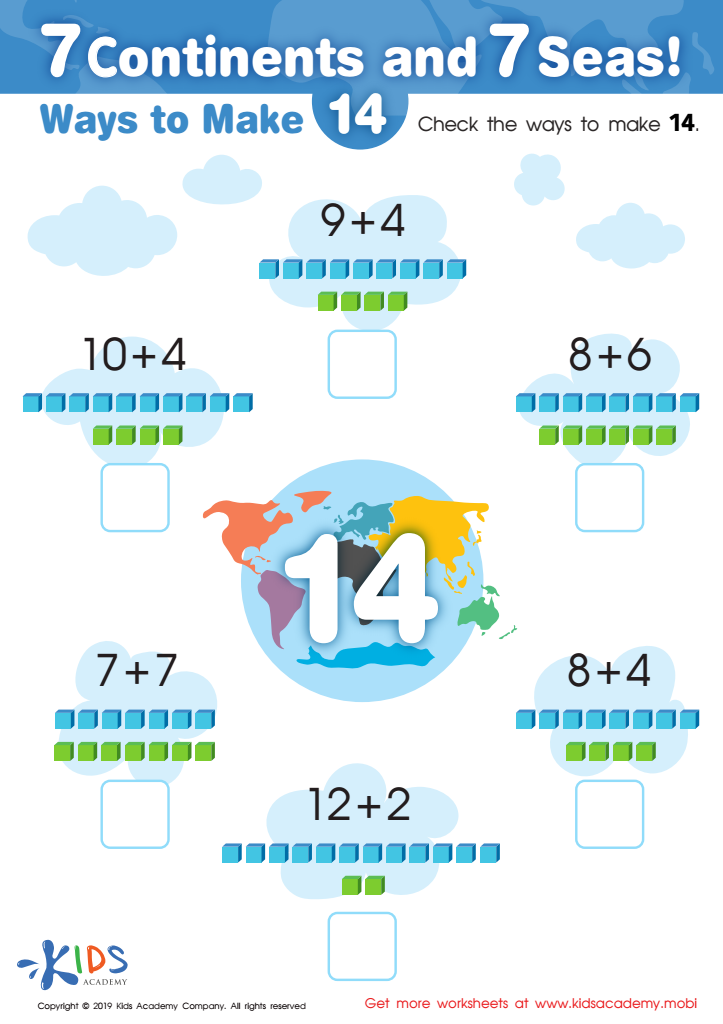
7 Continents and 7 Seas Worksheet
Remind kids of the continents and show them how different numbers can add up to the same figure. Give examples, like 2+2 =4, and 3+1 =4. Ask if they can provide other examples, then work through the simple additions in this worksheet with them. Ask them to circle all equations that make 14.
7 Continents and 7 Seas Worksheet
Worksheet
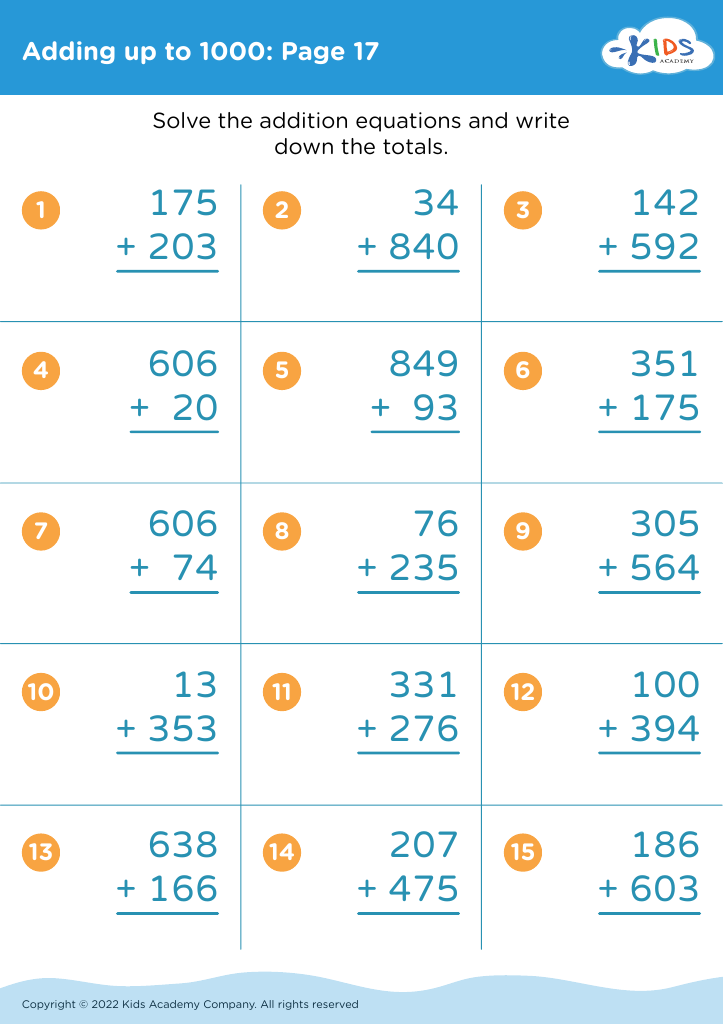
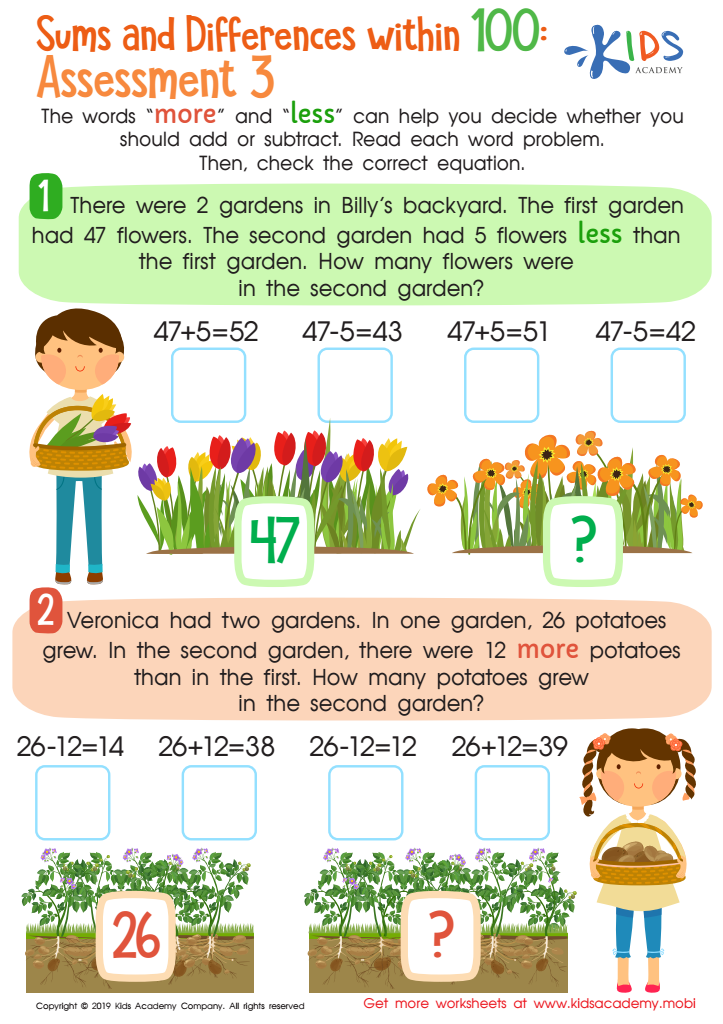
Sums and Differences Within 1 - Assessment 1 Worksheet
Help your child understand school topics better with your assistance. For math, go over their worksheet together and discuss the instructions and text. Solve the questions and check the right equation. This will take their learning to the next level.
Sums and Differences Within 1 - Assessment 1 Worksheet
Worksheet
Join Kids Academy for Free
Who is primarily going to use this learning content?








Number comprehension and addition skills are foundational components of early mathematics, critical for children aged 4 to 9. Parents and teachers should prioritize these skills for several reasons. Firstly, mastering number comprehension helps children understand the number system, enabling them to visualize quantities and relationships among numbers, which is essential for advanced math concepts later on.
Strong addition skills promote problem-solving abilities, nurturing logical thinking and critical reasoning. As children learn to combine numbers, they develop an understanding of how quantities change and interact, which lays the groundwork for later operations in mathematics.
Encouraging number comprehension and addition in early childhood also boosts confidence and fosters a positive attitude towards learning. Children who grasp these concepts are more likely to enjoy mathematics and engage actively in classroom activities. Furthermore, thematic connections in real-life situations, such as shopping or cooking, can enrich their understanding and make learning contextual and relevant.
Investing in these early skills can help prevent future math anxiety and learning difficulties, ensuring children are well-prepared for more complex mathematical challenges as they progress in their education. Ultimately, parents and teachers play a crucial role in nurturing these essential skills for a lifelong appreciation of mathematics.








