
Number identification Addition Worksheets for Ages 4-9
5 filtered results
Difficulty Level
Grade
Age
-
From - To
Subject
Activity
Standards
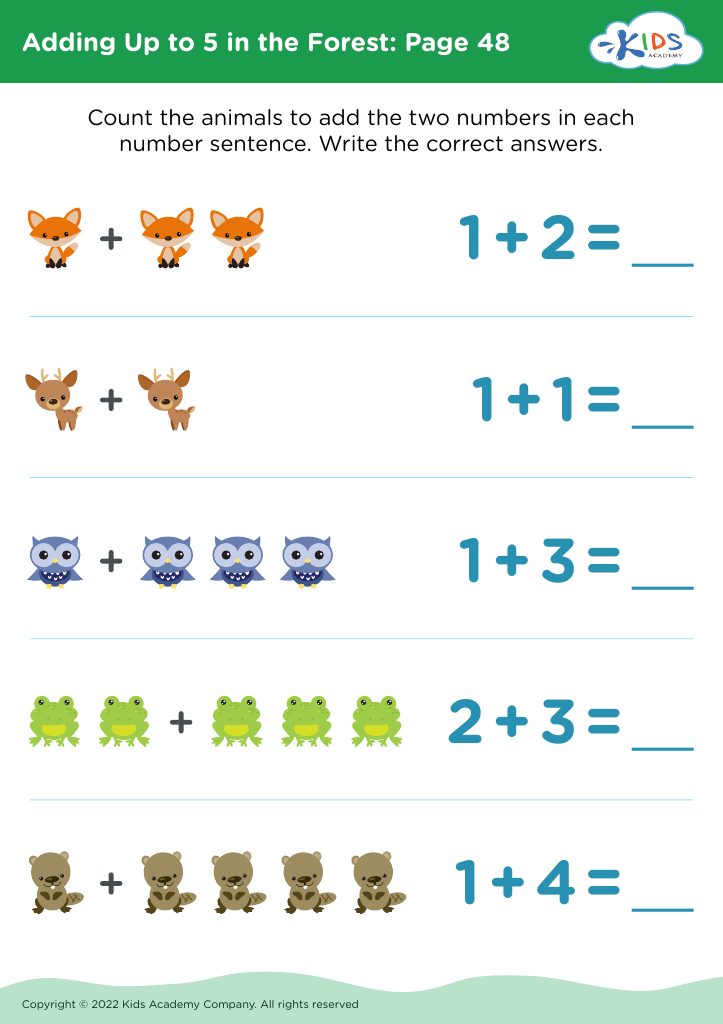
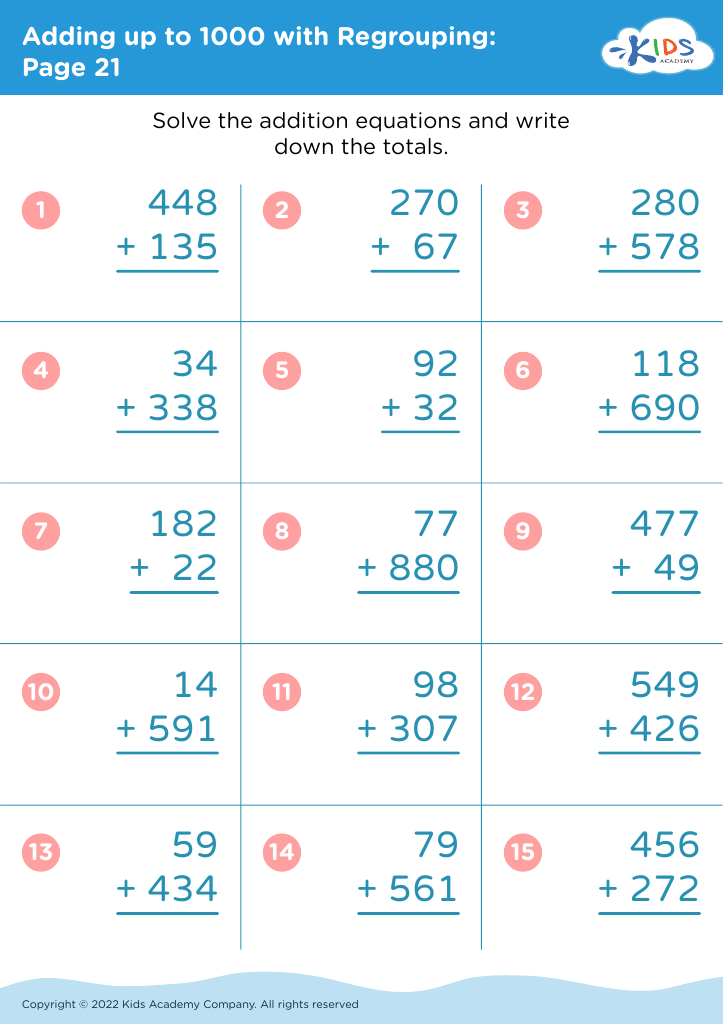
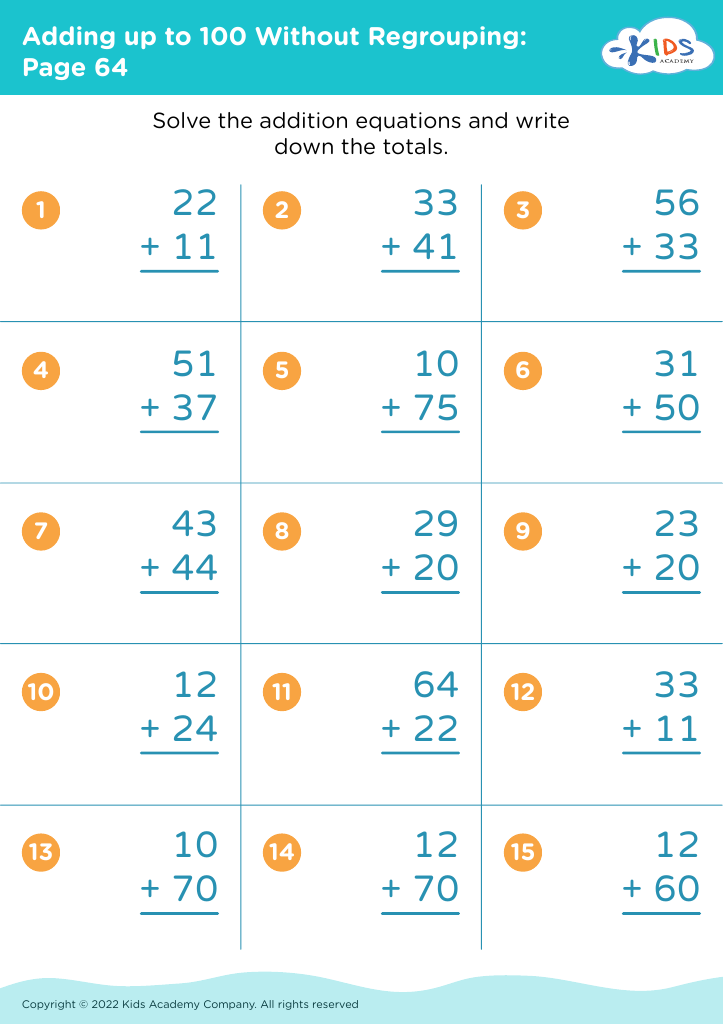
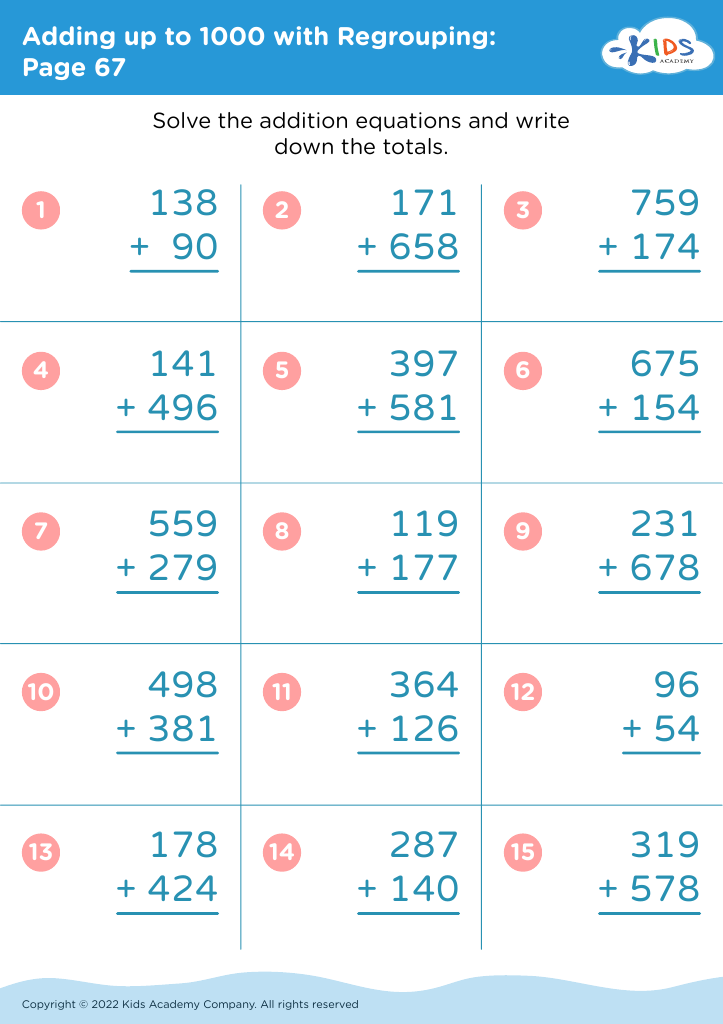
Discover our engaging Number Identification Addition Worksheets designed for children ages 4-9! These fun, interactive resources aim to enhance young learners' number recognition and addition skills through colorful visuals and practical exercises. With a variety of worksheets tailored to different skill levels, kids will enjoy improving their math abilities while building confidence. Each worksheet encourages independent thinking and problem-solving, perfect for at-home practice or classroom activities. Download our Number Identification Addition Worksheets today to help your child master number recognition and addition in a playful and effective manner, setting the foundation for lifelong math success! Explore learning made easy!
Favorites
With answer key
Interactive
Join Kids Academy for Free
Who is primarily going to use this learning content?





.jpg)


Number identification and addition are foundational skills critical for children aged 4-9, forming the basis for future mathematical understanding. Parents and teachers alike should prioritize these skills for several reasons.
Firstly, number identification aids in developing a child's ability to recognize and understand numerical concepts, crucial for everyday tasks such as counting, measuring, and telling time. When children can identify numbers, they gain confidence and become more engaged in their learning environment.
Addition, on the other hand, introduces the concept of combining quantities, a skill integral not only in mathematics but also in problem-solving across various aspects of life. Mastery of addition allows children to approach more complex mathematical operations with ease, thereby setting the stage for long-term academic success.
Furthermore, early number skills have a direct link to later achievement in math. Research indicates that children who develop robust number sense in their early years often perform better in higher mathematics.
Additionally, by nurturing these skills from a young age, parents and teachers can cultivate positive attitudes towards math, reducing anxiety and building a strong foundation for future learning. Overall, fostering number identification and addition not only aids cognitive development but also empowers children with essential life skills.








