Number Sequencing Addition Worksheets for Ages 4-9
10 filtered results
-
From - To
Discover the perfect resource to enhance your child's math skills with our Number Sequencing Addition Worksheets for ages 4-9. Crafted to help young learners grasp and practice addition within a fun and engaging format, these worksheets are designed to build confidence and fluency. Each page offers progressive challenges that encourage critical thinking and problem-solving abilities as kids sequence numbers and add accurately. Ideal for grade school preparation, our worksheets can be easily downloaded and printed for convenient, at-home practice. Enrich your child's learning experience with Kids Academy's practical and educational resources today!
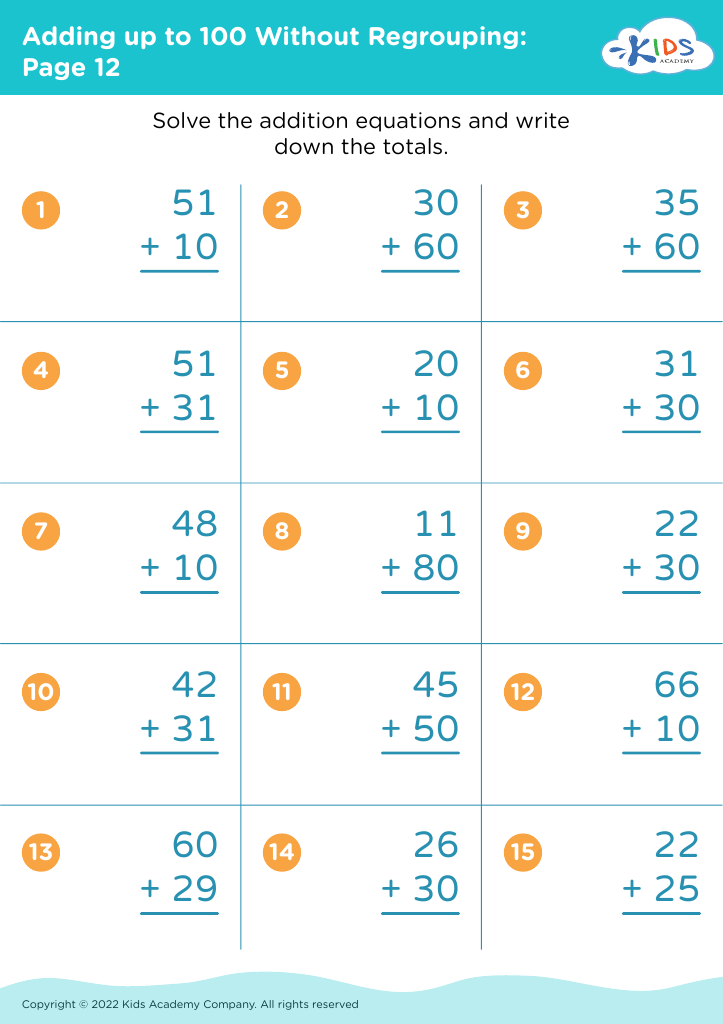
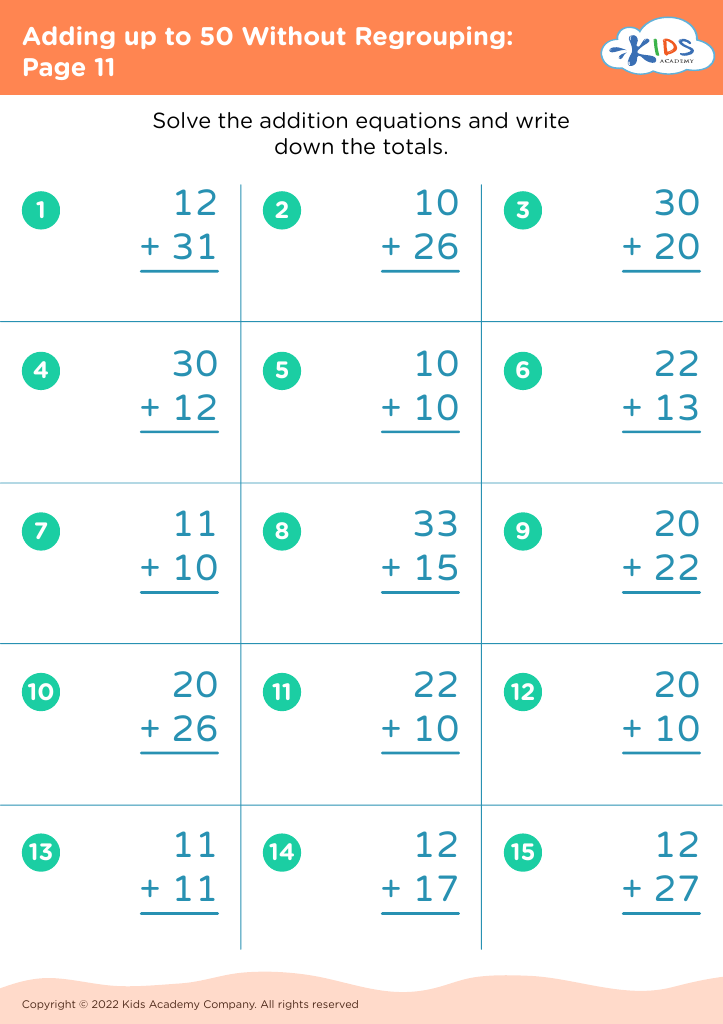
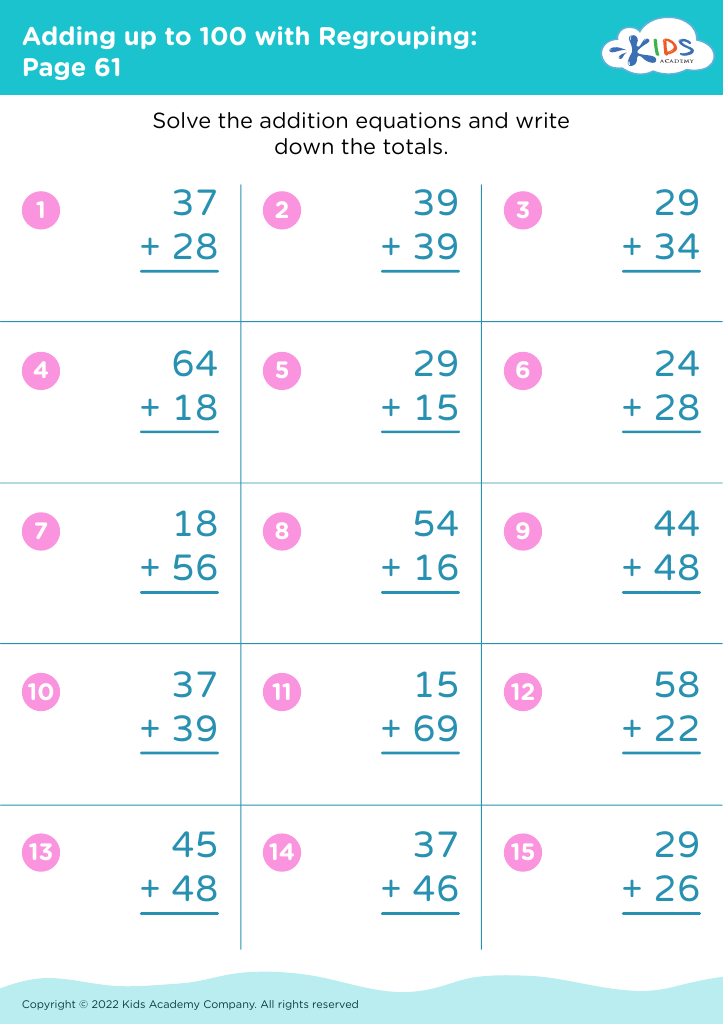
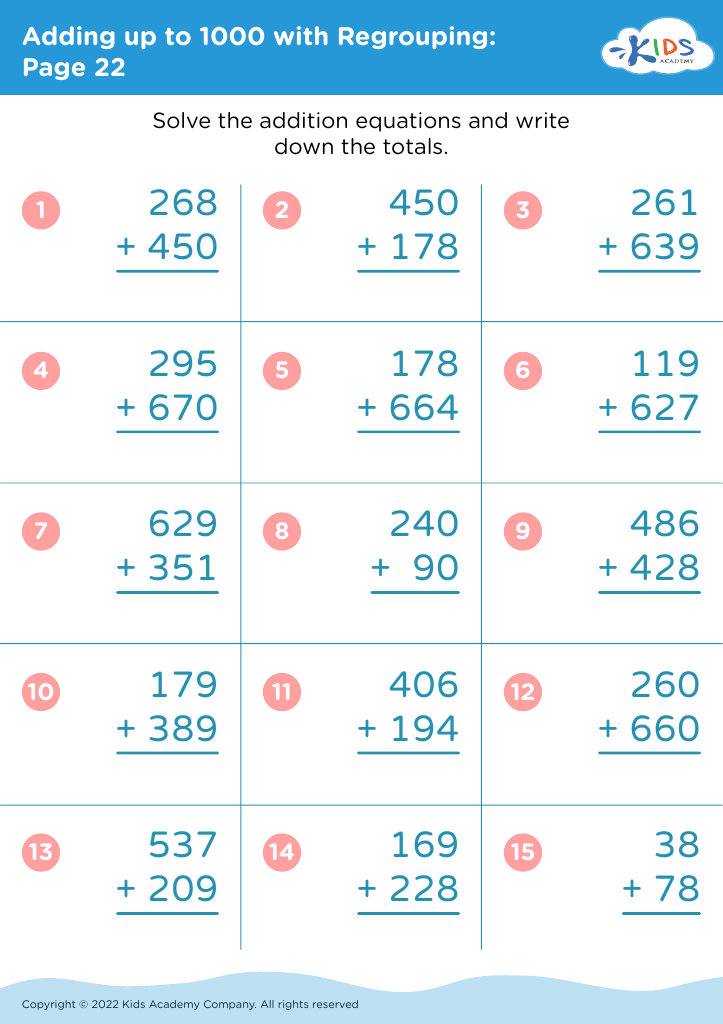
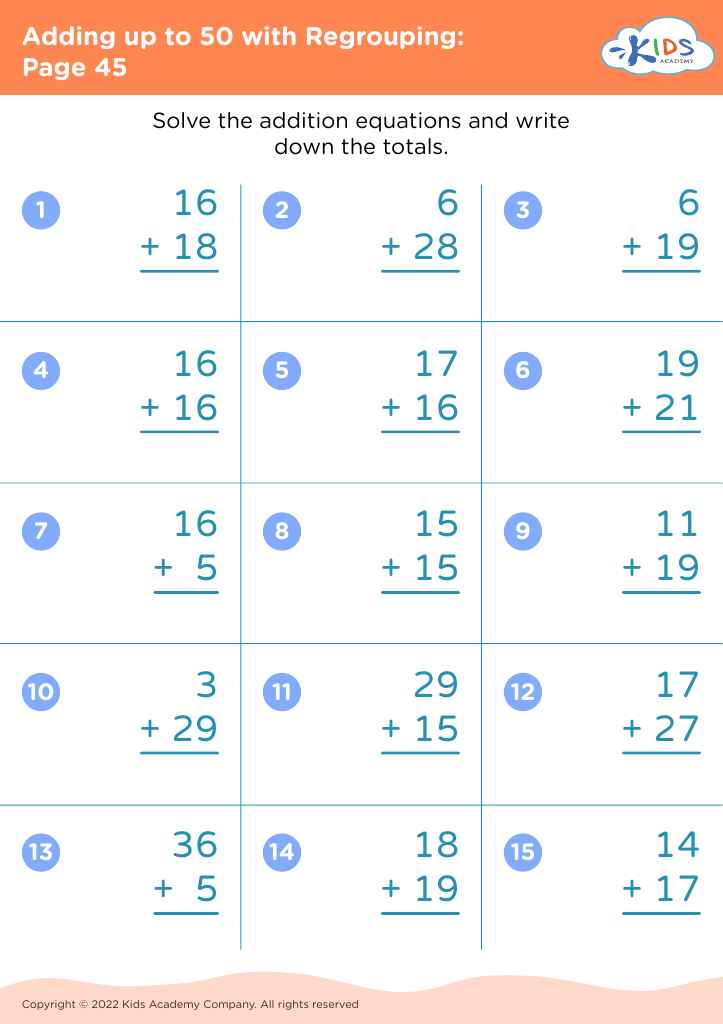
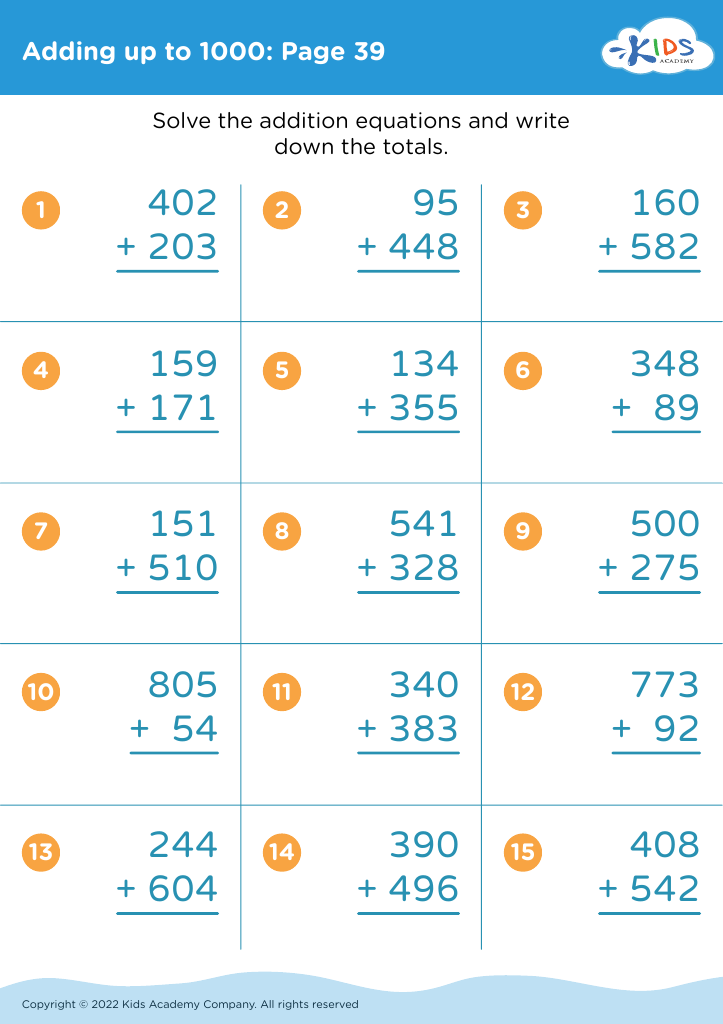
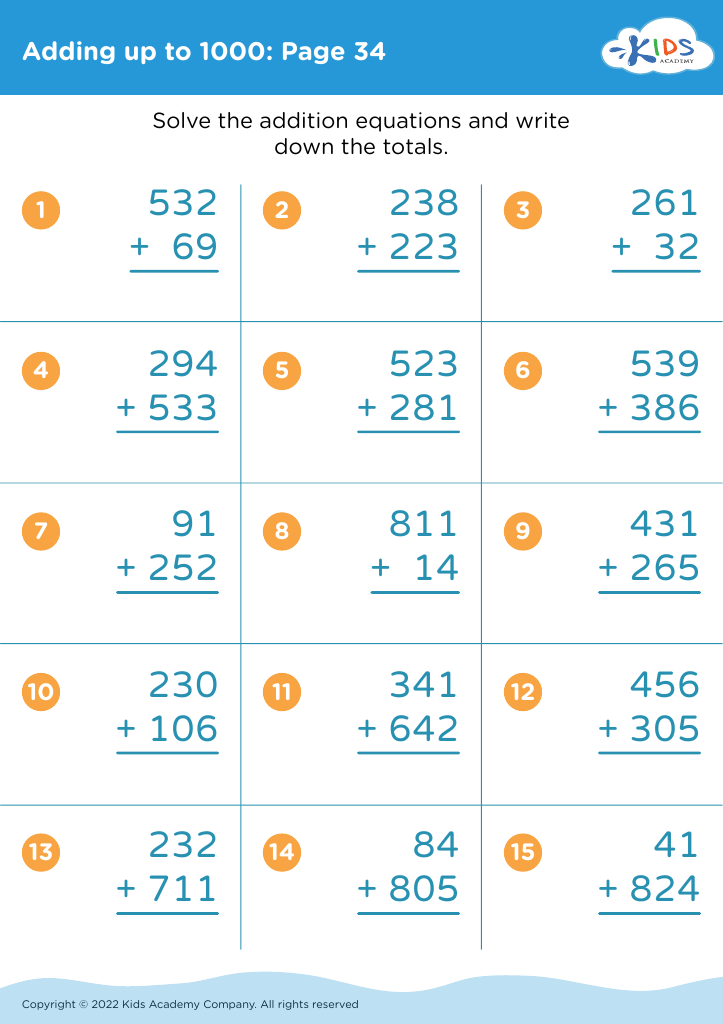
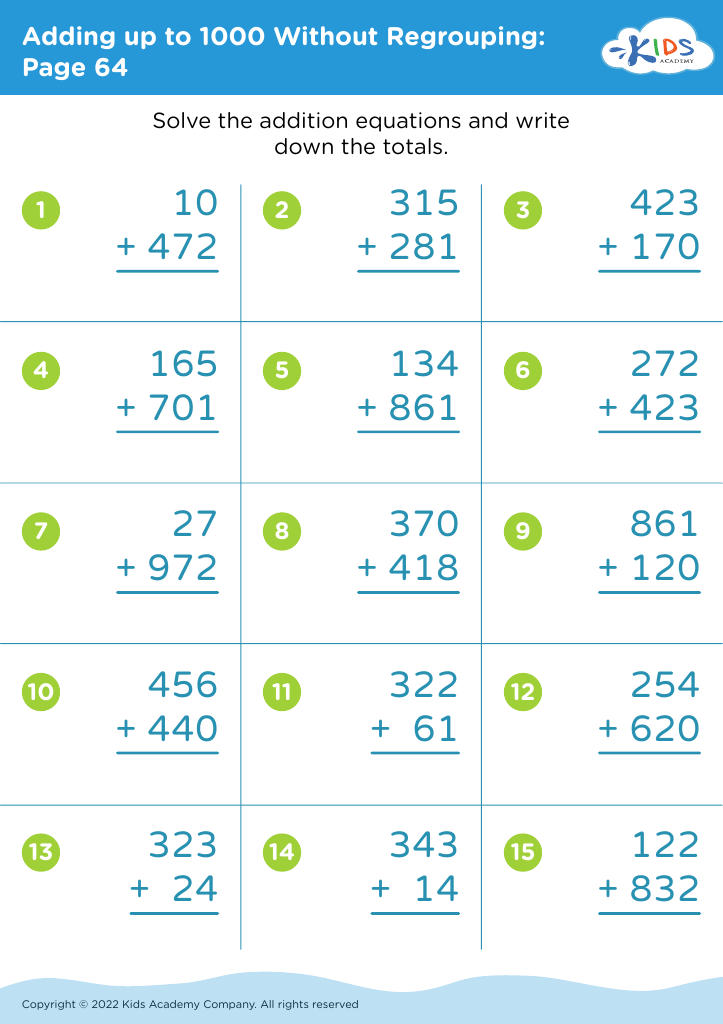
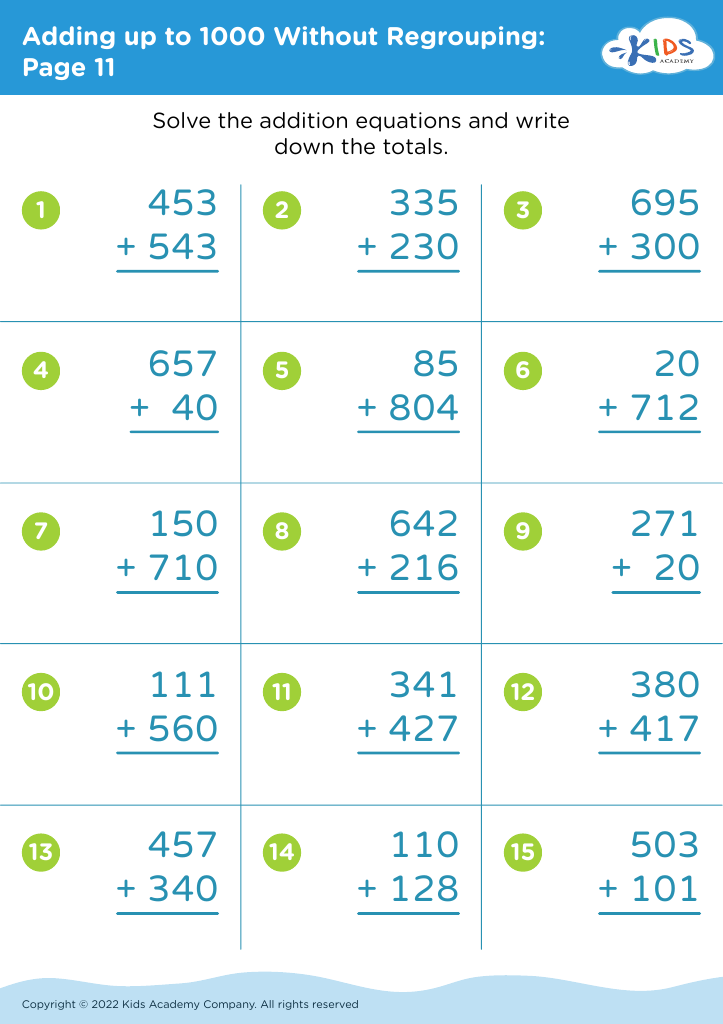
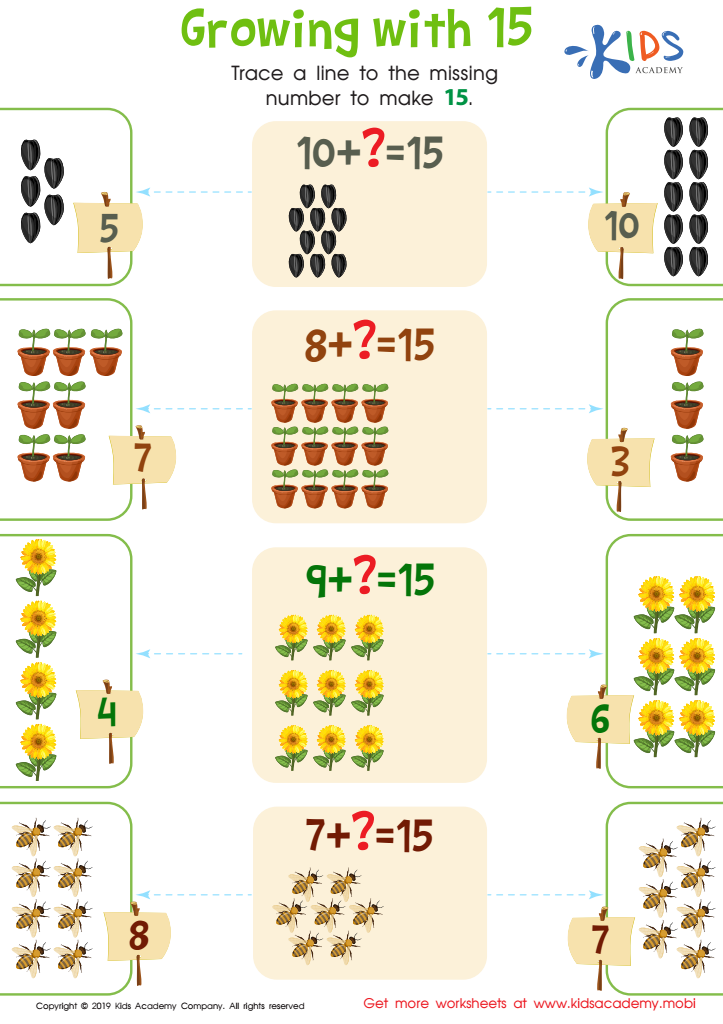
Growing with 15 Worksheet
 Assign to My Students


.jpg)





Number sequencing addition is a fundamental building block in early childhood education that parents and teachers should prioritize for children aged 4-9. Understanding and mastering number sequencing lays a strong mathematical foundation, promoting cognitive development and problem-solving skills.
Firstly, grasping the concept of number sequences helps children recognize patterns and relationships between numbers. This skill is essential not only for solving basic arithmetic problems but also for understanding more complex math concepts as they progress in their education. For instance, recognizing that 2 plus 2 equals 4 helps children later understand that 20 plus 20 equals 40.
Moreover, number sequencing enhances a child's logical thinking and reasoning abilities. When children can accurately sequence numbers, they can better predict outcomes and make informed decisions in both academic settings and real-life situations. It also facilitates the development of memory skills, as children consistently practice recalling and ordering numbers.
Socially, engaging with number sequencing and addition tasks boosts confidence and cultivates a sense of achievement. This positive attitude towards learning math can carry on through a child’s academic life.
In summary, number sequencing addition is pivotal for developing essential mathematical abilities, fostering logical reasoning, and building self-confidence, ultimately laying the groundwork for future success in mathematics and related disciplines.








