
Observational skills Addition Worksheets for Ages 4-9
5 filtered results
Difficulty Level
Grade
Age
-
From - To
Subject
Activity
Standards
Our Observational Skills Addition Worksheets are designed for children ages 4-9 to enhance both their math and observational abilities. These worksheets offer a variety of engaging activities that integrate fun visual learning with fundamental addition practices. As kids explore colorful images and solve addition problems, they simultaneously sharpen their attention to detail and cognitive skills. Perfect for young learners, these resources ensure that mastering math becomes an enjoyable experience. Boost your child’s critical thinking, improve their number sense, and build a solid foundation for future math success with our expertly crafted observational skills addition worksheets.
Favorites
With answer key
Interactive
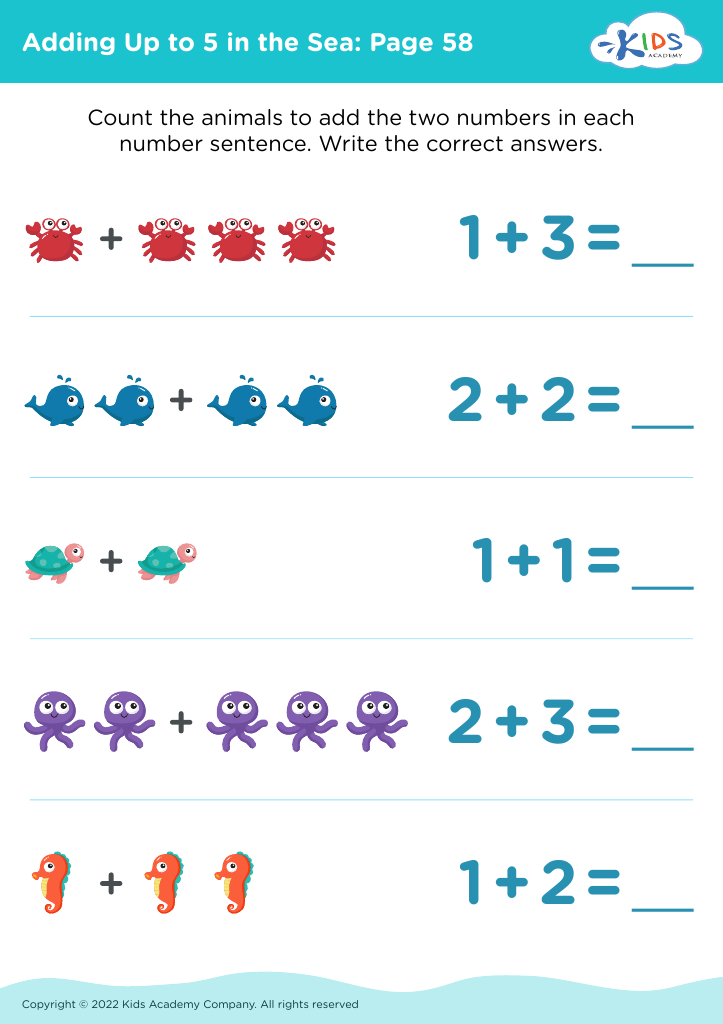
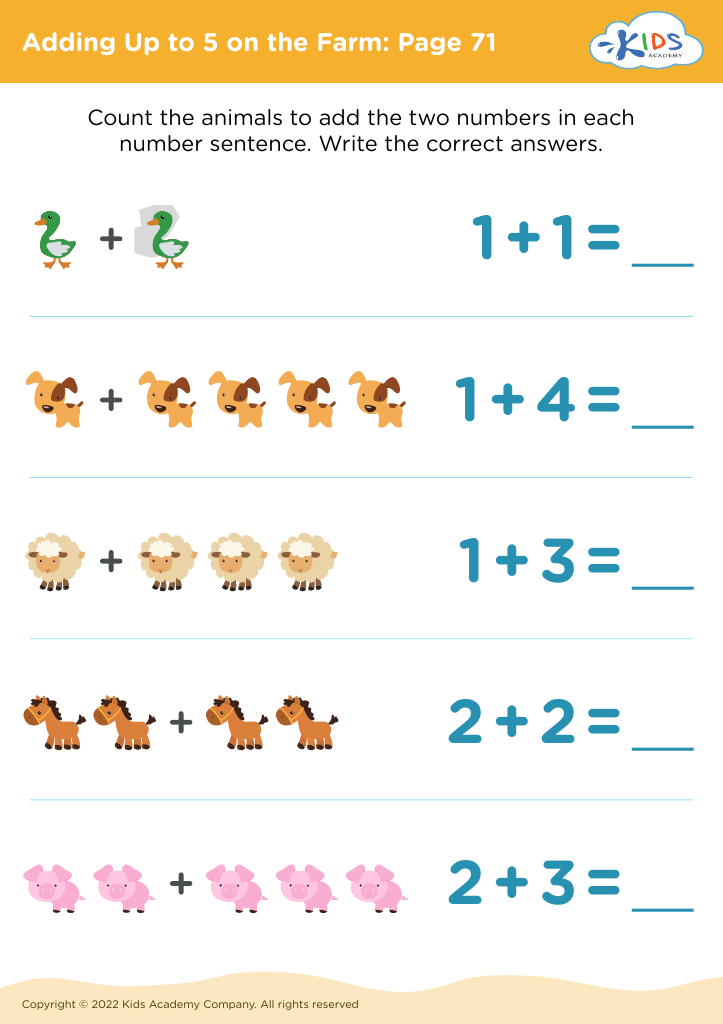
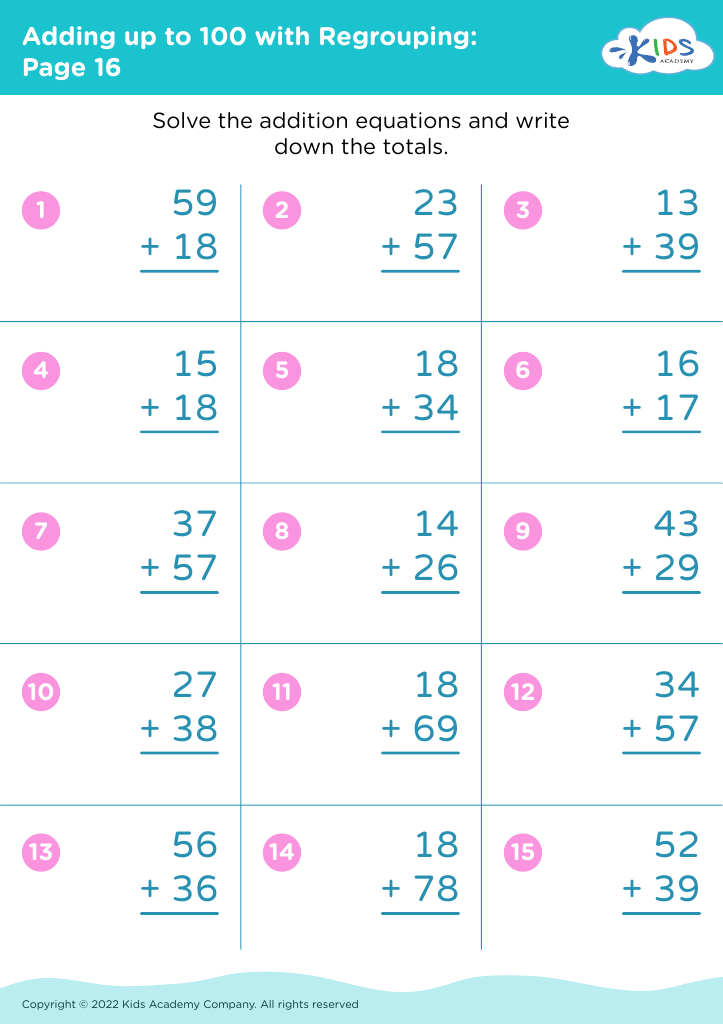
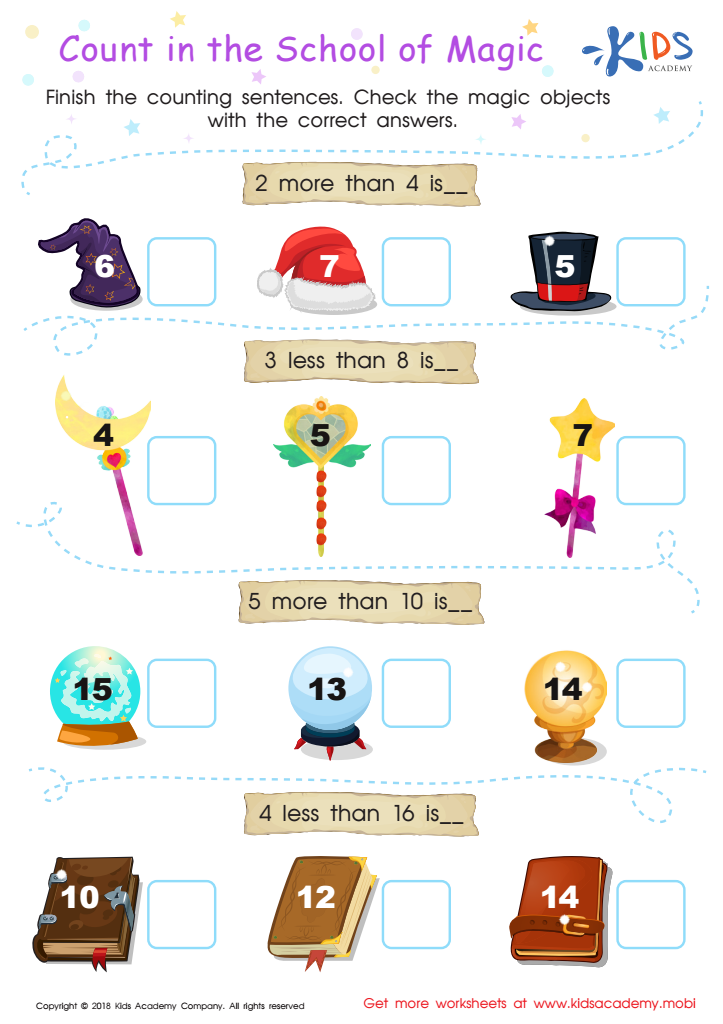
Count in the School of Magic Worksheet
Your math learners can explore the School of Magic with this worksheet. They'll read equations with addition and subtraction numbers under 20, count back and forth to find the answer, then complete the counting sentences. Fun pictures and easy accuracy make it an enjoyable and successful learning experience.
 Assign to My Students
Count in the School of Magic Worksheet
Worksheet
Join Kids Academy for Free
Who is primarily going to use this learning content?







Observational skills form the foundation of learning and cognitive development, making them crucial for children between the ages of 4-9. At this age, kids are naturally curious and keen to explore their environment. By honing their observational skills, parents and teachers can significantly enrich their learning experiences.
Primarily, strong observational skills help children notice and understand details, boosting their ability to learn concepts across subjects like science, math, and reading. For example, identifying patterns in nature or recognizing letters and numbers supports early literacy and numeracy. Furthermore, these skills sharpen critical thinking: by observing cause and effect, children can make better judgments and problem-solve more effectively.
For social development, observational skills enable kids to better understand social cues, fostering empathy and effective communication. Being able to read facial expressions and body language helps children develop friendships and interact more positively with peers.
Moreover, enhancing observation helps children with self-regulation and concentration, vital skills for academic success. Activities such as drawing, simple experiments, and storytelling can improve these abilities. Parents and teachers nurturing observational skills contribute to well-rounded, attentive, and empathetic learners.
Therefore, encouraging observational skills through mindful activities, discussions, and active engagement prepares children for more complex learning and better social interactions, ultimately promoting holistic development.








