Practice inference skills Addition Worksheets for Ages 4-9
3 filtered results
-
From - To
Enhance your child's problem-solving abilities with our Practice Inference Skills Addition Worksheets, designed for ages 4-9. These engaging worksheets help children develop critical thinking and reasoning skills through fun, interactive addition problems that encourage them to infer and draw conclusions. By combining basic math concepts with analytical thinking, kids will gain confidence in their abilities while mastering addition. Perfect for classroom use or at-home learning, these worksheets offer varied exercises to suit different learning styles. Whether your child is a beginner or looking to sharpen their skills, our resources foster a love for math while building essential inference skills. Start exploring today!
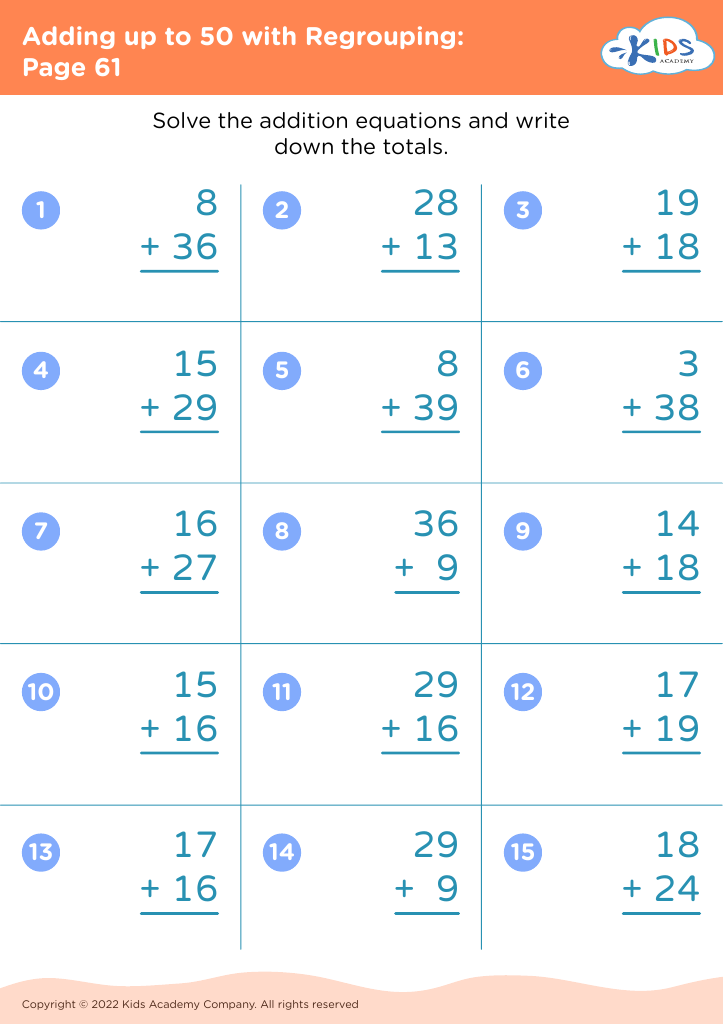
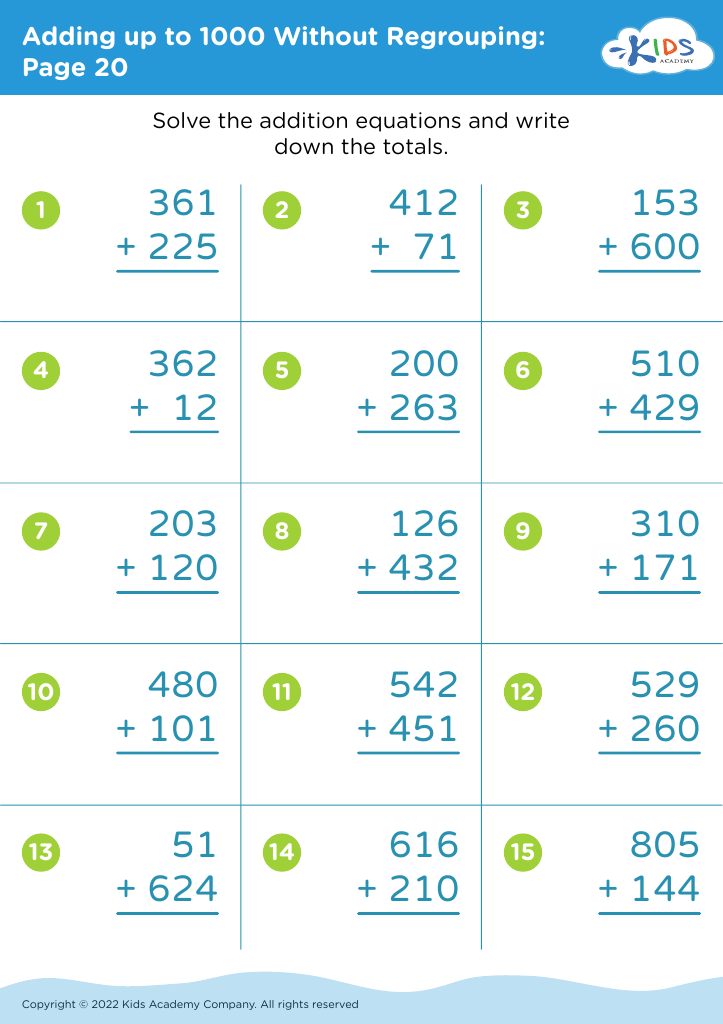
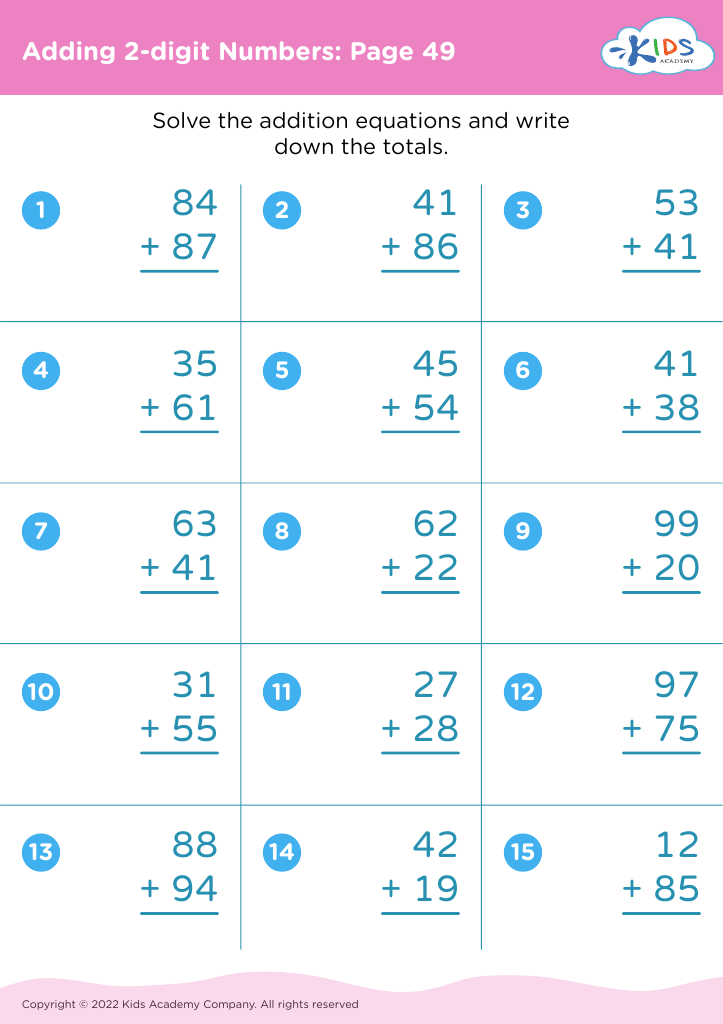








Understanding and practicing inference skills in addition is crucial for children aged 4-9, as it forms the foundation for deeper mathematical comprehension and critical thinking. At this age, children are developing not just basic addition skills, but also the ability to recognize patterns, draw conclusions, and solve problems. When parents and teachers emphasize inference in addition, they help children learn to analyze numerical relationships and derive answers beyond mere rote memorization.
These skills go beyond academic success; they foster cognitive development, improving children's reasoning abilities. For instance, when children learn to infer that if 3 + 2 equals 5, then 5 – 3 must equal 2, they acquire versatile thinking and confidence in approaching math challenges.
Additionally, inference skills enhance reading comprehension and problem-solving in everyday situations. In a world flooded with information, being able to infer leads to better understanding and interpretation of both mathematical concepts and general knowledge.
Ultimately, nurturing these skills helps create independent learners who are prepared to tackle more complex tasks in higher grades, making it imperative for parents and teachers to actively engage children in activities that promote inference in addition. Investing in these skills early equips children for lifelong learning and success.








