Sea creatures identification Addition Worksheets for Ages 4-9
3 filtered results
-
From - To
Discover our engaging Sea Creatures Identification Addition Worksheets, designed specifically for children aged 4-9. These interactive worksheets combine learning math skills with an exciting underwater adventure! Kids will practice addition while identifying various sea creatures, from colorful fish to majestic whales. Each worksheet is crafted to enhance your child's mathematical understanding and promote critical thinking. Perfect for homeschooling, classroom settings, or supplemental practice, these resources encourage a love for learning and exploration. Dive into the world of mathematics with the wonders of marine life, making addition a fun and enjoyable experience for young learners. Start today and watch their skills flourish!
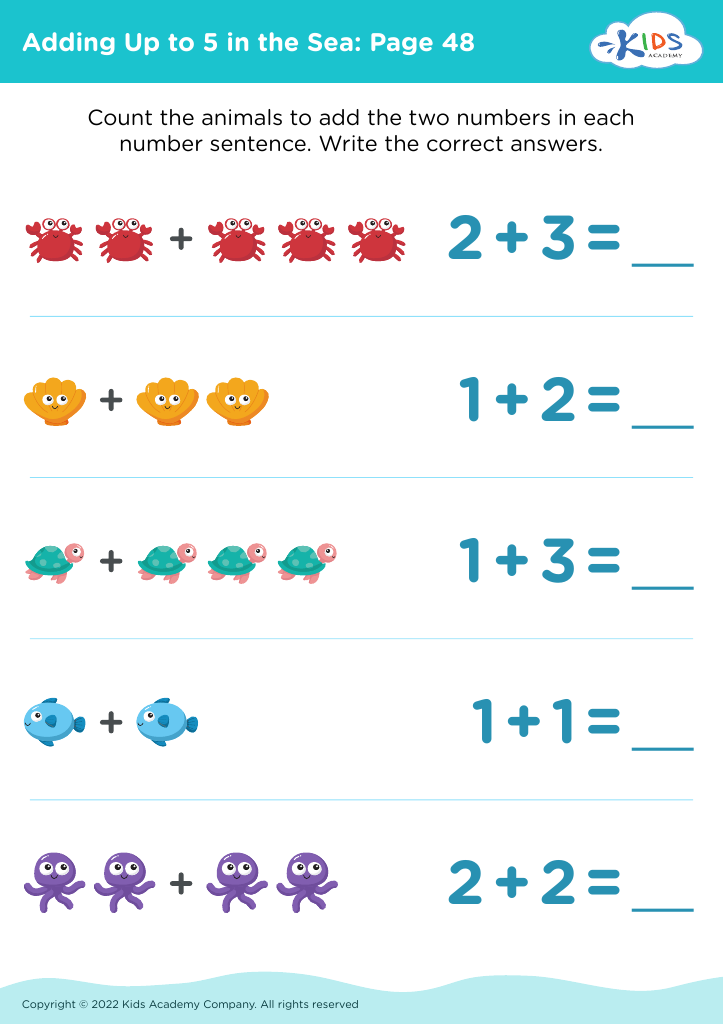
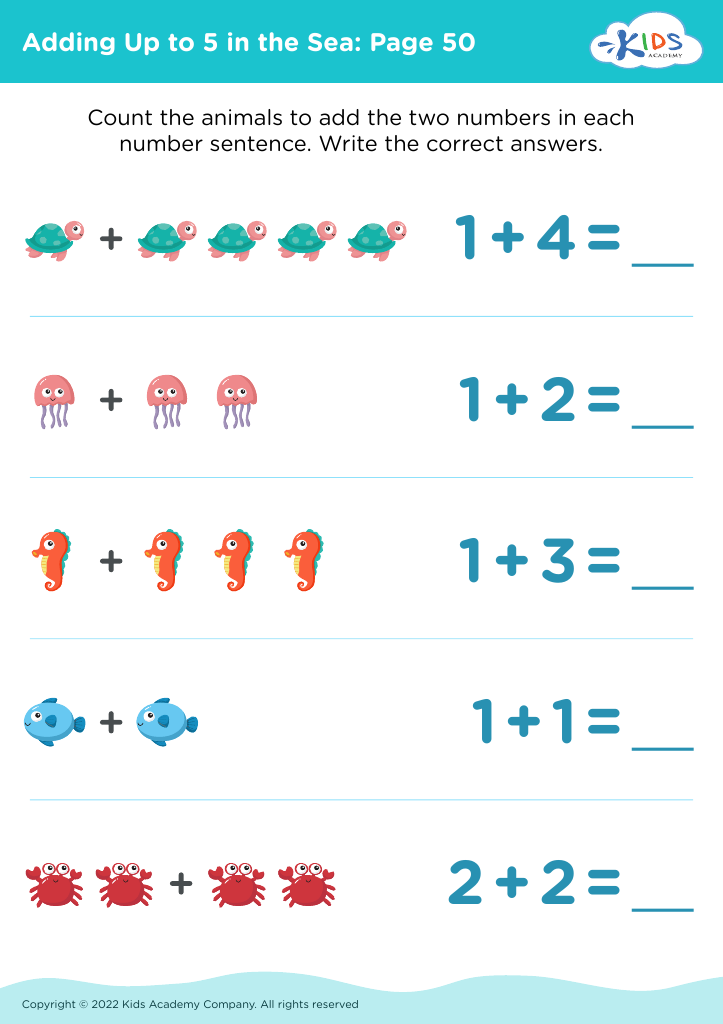
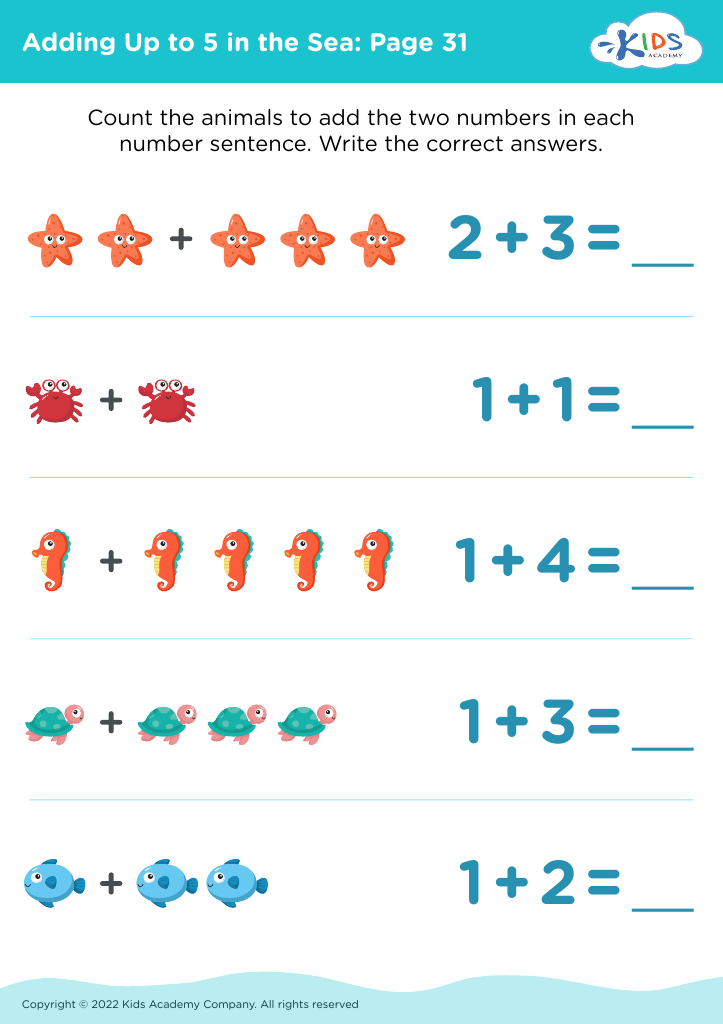








Understanding sea creature identification is vital for parents and teachers, especially for children aged 4-9. This educational endeavor fosters curiosity about marine life, essential for developing an appreciation for the environment. By learning to identify various sea creatures, children enhance their observational skills, enabling them to differentiate between species and understand their habitats and roles in the ecosystem.
Furthermore, learning about sea creatures encourages literacy and numeracy skills; lessons can involve reading about different species or performing addition exercises related to them, such as counting the number of jellyfish or starfish seen in illustrations. This multi-disciplinary approach creates engaging learning experiences that stimulate cognitive development.
Incorporating marine education into the curriculum or home activities promotes environmental awareness from a young age. Children who know about sea life develop a sense of responsibility toward conservation efforts, as they realize the importance of protecting these creatures and their environments.
Finally, identifying sea creatures can be a family bonding experience, conducting beach outings or engaging in aquatic-themed activities together. This not only enriches children's knowledge but also nurtures emotional connections, making learning a fun and memorable adventure.








