
Spatial awareness Addition Worksheets for Ages 4-9
5 filtered results
Difficulty Level
Grade
Age
-
From - To
Subject
Activity
Standards
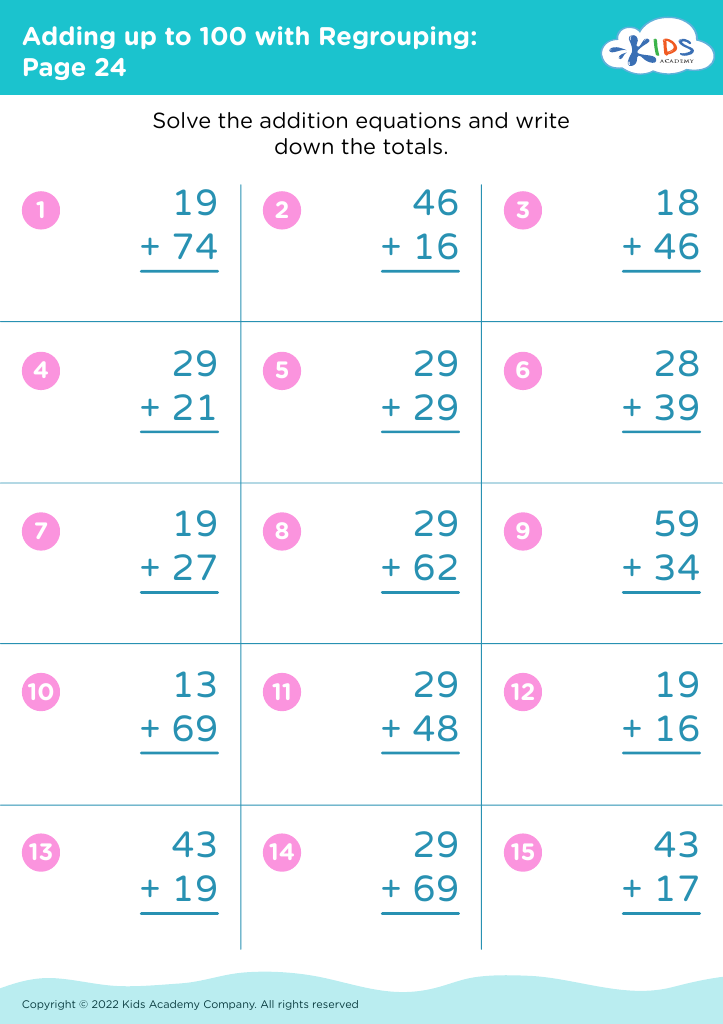
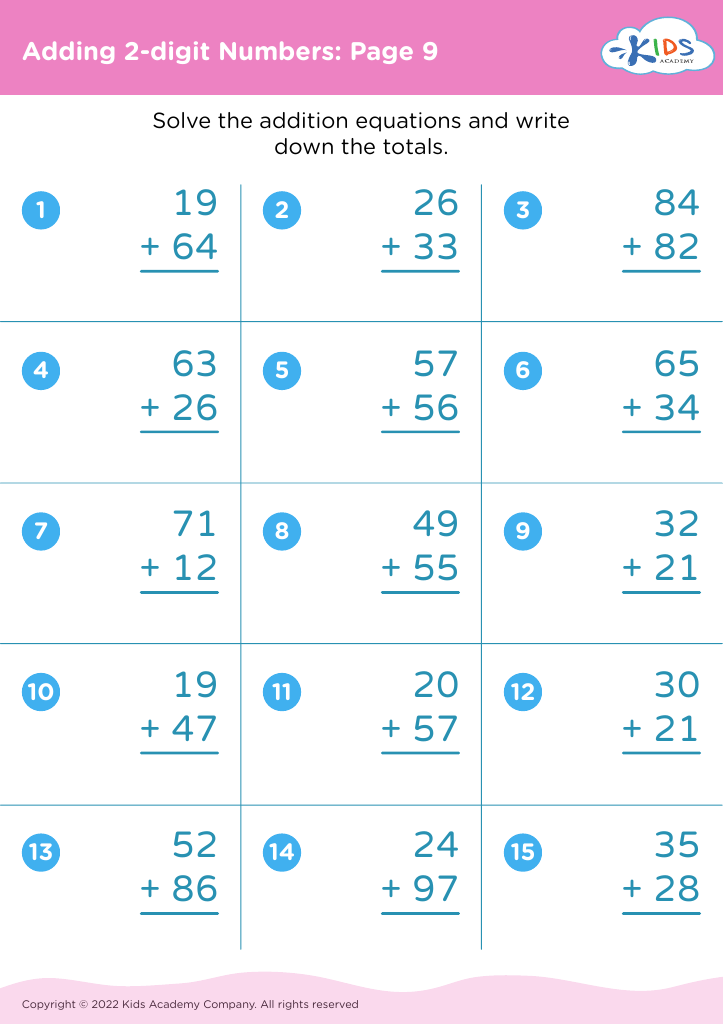
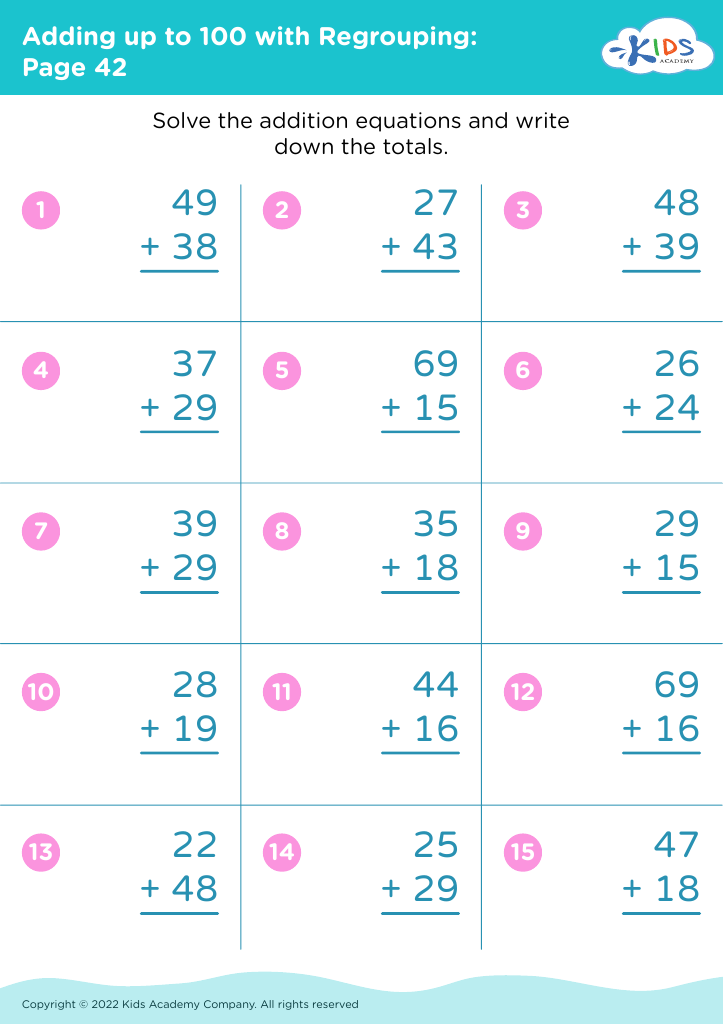
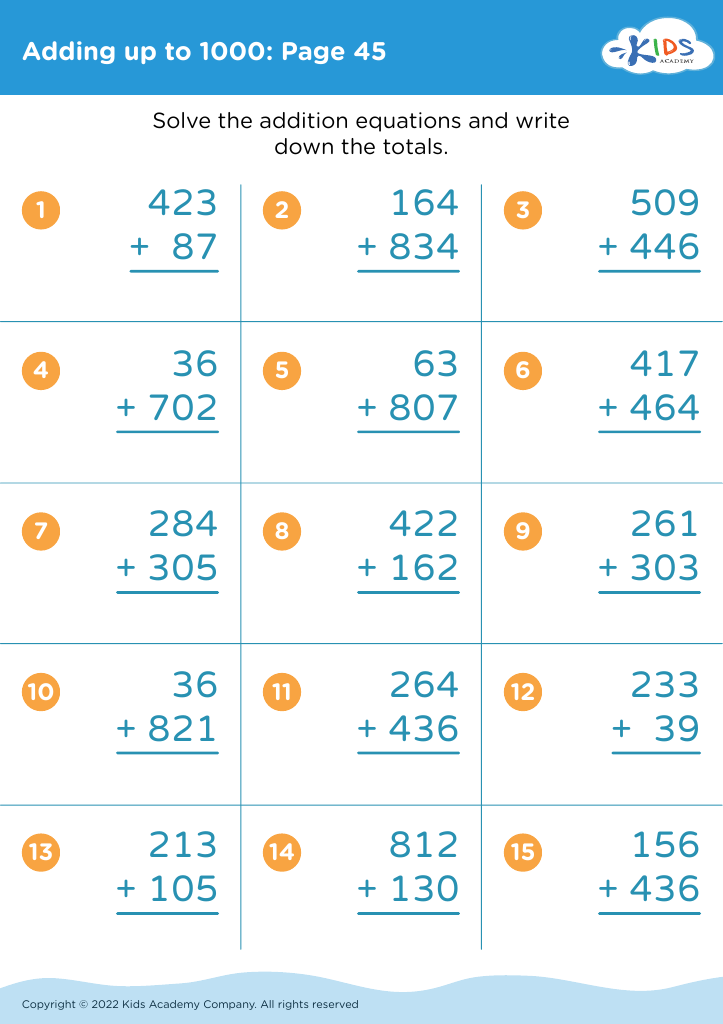
Enhance your child's mathematical skills with our Spatial Awareness Addition Worksheets, designed specifically for ages 4-9. These engaging worksheets not only focus on addition but also help children improve their spatial understanding through fun activities that involve shapes, positions, and patterns. By integrating spatial awareness with math concepts, we ensure that young learners develop a well-rounded foundation. Perfect for parents and educators alike, these worksheets support early learners in grasping essential math skills while fostering creativity and critical thinking. Explore our collection today to make math a delightful and educational experience for your little ones!
Favorites
With answer key
Interactive
Join Kids Academy for Free
Who is primarily going to use this learning content?








Spatial awareness is a crucial cognitive skill that enables children to understand their position in relation to the world around them. For ages 4-9, developing spatial awareness is essential for foundational learning and practical applications in various subjects. First and foremost, it underpins crucial mathematical skills, especially in addition. When children comprehend spatial relationships, they can visualize number lines and number frames, making it easier to grasp addition concepts, such as combining quantities or finding sums.
Moreover, enhancing spatial skills boosts problem-solving abilities. Children learn to analyze shapes, distances, and quantities, which directly contributes to their critical thinking. These skills are beneficial not just in math but in everyday life situations, such as navigating one’s environment or playing sports.
In addition, spatial awareness plays a significant role in a child's overall cognitive development, assisting them in understanding geometry and later, more complex mathematical concepts. For teachers and parents, fostering spatial skills through engaging activities—like puzzles, block building, and interactive games—ensures that children lay a strong foundation in both math and essential life skills. Thus, investing time and resources into spatial awareness not only enhances early academic success but also prepares children for varied future challenges.








