Understand patterns Addition Worksheets for Ages 4-9
6 filtered results
-
From - To
Discover our "Understand Patterns Addition Worksheets" designed specifically for children aged 4-9! These engaging and interactive worksheets help young learners grasp the concept of addition through pattern recognition. By utilizing visual aids and fun activities, students will enhance their mathematical skills while enjoying a variety of engaging exercises. Each worksheet is tailored to different learning levels, making it perfect for individual or group practice. Foster a strong foundation in addition as children learn to identify and create patterns that will improve their problem-solving abilities. Most importantly, our worksheets make learning fun and approachable – the perfect way to boost confidence in young mathematicians!
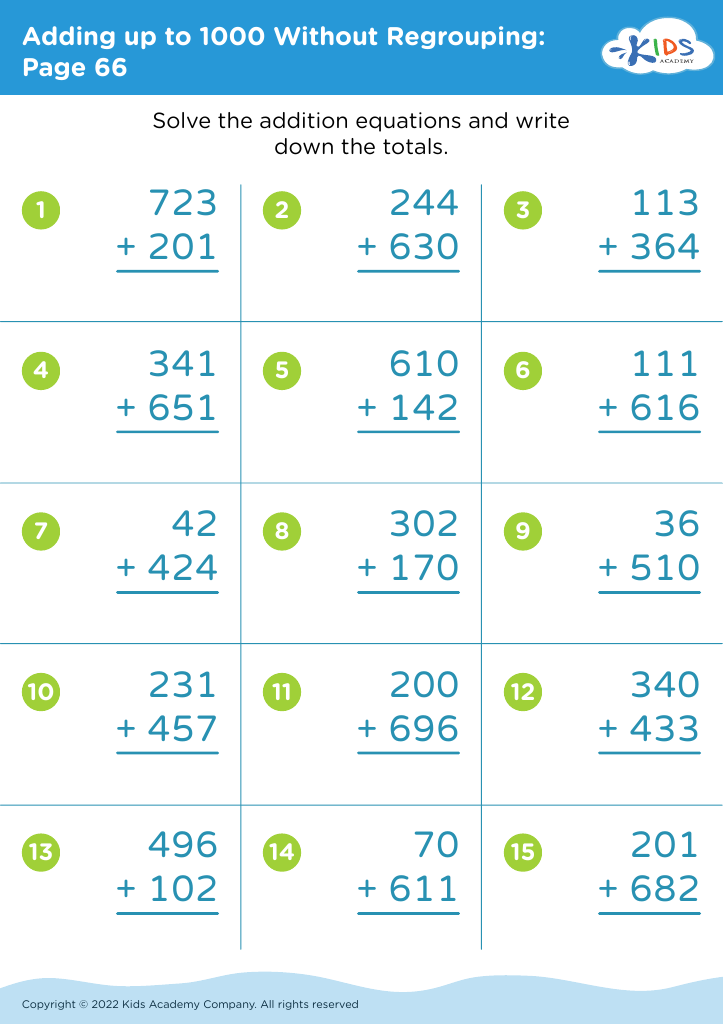
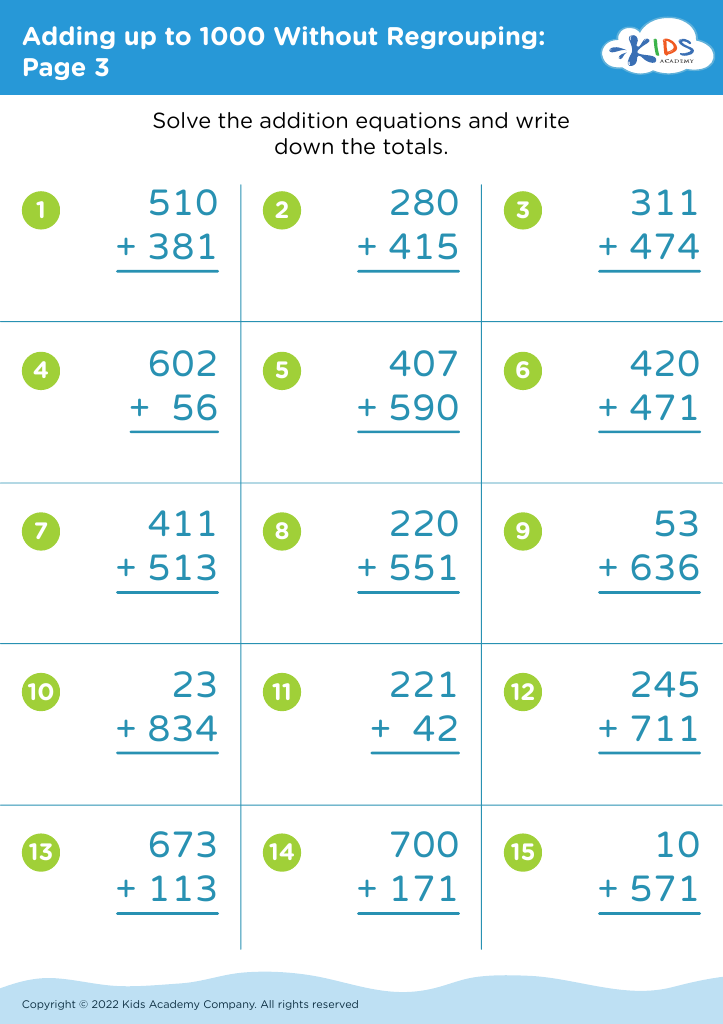
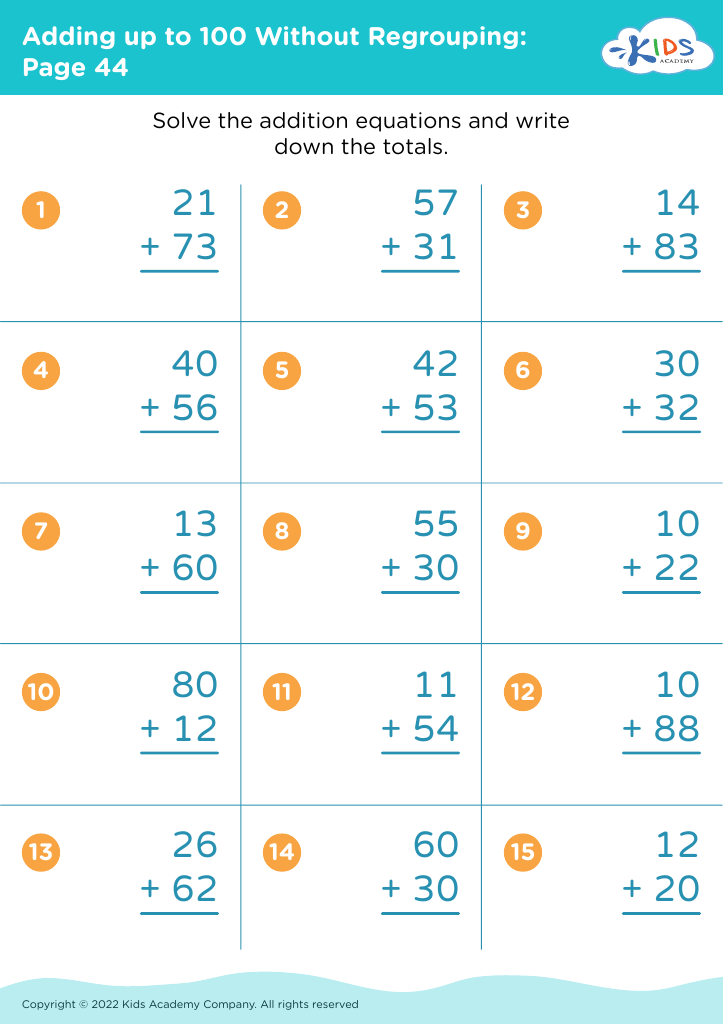
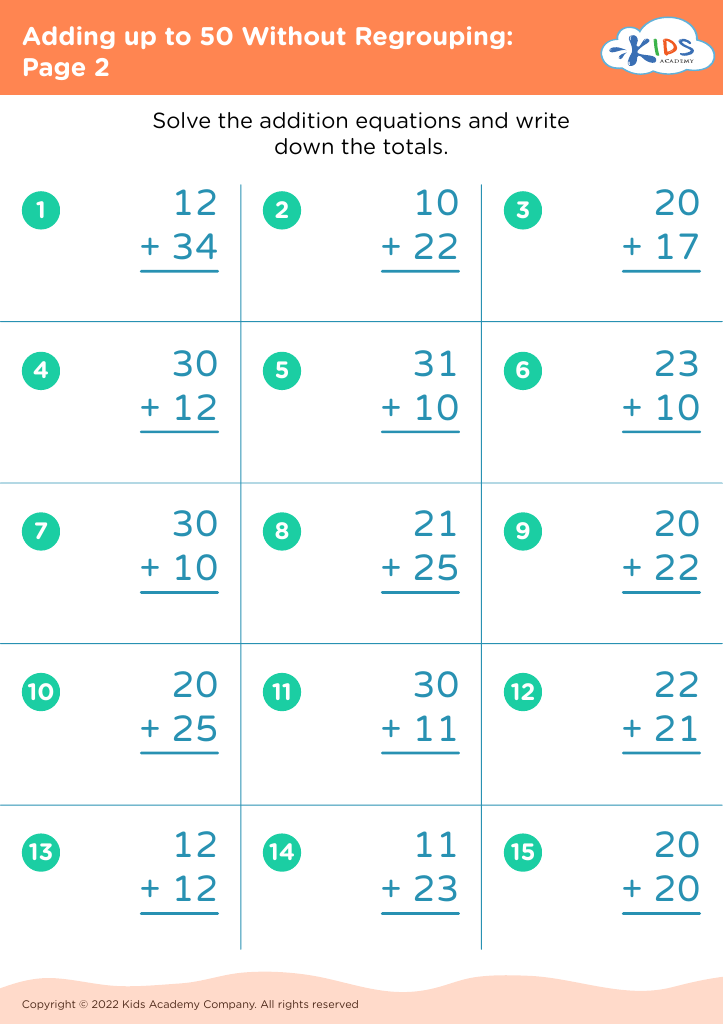





.jpg)


Understanding patterns in addition is crucial for children aged 4 to 9 as it lays the foundation for their future math skills. Recognizing patterns enhances their ability to make predictions and develop problem-solving skills. When children grasp how numbers interact, they can identify relationships between numbers, which is essential in addition and arithmetic operations. This cognitive skill helps them understand the concept of grouping and regrouping in addition, paving the way for more complex mathematical concepts later on.
Additionally, children learn best through engaging and playful exploration. Patterns encourage them to think critically and logically as they discover sequences, which fosters a love for learning. When teachers and parents emphasize patterns in addition through games, visuals, and real-life scenarios, they make math more relatable and enjoyable. This interactive approach boosts confidence and reduces anxiety related to math, creating a more positive attitude towards learning overall.
Furthermore, this foundational understanding aids in the development of literacy skills as well. When children learn patterns, they start recognizing not only numerical patterns but also patterns in language, enhancing their overall cognitive development. By prioritizing pattern recognition in addition, parents and teachers are equipping children with essential skills that will benefit them throughout their education and everyday life.








