Understanding number values Addition Worksheets for Ages 4-9
3 filtered results
-
From - To
Discover our "Understanding Number Values Addition Worksheets," tailored for children ages 4-9. These engaging and educational worksheets help young learners grasp fundamental addition concepts and number values in a fun, interactive way. Designed to support developing minds, each worksheet offers a variety of activities that enhance mathematical skills, boost confidence, and nurture a love for learning. Perfect for classroom use or at-home practice, these worksheets are an excellent resource for parents and teachers aiming to enrich their children's early math education. Empower your child with the building blocks of addition, and watch their skills flourish!
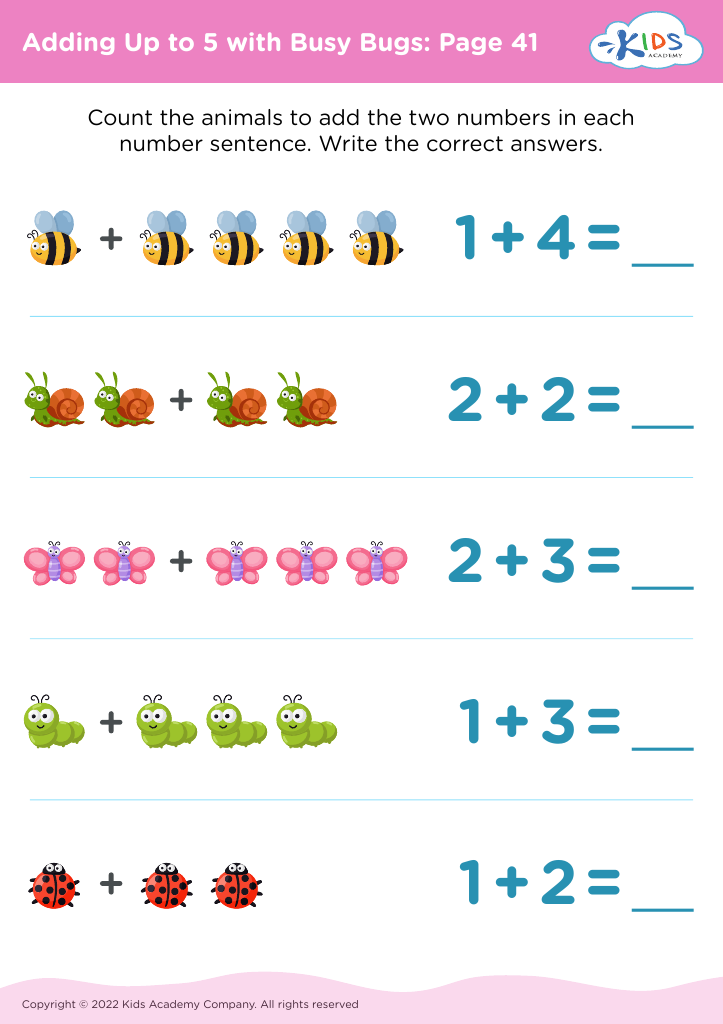
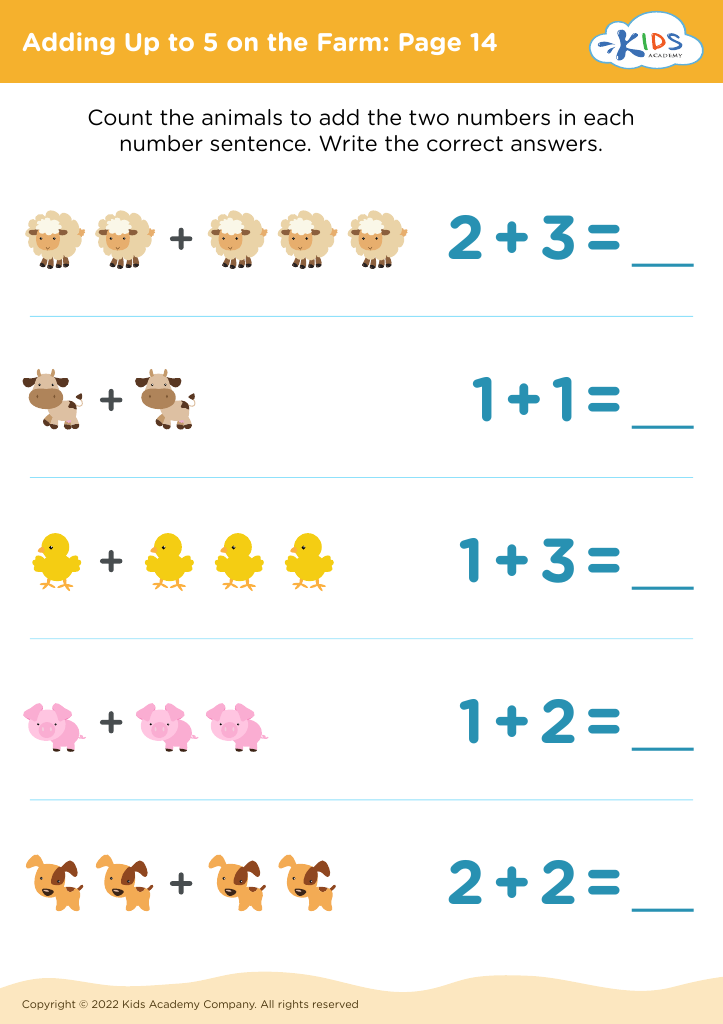
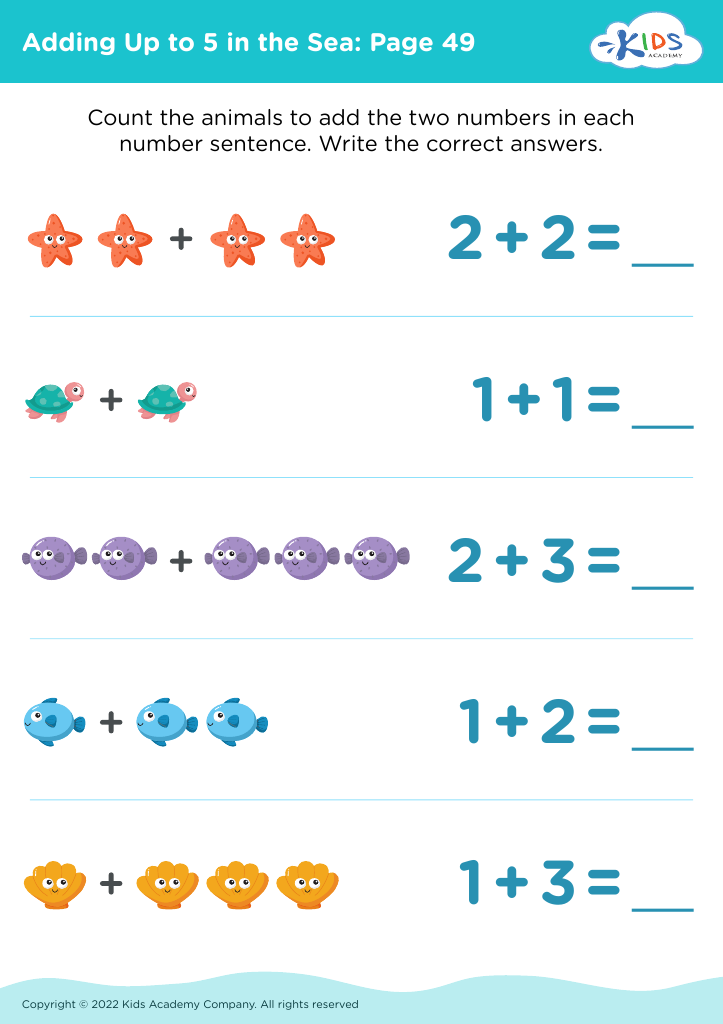








Understanding number values and concepts of addition is foundational for early childhood development, particularly for children ages 4 to 9. This period is crucial as it sets the stage for future mathematical learning and cognitive development. For parents and teachers, fostering a robust grasp of number values and basic addition enhances a child's ability to engage with more complex mathematical concepts as they grow.
Firstly, mastering number values allows children to comprehend quantities, which is essential for everyday problem-solving. Recognizing that three apples are less than five apples, for example, builds a practical understanding of numbers in real life. Secondly, learning addition helps develop arithmetic skills necessary for more advanced topics like subtraction, multiplication, and division. These skills are not only academic; they facilitate decision-making and logical thinking capabilities.
Furthermore, early numeracy skills are correlated with later academic success. Research shows that early mathematical proficiency predicts higher academic achievement in both math and reading. By supporting children in this critical stage, parents and teachers provide them with tools necessary for academic and professional success in the future. Finally, fostering positive attitudes toward math during these formative years can reduce anxiety and build confidence, ensuring that children approach more challenging subjects with a positive mindset and resilience.








