Understanding patterns Addition Worksheets for Ages 4-9 - Page 2
29 filtered results
-
From - To
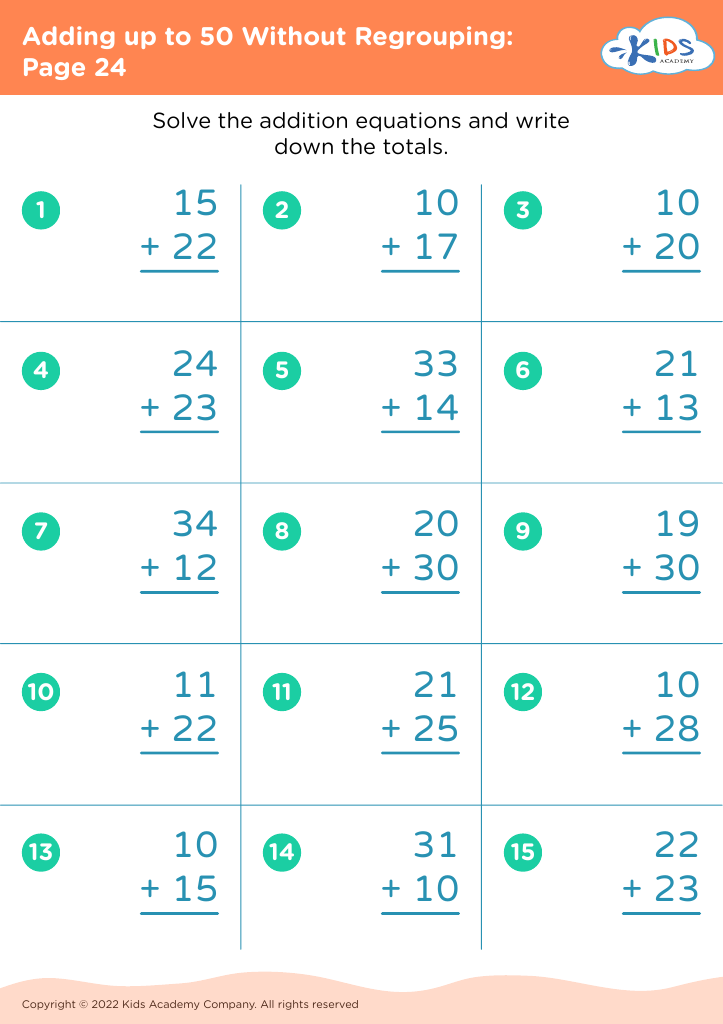
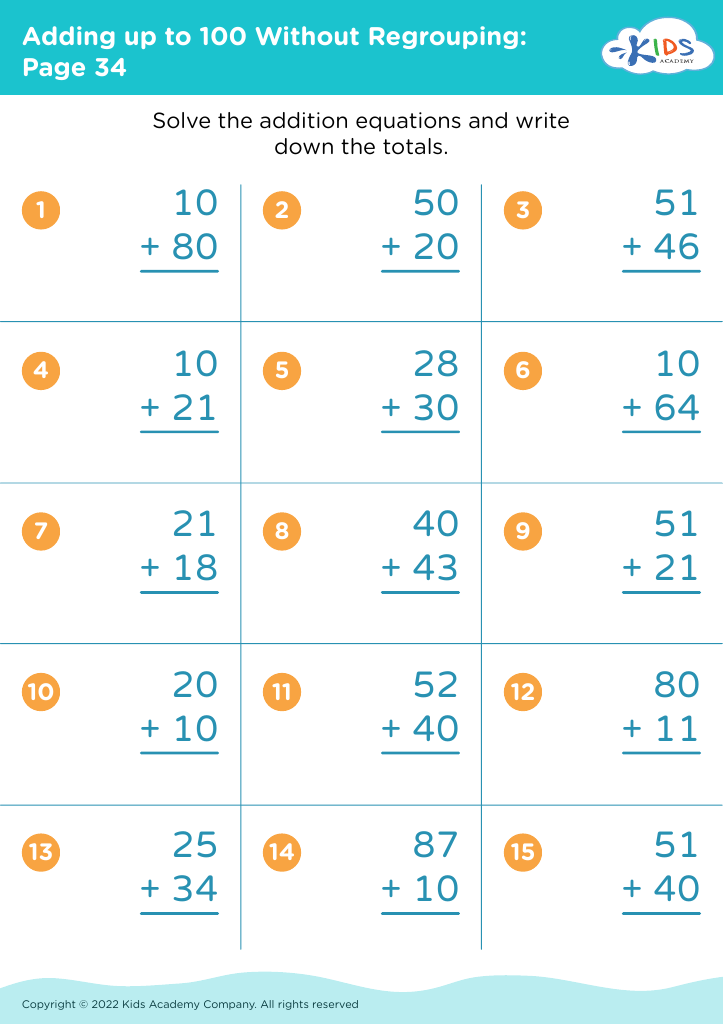
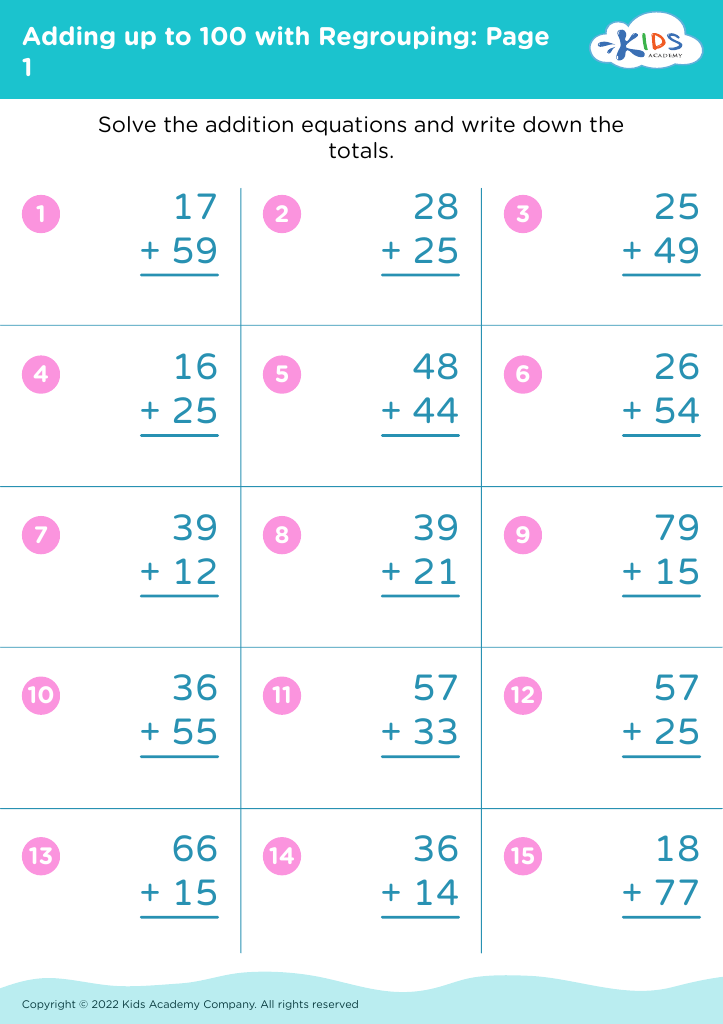
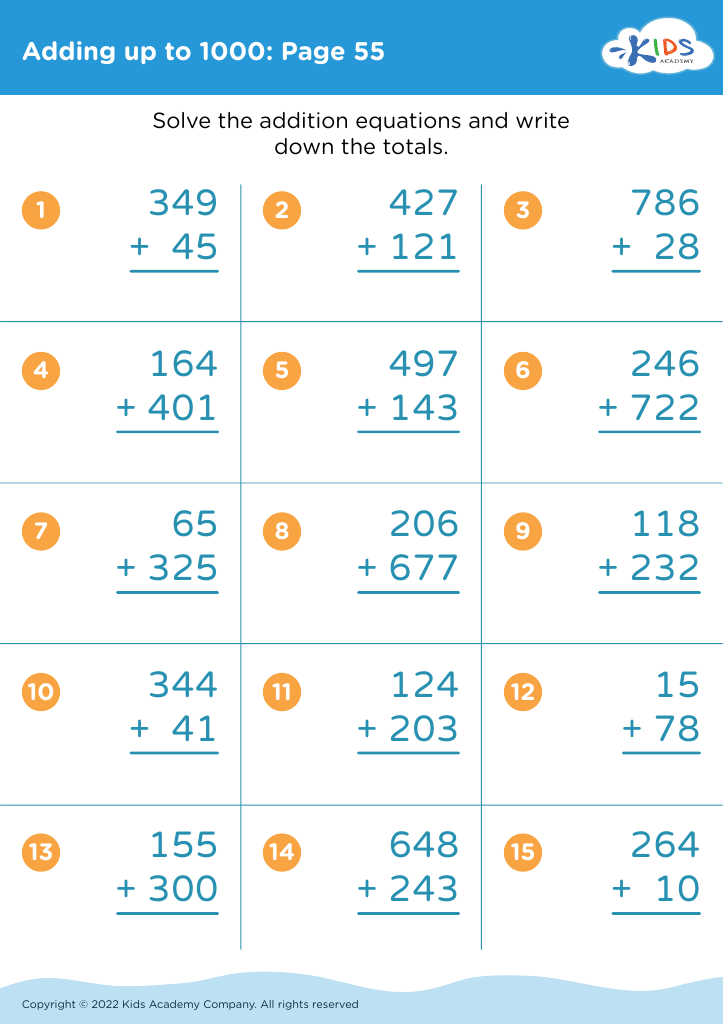
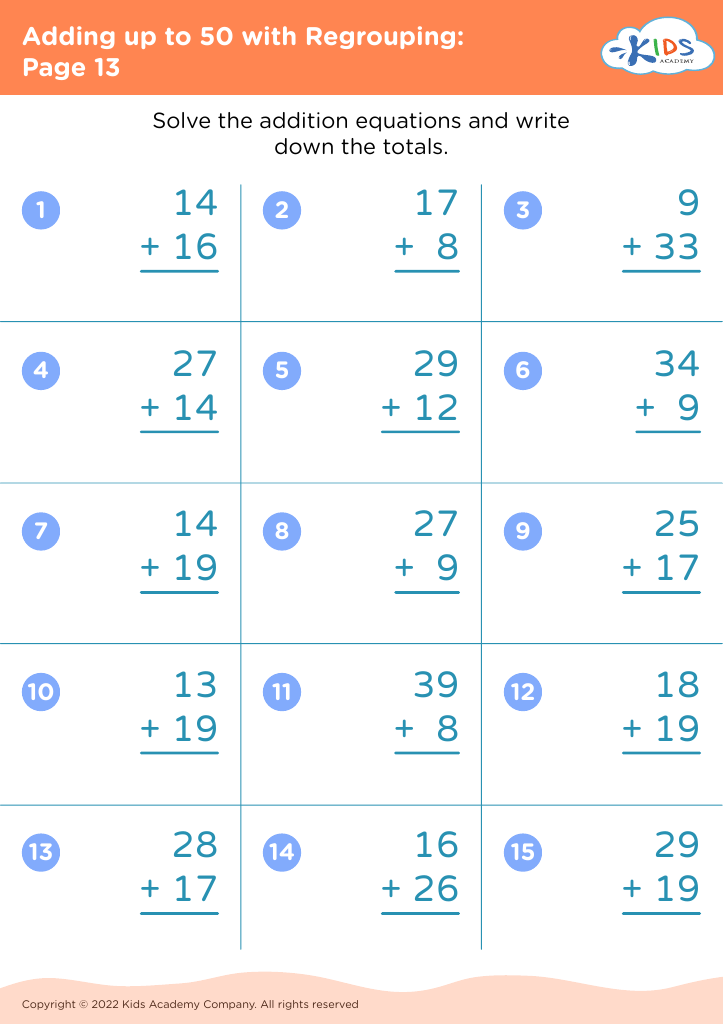








Understanding patterns in addition is crucial for children aged 4-9, as it lays a strong foundation for their mathematical skills and overall cognitive development. At this stage of learning, children begin to grasp not only basic arithmetic but also the underlying principles that govern number relationships. Recognizing and working with patterns helps them develop critical thinking and problem-solving abilities, as they learn to predict outcomes based on previous experiences.
Parents and teachers play a pivotal role in reinforcing pattern recognition in various ways. Incorporating games, daily activities, and real-world examples into their teaching can make learning more engaging and relevant. For instance, using objects like blocks, beads, or even everyday items to create addition patterns allows children to visualize the concepts, making it easier for them to understand.
Moreover, grasping patterns in addition enhances children’s ability to tackle more complex mathematical problems later on. As they progress through their education, a strong understanding of these foundational concepts empowers them to excel in higher-level math, paving the way for academic success. Encouraging children to embrace patterns not only fosters a love for learning but also equips them with essential tools for future challenges. Thus, investing time in helping children understand addition patterns is beneficial for their long-term educational journey.








