Understanding sequence Addition Worksheets for Ages 4-9
4 filtered results
-
From - To
Discover our engaging "Understanding Sequence Addition Worksheets for Ages 4-9" designed to cultivate early math skills in young learners. These printable worksheets are crafted to make learning addition sequences a fun and interactive experience. Perfect for children aged 4 to 9, our activities enhance logical thinking, sequencing, and problem-solving abilities. With colorful illustrations and progressively challenging exercises, kids are able to gradually build a solid foundation in math. Ideal for both home and classroom use, these worksheets will spark a love for math and make addition sequences enjoyable and easy to understand for your little ones.
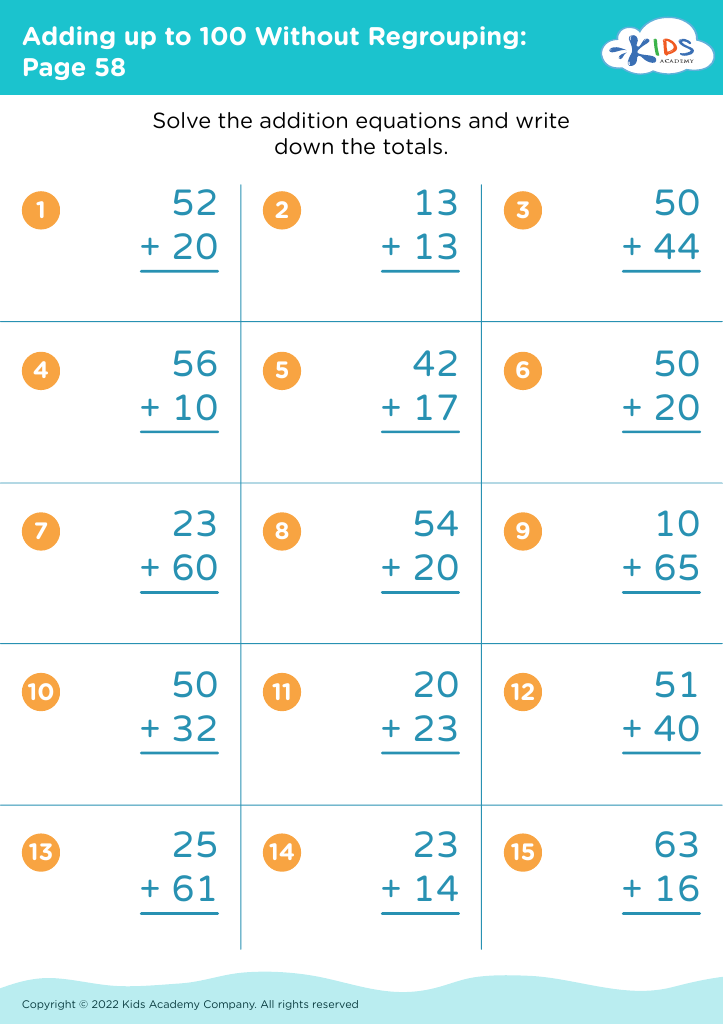
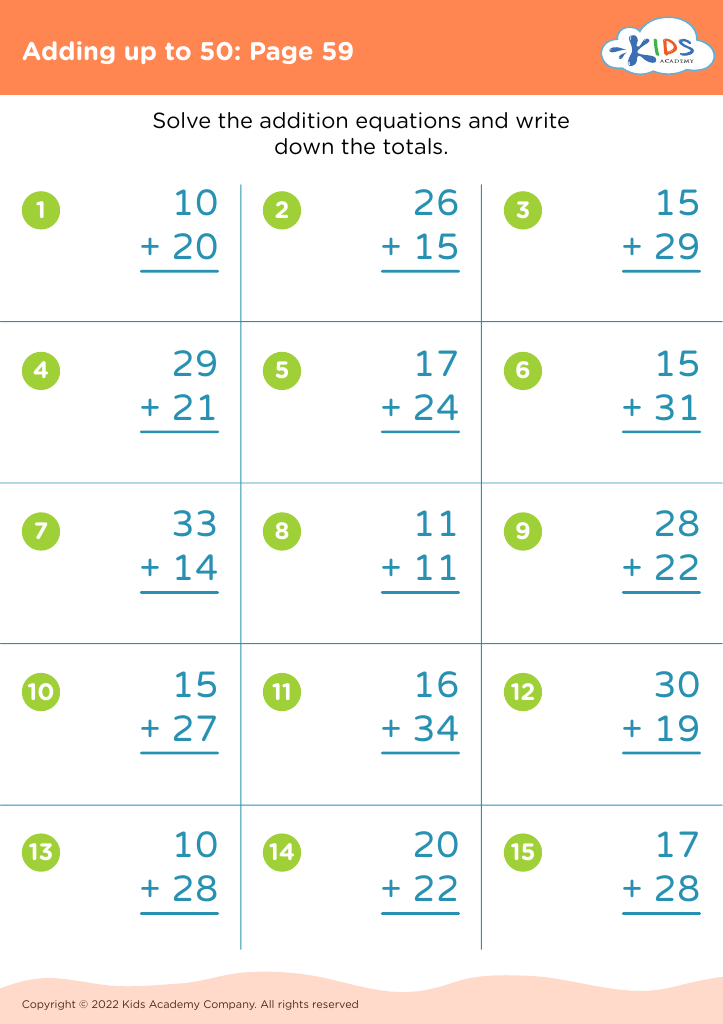
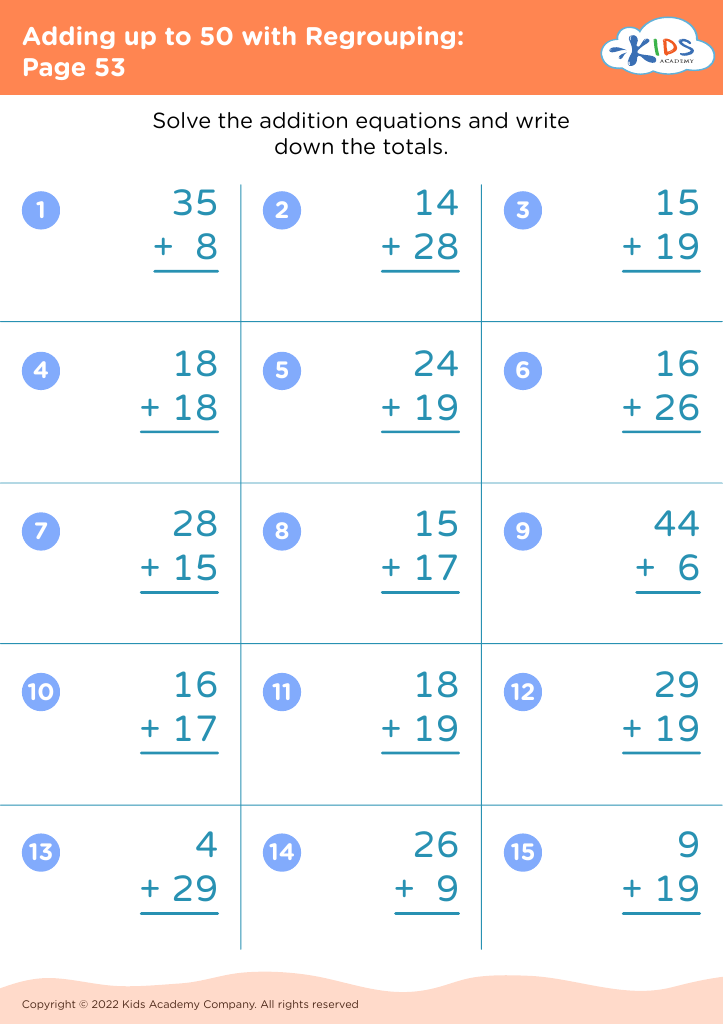
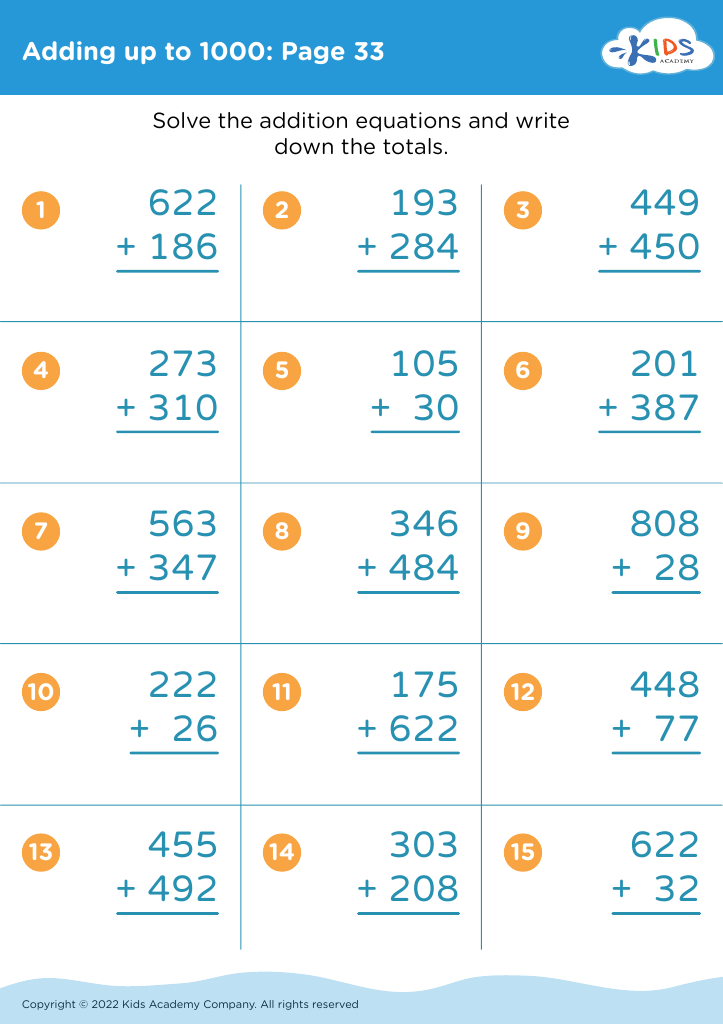








Understanding sequence addition is fundamental for children aged 4-9 as it is the foundation of their mathematical development. During these formative years, acquiring basic arithmetic skills establishes a robust groundwork for more complex problem-solving tasks later in life. Here are key reasons why parents and teachers should prioritize this:
-
Cognitive Development: Children’s brains are remarkably receptive to learning patterns and sequences at this stage. Teaching sequence addition helps stimulate cognitive processes such as logical thinking, memory, and attention.
-
Daily Relevance: Arithmetic is used in everyday activities, such as counting objects in a game or determining the total cost of items. Establishing a strong grasp of sequence addition enables children to navigate these tasks effortlessly.
-
Academic Achievement: Early proficiency in addition can set children on a trajectory of success in school. Math is cumulative; understanding addition well prepares them for more advanced topics like multiplication and division.
-
Confidence Building: Mastery of addition gives young learners a sense of accomplishment and boosts their confidence. This positive self-perception can enhance their enthusiasm for school and learning in general.
-
Critical Life Skills: Sequence addition fosters critical life skills such as problem-solving, logical reasoning, and perseverance. These skills are not limited to mathematics but are applicable across diverse disciplines and everyday situations.
Investing time in teaching sequence addition during these early years sets the stage for broad, long-term educational and personal success.








