Understanding symmetry Addition Worksheets for Ages 4-9
24 filtered results
-
From - To
Introduce your child to the fascinating world of symmetry through engaging addition worksheets designed for ages 4-9. At Kids Academy, our printable worksheets blend fun and education, helping young learners understand symmetry while mastering addition skills. Each worksheet is thoughtfully crafted to encourage critical thinking and foster a love for math. With clear instructions and vibrant illustrations, these exercises simplify complex concepts, ensuring kids grasp the basics quickly. Perfect for home or school, our symmetry addition worksheets make learning enjoyable and effective, paving the way for strong foundational math skills. Explore now and watch your child's confidence grow!
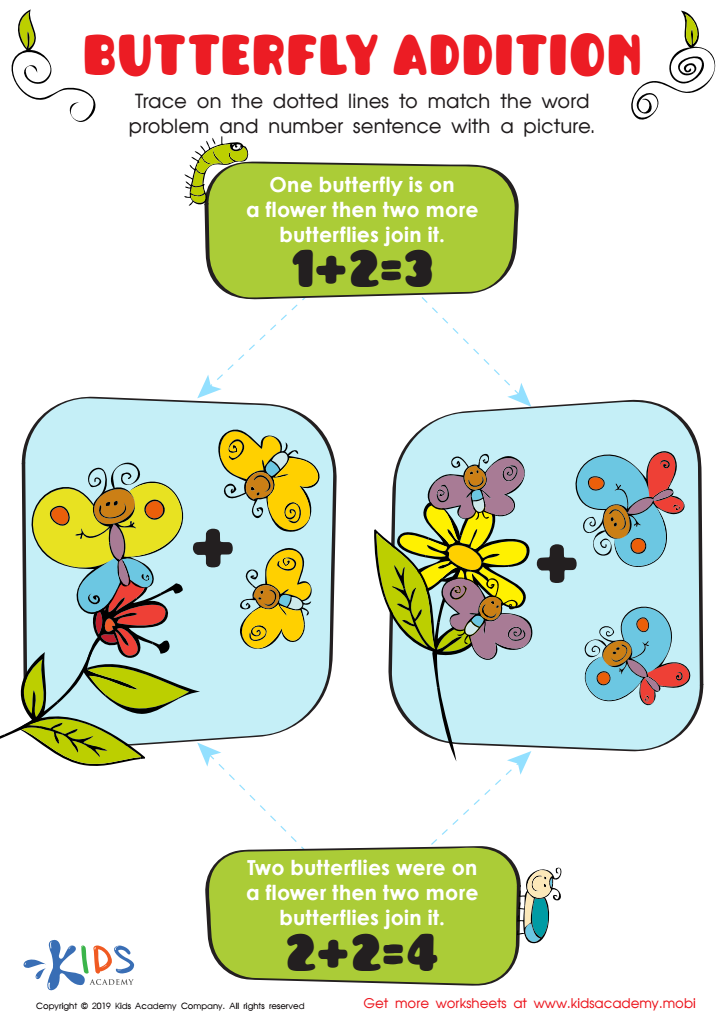
Butterfly Addition Worksheet
 Assign to My Students
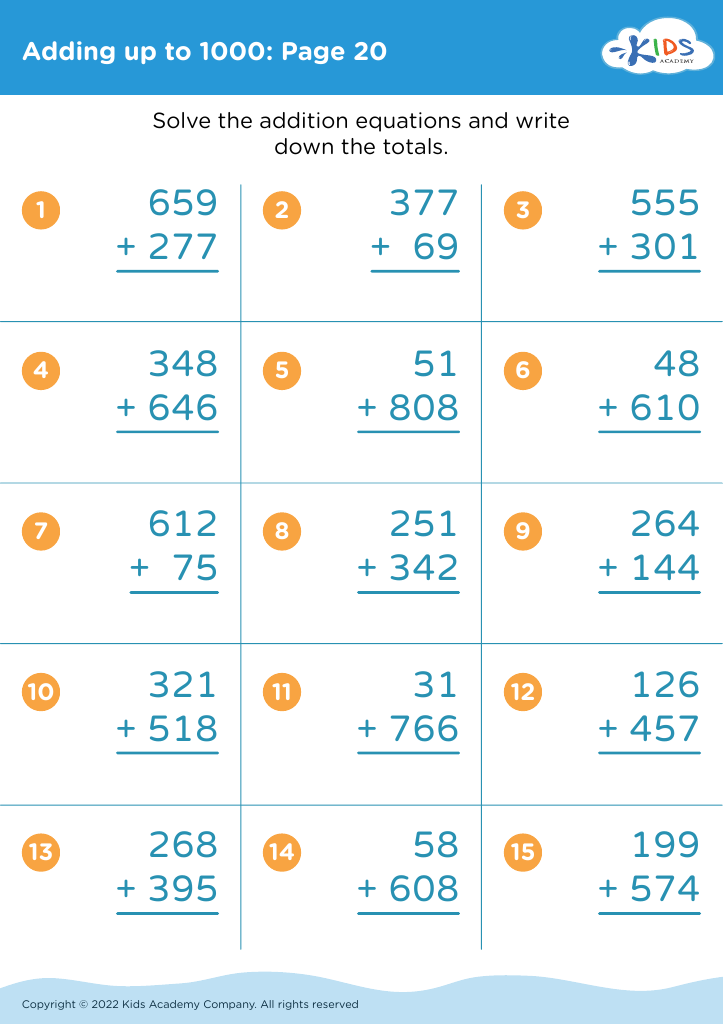
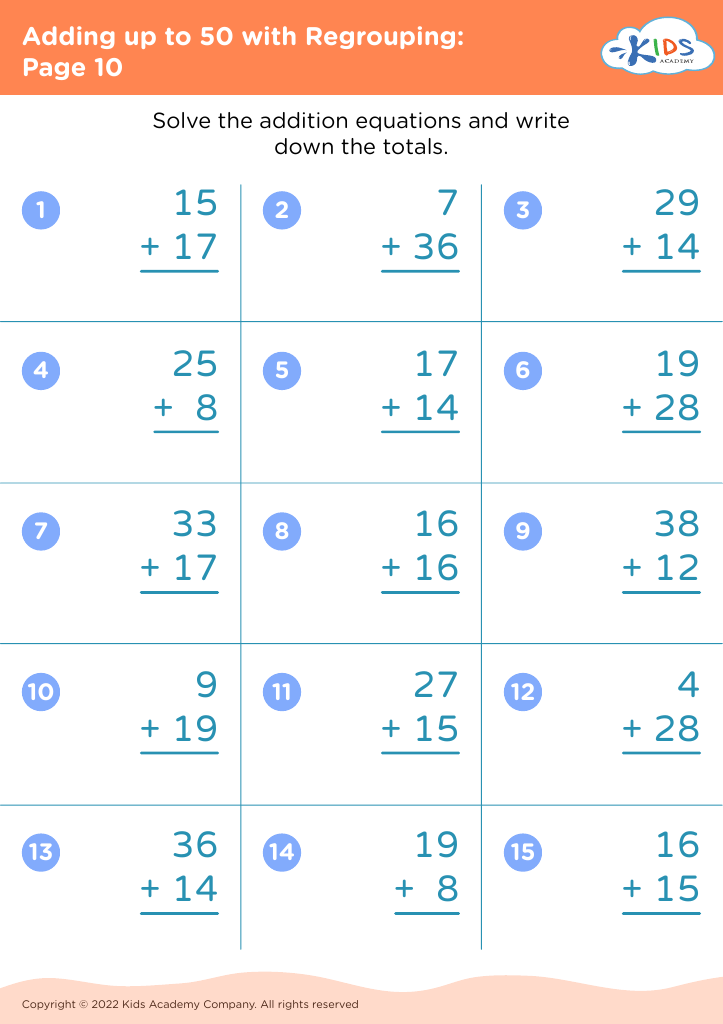
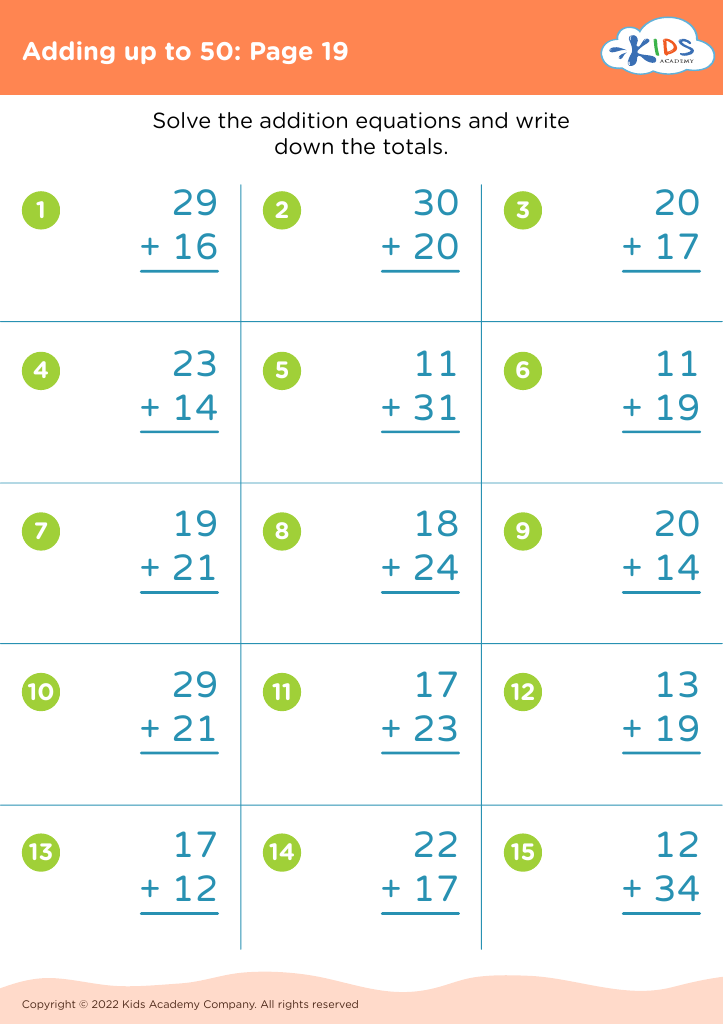
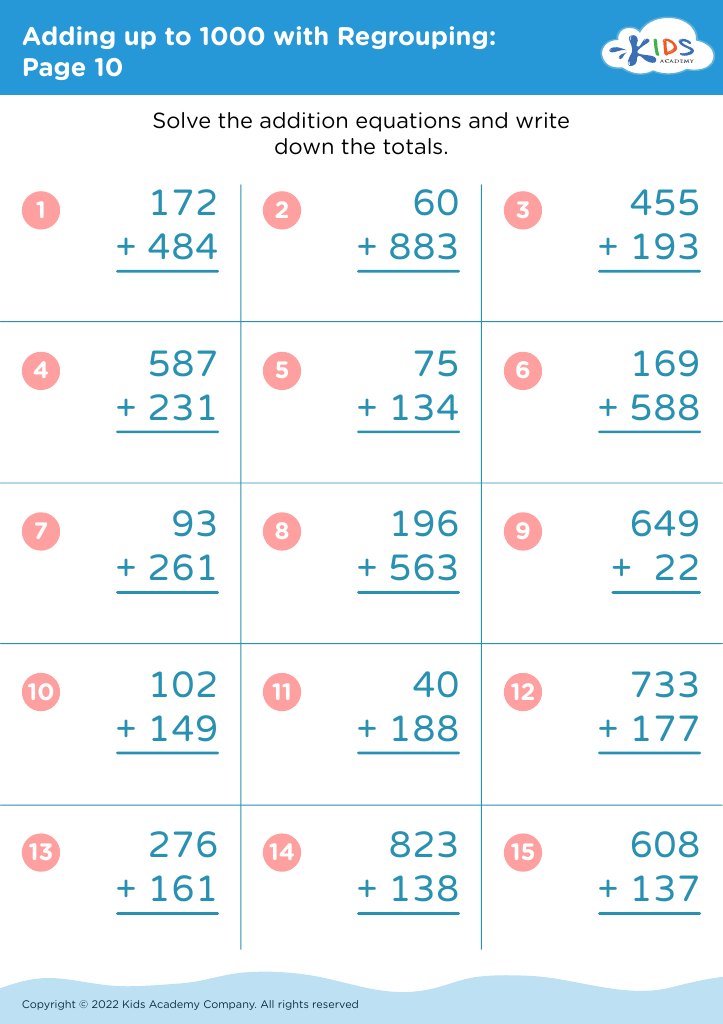
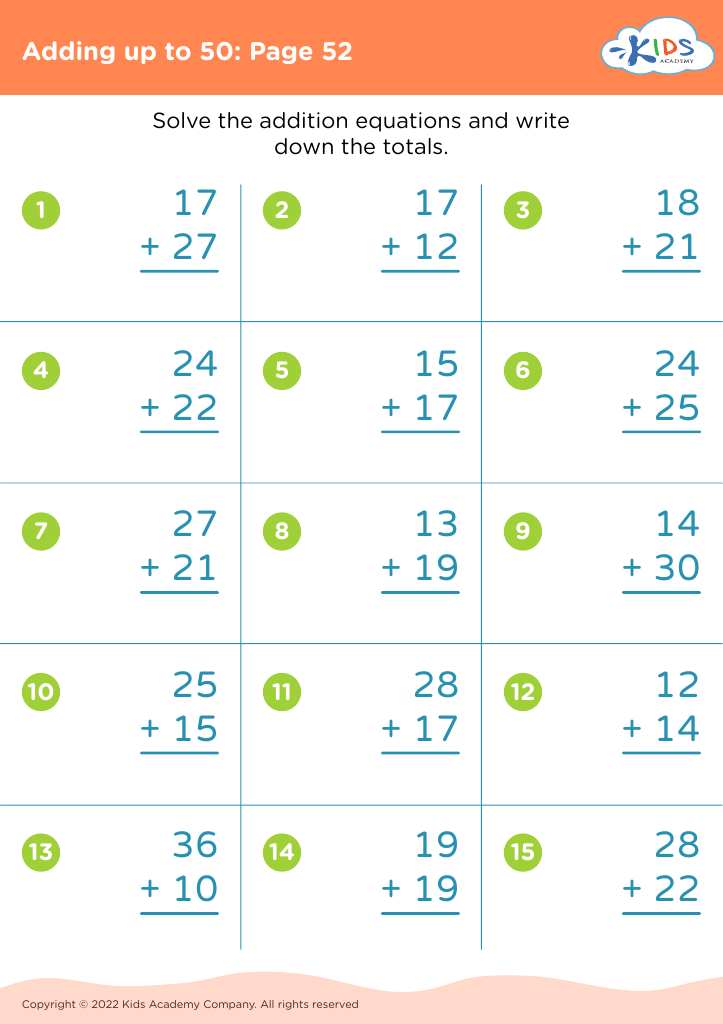
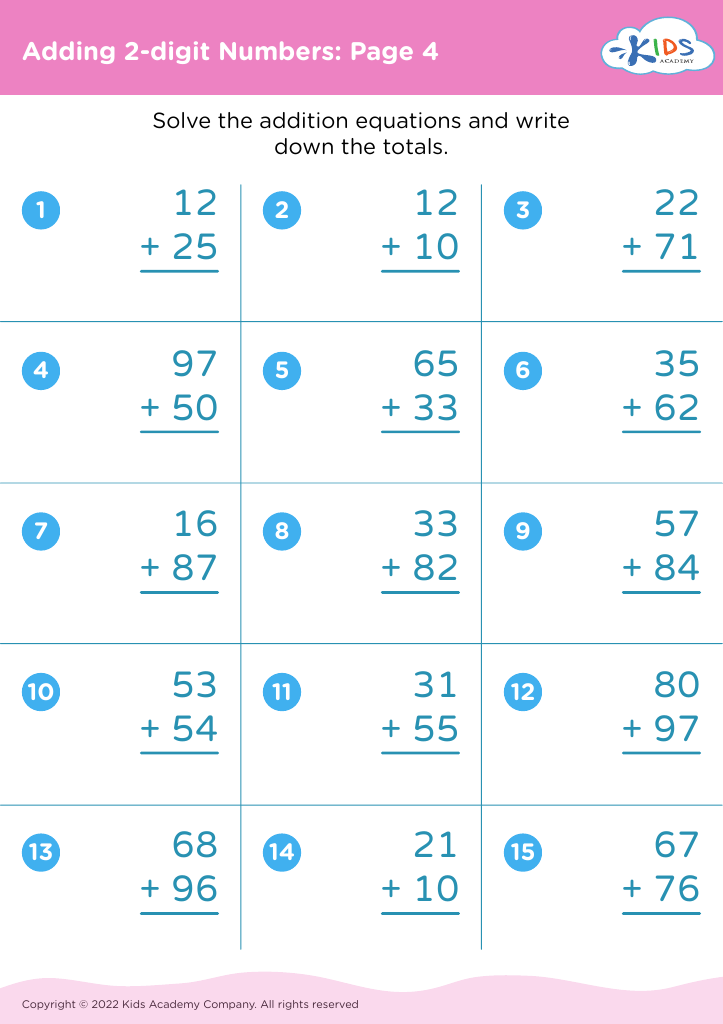
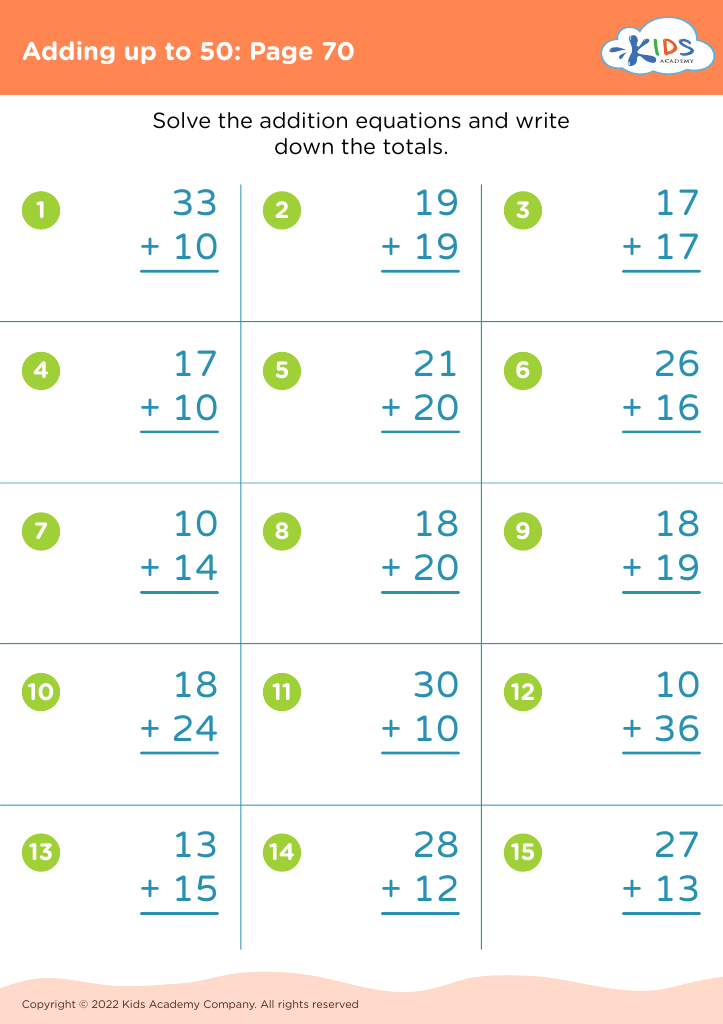
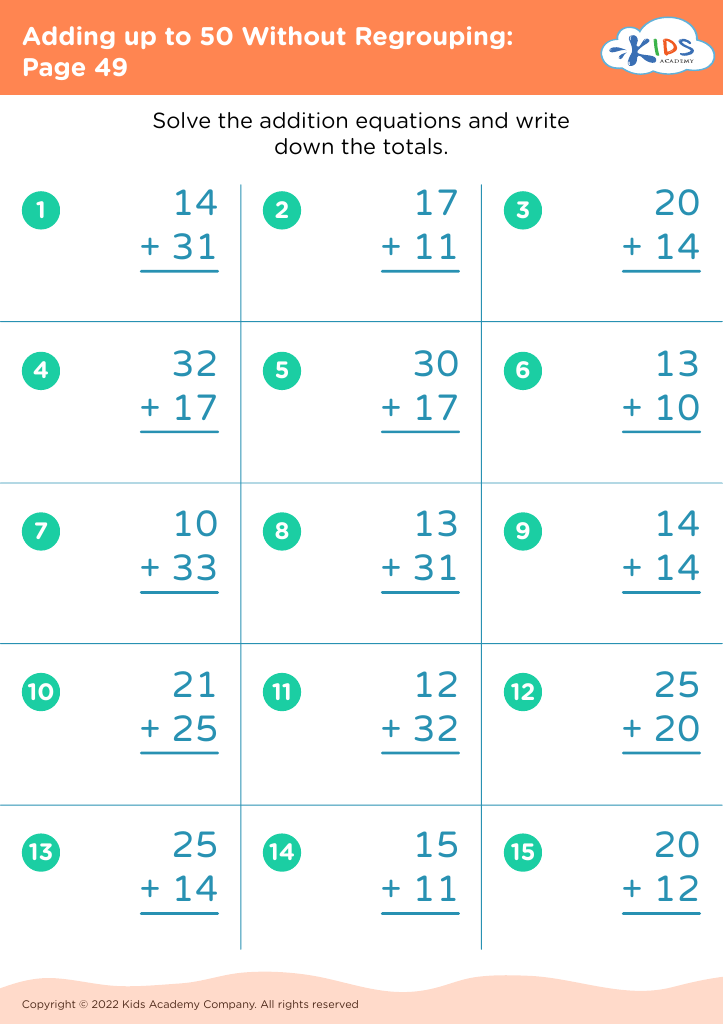
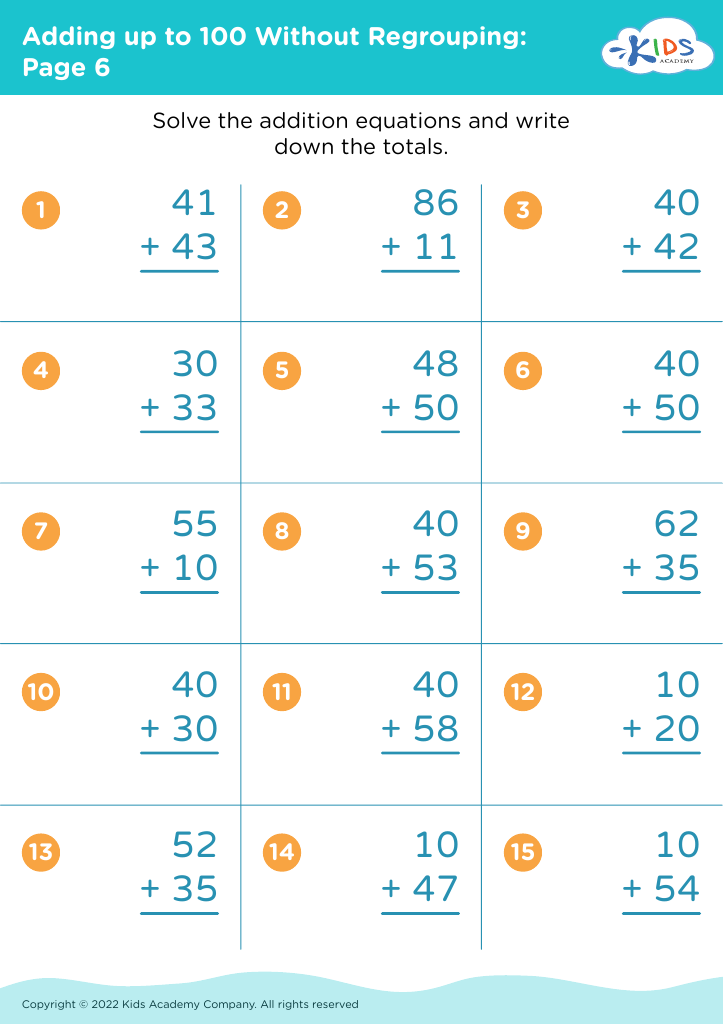
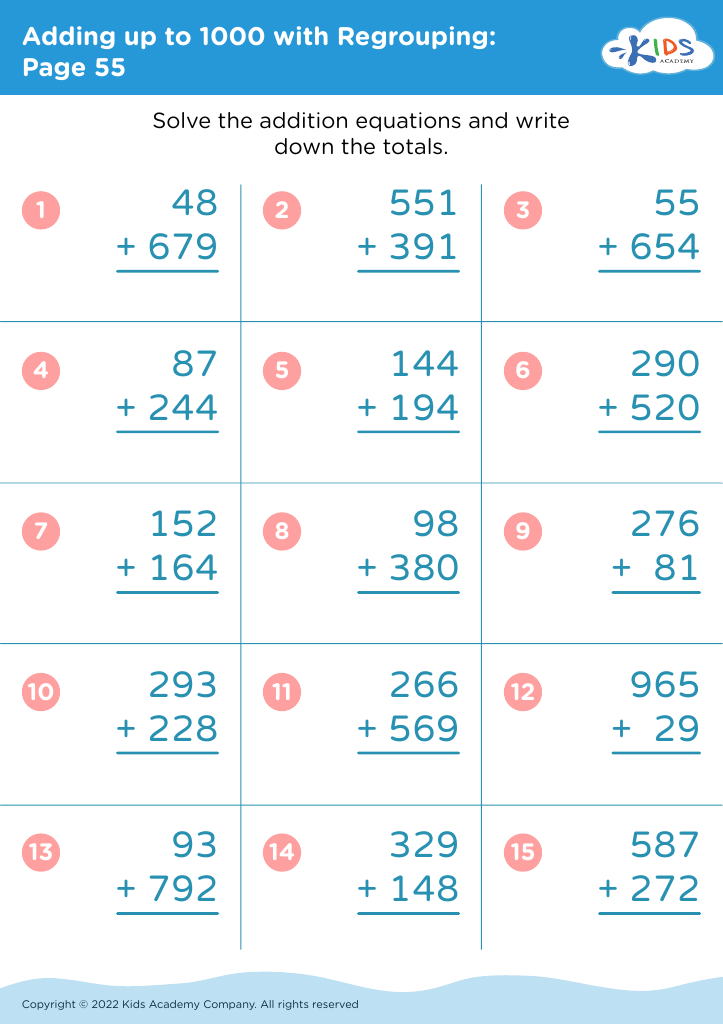
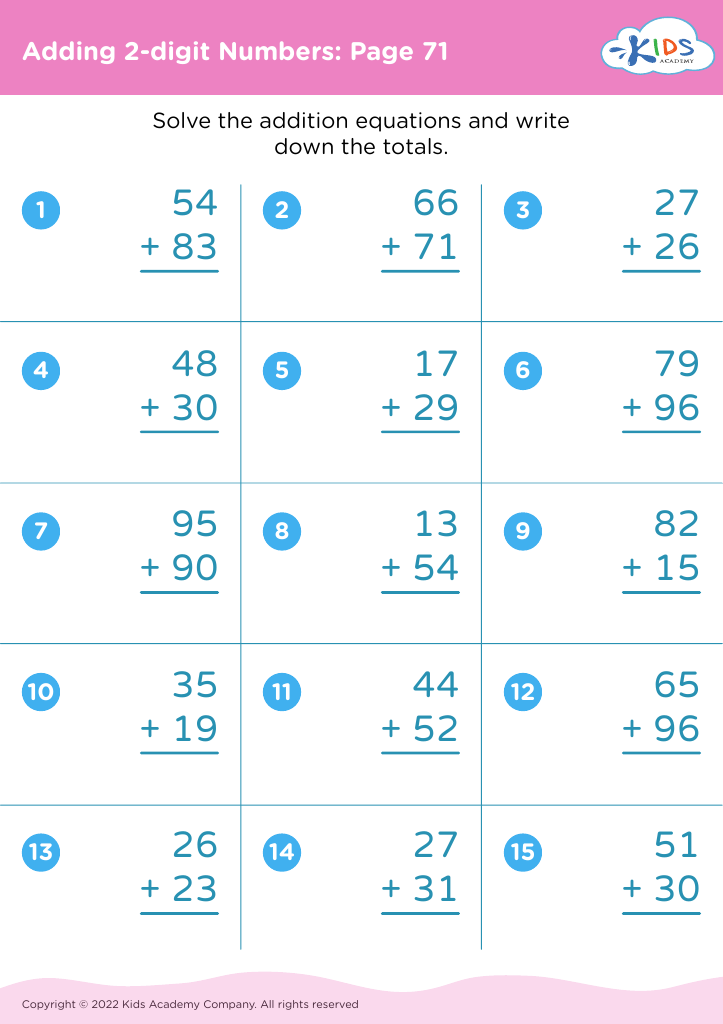
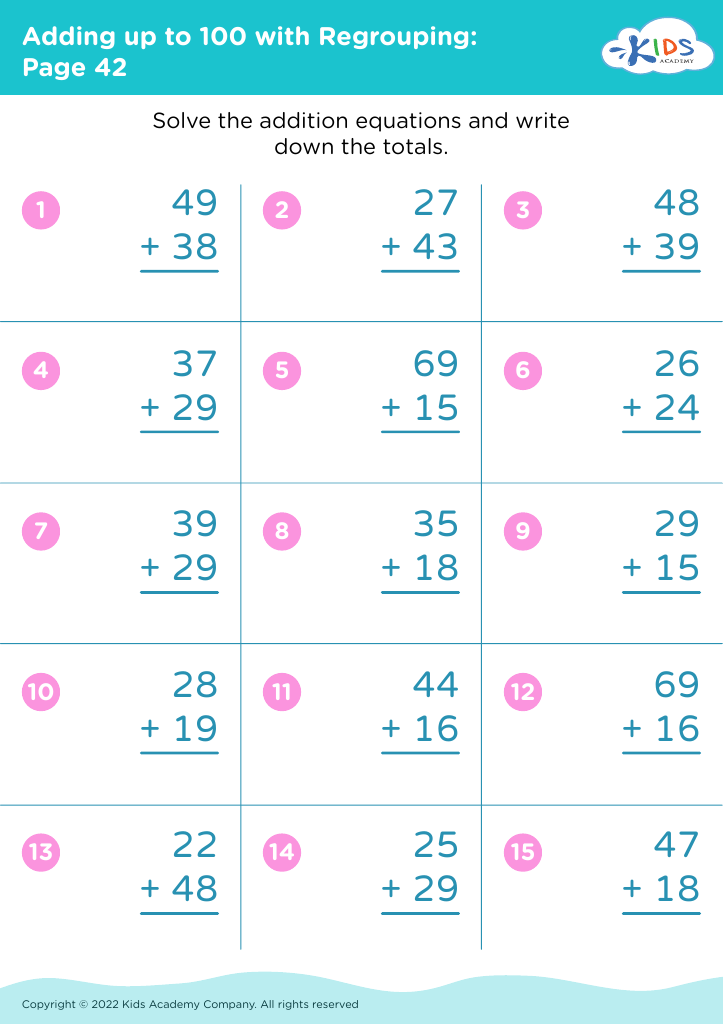
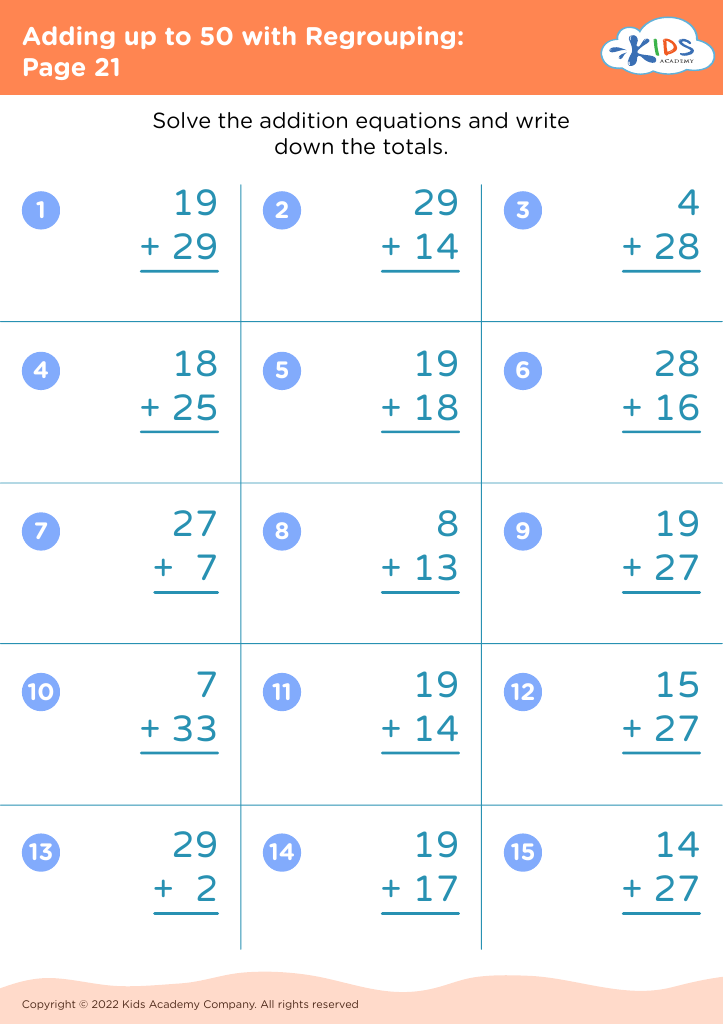
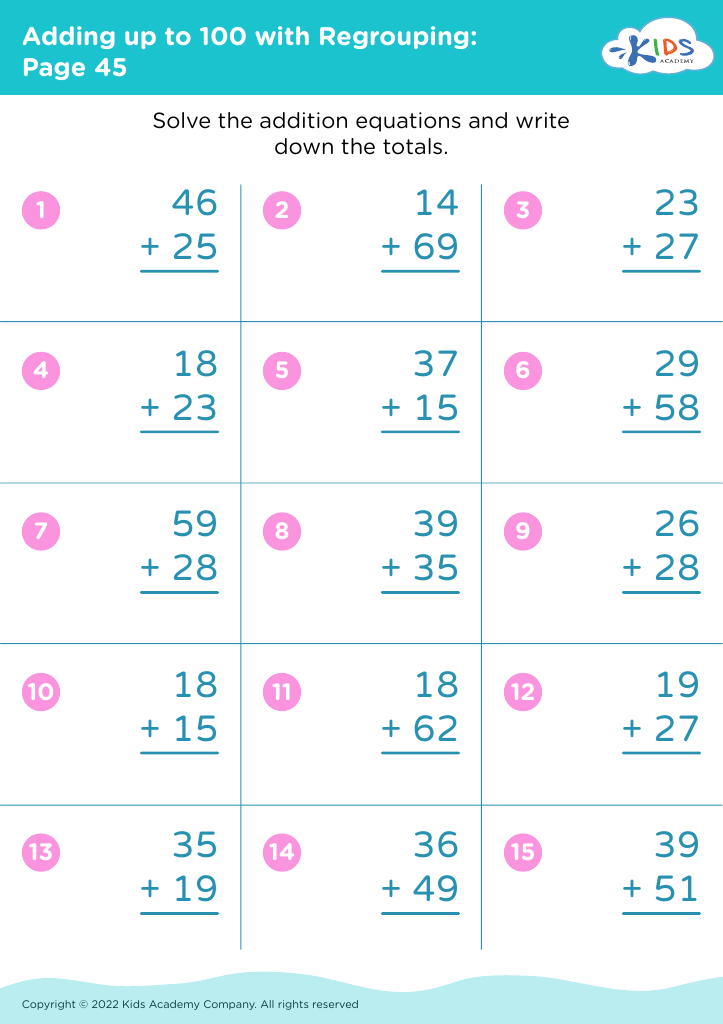
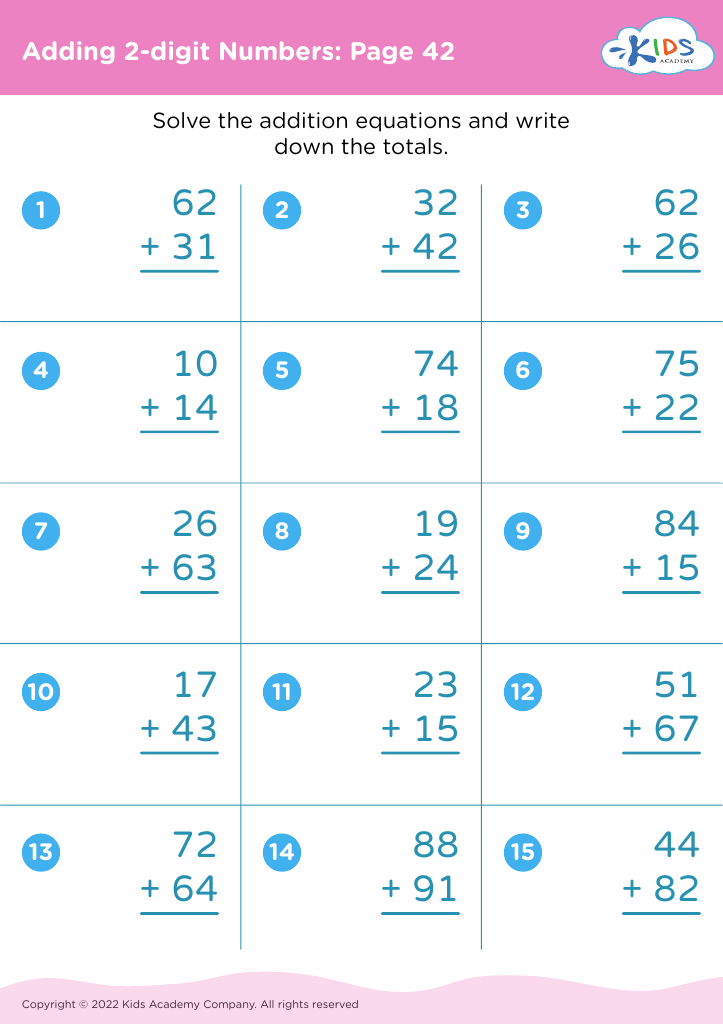
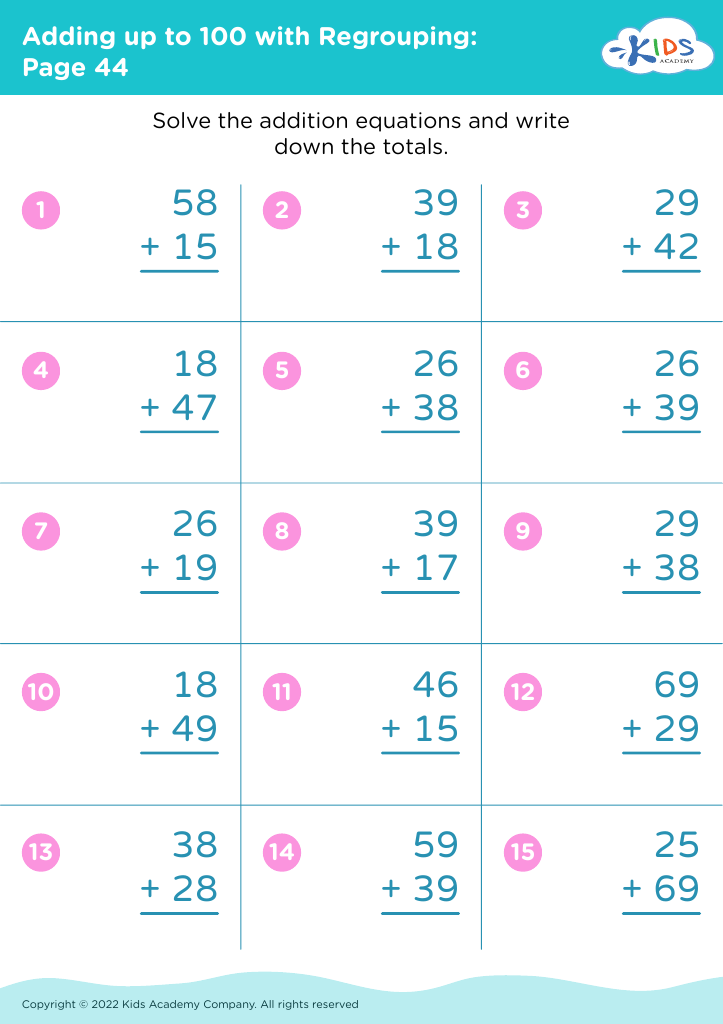








Understanding symmetry and basic addition concepts at an early age is crucial for a child's cognitive and academic development. Symmetry fosters spatial awareness and pattern recognition, which are foundational skills in both mathematics and the sciences. When children comprehend symmetry, they begin to notice order and balance in their environment, enhancing their ability to organize thoughts and solve problems systematically.
Basic addition, on the other hand, is one of the first steps in mathematical literacy. Mastery of addition equips children with essential problem-solving tools and the ability to comprehend more complex mathematical concepts later on, such as subtraction, multiplication, and division. Early exposure to these ideas builds confidence and sets a strong foundation for academic success across subjects.
For ages 4-9, playful, age-appropriate activities incorporating symmetry and addition can make learning enjoyable and engaging. Activities like using building blocks to create symmetrical patterns or games that involve summing objects can seamlessly blend learning with play, ensuring that children remain curious and enthusiastic about numbers.
Moreover, these foundational skills enhance brain development. Enhanced cognitive structures, improved memory, and efficient reasoning are all lifelong assets that start growing with early educational experiences. Therefore, parents and teachers should prioritize teaching symmetry and basic addition to foster well-rounded, confident, and capable young learners ready for future academic challenges.








