
Visual perception Addition Worksheets for Ages 4-9
16 filtered results
Difficulty Level
Grade
Age
-
From - To
Subject
Activity
Standards
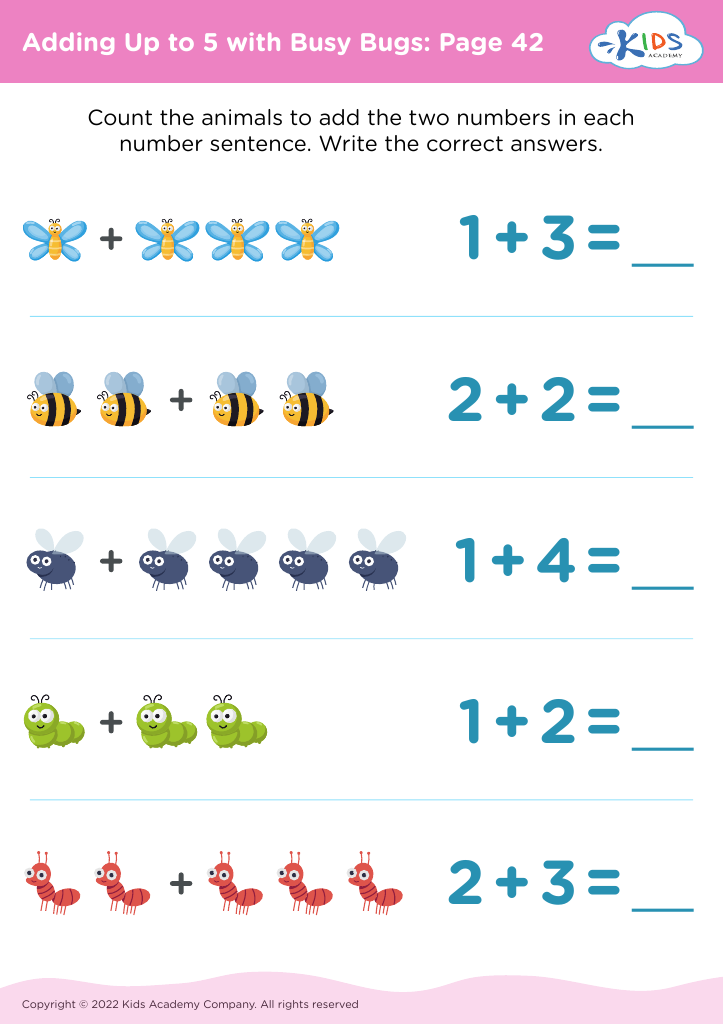
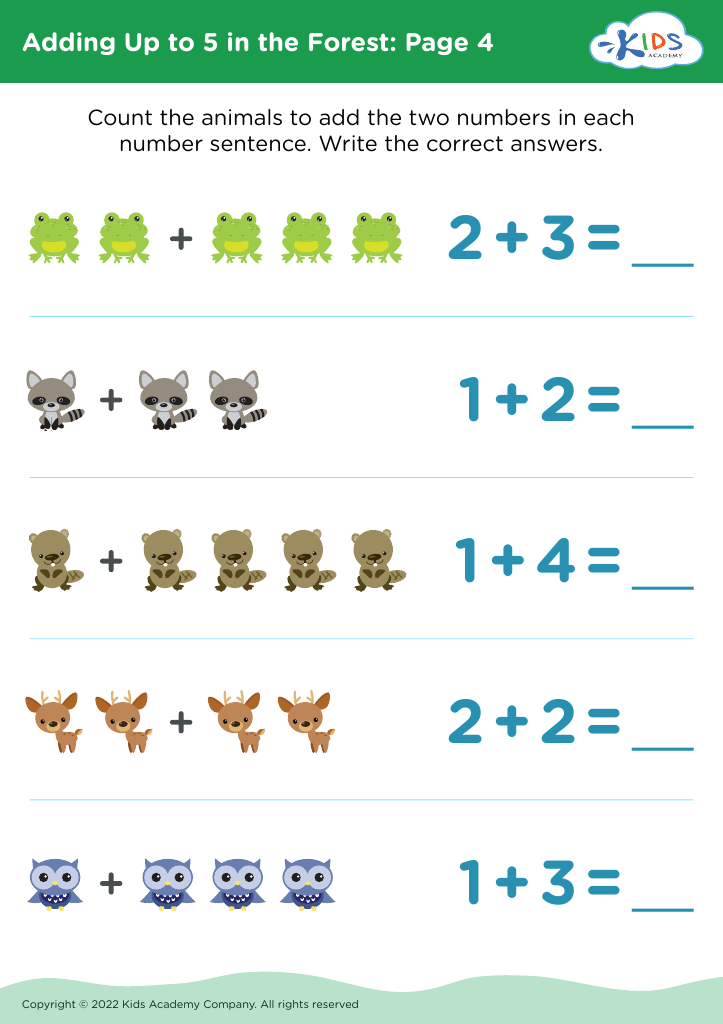
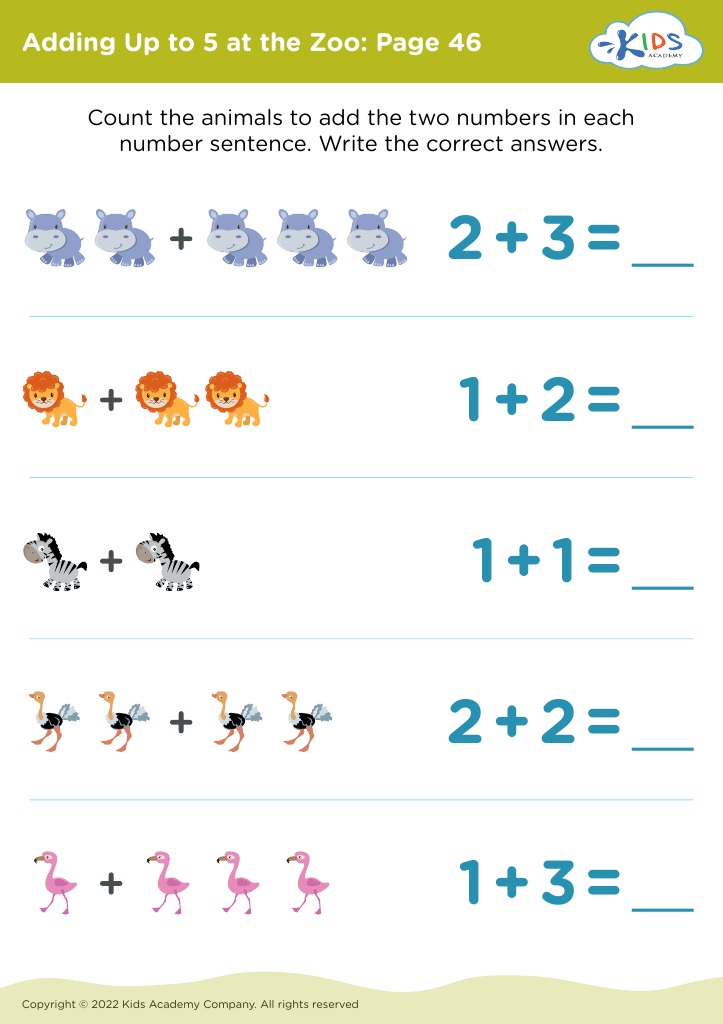
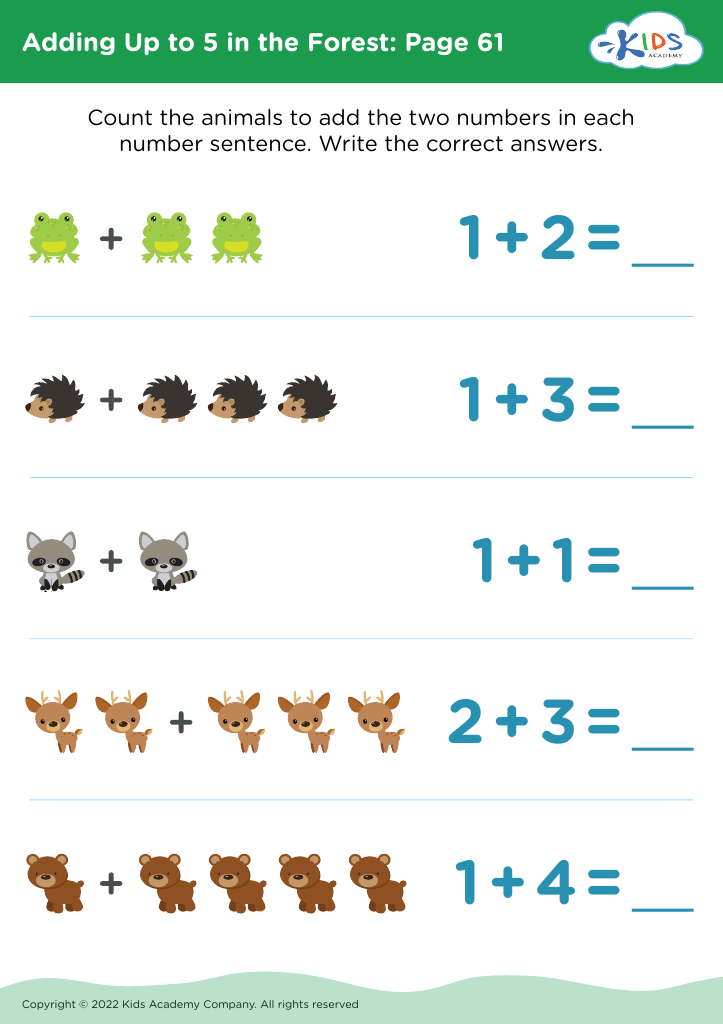
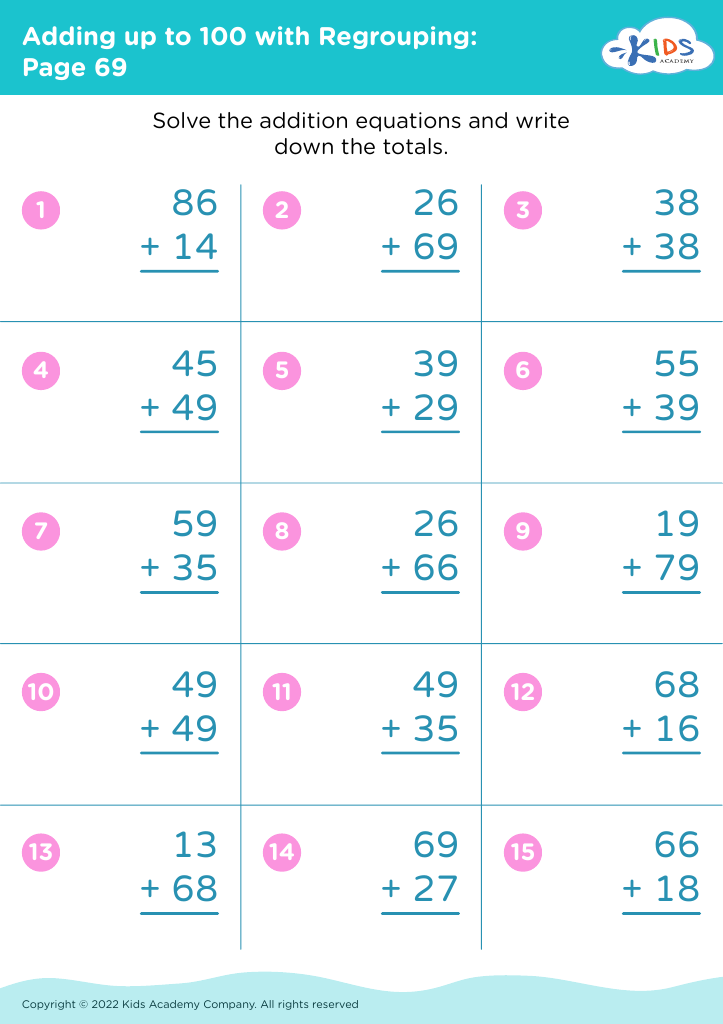
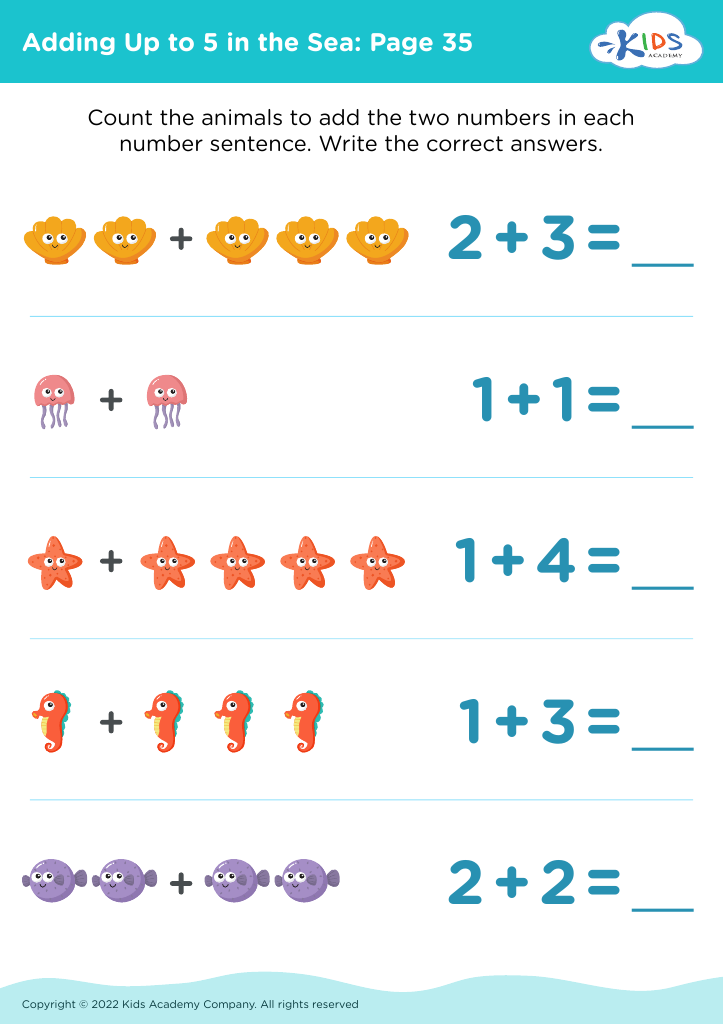
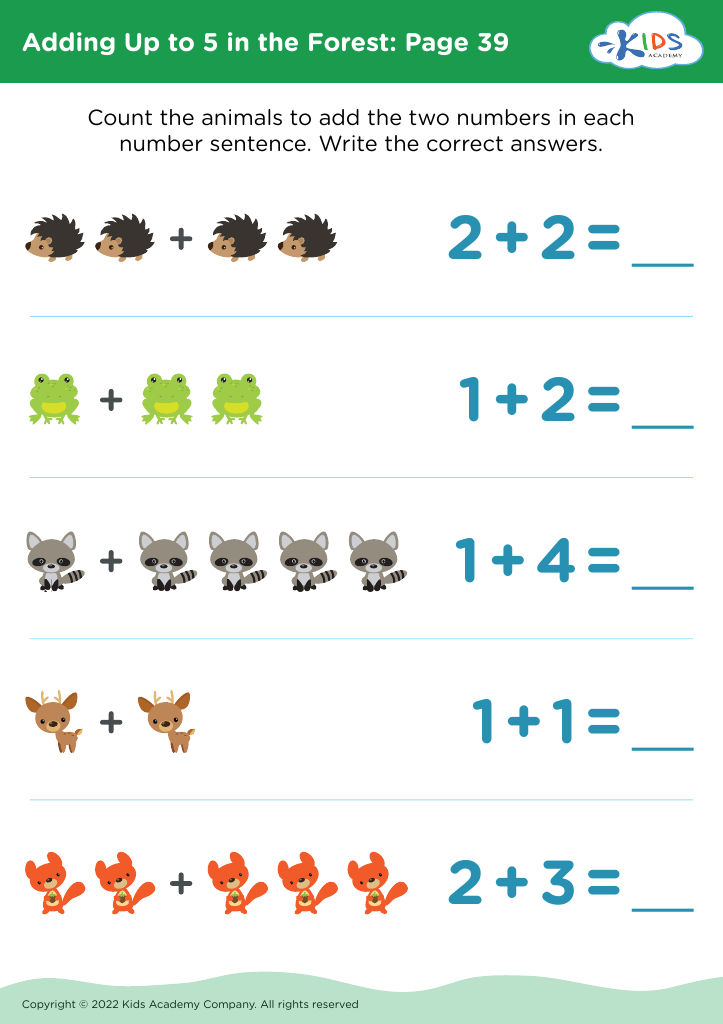
Enhance your child's math skills with our engaging Visual Perception Addition Worksheets, designed for ages 4-9! These worksheets incorporate fun visuals to strengthen your child's ability to comprehend and solve addition problems. By using colorful images and interactive exercises, children can improve their visual processing while mastering fundamental math concepts. Perfect for at-home learning or classroom activities, our worksheets cater to various learning styles, making math enjoyable and accessible. Encourage critical thinking and problem-solving in your young learners with these essential resources today! Download and print today to inspire a love for math in your child while building essential visual perception skills.
Favorites
With answer key
Interactive
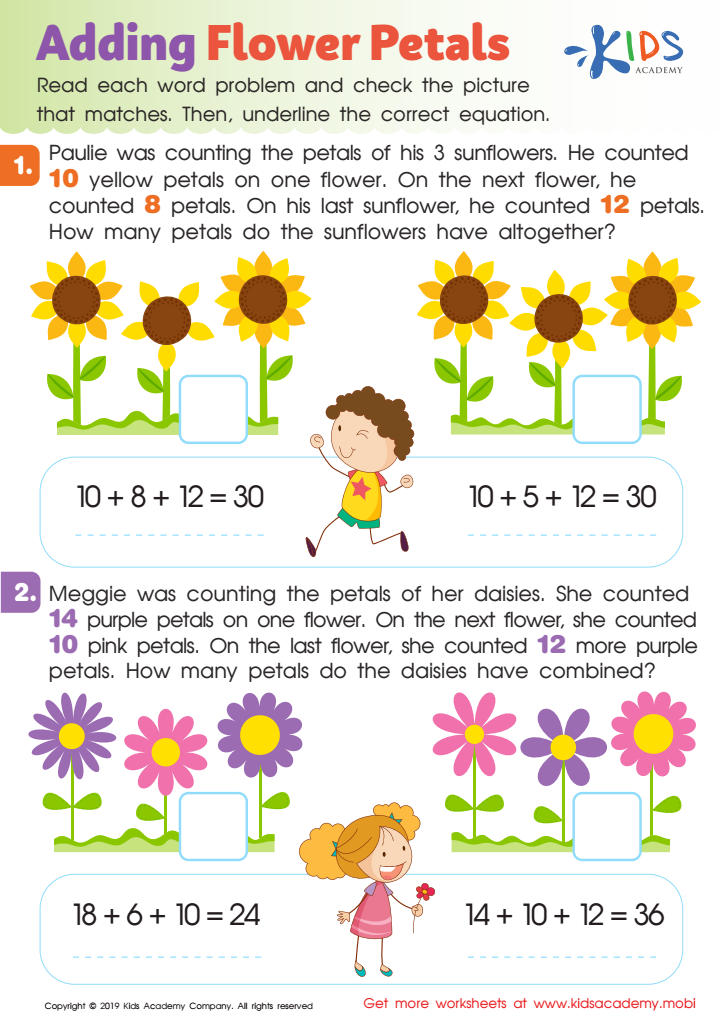
Adding Flower Petals Worksheet
This free worksheet helps little mathematicians learn to understand word problems. They'll read each one and match it to the corresponding picture. Important info is highlighted, teaching kids to look for key info when solving problems. Then they'll underline the correct number equation that matches the picture. A great way to practice problem-solving skills!
 Assign to My Students
Adding Flower Petals Worksheet
Worksheet
Join Kids Academy for Free
Who is primarily going to use this learning content?


.jpg)



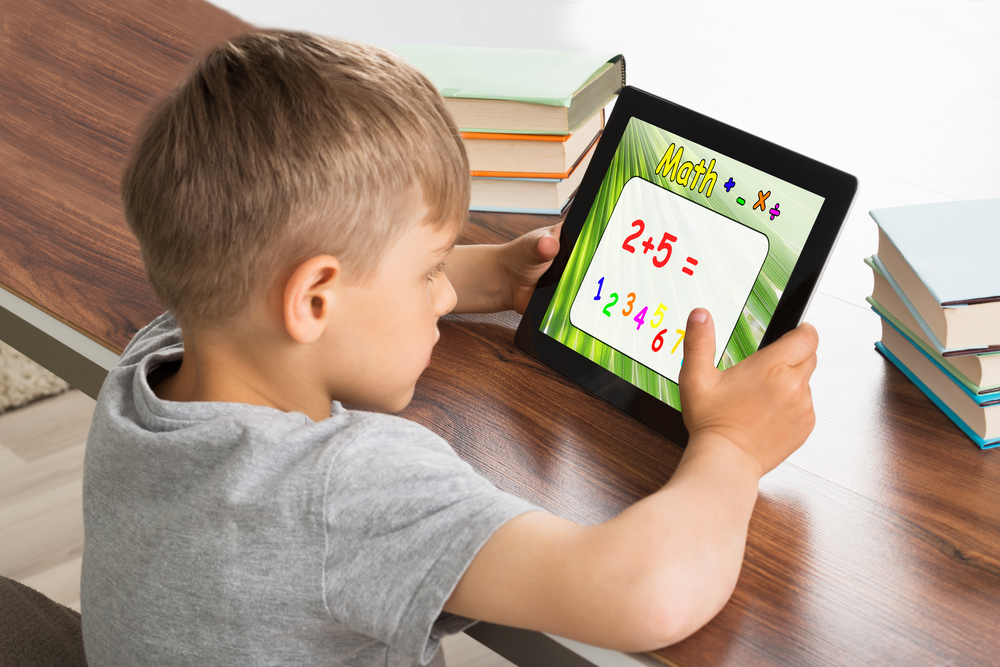

Visual perception is a crucial cognitive skill that enables children, especially between the ages of 4 and 9, to interact effectively with their environment, understand spatial relationships, and develop fundamental academic abilities, particularly in mathematics. Strong visual perception aids in recognizing numbers, aligning them during addition, and visualizing quantities, which are essential for solving arithmetic problems.
For teachers and parents, fostering visual perception through activities like puzzles, games, and drawing can significantly boost a child’s learning experience. Through engaging with these activities, kids enhance their attention to detail, memory retention, and the ability to process information visually, which are foundational for later academic success.
Moreover, strong visual perception contributes to a child’s confidence and motivation in learning. When children easily grasp visual concepts, they are more likely to participate actively in classroom settings and feel empowered to tackle new challenges. As they master addition through visual strategies, they build a preliminary understanding of more complex mathematical concepts. With the rise of STEM education, prioritizing visual perception can give children a head start, equipping them with essential skills for lifelong learning and problem-solving. Thus, both parents and teachers should regard it as a pivotal area of development to nurture in early childhood education.








