Historical Knowledge Arrays Worksheets for Ages 4-9
4 filtered results
-
From - To
Explore our engaging "Historical Knowledge Arrays Worksheets for Ages 4-9," designed to make learning history fun and relatable! These worksheets help young learners develop essential historical awareness using arrays, making connections between math concepts and history. Children will discover key historical figures, events, and timelines through vibrant illustrations and interactive activities. Perfect for classrooms or at-home learning, our worksheets encourage critical thinking, enhance vocabulary, and foster a love of learning about the past. With age-appropriate content, your little historians will enjoy expanding their minds and skills while building a firm foundation in historical knowledge through playful educational activities.
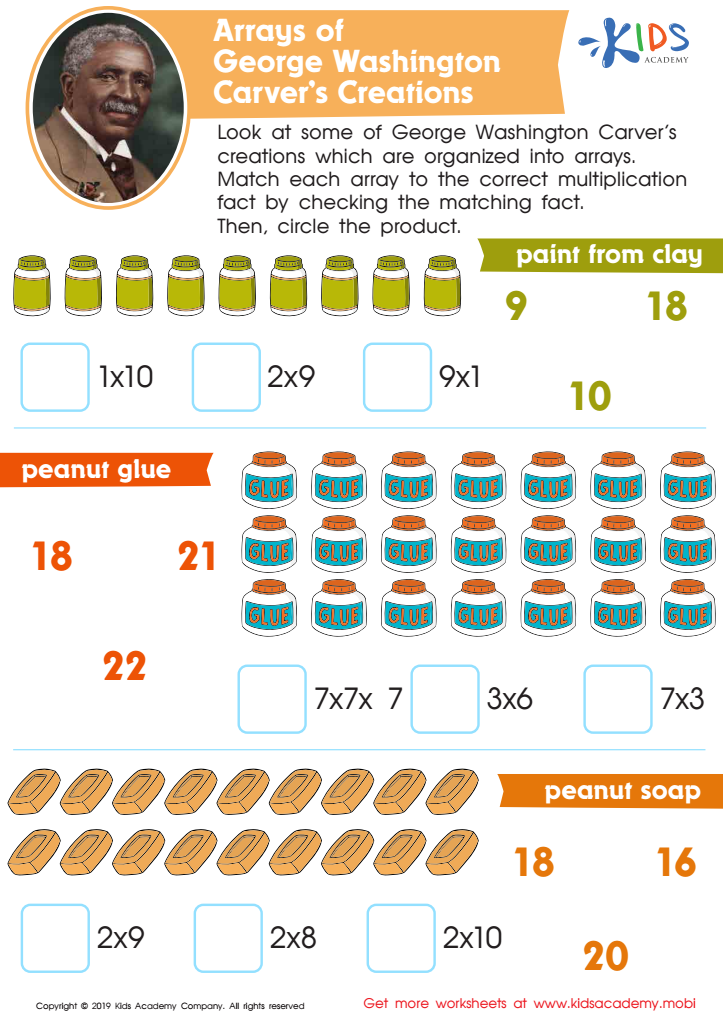
Arrays of George Washington Carver’s Creations Worksheet
 Assign to My Students
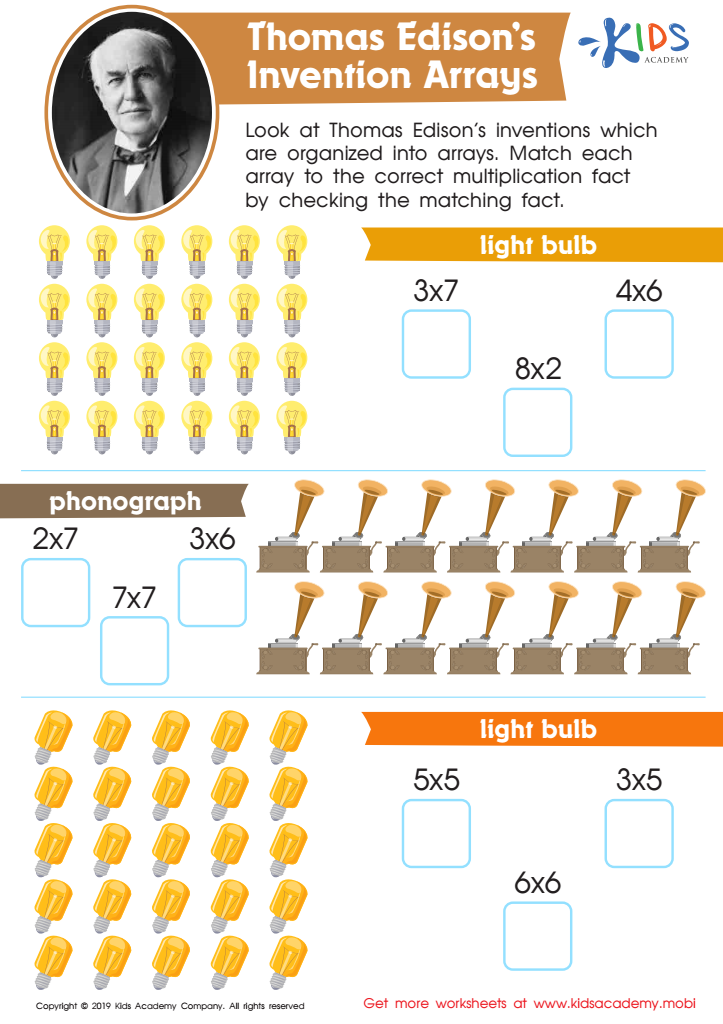
Thomas Edison’s Invention Arrays Worksheet
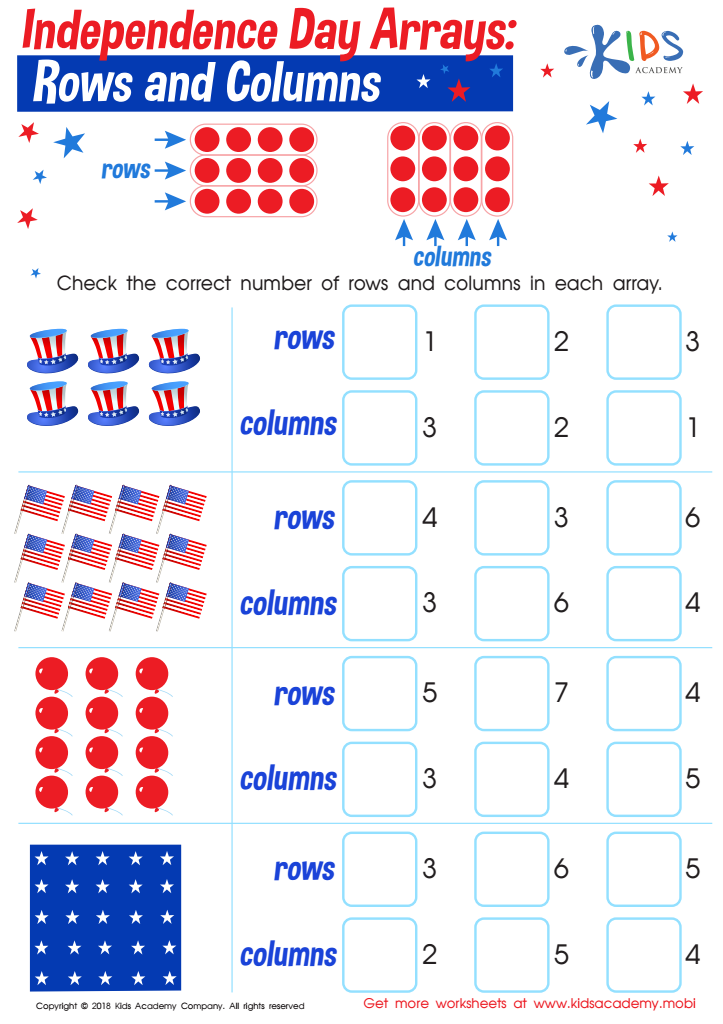
Independence Day Arrays: Rows and Columns Worksheet
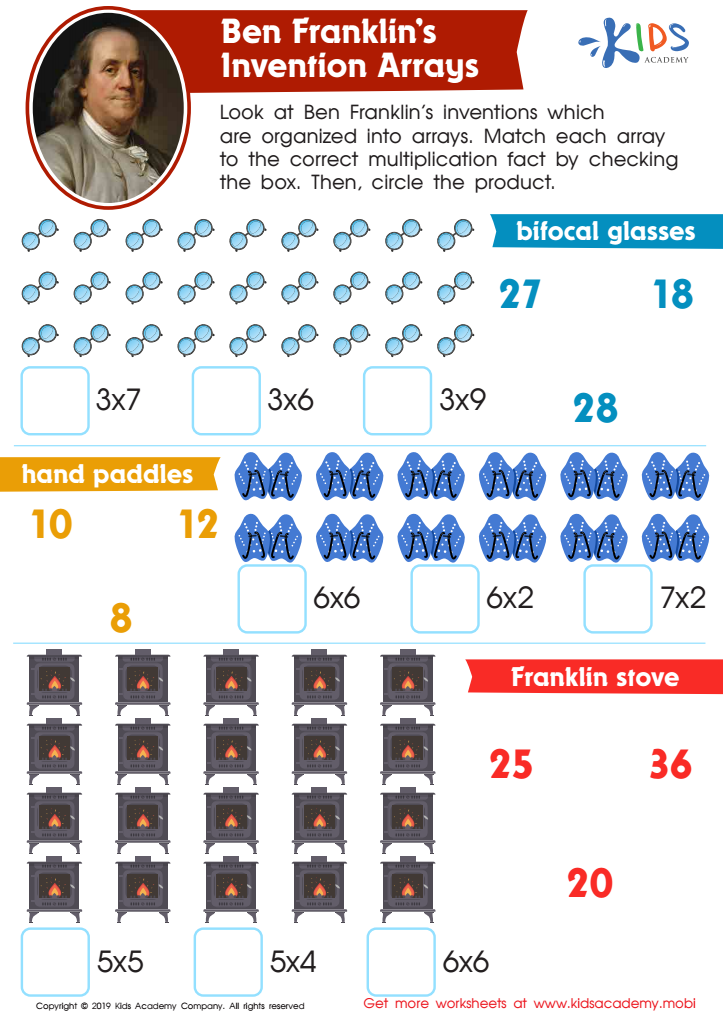
Ben Franklin’s Invention Arrays Worksheet








Historical Knowledge Arrays are essential tools for parents and teachers of children aged 4-9 because they offer structured frameworks to present historical content in a way that is engaging, age-appropriate, and meaningful. During these formative years, children develop foundational cognitive skills and begin to understand their place in the world. By utilizing Historical Knowledge Arrays, caregivers can help foster a sense of curiosity and critical thinking by making connections between past and present events, figures, and cultures.
These arrays facilitate thematic learning, allowing children to explore various topics—such as significant historical figures, important milestones, or cultural traditions—through a scaffolded approach. This method helps develop their storytelling abilities, empathy, and understanding of diverse perspectives. Engaging with history in this manner can also enhance language development as children learn to articulate their thoughts and insights.
Moreover, incorporating Historical Knowledge Arrays into the curriculum supports social studies standards and encourages children to inquire about their community’s heritage and global history. This foundational knowledge is pivotal in nurturing informed, culturally aware individuals. Ultimately, by investing time in historical education, parents and teachers can lay the groundwork for lifelong learning and global citizenship.








