Multiplication practice Arrays Worksheets for Ages 4-9
4 filtered results
-
From - To
Enhance your child's multiplication skills with our engaging Arrays Worksheets designed for ages 4-9! These fun and interactive worksheets provide a hands-on approach to learning multiplication through visual groupings. Each sheet features colorful array models that help young learners grasp multiplication concepts by visualizing numbers in rows and columns. Perfect for both classroom and at-home practice, our worksheets cater to various learning styles, ensuring that every child can master multiplication at their own pace. Boost your child's confidence in math while making learning enjoyable! Download these worksheets today and watch your young mathematicians thrive in their multiplication journey!
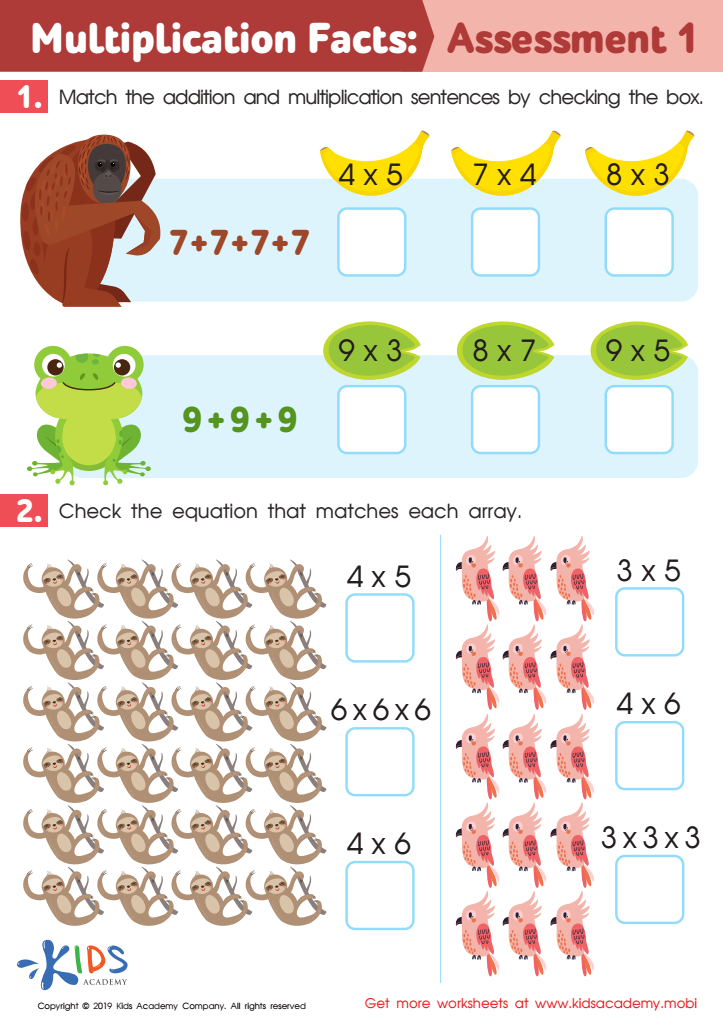
Multiplication Facts: Assessment 1 Worksheet
 Assign to My Students
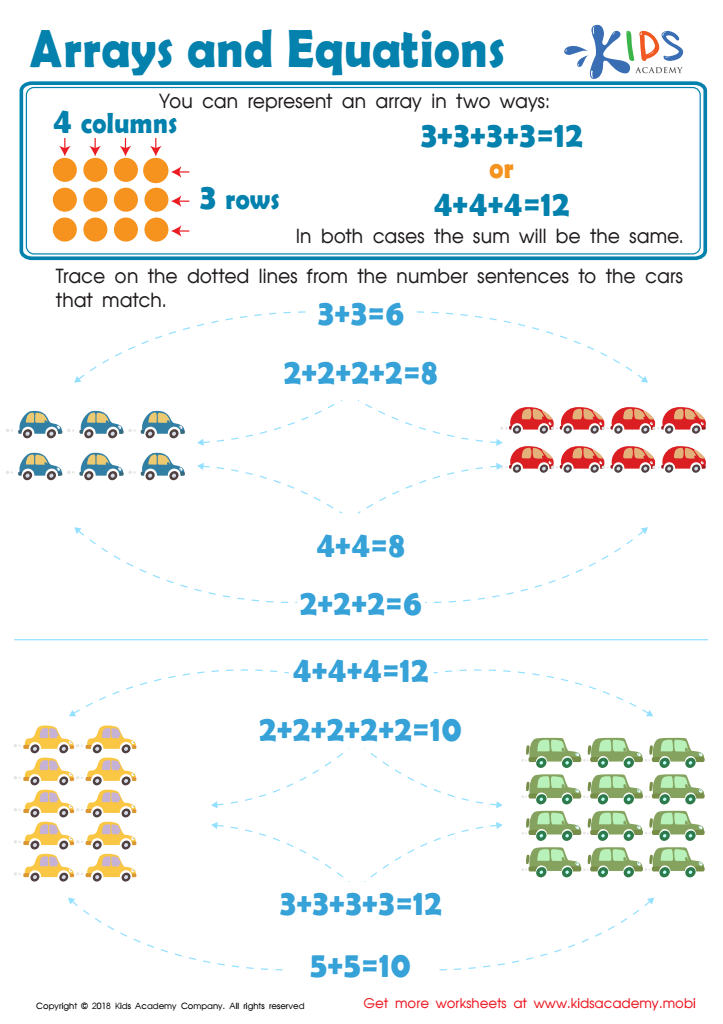
Arrays and Equations Worksheet
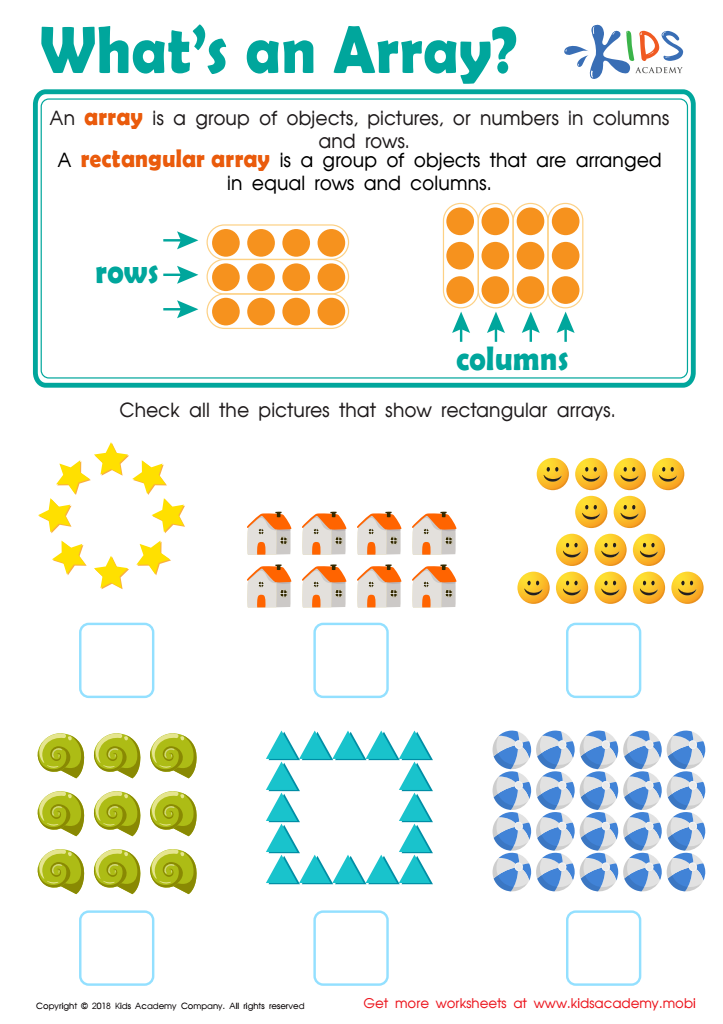
What's an Array? Worksheet
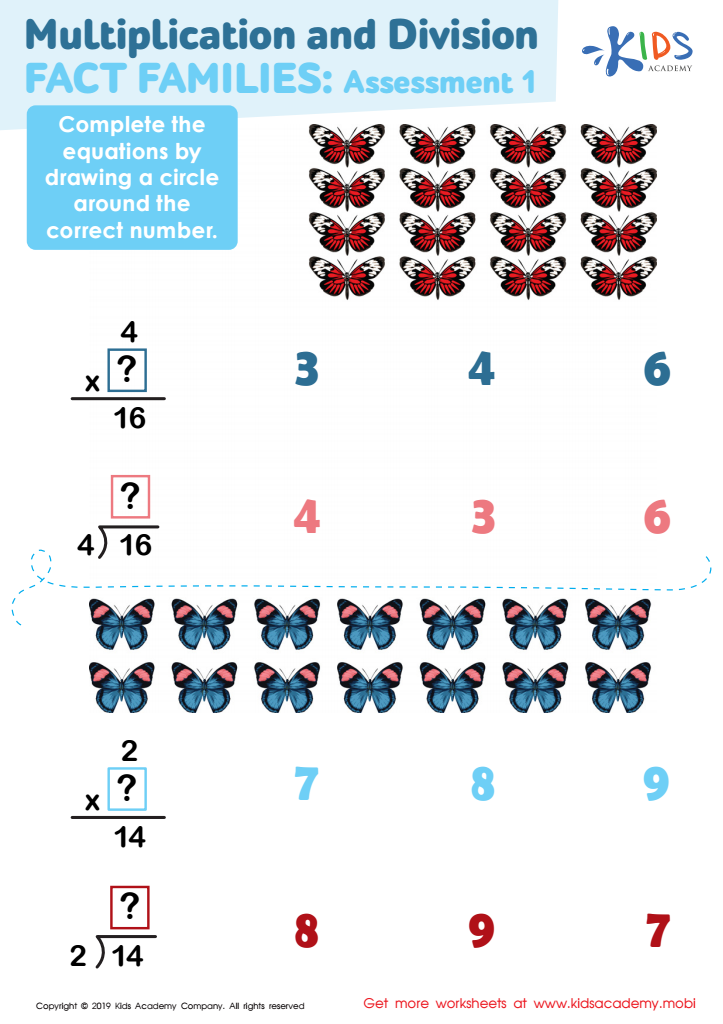
Multiplication and Division Fact Families Assessment 1 Worksheet








Multiplication practice using arrays is a vital tool in developing mathematical skills for children aged 4-9. An array is a visual representation of numbers arranged in rows and columns, making it easier for young learners to grasp the concept of multiplication as repeated addition. Understanding arrays helps children to visualize and relate math to real-life scenarios, such as organizing objects, helping them see the practical applications of multiplication.
Parents and teachers should care about this practice because it fosters a strong foundation for future math success. Engaging with arrays cultivates problem-solving skills, boosts confidence, and encourages logical thinking. As children create and manipulate arrays, they improve their fine motor skills and increase their ability to classify and categorize information.
Furthermore, arrays lay the groundwork for advanced mathematical concepts like area and multiplication of larger numbers. This understanding can significantly impact overall academic achievement. By incorporating array practice into learning routines, both parents and teachers can promote a deeper comprehension of multiplication, making math not only fun but accessible. Ultimately, investing time in multiplication practice through arrays can set the stage for a lifetime of mathematical interest and proficiency.








