Reading comprehension Arrays Worksheets for Ages 4-9
5 filtered results
-
From - To
Foster a love for reading and math with our Reading Comprehension Arrays Worksheets for ages 4-9! Specially designed for young learners, these engaging worksheets help develop critical thinking, reading proficiency, and numerical understanding. Through vibrant illustrations and relatable stories, children grasp the concept of arrays while enhancing their reading comprehension skills. Each worksheet offers fun, interactive exercises that make learning enjoyable. Perfect for both classroom use and at-home practice, our resources support educators and parents in building strong academic foundations. Explore our collection today and watch your child's confidence in reading and math soar!
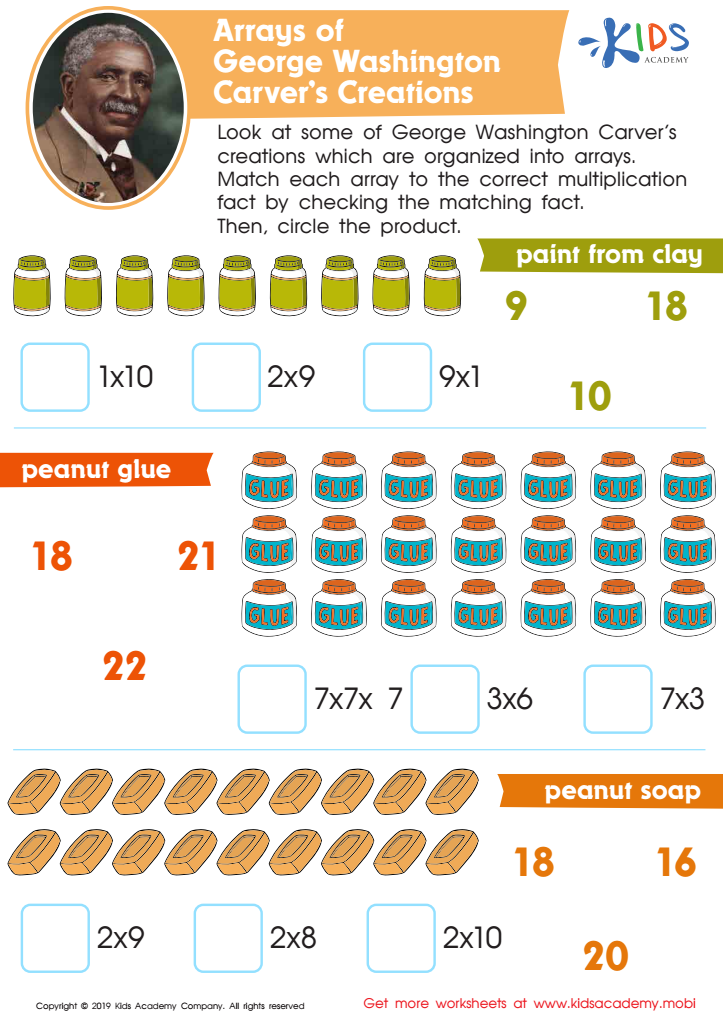
Arrays of George Washington Carver’s Creations Worksheet
 Assign to My Students
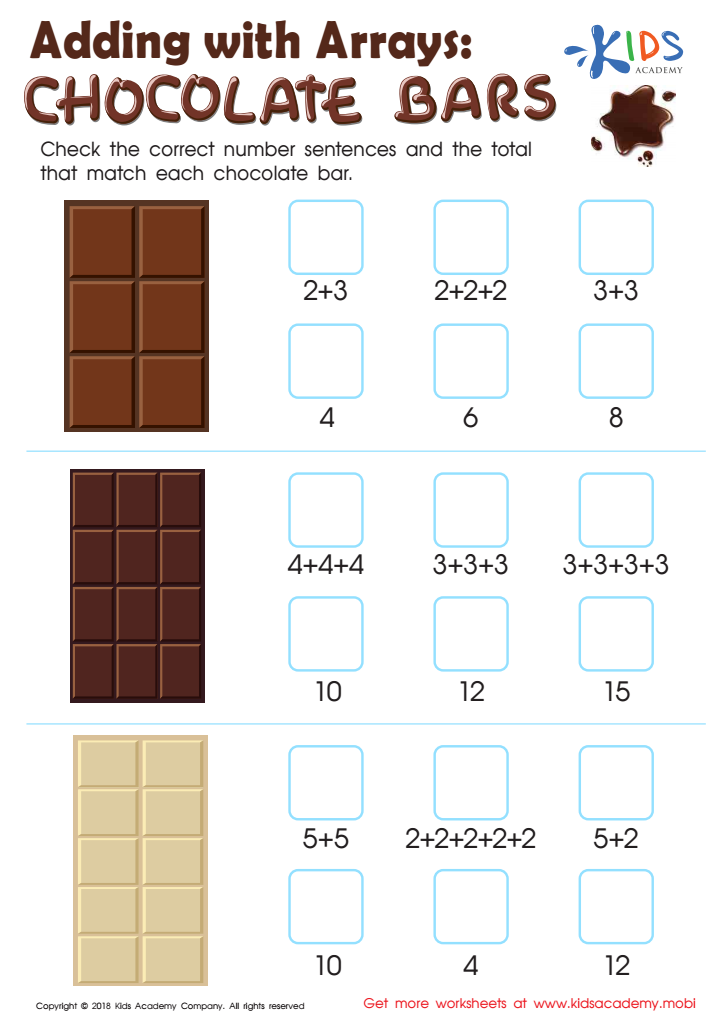
Adding with Arrays: Chocolate Bars Worksheet
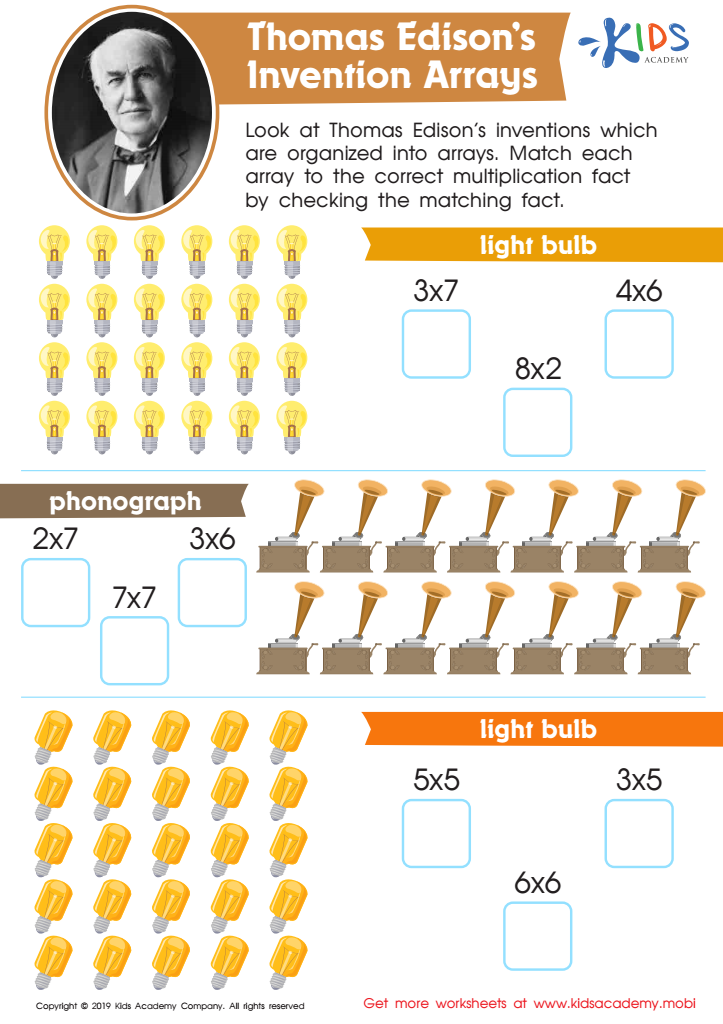
Thomas Edison’s Invention Arrays Worksheet
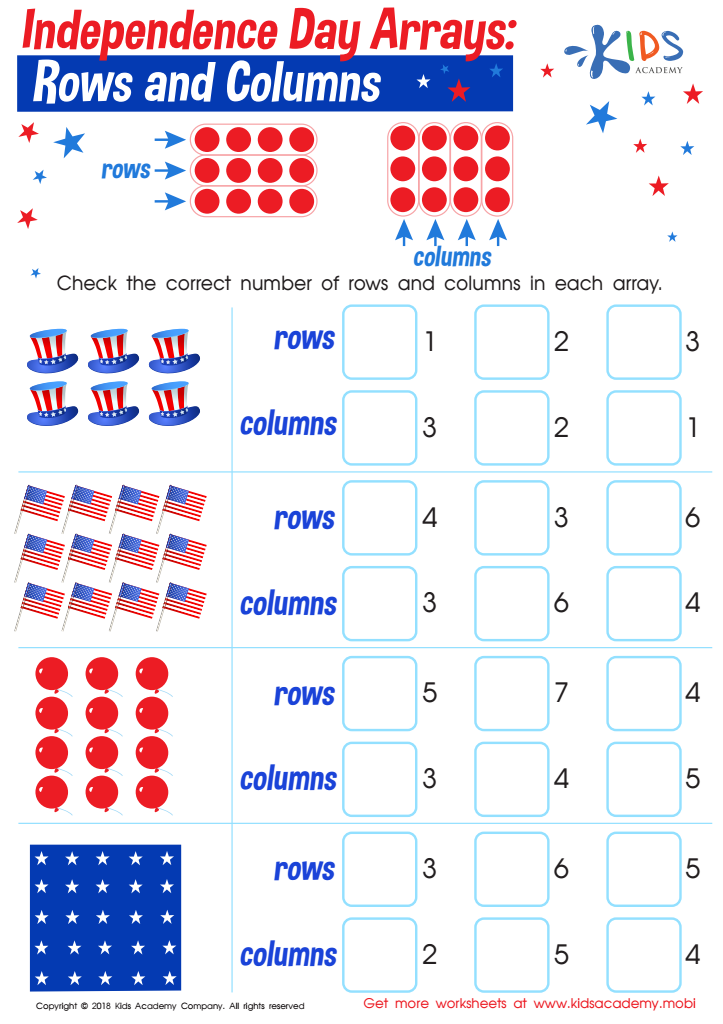
Independence Day Arrays: Rows and Columns Worksheet
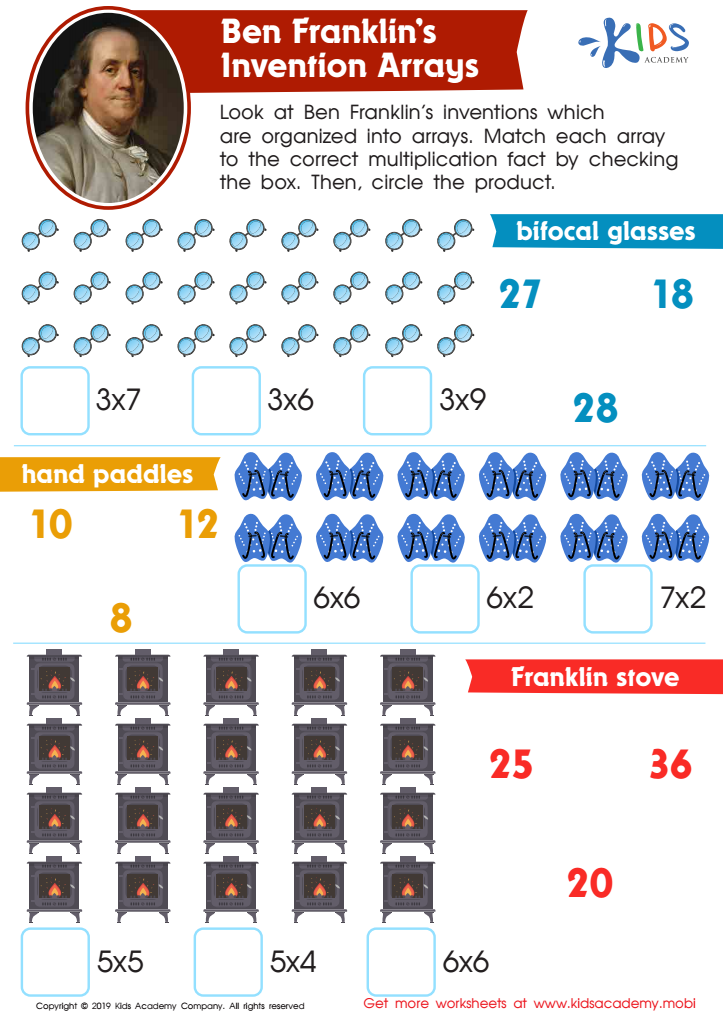
Ben Franklin’s Invention Arrays Worksheet








Reading comprehension arrays are invaluable tools for young children, aged 4-9, embarking on their reading journeys. These arrays present information visually and systematically, helping children decode text more effectively. Understanding the importance of these tools offers several key benefits:
Firstly, reading comprehension arrays reinforce foundational literacy skills. For beginning readers, associating words with images supports memory retention and concept understanding. When children see a picture of a dog alongside the word "dog," they better grasp and remember the connection due to the visual stimulus.
Secondly, these arrays enhance vocabulary development. Exposure to arrays introduces new words in context, making it easier for children to understand and remember them. Developing a rich vocabulary early sets the stage for more advanced reading and comprehension skills later.
Moreover, comprehension arrays promote critical thinking. By engaging with pictures and aligning them with words or sentences, children learn to analyze and interpret information, a skill essential for academic success across subjects.
Finally, these arrays make learning interactive and enjoyable. The colorful and organized presentation captures young readers’ interests, fostering a love for reading from an early age.
In summary, investing time in reading comprehension arrays equips children with essential skills, developing strong, confident, and enthusiastic readers prepared for future educational endeavors. Both parents and teachers play crucial roles in facilitating these early literacy experiences.








