Data analysis Graphs Worksheets for Ages 4-9
3 filtered results
-
From - To
Explore our engaging Data Analysis Graphs Worksheets designed for children ages 4-9! Our thoughtfully crafted resources help young learners develop essential skills in interpreting data through colorful visual aids and interactive activities. These worksheets introduce basic concepts such as graph reading, categorization, and comparison, fostering critical thinking and analytical skills early on. Perfect for teachers or parents, these activities promote hands-on learning and make data analysis fun and accessible. Help your child gain confidence in math while they discover the world of graphs, charts, and data representation. Start their journey to becoming data-savvy learners today!
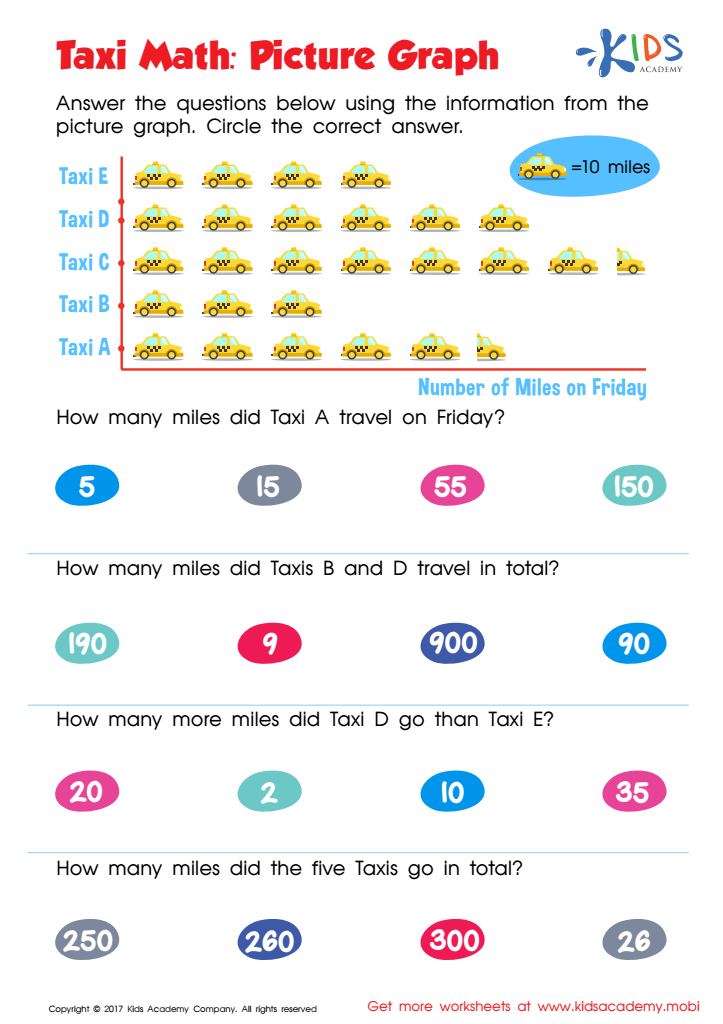
Taxi Math Worksheet
 Assign to My Students
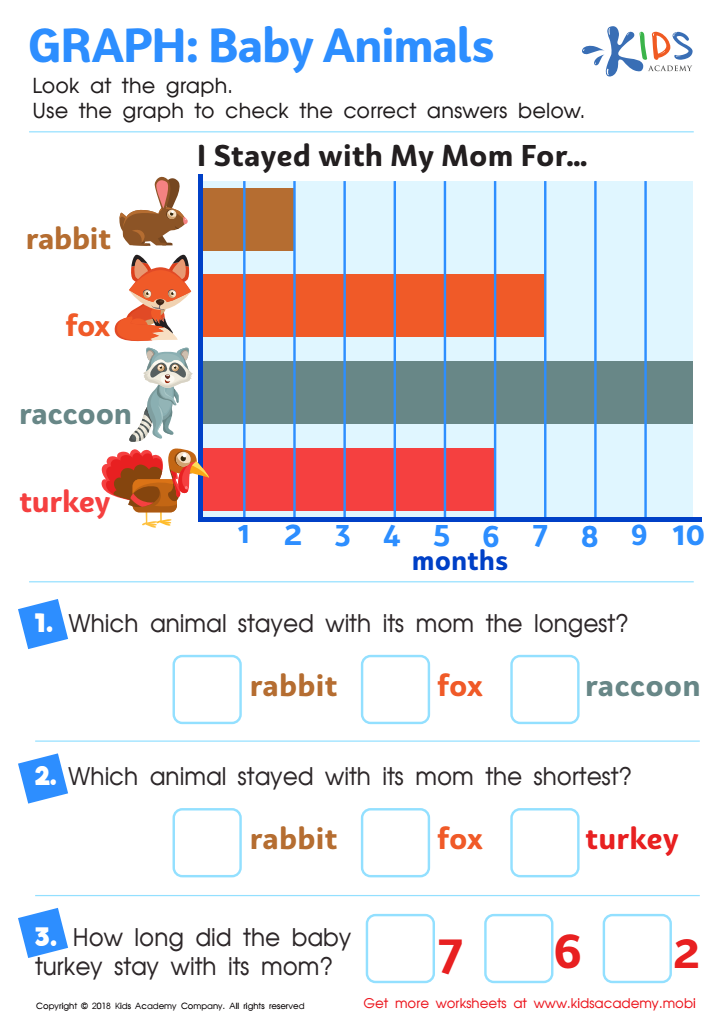
Graph: Baby Animals Worksheet
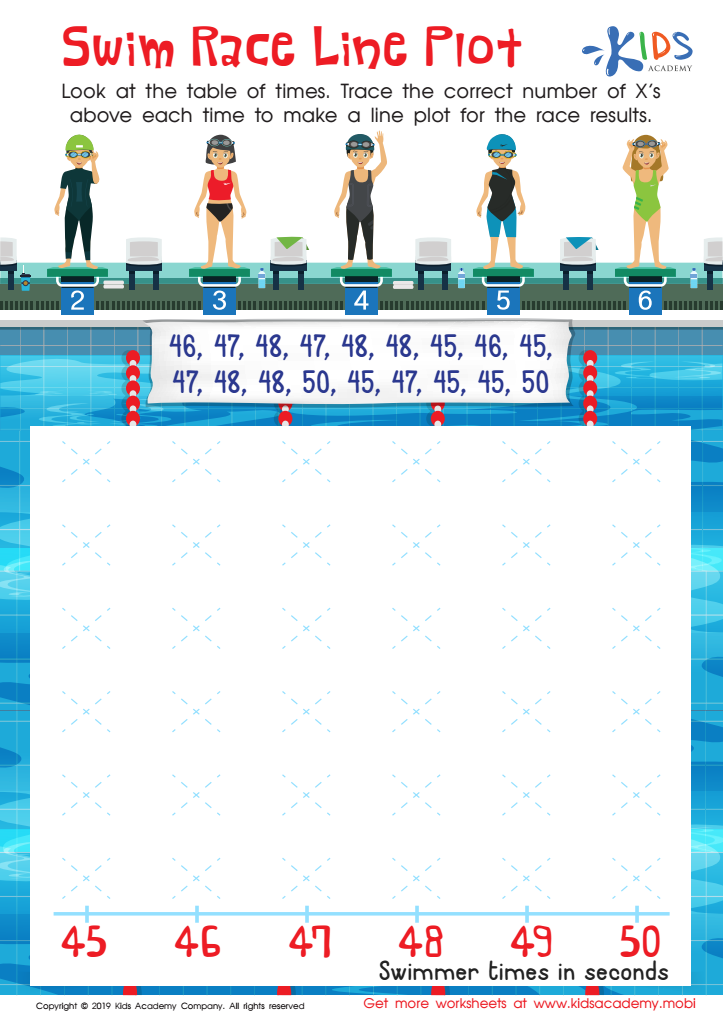
Swim Race Line Plot Worksheet





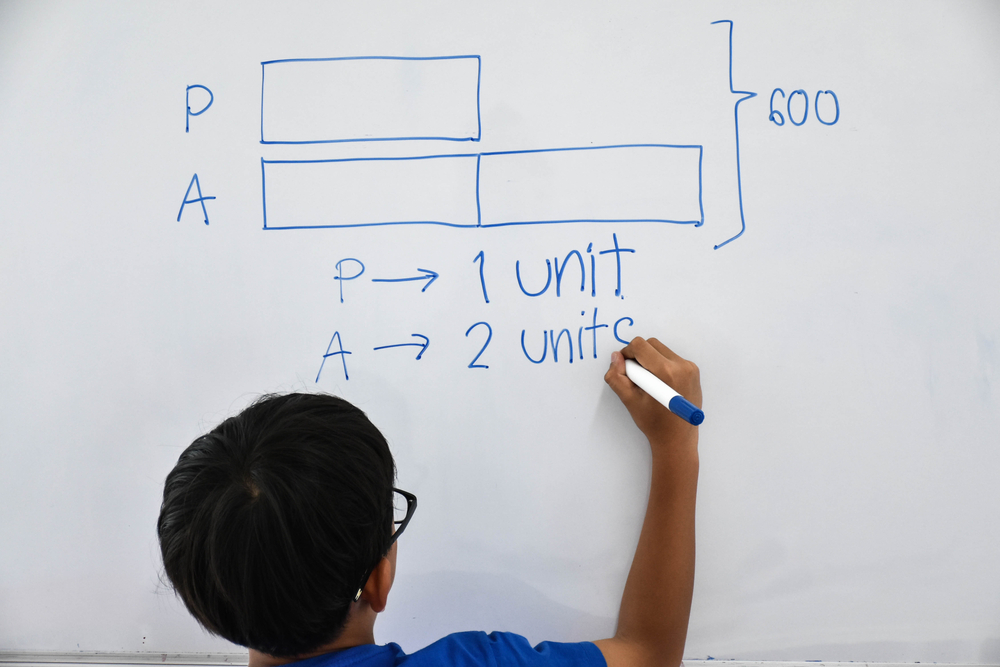


Parents and teachers should prioritize understanding data analysis graphs for children aged 4-9 because these tools foster essential skills and enhance learning experiences. Graphs simplify complex information, making it easier for young learners to visualize data and identify patterns. As children begin to engage with statistics, they can practice critical thinking and problem-solving skills, laying a foundation for more advanced mathematical concepts.
Understanding graphs encourages curiosity and inquiry-based learning. For instance, teachers can introduce simple bar graphs or pictograms to track favorite fruits or animals, prompting discussions about choices and trends. This interactive approach not only makes learning fun but also helps children develop their communication skills as they articulate their findings.
Moreover, early exposure to data analysis supports informed decision-making. As children learn to interpret graphs, they become more adept at examining information critically, fostering a sense of empowerment and helping them make evidence-based choices as they grow older.
In modern education, where data-driven decision-making is pivotal, familiarity with graphs can be a significant advantage. Embracing this knowledge empowers both parents and educators to guide children toward becoming confident learners capable of navigating a data-rich world.








