Mental math practice Numbers Worksheets for Ages 4-9
4 filtered results
-
From - To
Boost your child's numerical skills with our "Mental Math Practice Numbers Worksheets for Ages 4-9." Tailored to foster young mathematicians, these engaging worksheets transform learning numbers into a fun, accessible experience. Each activity hones essential skills like addition, subtraction, counting, and simple problem-solving, ensuring a comprehensive understanding of fundamental math concepts. Ideal for early learners, these printables enhance mental agility and confidence in math, supporting both classroom and at-home learning. Empower your child with the foundational tools they need to succeed in math, making numbers an enjoyable and rewarding challenge. Explore our collection today!
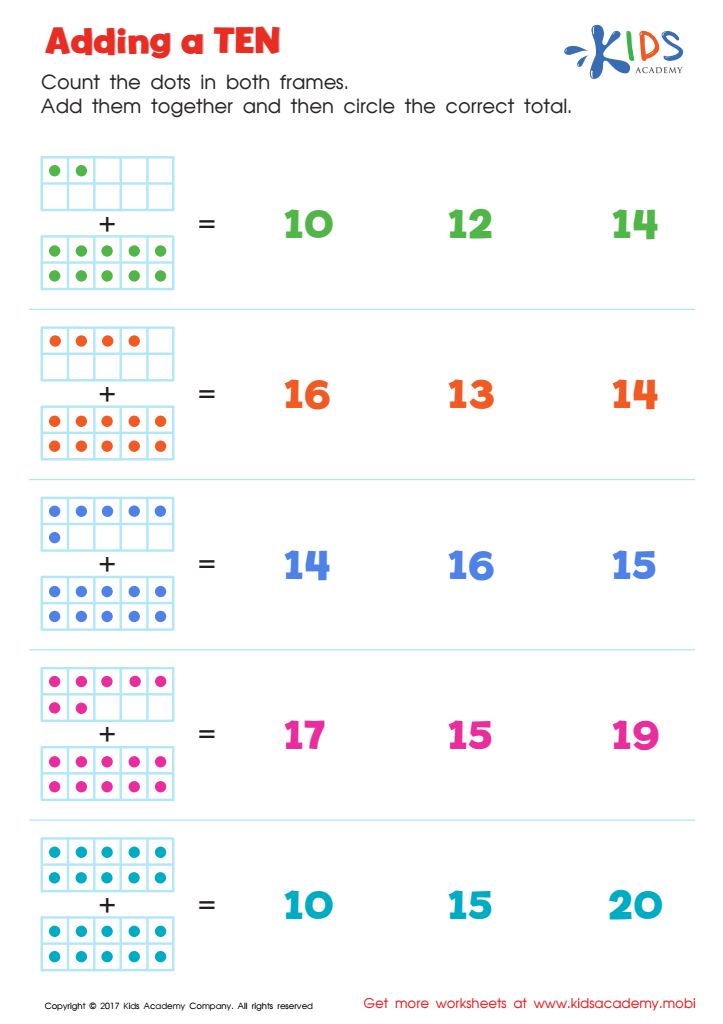
Adding a Ten Worksheet
 Assign to My Students
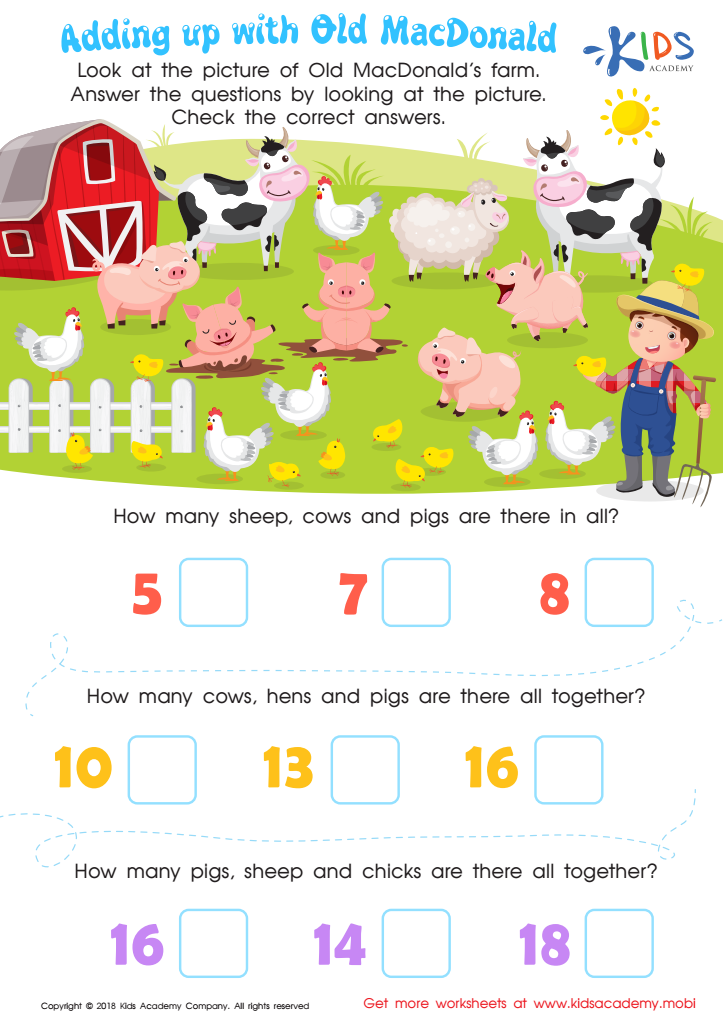
Adding Up with Old MacDonald Worksheet
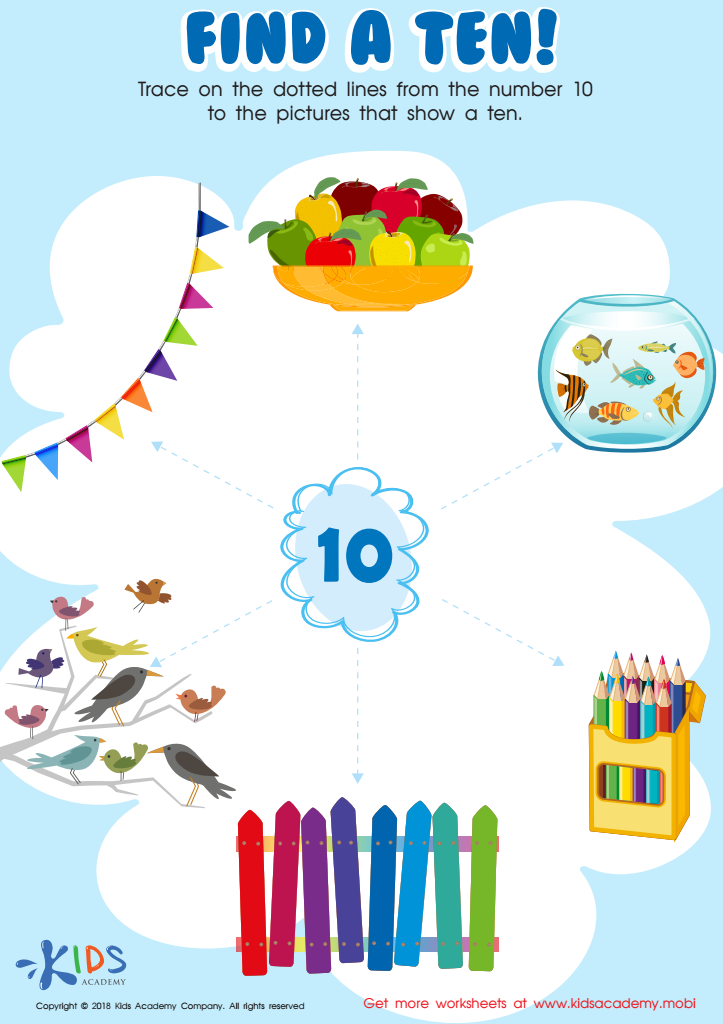
Kindergarten Math Worksheet: Find a Ten
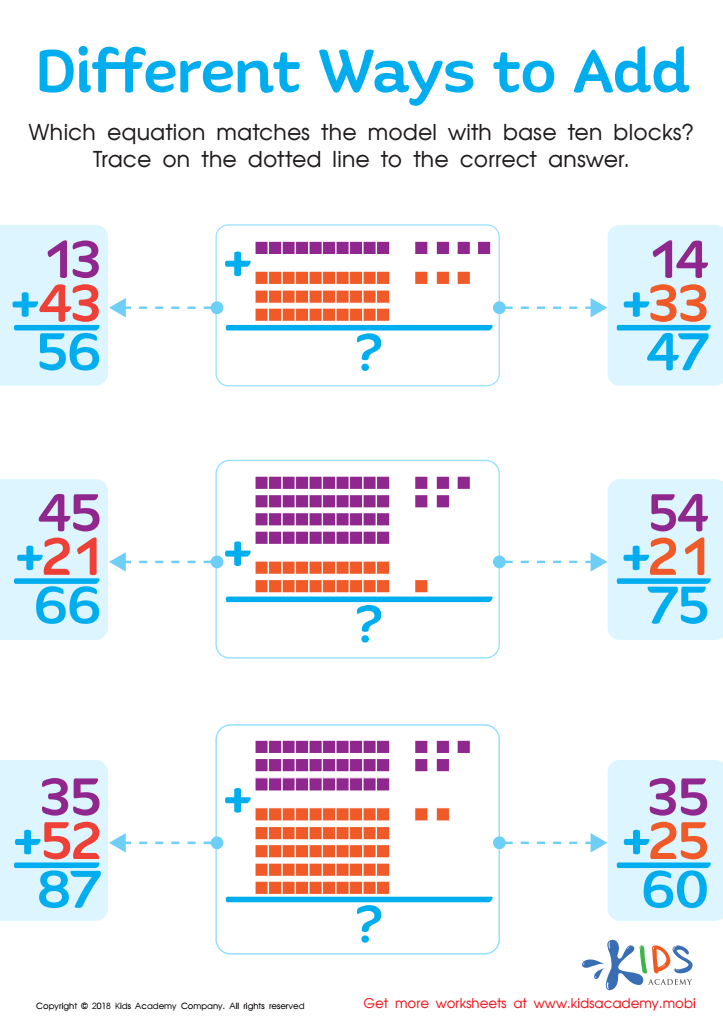
Different Ways to Add Worksheet








Mental math practice is vital for children aged 4-9 as it lays the groundwork for robust mathematical skills, benefiting both their academic and everyday life experiences. Firstly, engaging in mental math enhances cognitive development by promoting critical thinking, problem-solving, and memory skills. These early stages are crucial for brain development, and mental math challenges stimulate neural pathways, making future learning more effective.
Secondly, proficiency in mental math contributes to increased confidence and a positive attitude towards mathematics. Children who regularly practice mental math feel more competent and are less likely to develop math-related anxiety. This confidence can translate into better performance not just in math, but across all subjects that require analytical thinking and problem-solving abilities.
In addition, mental math practice encourages a sense of independence. When children develop skills to quickly solve problems in their heads, they become more self-reliant learners who are willing to approach complex tasks with problem-solving strategies they have internalized. This fosters an independent mindset that benefits their overall educational journey.
Finally, these skills are practical for everyday life. Understanding numbers and performing simple calculations mentally empowers children to handle various daily activities, from calculating change and managing time to measuring ingredients while cooking. Early investment in mental math practice can therefore yield long-lasting benefits both academically and in real-world applications.








