Basic geometry Math Worksheets for Ages 4-9
3 filtered results
-
From - To
Introducing our "Basic Geometry Math Worksheets for Ages 4-9". These engaging and colorful worksheets are designed to help young learners develop foundational geometry skills. Your child will enjoy learning shapes, patterns, spatial awareness, and symmetry through interactive exercises and activities. Each worksheet is created to cater to different skill levels, ensuring that kids from preschool to early elementary school build confidence and competence in geometry. Perfect for classroom use or at-home practice, our worksheets provide a solid foundation to inspire a lifelong love of math. Unlock the joy of learning geometry today!
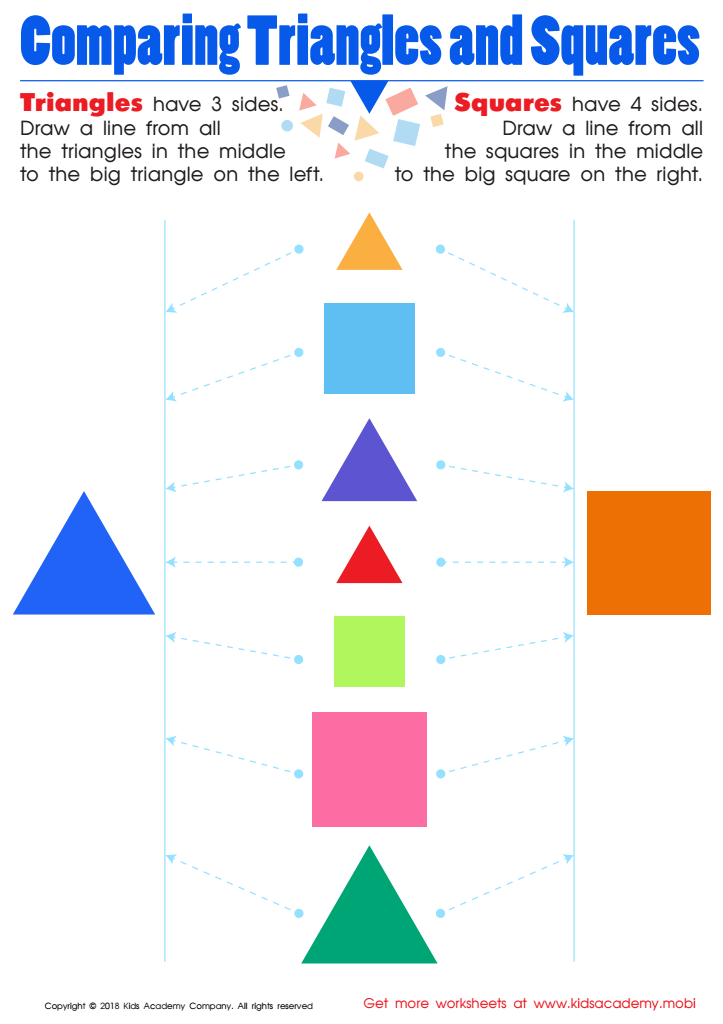
Comparing Triangles Squares Worksheet
 Assign to My Students
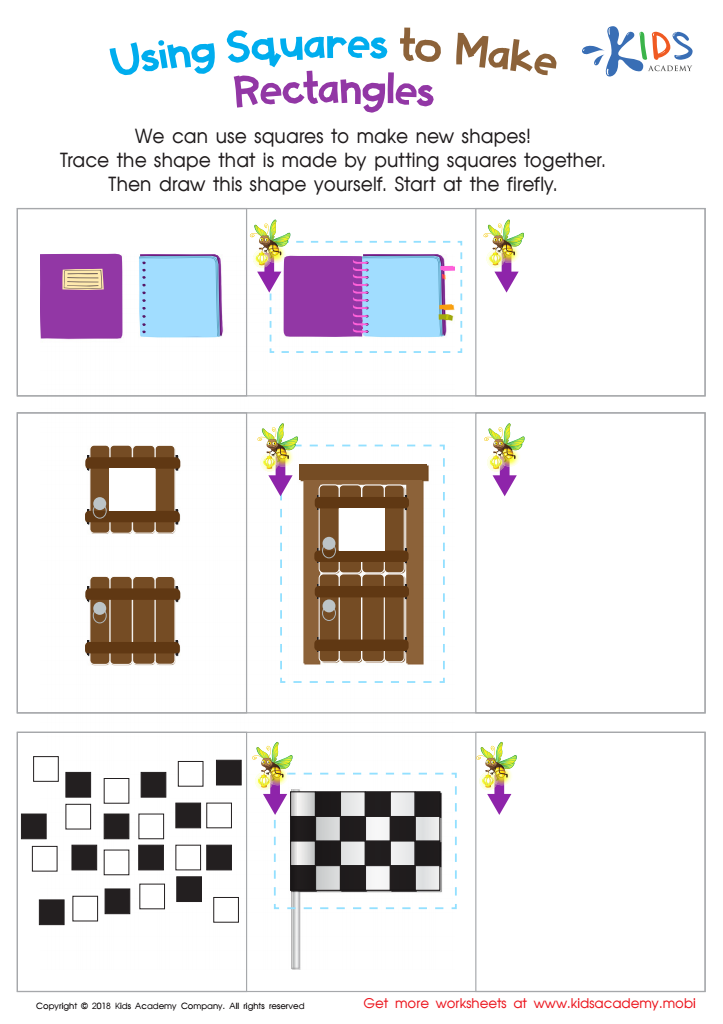
Using Squares to Make Rectangles Worksheet
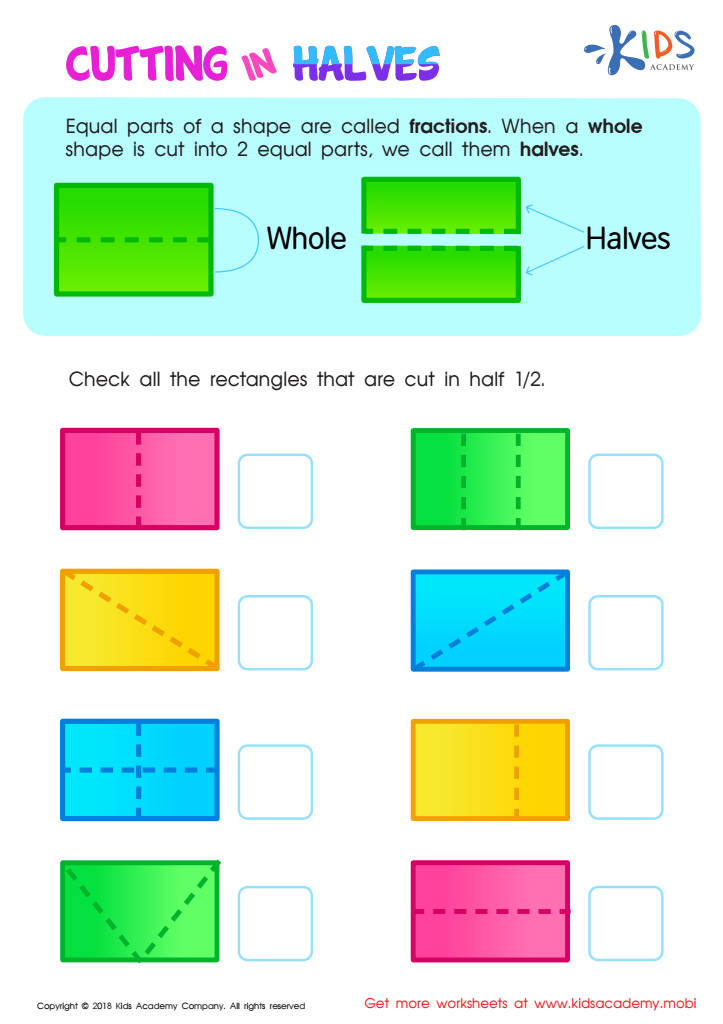
Cutting in Halves Worksheet








Parents and teachers should prioritize basic geometry for young children because it lays the groundwork for essential cognitive and academic skills. At ages 4-9, children are in a critical period of brain development when they can easily absorb new concepts. Engaging with geometry cultivates spatial reasoning, helping children understand shapes, sizes, and the spatial relationships between objects. This foundational skill enhances their ability to solve problems not just in math, but across other areas like science, art, and daily life.
Geometry also promotes logical thinking and analytical skills. Identifying patterns, comparing shapes, and recognizing symmetry help in developing critical thinking. Early exposure to these concepts enables children to approach complex problems more systematically and creatively as they progress in their education.
Moreover, basic geometry is everywhere in the real world. By introducing it early, parents and teachers help children make sense of their environment. Kids learn to recognize shapes, navigate spaces, and even follow directions better. Activities like building blocks, drawing, and puzzles integrate geometry into play, making learning both effective and fun.
In summary, investing in basic geometry instruction for children aged 4-9 fosters cognitive development, enhances problem-solving skills, and helps them make sense of the world around them, ensuring a strong academic and life foundation.








