
Compare fractions Math Worksheets for Ages 4-9
6 filtered results
Difficulty Level
Grade
Age
-
From - To
Subject
Activity
Standards
Explore our engaging "Compare Fractions Math Worksheets" designed for children aged 4-9! These worksheets provide a fun and interactive way for young learners to grasp the concept of fractions and enhance their math skills. With colorful illustrations and simple instructions, students will enjoy comparing fractions using visual aids and clear examples. Each worksheet is tailored to cater to different learning levels, ensuring that every child can succeed. Whether in the classroom or at home, our resources encourage exploration and discovery in math. Enhance your child's confidence and competence in fractions today with our carefully crafted worksheets!
Favorites
With answer key
Interactive
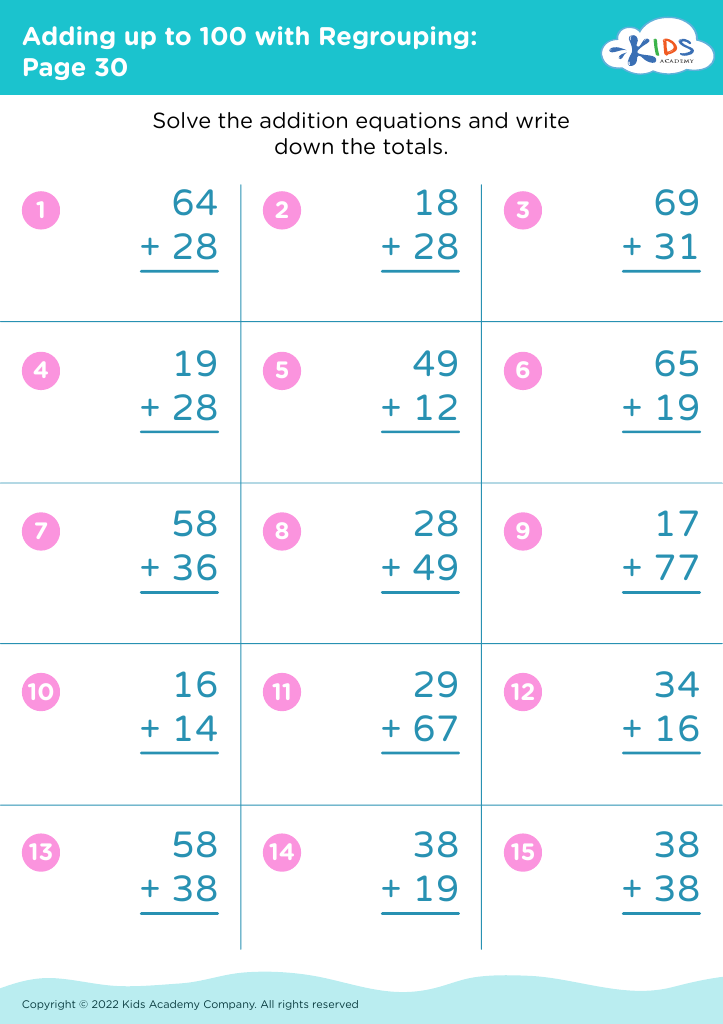
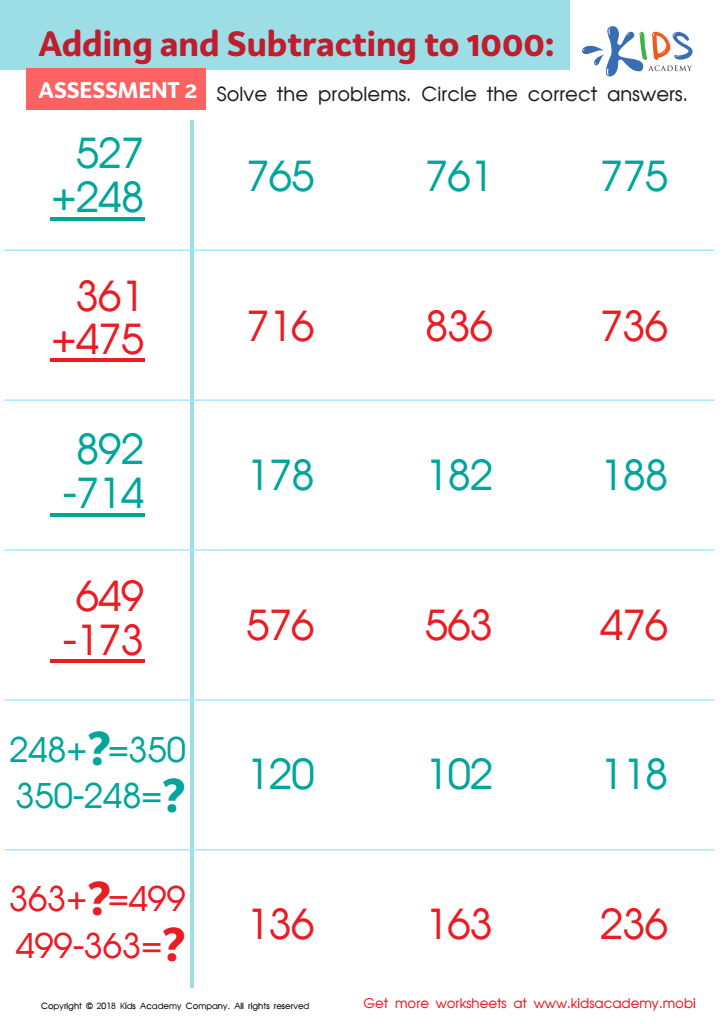
Adding and Subtracting to 1 Worksheet: Assessment 2
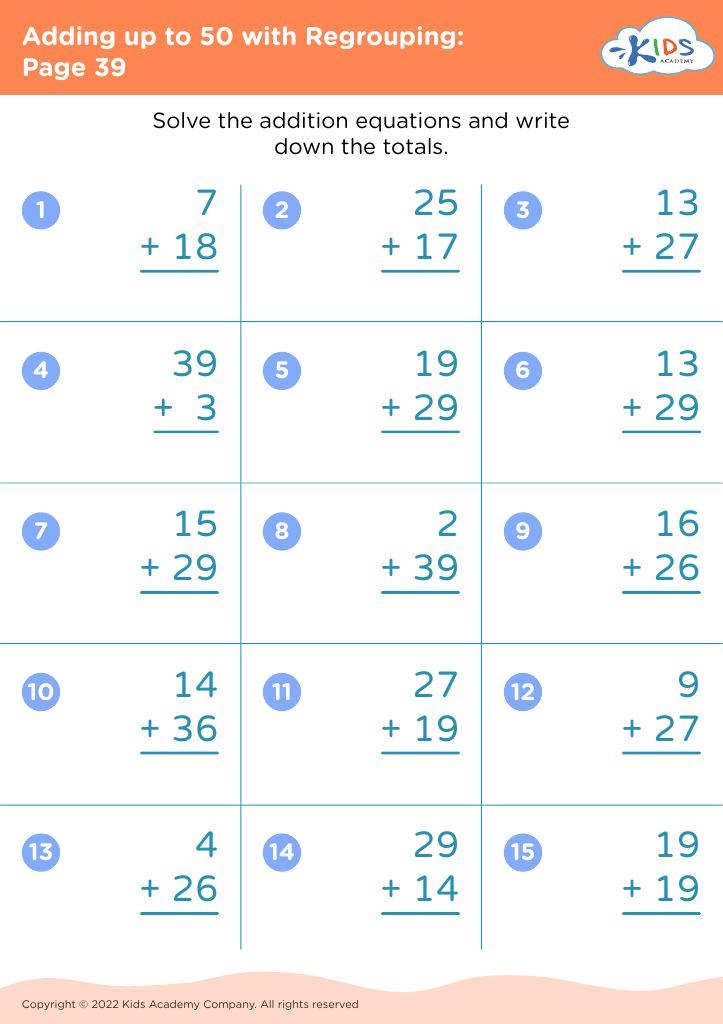
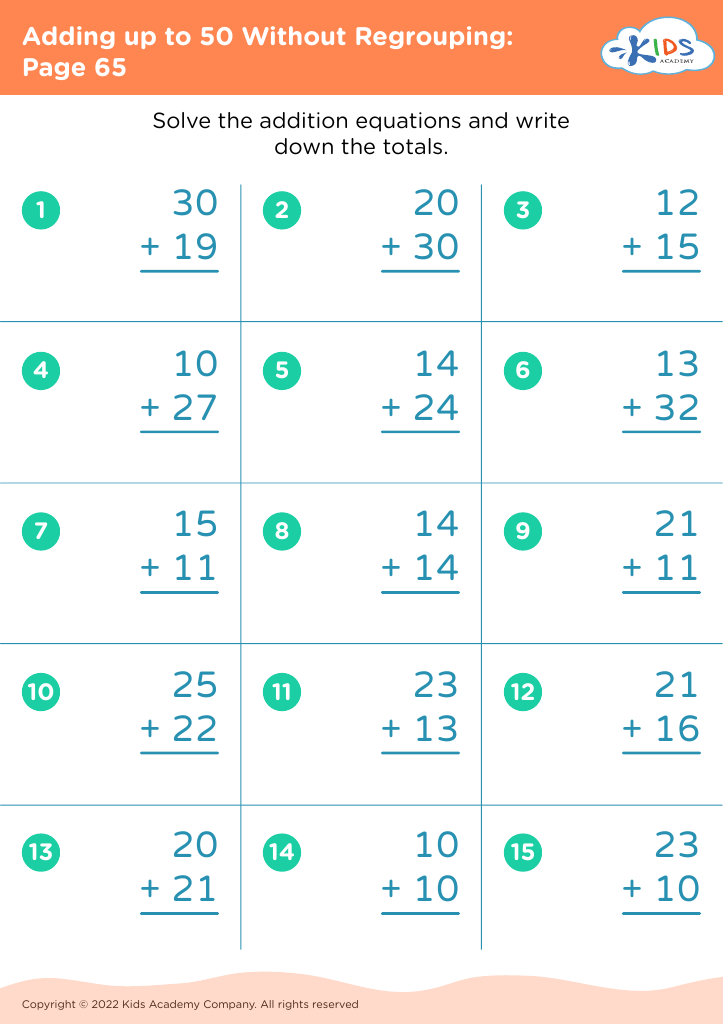
Test your child's addition and subtraction of 3-digit numbers with this assessment worksheet! They'll practice regrouping and pre-algebra skills to show their expertise. Have them work through the page and circle their answers, then see how many they got right to check their understanding and progress.
 Assign to My Students
Adding and Subtracting to 1 Worksheet: Assessment 2
Worksheet
Join Kids Academy for Free
Who is primarily going to use this learning content?








Teaching children to compare fractions is crucial for their mathematical development and comprehension. For ages 4-9, this foundational skill not only enhances their understanding of numbers, but also promotes critical thinking and problem-solving abilities. As children engage with fractions, they learn about parts of a whole, paving the way to grasp more complex concepts in fractions, measurement, and ratios later on.
Parents and teachers should care about comparing fractions because it prepares children for everyday scenarios where making decisions requires assessing quantities, such as dividing food or measuring ingredients for recipes. By becoming comfortable comparing fractions, children develop confidence in their mathematical abilities, which translates to a positive attitude towards learning.
Furthermore, introducing these concepts early encourages cognitive development, as it challenges young minds to recognize differences and similarities among numbers. It fosters quantitative reasoning skills, teaching them to analyze relationships between quantities, rather than rote memorization. Finally, instilling a love for math and encouraging curiosity early on can set the stage for lifelong skills, leading to academic success and empowering future thinkers. Engaging with math in this way is building a toolkit for children that supports them both inside and outside the classroom.








