Fine motor development Math Worksheets for Ages 4-9
7 filtered results
-
From - To
Enhance your child's fine motor development while merging learning with fun through our Math Worksheets for Ages 4-9! Our meticulously designed worksheets integrate engaging math concepts with essential fine motor skill activities. These worksheets allow children to practice handwriting, tracing, and cutting while solving age-appropriate math problems, ensuring a well-rounded educational experience. Crafted for young learners, each worksheet promotes cognitive growth, coordination, and dexterity. Whether at home or in the classroom, these resources foster an enjoyable learning environment that sets the foundation for future academic success. Explore our collection today and watch your child thrive academically while developing essential skills!
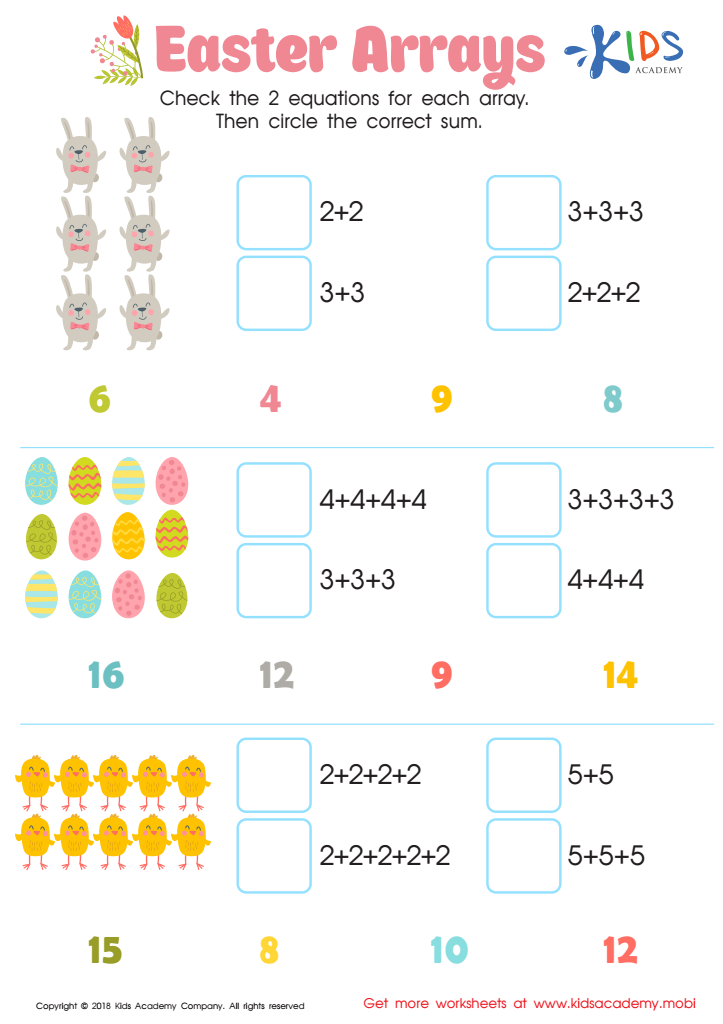
Easter Arrays Worksheet
 Assign to My Students
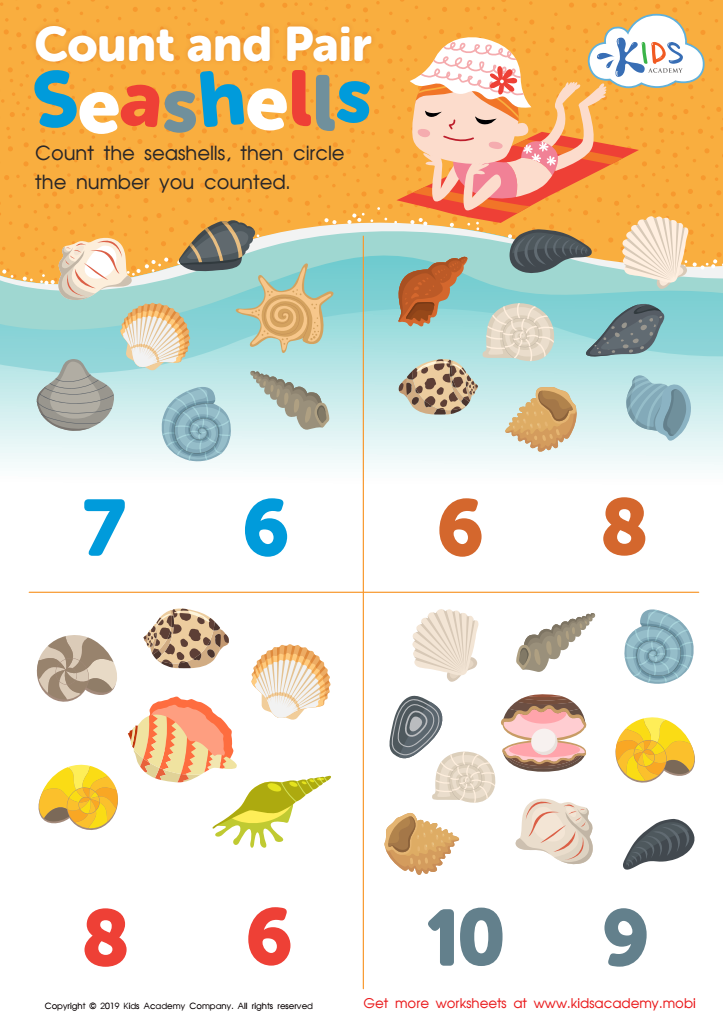
Count and Pair Seashells Worksheet
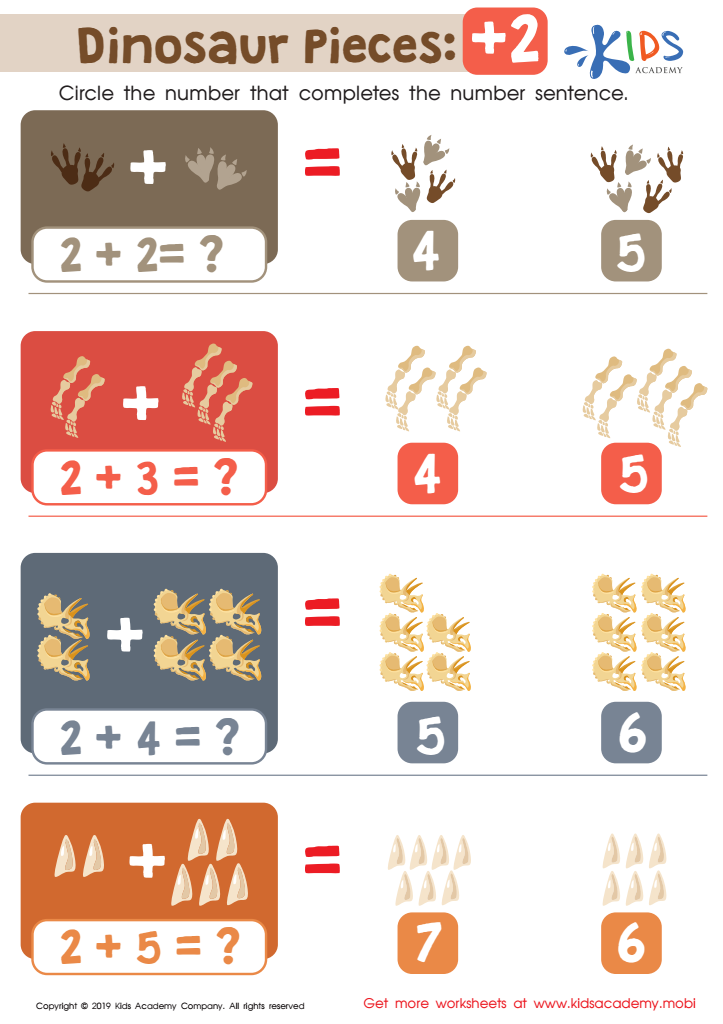
Dinosaur Pieces: +2 Worksheet
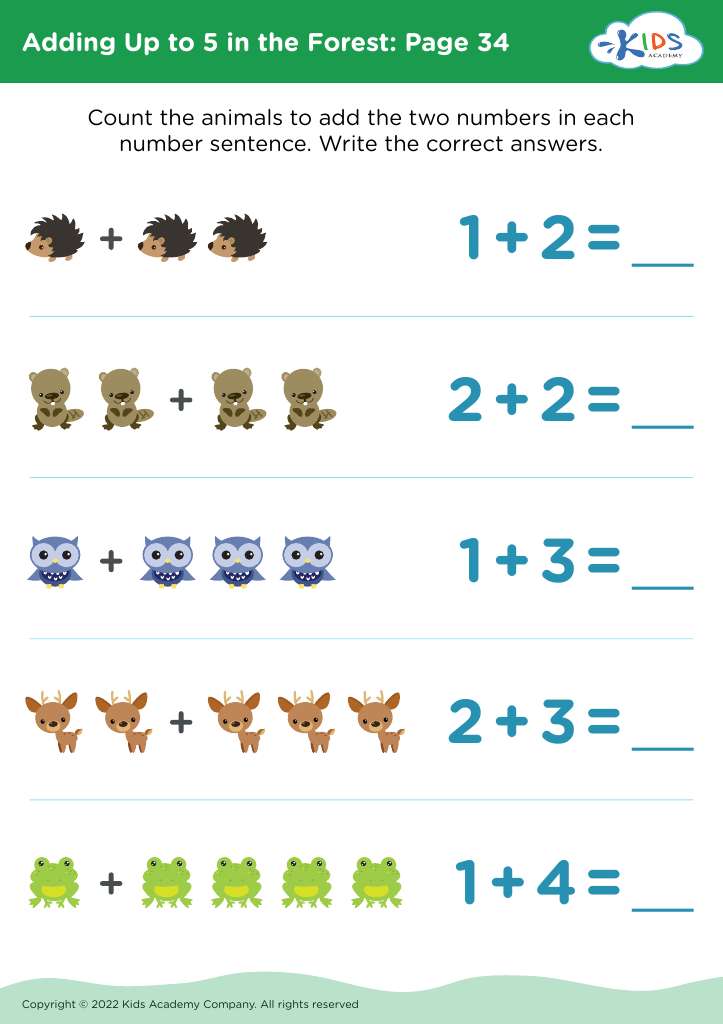

Shapes Worksheet
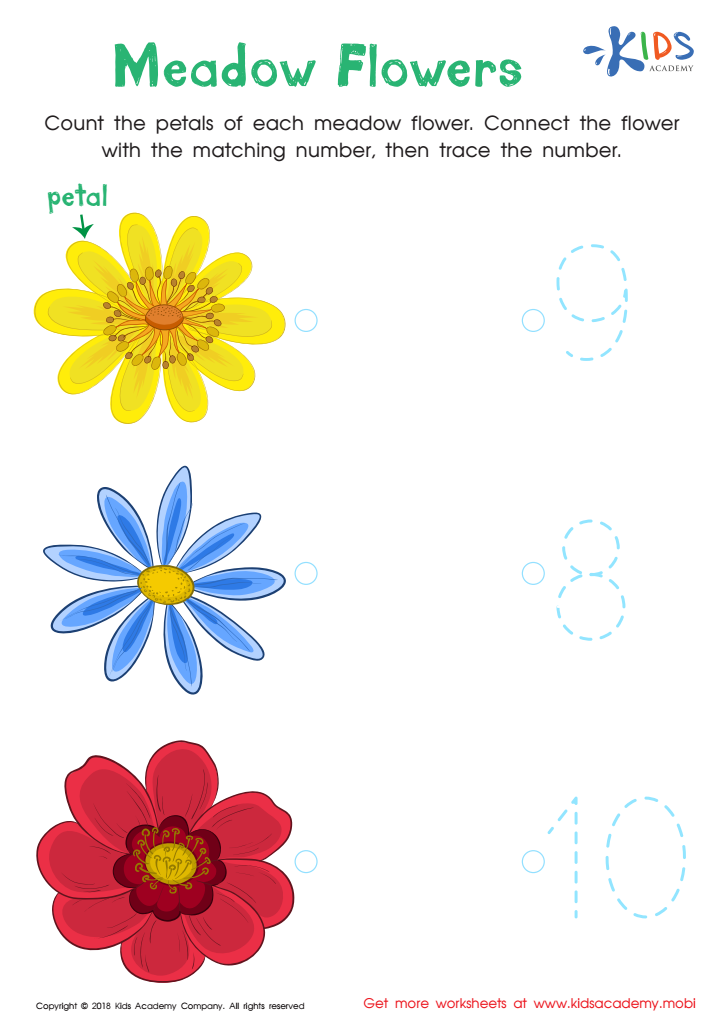
Kindergarten Number Tracing: Medow Flowers Worksheet



.jpg)




Parents and teachers should prioritize fine motor development in children aged 4-9, especially as it relates to math skills. Fine motor skills involve the coordination of small muscles in the hands and fingers, which are crucial for tasks such as writing, cutting, and manipulating objects. These skills significantly impact a child's ability to perform mathematical activities, such as drawing shapes, using tools like scissors or counting manipulative items.
As children engage with math, fine motor development enhances their ability to organize and express their mathematical thinking visually. For example, holding a pencil properly or arranging blocks effectively supports not only their fine motor skills but also their understanding of spatial relationships and geometric concepts, which are foundational in math.
Moreover, strong fine motor skills boost children's confidence and independence in academic settings, enabling them to complete tasks with ease. This confidence is essential for fostering a positive attitude towards learning, particularly in subjects like math that can be challenging for some.
In summary, by focusing on fine motor development, parents and teachers can help children build the essential skills necessary for math success, promoting overall cognitive development and preparing them for future academic achievements.








