Improve fine motor skills Math Worksheets for Ages 4-9
3 filtered results
-
From - To
Enhance your child's fine motor skills with our engaging math worksheets designed for ages 4-9. These fun and educational resources help young learners develop essential hand-eye coordination, dexterity, and skills needed for successful writing and math exercises. Our worksheets incorporate a variety of activities, such as tracing, cutting, and coloring, making math practice an enjoyable experience. By reinforcing foundational concepts while honing fine motor abilities, these worksheets promote confidence and independence in young learners. Explore our collection and watch your child's skills flourish as they make learning an exciting and hands-on adventure! Start their journey to mastery today!
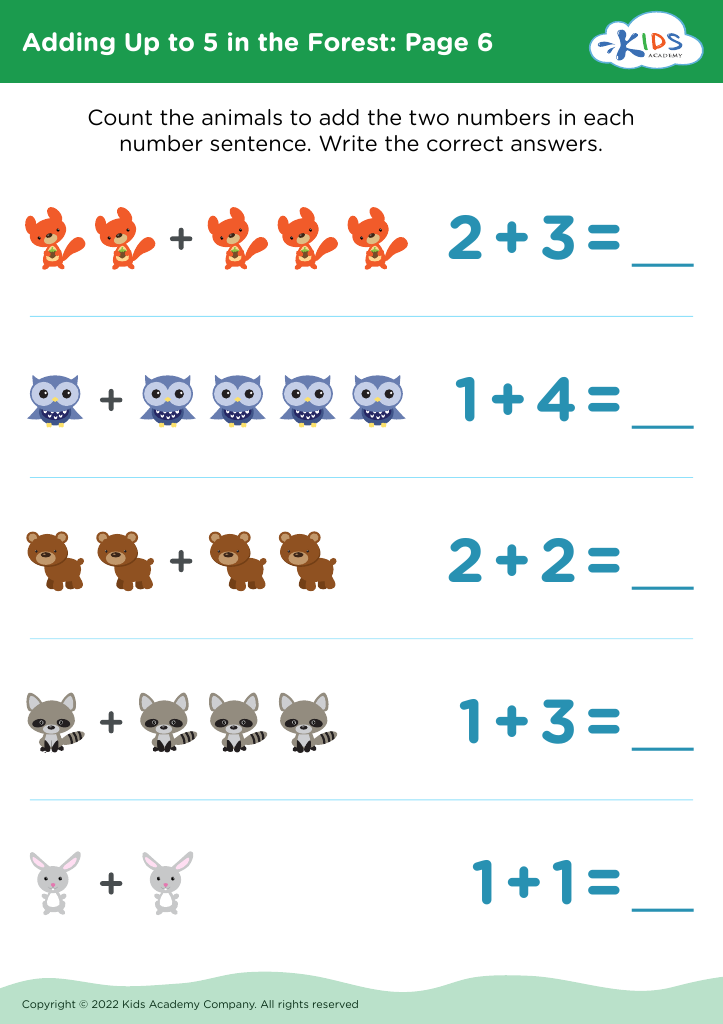
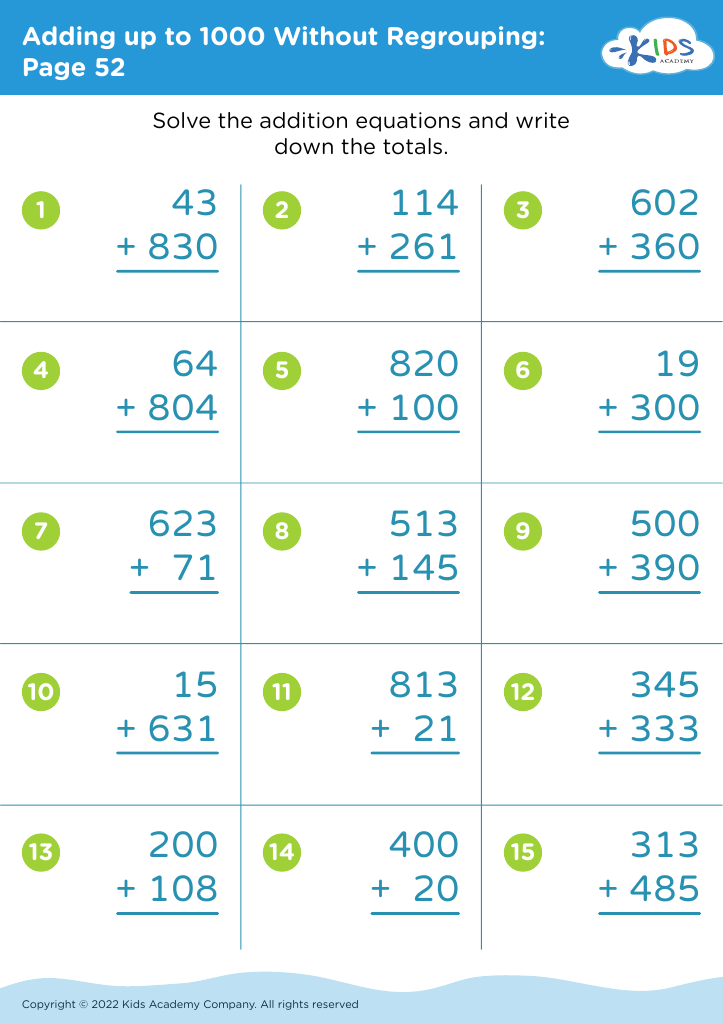
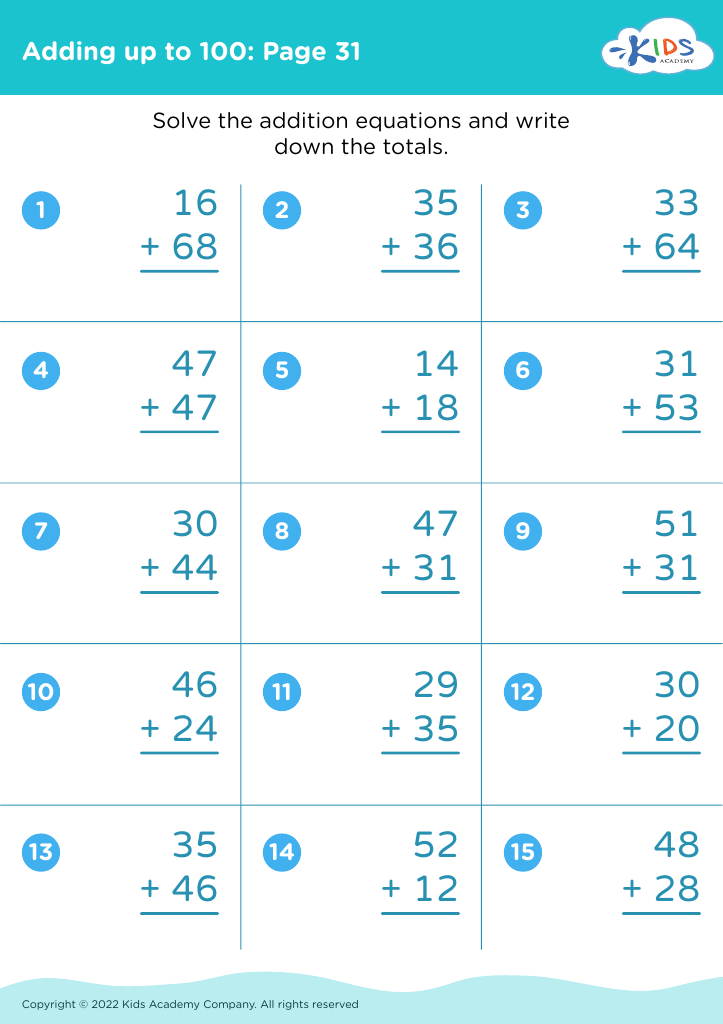








Improving fine motor skills in children ages 4-9 is crucial, especially when it comes to tasks connected to math. Fine motor skills refer to the small movements of the hands and fingers that are essential for everyday tasks like writing, cutting, and manipulating objects. In a math context, these skills aid in effectively using tools such as pencils, rulers, and abacuses, and are key for engaging in hands-on activities like counting blocks or drawing shapes.
Strengthening fine motor skills allows children to approach math with confidence and dexterity, influencing their overall academic performance. For parents and teachers, fostering these skills early on means enabling children to tackle math problems more easily—a smoother start leads to greater enthusiasm and competence in the subject.
Moreover, fine motor development supports cognitive processes that are vital in math, such as spatial awareness, problem-solving, and logical reasoning. Engaging in activities like tracing numbers, using manipulatives, and drawing geometric shapes not only enhances fine motor skills but simultaneously reinforces critical math concepts. Thus, prioritizing the development of fine motor skills equips children with the essential toolkit they need for academic success, making it a fundamental area of focus in early education.








