Improve subtraction skills Math Worksheets for Ages 4-9
4 filtered results
-
From - To
Looking to enhance your child's subtraction skills? Our Math Worksheets for ages 4-9 provide a fun and interactive way to improve proficiency in subtraction. These carefully designed worksheets cater to various learning stages, ensuring young learners grasp foundational concepts while progressively challenging them. Packed with engaging activities, colorful illustrations, and age-appropriate problems, our printable resources help develop essential math skills, boost confidence, and make learning enjoyable. Ideal for both classroom use and at-home practice, parents and teachers can utilize these tools to support children in mastering subtraction. Explore our collection and give your child the math advantage they deserve!
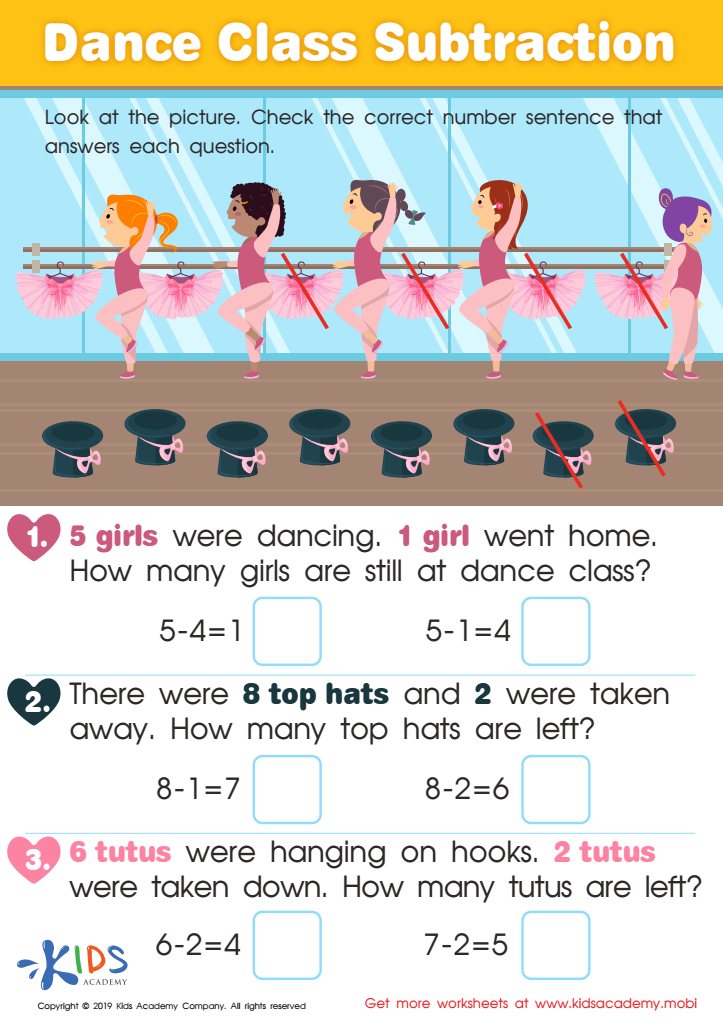
Dance Class Subtraction Worksheet
 Assign to My Students
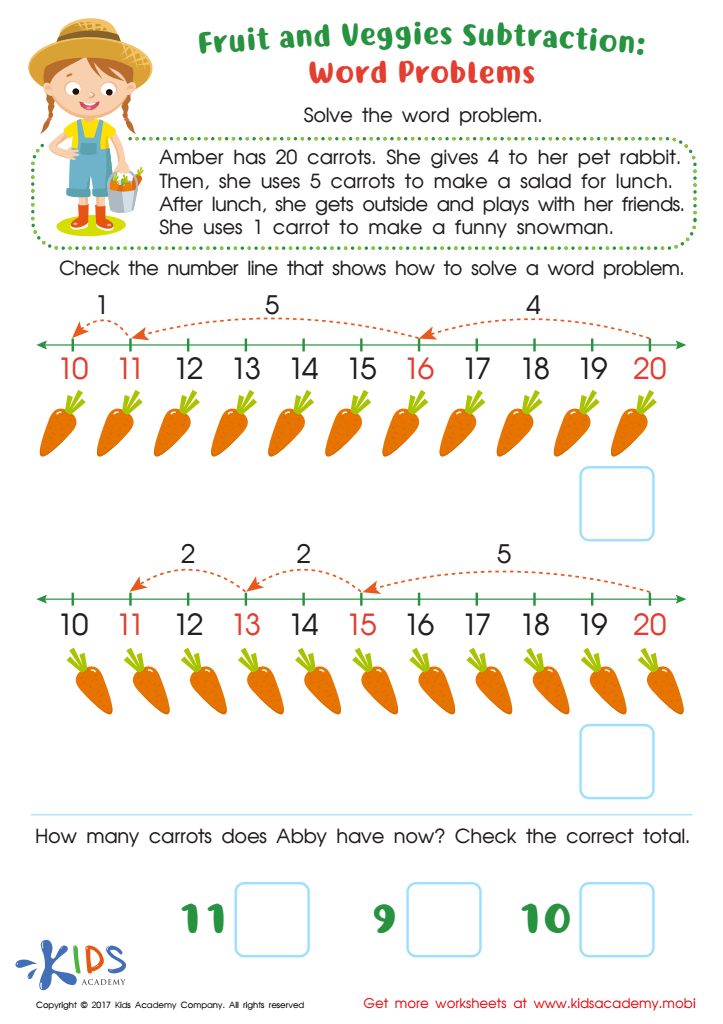
Subtraction Word Problems Printable
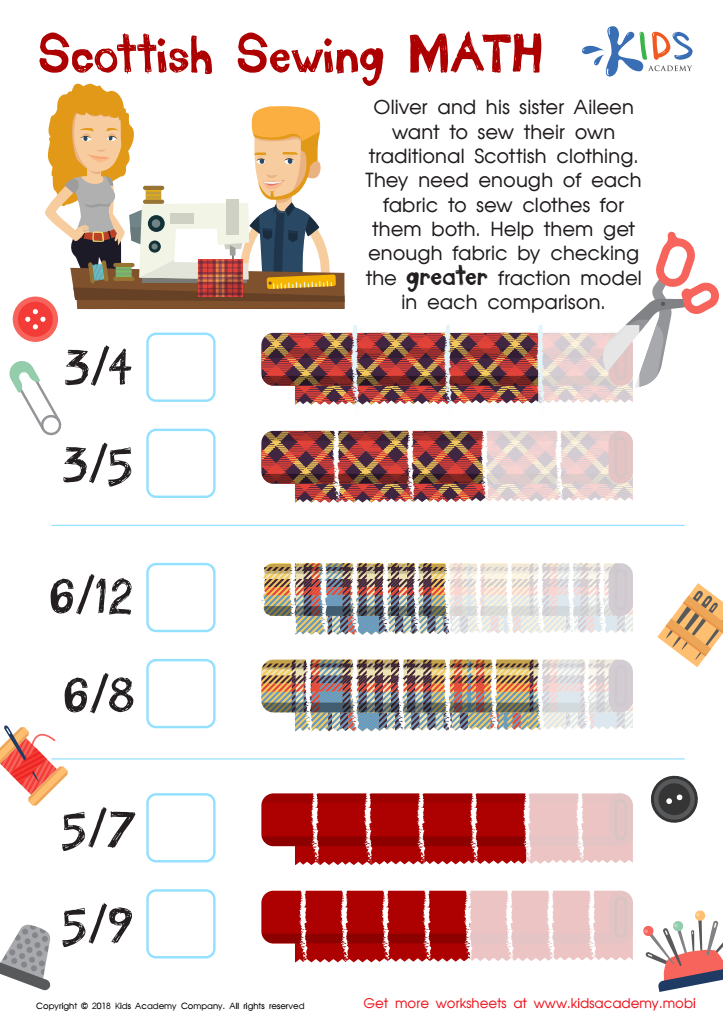
Scottish Sewing Math Worksheet
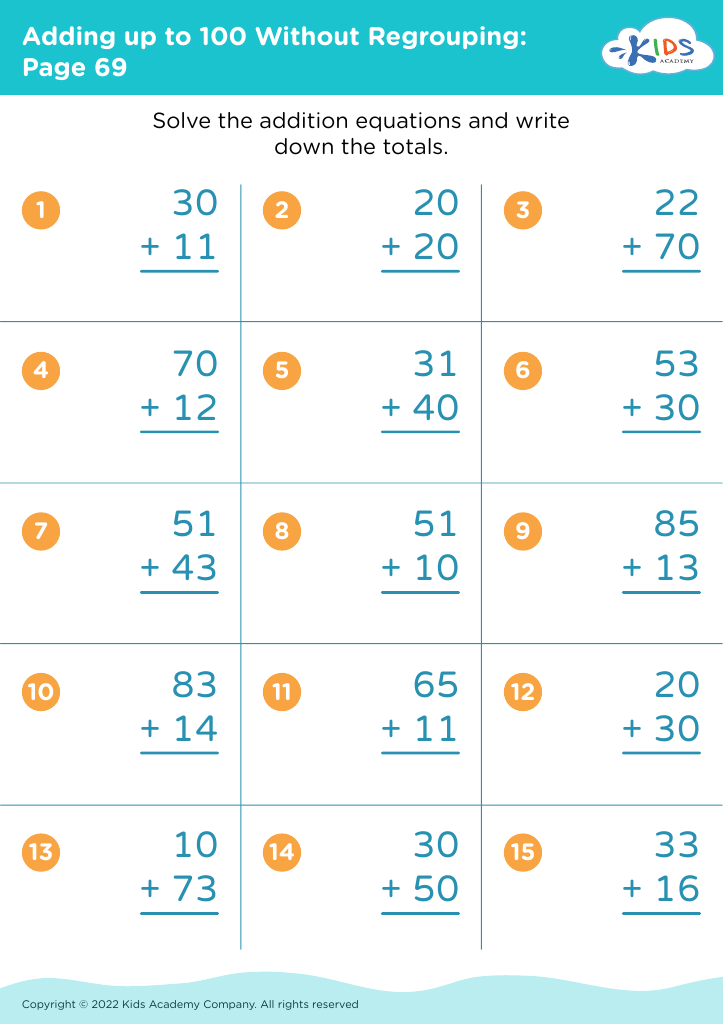


%20(1).jpg)





Cultivating subtraction skills in children between the ages of 4-9 holds substantial importance for their overall educational development. During these formative years, foundational mathematical concepts like subtraction are not just academic subjects but integral parts of cognitive growth. Mastery of subtraction enhances logical reasoning and critical thinking. Children learn to approach problems systematically, breaking them down into manageable parts—a skill that has applications far beyond math equations.
From a practical perspective, subtraction is a life skill. It helps children understand real-world scenarios such as calculating change, sharing equally, and managing simple inventories. These everyday examples highlight the immediate value of mathematical competency.
Moreover, early success in mastering subtraction fosters a positive self-image and builds confidence in young learners. Children who struggle with basic arithmetic often develop math anxiety, which can hinder their academic progress in various subjects that progressively rely on math proficiency.
Engaged parents and attentive teachers play a critical role by providing supportive environments, employing creative teaching methods, and offering regular practice to reinforce skills. Whether through interactive games, visual aids, or practical exercises, their encouragement can make a significant difference. Investing time and resources in this area ensures a solid mathematical foundation, paving the way for academic and real-life success.








